

Medication routine improvements are practical interventions and tools designed to help patients and carers manage daily medication schedules more effectively and consistently. Poor adherence is one of the most persistent problems in chronic disease management, and the consequences range from avoidable hospital admissions to accelerated disease progression. The good news is that examples of medication routine improvements span everything from a simple weekly pill organiser to AI-powered platforms like Thedailydosetracker, which combines real-time alerts, drug interaction checks, and multi-patient management in one place. The right combination of organisational, behavioural, and technological strategies can transform a chaotic medicine cabinet into a reliable daily routine.
1. Examples of medication routine improvements using organisational tools
Physical and digital organisers are the most accessible starting point for improving any medication routine. A weekly pill organiser significantly reduces confusion and helps patients track whether a dose has been taken, particularly in complex regimens involving five or more medicines. The visual confirmation alone removes the most common cause of missed doses: uncertainty about whether a tablet was already taken.
Digital tools add a second layer of protection. Smartphone alarms, medication reminder apps, and electronic pill dispensers provide alerts, log missed doses, and maintain an up-to-date medication list. These features matter most for patients managing chronic conditions, where consistency over months and years determines clinical outcomes.

Medication calendars and written schedules remain a practical low-tech option for patients with limited digital access. A printed grid showing each medicine, dose, and time of day costs nothing and works without a Wi-Fi connection.
Pro Tip: Pair a weekly pill organiser with a smartphone alarm set to the same time each day. The physical organiser confirms the dose was taken; the alarm prevents the dose from being forgotten in the first place.
| Tool | Ease of use | Cost | Best use case |
|---|---|---|---|
| Weekly pill organiser | High | Low | Complex regimens, elderly patients |
| Smartphone alarm | High | Free | Single or twice-daily dosing |
| Medication reminder app | Medium | Free to low | Chronic disease, multiple medicines |
| Electronic pill dispenser | Medium | Medium to high | Patients living alone, high-risk regimens |
| Printed medication calendar | Very high | Free | Low digital literacy, caregiver-managed care |
2. Simplifying medication regimens to enhance adherence
Regimen complexity is a direct barrier to adherence. Reducing dosing frequency from multiple daily doses to a once-daily schedule decreases the cognitive and logistical burden on patients, making long-term adherence far more achievable. This is especially relevant in geriatric care, where patients may manage eight or more medicines simultaneously.
Fixed-dose combinations consolidate multiple active ingredients into a single tablet or capsule. This approach reduces pill burden, lowers the risk of dosing errors, and improves therapeutic outcomes in conditions such as hypertension, HIV, and type 2 diabetes. A patient who previously took four separate tablets at different times may take just one combination tablet each morning.
Formulation innovations also play a significant role. Long-acting and modified-release preparations extend the duration of a drug's effect, cutting the number of daily doses required. Taste masking and alternative formulations improve acceptability in paediatric and geriatric patients, reducing refusal rates without affecting efficacy.
Deprescribing, the planned and supervised reduction of unnecessary medicines, is another effective strategy. Pharmacists conducting annual medication reviews identify redundant prescriptions, drug-food interactions, and opportunities to simplify regimens. For carers managing a loved one's medicines, requesting a structured medication review is one of the highest-value steps available. You can read more about this in the guide to managing multiple prescriptions.
Benefits of simplified regimens include:
- Fewer missed doses due to reduced scheduling complexity
- Lower risk of drug interactions from reduced pill burden
- Improved patient confidence and sense of control
- Better therapeutic outcomes in chronic disease management
- Reduced carer workload and cognitive load
3. Behavioural and social support strategies that improve adherence
Behavioural support addresses the psychological side of medication adherence, which organisational tools alone cannot fix. Motivational interviewing is a structured counselling technique that helps patients explore their own reasons for taking or avoiding medicines. It works by addressing ambivalence rather than lecturing, which produces more durable behaviour change than simple instruction.
Patient education is equally important. Patients who understand why a medicine is prescribed, what it does, and what happens if doses are missed are significantly more likely to adhere. This education works best when delivered by a pharmacist or nurse who can answer questions in plain language.
Family and caregiver involvement is one of the most reliable adherence supports available. Shared routines, such as a carer and patient taking their respective medicines at the same time each morning, create social accountability. This is particularly effective for elderly patients and those with early cognitive decline.
Pro Tip: For patients managing complex chronic conditions, ask the GP to refer to a multidisciplinary team including a clinical pharmacist. A single structured review can identify adherence barriers that a 10-minute appointment would miss.
Practical examples from chronic disease management show consistent results:
- Diabetes patients who received pharmacist counselling showed measurably better glycaemic control
- Heart failure patients with carer-supported routines had fewer unplanned hospital admissions
- Patients in motivational interviewing programmes maintained adherence longer than those receiving standard advice
For carers specifically, the guide on common challenges managing family medications offers targeted strategies for household medication management.
4. Innovative technology and digital solutions for medication routines
Digital health technology has moved well beyond basic smartphone alarms. Smart pillboxes and electronic monitoring systems now provide real-time adherence tracking, automated reminders, and direct communication with healthcare providers. A smart pillbox can alert a carer by text message when a dose is missed, removing the need for daily check-in calls.
Mobile health applications with real-time feedback go further still. The most effective apps combine reminders with education features, symptom logging, and health tracking. Context-tailored bundles that integrate digital tools with physical aids outperform single-method reminder systems. A patient using both a smart pillbox and a reminder app, calibrated to their daily schedule, achieves better adherence than one relying on either tool alone.
Telepharmacy services extend professional support to patients in rural or underserved areas. A pharmacist can conduct a medication review, answer questions, and adjust counselling remotely, removing geography as a barrier to good adherence support.
Digital literacy and privacy remain genuine challenges. Older patients may need hands-on support to set up and use apps confidently. Platforms that comply with UK GDPR standards, such as Thedailydosetracker, address the privacy concern directly. The guide on why digital medication logs are safer explains the security considerations in practical terms.
| Technology type | Key features | Advantages | Limitations |
|---|---|---|---|
| Smart pillbox | Automated alerts, dose tracking | Real-time monitoring, carer notifications | Higher cost, setup required |
| Reminder app | Alerts, medication lists, logs | Free or low cost, widely accessible | Requires smartphone literacy |
| Telepharmacy | Remote counselling, medication review | Removes geographic barriers | Dependent on internet access |
| Electronic monitoring | Dose logging, provider communication | Clinical-grade data, intervention triggers | Privacy concerns, cost |
| AI-powered platform | Interaction checks, multi-patient management | Personalised, integrates multiple functions | Requires onboarding |
Key takeaways
The most effective medication routine improvements combine organisational tools, simplified regimens, behavioural support, and digital technology rather than relying on any single method.
| Point | Details |
|---|---|
| Use physical and digital tools together | Pairing a pill organiser with a reminder app outperforms either method used alone. |
| Simplify regimens where possible | Once-daily dosing and fixed-dose combinations reduce errors and improve long-term adherence. |
| Involve carers and multidisciplinary teams | Family routines and pharmacist reviews address barriers that self-management alone cannot resolve. |
| Choose context-appropriate technology | Match digital tools to the patient's literacy level, lifestyle, and privacy needs. |
| Request regular medication reviews | Annual pharmacist reviews identify unnecessary medicines and opportunities to reduce complexity. |
What I have learned about improving medication routines
By Prasant
After working closely with patients and carers managing complex medication regimens, the pattern I see most often is this: people try one thing, it partially works, and then they conclude that adherence tools do not work for them. The real problem is almost never the tool. It is the mismatch between the tool and the person's actual daily life.
A weekly pill organiser is genuinely useful, but it fails the moment a patient travels, works irregular shifts, or shares a home with others who might move it. A reminder app works brilliantly for a 55-year-old who checks their phone constantly, and fails completely for an 80-year-old who leaves it on charge in the kitchen. The research on multilevel interventions confirms what I have observed directly: bundled, context-tailored approaches consistently outperform single-method solutions.
The advice I give carers most often is to start with a structured medication review before buying any new tool. A pharmacist can identify which medicines are genuinely necessary, which could be combined, and which dosing times could be consolidated. That single conversation often reduces a 12-tablet-a-day regimen to seven, which makes every subsequent adherence strategy easier to sustain.
The other thing I would caution against is assuming that more technology equals better adherence. A printed medication calendar on the fridge, reviewed each morning over breakfast, beats an app that the patient never opens. The best tool is the one that fits the patient's routine, not the one with the most features. For elderly patients especially, the practical guide to adherence in older adults is worth reading before making any decisions about digital tools.
— Prasant
How Thedailydosetracker supports your medication routine
Thedailydosetracker brings together the organisational, reminder, and monitoring functions that effective medication management requires, in a single platform built for carers, patients, and healthcare teams.
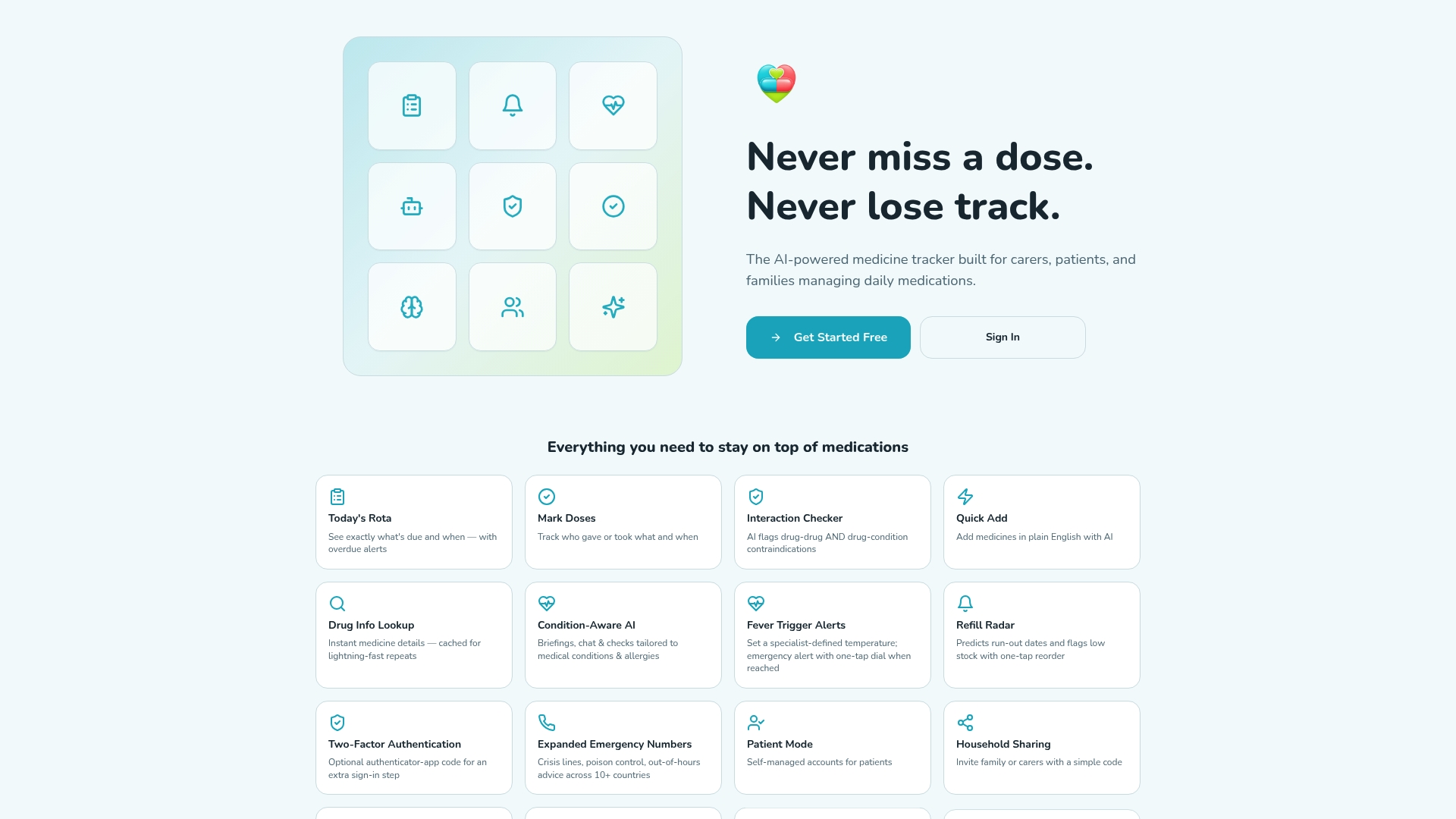
The platform delivers real-time alerts for due and overdue doses, drug interaction checks, refill predictions, and multi-patient management across multiple devices. Household sharing means a carer can monitor a family member's routine without being physically present. AI-powered insights flag patterns that might otherwise go unnoticed, such as a consistently missed evening dose. For families managing complex or chronic conditions, Thedailydosetracker offers a practical, GDPR-compliant starting point for building a reliable medication routine.
FAQ
What are the most effective examples of medication routine improvements?
The most effective improvements combine weekly pill organisers, once-daily dosing schedules, and digital reminder tools tailored to the patient's lifestyle. Pharmacist-led medication reviews add a clinical layer that identifies unnecessary medicines and simplifies regimens.
How do reminder apps improve medication adherence?
Reminder apps provide alerts, log missed doses, and maintain medication lists, making it easier to maintain consistent schedules. They work best when combined with physical aids rather than used as a standalone solution.
What role do carers play in medication routine improvements?
Carers provide reminders, shared routines, and social accountability that significantly improve adherence, particularly for elderly patients and those with cognitive decline. Involving a carer in a structured medication review produces better outcomes than patient self-management alone.
How can medication regimens be simplified to improve adherence?
Fixed-dose combinations, once-daily formulations, and deprescribing reduce pill burden and scheduling complexity. A pharmacist-led medication review is the most reliable way to identify which simplifications are clinically appropriate for an individual patient.
Are digital tools suitable for elderly patients managing medication routines?
Digital tools can work well for elderly patients when matched to their digital literacy and daily habits. Platforms with accessible interfaces, household sharing, and carer notification features, such as Thedailydosetracker, reduce the burden on the patient while keeping a carer informed in real time.