
Digital medication logs are defined as electronic systems that record, timestamp, and synchronise every dose taken, making them measurably safer than paper records or memory alone. Heart failure patients using electronic tracking had 23% fewer hospital readmissions than those relying on traditional methods. That single figure tells you everything about why digital medication logs safer management matters. Whether you are managing your own prescriptions or coordinating care for a family member, the advantages of electronic medication records go far beyond convenience. This article explains exactly how these tools reduce errors, improve communication, and give you confidence in every dose.
Why digital medication logs are safer than paper records
The core reason electronic medication records outperform paper is accuracy at the point of use. Paper logs go stale the moment a prescription changes. A digital log updates in real time, so the version you check at midnight reflects the same information your GP or pharmacist holds. Medication errors frequently start with stale lists, unclear instructions, and poor communication across clinics, pharmacies, and carers. Digital systems close that gap by design.
Electronic logs also function as a portable, searchable source of truth. In an emergency, a carer or paramedic can pull up a complete, current medication list within seconds rather than hunting through paper files or relying on memory. That speed matters enormously when someone is unconscious or confused. The record is always with the patient, not left on a kitchen counter.
Integration with electronic prescribing systems adds another layer of protection. Digital records lower prescribing and administration errors compared to paper systems by allowing cross-verification of doses before they are given. A nurse or carer can confirm that what they are about to administer matches what was prescribed, without making a phone call or waiting for a fax.
What safety features do digital medication logs include?
The safety features of digital medication tracking fall into four practical categories, each addressing a specific failure point in traditional methods.
- Real-time synchronisation. When a hospital discharge changes a prescription, a digital log reflects that change immediately. Digital logs act as a living document for constant updates, so home records stay synced with clinical records without manual rewriting.
- Automatic dose alerts. Reminders for due or overdue doses reduce missed doses and prevent accidental double-dosing. A daily medication reminder built into an app removes the reliance on memory entirely.
- Drug interaction checks. Advanced platforms flag potentially dangerous combinations before a dose is taken. This is particularly valuable when a patient sees multiple specialists who may not communicate with each other.
- Secure sharing across care teams. A carer, a district nurse, and a GP can all view the same record simultaneously. That shared visibility eliminates the version-control problem that paper creates.
- Timestamped dose history. Every entry carries a date and time, creating an auditable trail. If a symptom appears, you can cross-reference it against the medication log immediately.
Pro Tip: Set up household sharing on your digital log so that every carer in the home sees the same record. This single step prevents the most common cause of accidental double-dosing: two people each assuming the other has not yet given the dose.
Thedailydosetracker incorporates all five of these features, including drug interaction checks and multi-device synchronisation, making it particularly suited to families managing complex regimens.
Digital vs paper medication logs: how errors are reduced
The comparison between digital and paper logs is not close when it comes to error rates. Paper systems carry structural vulnerabilities that no amount of careful handwriting can fix.
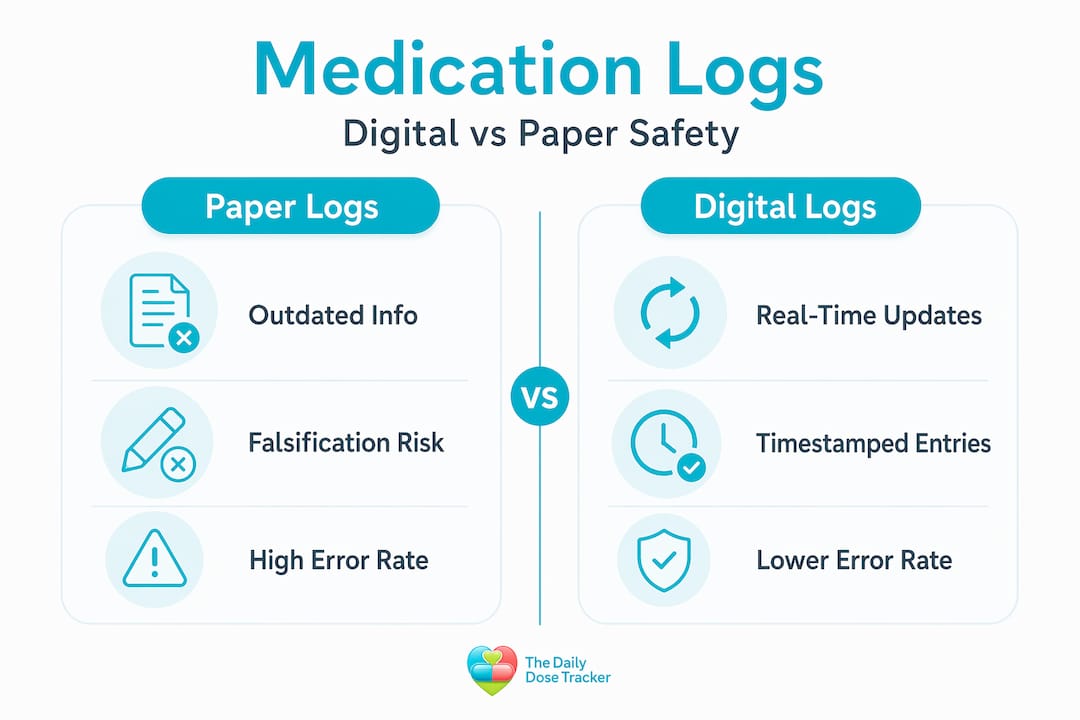
| Risk Factor | Paper Logs | Digital Logs |
|---|---|---|
| Outdated information | High. Lists go stale after any prescription change. | Low. Records update in real time after clinical changes. |
| Transcription errors | Common. Copying between documents introduces mistakes. | Minimal. Data flows directly from prescribing systems. |
| Misplaced records | Frequent. Paper can be lost, damaged, or left at home. | Rare. Cloud-based records are accessible from any device. |
| Double-dosing risk | High. No automatic check when a second carer gives a dose. | Low. Timestamped logs and alerts flag recent administration. |
| Emergency access | Slow. Requires locating physical documents. | Immediate. Searchable records available on any smartphone. |
Paper logs also carry a falsification risk that is rarely discussed. A carer under pressure may record a dose as given when it was not, simply to avoid a difficult conversation. Digital systems with timestamped entries and device-linked records make that kind of error far harder to conceal, which protects both the patient and the carer.
One limitation deserves honest acknowledgement. 92% of current digital trackers have a 12.3% false adherence rate, often overestimating medication intake because they cannot detect whether a tablet was actually swallowed. Logging a dose and taking a dose are not the same thing. Digital records improve accuracy dramatically, but they still depend on honest, consistent input from the user.
For guidance on using logs to support clinical decisions, the Thedailydosetracker blog covers medication logs for clinical decisions in practical detail.
How do digital logs help carers managing complex regimens?
Carers managing polypharmacy, which means five or more regular medications, face a coordination challenge that paper simply cannot handle reliably. The benefits of digital medication logs become most visible here.
- A single, current record. After a hospital stay or specialist appointment, a digital log updates to reflect new prescriptions immediately. There is no risk of a carer working from a list that was accurate three weeks ago but is now dangerously out of date.
- Reduced anxiety around complex schedules. Digital medication support acts as a structured guide, reducing anxiety for those managing complex regimens such as bipolar disorder or multiple chronic conditions. Knowing the record is current removes a significant cognitive burden.
- Multi-person coordination. When two or three family members share caring responsibilities, a shared digital log prevents conflicting actions. Each person can see who last gave a dose and when.
- Condition-specific alerts. Platforms like Thedailydosetracker offer condition-specific guidance and fever alerts, so a carer is not left guessing whether a symptom warrants a call to the GP.
- Refill predictions. Automated refill reminders prevent the situation where a critical medication runs out over a bank holiday weekend.
Pro Tip: After every GP or hospital appointment, update your digital log before you leave the building or the consultation room. Doing it immediately means you never rely on memory to transfer new instructions accurately.
For carers managing multiple family members, managing children and adult medications in a single app removes the need to switch between separate systems.
Are there limitations to digital medication logs?
A balanced view requires acknowledging where digital logs can fall short, and what you can do about each limitation.
- Technology access. Not everyone owns a smartphone or feels confident using one. Elderly users in particular may find app interfaces unfamiliar. Medication management apps need stable performance and low power consumption to sustain usage, especially among older adults. Choosing an app with large text, simple navigation, and offline capability addresses most of these concerns.
- Technical reliability. Smart blister packs combined with mobile apps face occasional technical issues, with around 10% of users reporting problems. No digital system is entirely immune to downtime. Keeping a brief paper backup for critical medications is a sensible precaution.
- User engagement. A digital log is only as accurate as the person updating it. If entries are skipped or delayed, the record loses its value. Building the habit of logging immediately after each dose is the single most effective way to maintain accuracy.
- Data privacy. Any system holding health data must comply with UK GDPR. Before choosing an app, confirm it stores data on UK or EU servers and has a clear privacy policy. Thedailydosetracker complies with UK GDPR standards, which is a baseline requirement for any platform you trust with sensitive health information.
- Over-reliance. Digital logs support clinical decisions but do not replace them. Review your log with your GP or pharmacist at least every six months, particularly if your regimen has changed.
Key takeaways
Digital medication logs are safer than paper records because they combine real-time updates, timestamped dose history, and automatic alerts to close the gaps where errors most commonly occur.
| Point | Details |
|---|---|
| Real-time accuracy | Digital logs update immediately after prescription changes, removing the risk of stale records. |
| Error reduction | Electronic cross-verification lowers prescribing and administration errors compared to paper systems. |
| Carer coordination | Shared digital records prevent double-dosing when multiple carers manage the same patient. |
| Honest limitations | A 12.3% false adherence rate in some trackers means logs must be updated honestly and consistently. |
| Privacy matters | Choose only apps that comply with UK GDPR and store data securely before trusting them with health records. |
What i have learnt from watching people use digital logs every day
The most common mistake I see is treating a digital log as a set-and-forget system. People download an app, enter their medications once, and then assume the hard work is done. It is not. The log is only as reliable as the habit behind it.
What genuinely impresses me is how quickly anxiety drops for carers once they have a shared, current record. The fear of "did I already give that tablet?" is one of the most exhausting parts of caring for someone on a complex regimen. A timestamped log removes that fear almost entirely. That emotional benefit rarely appears in clinical studies, but it is real and it matters.
I am also cautious about the false adherence problem. A digital log that shows 100% compliance is not proof that every dose was taken. It is proof that every dose was recorded. Those are different things. The most effective users I have seen treat their log as a conversation starter with their pharmacist or GP, not as a final verdict on their own adherence.
The technology is genuinely useful. It is not infallible. Use it as a living document for medication management that you review regularly with a professional, and it will serve you well.
— Prasant
Take control of medication safety with Thedailydosetracker
Managing medications safely is easier when you have the right tools behind you. Thedailydosetracker brings together real-time dose logging, drug interaction checks, automatic alerts, and secure household sharing in one place, designed specifically for carers and individuals managing daily medication routines.
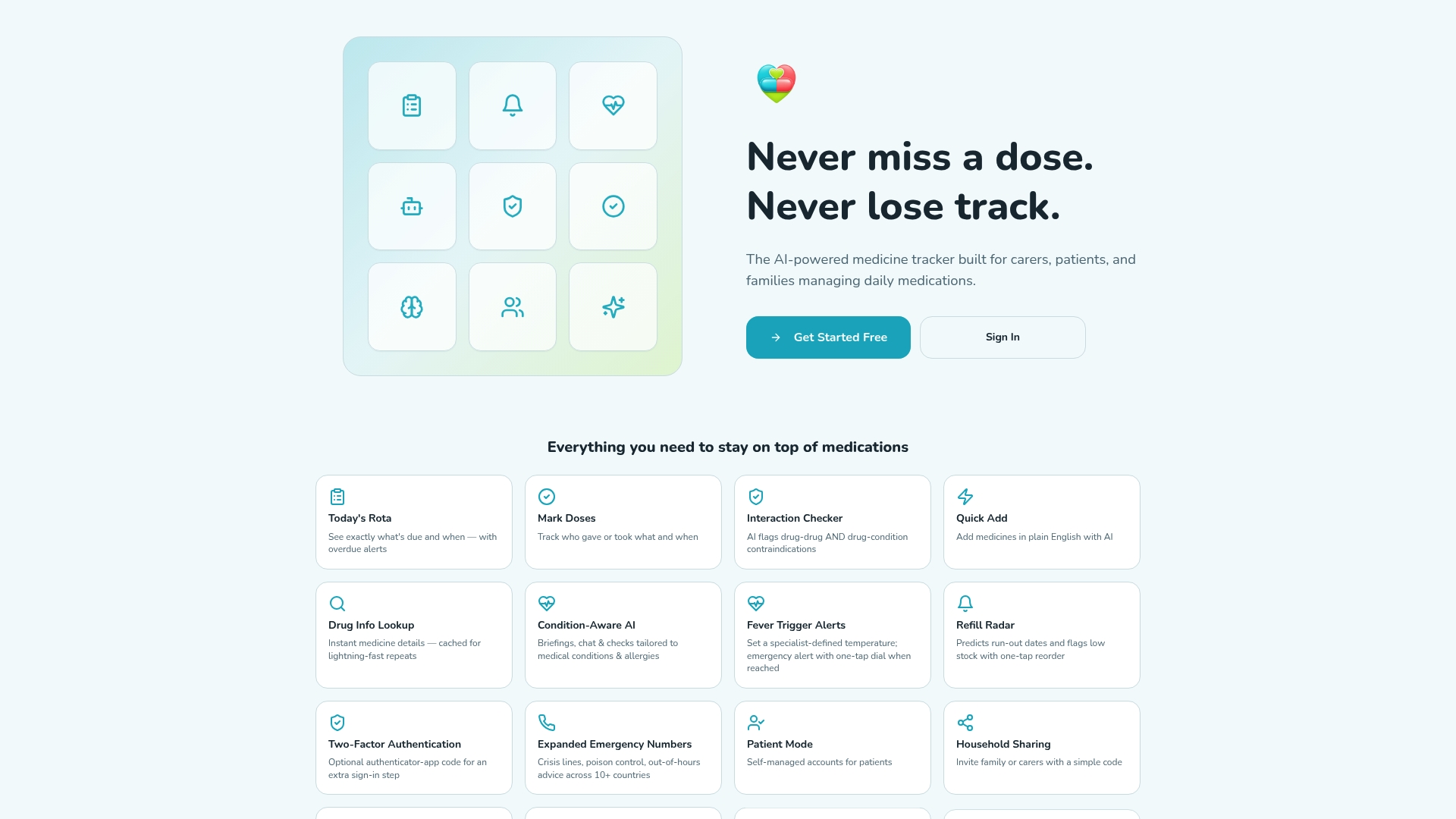
The platform complies with UK GDPR, works across multiple devices, and supports multi-patient management for families caring for elderly or complex patients. Whether you are managing complex medication schedules or simply want a more reliable way to track your own prescriptions, Thedailydosetracker is built for exactly that. Visit the free medicine app for carers to get started today.
FAQ
What makes digital medication logs safer than paper?
Digital logs update in real time, timestamp every entry, and alert users to missed or duplicate doses. These features remove the three most common causes of paper-based errors: stale records, transcription mistakes, and poor communication between carers.
Can digital medication logs reduce hospital readmissions?
Yes. Heart failure patients using electronic tracking systems had 23% fewer readmissions than those using traditional methods. Consistent digital tracking improves adherence, which directly reduces preventable hospital stays.
Are digital medication logs suitable for elderly users?
They can be, provided the app is designed with accessibility in mind. Look for large text options, simple navigation, offline capability, and low power consumption. Thedailydosetracker includes dark mode and font adjustment options to support older users.
How often should i update my digital medication log?
Update it immediately after every dose and after every GP, hospital, or specialist appointment. Treating the log as a living document that reflects current prescriptions is the only way to maintain its safety value.
Do digital medication logs protect my health data?
Any reputable medication app should comply with UK GDPR and store data on secure, UK or EU-based servers. Always check the privacy policy before entering health information. Thedailydosetracker is built to UK GDPR standards as a core requirement, not an optional feature.