

A daily medication reminder is any system designed to organise, store, and prompt medication intake on schedule, ranging from a paper calendar on the fridge to an AI-powered app that alerts a carer in real time. Despite clear clinical recommendations, only 28.5% of chronic care patients used formal reminder methods. That gap between recommendation and practice is precisely why understanding your options matters. Whether you are managing your own prescriptions or coordinating care for a family member, the right reminder system is the difference between a treatment plan that works and one that quietly fails.
What is a daily medication reminder and why does it matter?
A daily medication reminder, known in clinical settings as a medication adherence support tool, is any device, app, or method that signals when a dose is due and records whether it was taken. The term covers a wide spectrum. At the simplest end sits a handwritten pill chart or a basic phone alarm. At the advanced end sit platforms like Thedailydosetracker, which combine automated alerts, drug interaction checks, and caregiver monitoring across multiple devices.
The importance of medication reminders extends beyond convenience. Missed doses are one of the leading causes of treatment failure in chronic conditions including hypertension, diabetes, and epilepsy. When a patient forgets a dose, the clinical consequence is not just one missed tablet. It can mean an unstable blood pressure reading, a preventable hospital admission, or a prescriber incorrectly concluding that a drug is ineffective.
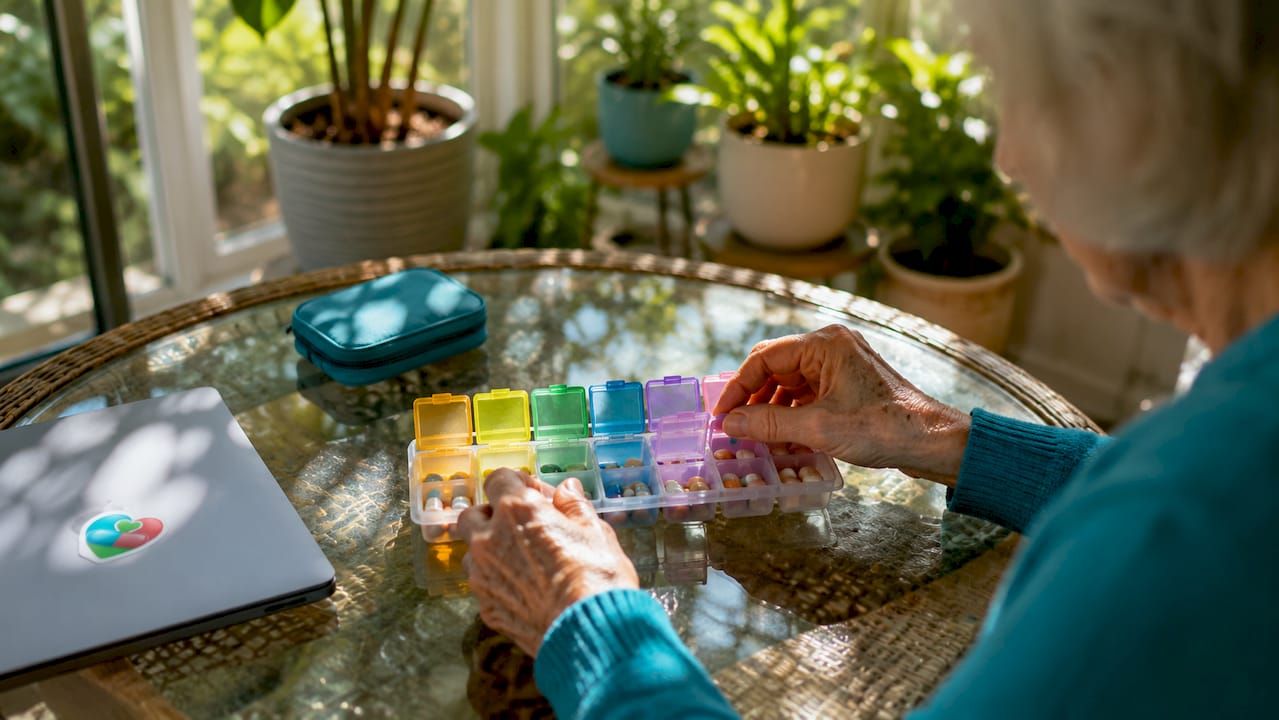
For carers supporting elderly relatives or managing complex household medication routines, the stakes are even higher. A reliable daily pill reminder removes the cognitive burden of tracking multiple medications, multiple times a day, across multiple people.
What types of daily medication reminders are available?
The range of reminder tools available in 2026 is broader than most people realise. Choosing the right one depends on the complexity of the regimen, the user's digital confidence, and the level of carer involvement required.
Low-tech options
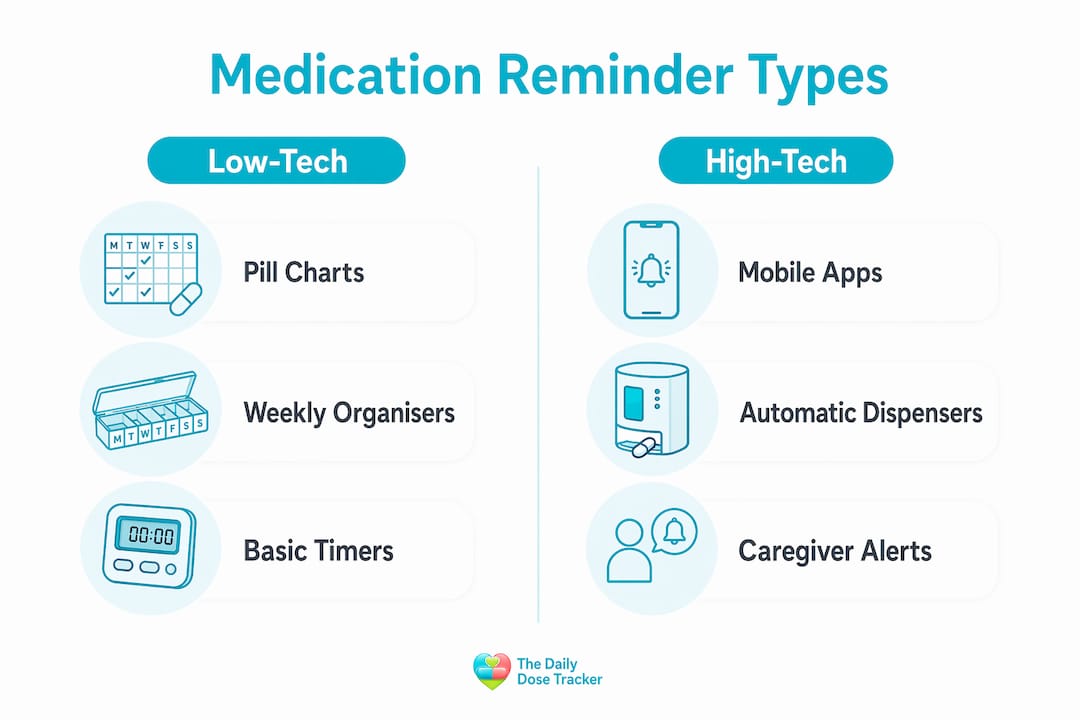
Paper pill charts, weekly pill organisers, and basic kitchen timers remain genuinely useful for simple, single-medication routines. A pill organiser with a built-in alarm costs very little and requires no smartphone. For older adults who are not comfortable with apps, these tools are often the most reliable choice.
Digital apps
Digital medication reminders typically offer dose logging, interaction checking, and caregiver support, enabling real-time adherence monitoring across platforms. Apps such as Medisafe, Doz, and MedMinder each take a different approach. Doz, for example, parses prescriptions intelligently and works offline with no account required, making it a strong choice for privacy-conscious users. Medisafe adds a social layer, allowing family members to receive alerts when a dose is missed.
Automatic pill dispensers
Automatic pill dispensers represent the most hands-off option. They sort doses in advance, lock compartments until the correct time, and sound an alarm when a dose is due. For patients with cognitive impairment or those managing more than five daily medications, dispensers significantly reduce the risk of double-dosing or skipping.
| Reminder type | Best suited for | Key limitation |
|---|---|---|
| Paper chart or pill organiser | Simple regimens, low digital confidence | No automated alert |
| Smartphone app | Most adults, complex schedules | Requires consistent phone use |
| Automatic pill dispenser | Cognitive impairment, high-risk patients | Higher upfront cost |
| Caregiver monitoring app | Families, professional care teams | Requires shared access setup |
Pro Tip: If you are setting up reminders for someone else, choose a medication schedule app that supports household sharing so you can monitor adherence without needing physical access to their device.
Privacy is a genuine consideration when selecting a digital tool. Offline-first apps with iCloud sync protect user data better than those relying on third-party cloud servers. If the person you are supporting is cautious about data sharing, prioritise apps that store information locally.
How effective are daily medication reminders in improving adherence?
The evidence on reminder effectiveness is more nuanced than most product pages suggest. Reminders unquestionably help patients remember doses. The critical caveat is that reminders alone show no statistically significant association with sustained adherence improvement when used in isolation.
"Medication reminders must form part of a holistic care plan that addresses behavioural and socioeconomic challenges. Technology is a support tool, not a substitute for patient-centred care." — BMC Health Services Research, 2026
This finding does not diminish the value of reminders. It reframes them. A daily pill reminder works best as one component of a broader approach that includes clear prescriber communication, pharmacist review, and genuine patient engagement. When those elements are present, automated pill notifications meaningfully reduce missed doses.
The most effective reminder systems are adaptive. Medisafe's Just-In-Time Intervention technology adjusts nudges based on how a user has responded to previous alerts, rather than firing the same alarm at the same time regardless of context. This personalised approach produces better engagement than static alarms because it fits around real behaviour rather than demanding that behaviour change to fit the app.
Pro Tip: If you notice that reminders are being consistently dismissed or snoozed at a particular time, treat that as a signal to review the schedule with a pharmacist rather than simply moving the alarm.
The pharmacist's role here is underappreciated. Simplifying dosing frequency and aligning it with existing daily habits, such as meals or bedtime, improves adherence more reliably than adding more alerts. A reminder set for a time that conflicts with work or sleep will always be ignored.
What features should you look for in a medication schedule app?
Selecting a medication schedule app is not simply a matter of downloading the most popular option. The features that matter depend entirely on who is using it and what the regimen looks like.
Here are the core features worth evaluating before committing to any app:
- Intelligent prescription parsing. The best apps allow you to photograph or type a prescription and automatically populate the schedule. This reduces setup errors and saves significant time when managing multiple medications.
- Flexible scheduling options. Look for support for daily, weekly, PRN (as-needed), and meal-based dosing. A single app should handle a morning blood pressure tablet, a weekly bisphosphonate, and an as-needed antihistamine without requiring workarounds.
- Dose tracking and adherence metrics. A log of taken, missed, and snoozed doses gives you and a prescriber a factual record of how a regimen is actually being followed. This is particularly valuable at review appointments.
- Caregiver sharing and real-time monitoring. For families and professional carers, the ability to receive alerts when a dose is overdue is one of the most practically useful features available. Thedailydosetracker supports multi-patient management and household sharing across devices.
- Injection site rotation maps. For patients managing insulin, biologics, or IVF treatments, visual site rotation tracking prevents tissue damage caused by repeated injections in the same location. This is a specialist feature that generic reminder apps rarely include.
- Privacy and offline capability. Check whether the app stores data locally or requires cloud syncing. For sensitive health data, local data storage with optional encrypted backup is the safer architecture.
Beyond features, consider the interface. An app that a patient finds confusing will be abandoned within a week regardless of how many functions it offers. Simplicity and reliability outperform feature density every time.
How to use daily medication reminders effectively in real life
Knowing how to remember medications is only partly about the tool. The other part is how you integrate it into an existing routine.
- Anchor reminders to existing habits. Set alerts to coincide with something that already happens reliably, such as making morning tea, brushing teeth, or sitting down for a meal. Habit stacking is consistently more effective than arbitrary alarm times.
- Use follow-up nudges, not just single alerts. Most quality apps offer a second notification if the first is not acknowledged. Enable this feature. A single missed alert is easy to forget; a follow-up five minutes later is much harder to ignore.
- Review the regimen regularly. If doses are being missed at a particular time of day, consult a pharmacist about whether the schedule can be simplified. Twice-daily medications can sometimes be consolidated to once-daily formulations without clinical compromise.
- Manage complex regimens with specialist tools. Patients on injectable medications benefit from apps that include rotation maps and injection logs rather than adapting a basic pill reminder to a purpose it was not designed for.
- Distinguish memory problems from behaviour problems. If a patient consistently dismisses reminders without taking the dose, the issue is not forgetting. It may be side effects, cost, or a belief that the medication is unnecessary. These require a clinical conversation, not a louder alarm.
Pro Tip: For carers managing medications on behalf of someone else, set up a telehealth consultation to review the full regimen periodically. A prescriber can often simplify a complex schedule in ways that make reminders far easier to manage.
Automated pill notifications work best when the person receiving them understands why each medication matters. Brief, plain-language notes attached to each reminder, explaining what the drug does, increase the likelihood that the dose will actually be taken rather than dismissed.
Key takeaways
Effective medication adherence requires reminders that fit real behaviour, not just technology that sounds an alarm.
| Point | Details |
|---|---|
| Definition of a reminder | Any system that organises and prompts medication intake, from paper charts to AI-powered apps. |
| Reminders alone are insufficient | Clinical research confirms reminders must sit within a broader, patient-centred care plan to improve adherence reliably. |
| App features that matter most | Prioritise flexible scheduling, dose logging, caregiver sharing, and local data storage over feature quantity. |
| Adaptive reminders outperform static alarms | Context-aware systems that adjust to user behaviour, such as Medisafe's Just-In-Time Intervention, produce better engagement. |
| Pharmacist review is underused | Simplifying a dosing schedule in consultation with a pharmacist often improves adherence more than adding more alerts. |
Why I think we are asking the wrong question about medication reminders
Most conversations about medication reminders focus on which app has the most features. After spending considerable time working with families managing complex medication routines, I have come to believe that is the wrong starting point entirely.
The patients who struggle most with adherence are rarely struggling because they forgot. They are struggling because the regimen feels unmanageable, the side effects are unacknowledged, or nobody has explained why missing a dose matters. A sophisticated app handed to someone in that situation does not solve the problem. It adds another thing to manage.
What I find genuinely useful is the shift towards caregiver collaboration that platforms like Thedailydosetracker represent. When a carer can see in real time that a dose has been missed and follow up with a phone call, the technology becomes a communication tool rather than just an alarm. That human layer is what turns a reminder into actual adherence support.
I am also cautious about the privacy trade-offs that come with cloud-connected reminder systems. Medication data is sensitive. The fact that offline-first apps exist and work well means there is no reason to accept unnecessary data exposure in exchange for convenience features you may not need.
The future of medication reminders is not louder alerts or more notifications. It is systems that learn individual patterns, flag genuine risk, and connect carers and clinicians with the information they need to intervene early. We are moving in that direction, but the technology is only as good as the care plan surrounding it.
— Prasant
Managing medications with Thedailydosetracker
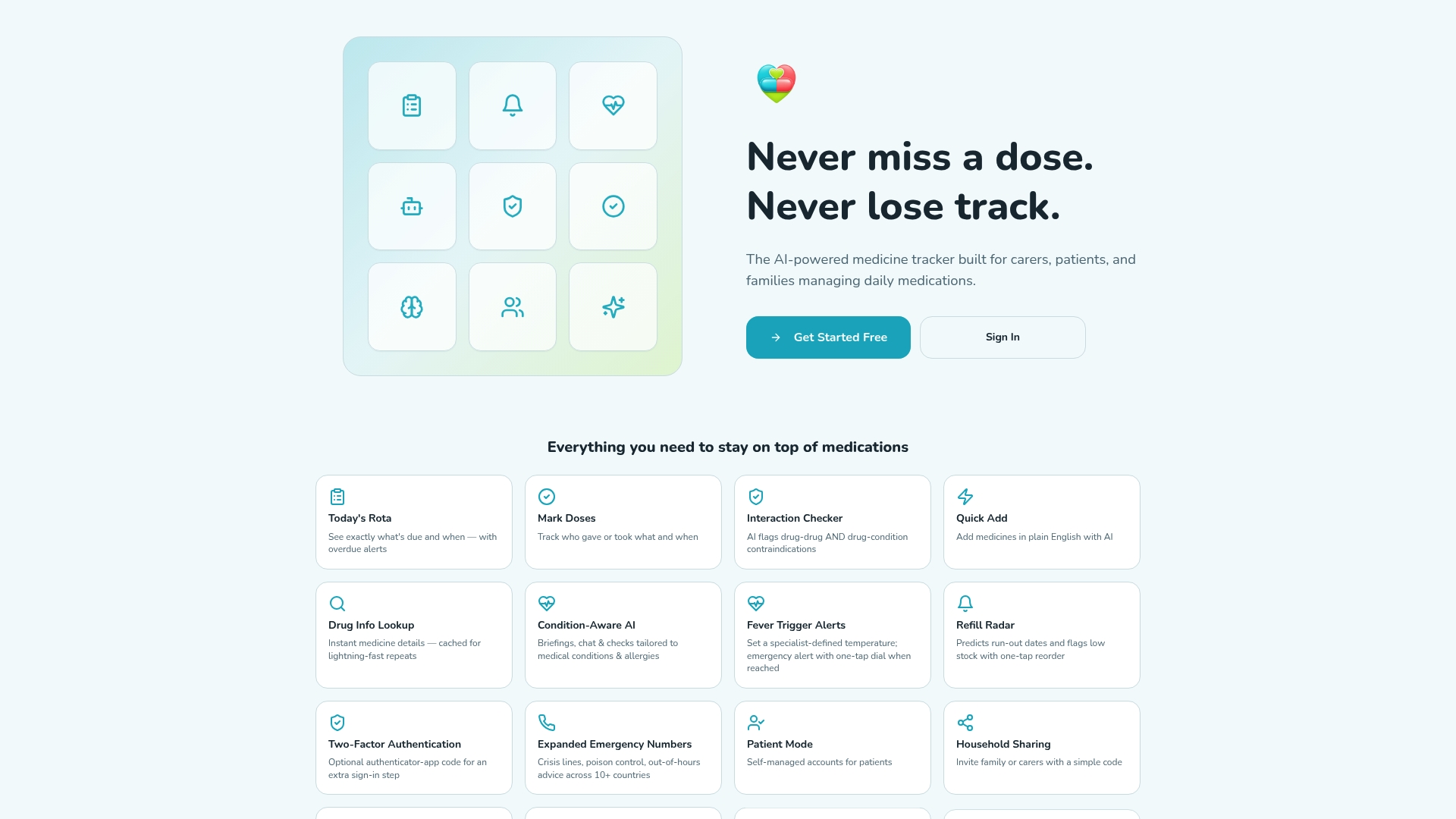
Thedailydosetracker is built specifically for carers and families who need more than a basic alarm. The platform supports multi-patient management, real-time dose alerts, drug interaction checks, and caregiver sharing across devices, all within a UK GDPR-compliant system that keeps your data secure. Whether you are coordinating medications for an elderly parent or managing your own complex regimen, Thedailydosetracker gives you the tools to stay on top of every dose without the administrative burden. Explore the full feature set and important resources to see how it fits your household's needs.
FAQ
What is a daily medication reminder?
A daily medication reminder is any system, from a pill organiser to a smartphone app, that prompts a patient to take their medication at the correct time and records whether each dose was taken.
Are medication reminder apps effective?
Apps improve dose recall, but reminders alone do not guarantee adherence without addressing behavioural and socioeconomic factors. They work best as part of a broader care plan.
What should I look for in a medication schedule app?
Prioritise flexible scheduling, dose logging, caregiver sharing, and clear privacy policies. Apps that store data locally, such as those using offline-first architecture, offer stronger data protection.
How can carers use automated pill notifications?
Carers can enable overdue dose alerts on platforms like Thedailydosetracker to receive real-time notifications when a family member misses a dose, allowing timely follow-up without needing to be physically present.
When should I consult a pharmacist about my reminder system?
If doses are being missed consistently at a particular time, a pharmacist can review whether the schedule can be simplified. Aligning dosing frequency with daily habits often improves adherence more than adjusting reminder settings.