

Medication adherence in elderly patients is defined as the extent to which an older adult's medication-taking behaviour matches the recommendations agreed with their healthcare provider. Nonadherence causes approximately 125,000 deaths and over $100 billion in annual healthcare costs. That scale makes elderly medication management one of the most consequential challenges in modern care. The World Health Organization recognises adherence as a critical determinant of treatment success, and for family carers supporting older relatives, understanding this issue is the first step towards preventing serious harm.
What is medication adherence in elderly patients?
Medication adherence is the degree to which a patient takes their medicines correctly, at the right time, in the right dose, and for the right duration. For elderly patients, this definition carries extra weight. Up to half of older adults do not take their medications as prescribed. That figure is not a reflection of age alone. Cognitive status, health literacy, and regimen complexity are stronger predictors of adherence than age itself.
The clinical term used by researchers and pharmacists is "medication adherence," though you will also hear "compliance" and "concordance" in healthcare settings. Compliance implies a passive patient following orders. Concordance reflects a shared agreement between patient and clinician. Adherence sits between the two. It is the most widely used term in current NHS and international guidance, and it is the one this article uses throughout.
Poor adherence in elderly patients leads directly to worsened chronic disease control, avoidable hospital admissions, and, in serious cases, premature death. The importance of medication adherence is not theoretical. When a patient with heart failure skips a diuretic, fluid builds up. When someone with type 2 diabetes misses insulin doses, blood glucose rises dangerously. The consequences are clinical and immediate.
What are the three phases of medication adherence?
Medication adherence divides into three phases: initiation, implementation, and discontinuation. Understanding each phase helps carers and clinicians identify exactly where a patient is struggling and apply the right response.
-
Initiation is when a patient fills their first prescription and takes the first dose. Failure at this stage is more common than most people expect. A patient may leave a GP appointment with a prescription but never collect it from the pharmacy, often due to cost concerns, anxiety about side effects, or simply forgetting.
-
Implementation is the ongoing phase. It covers whether the patient takes each dose correctly over the full course of treatment. This is where forgetfulness, complex schedules, and physical difficulties cause the most problems. A patient managing six different medicines across three daily time slots faces a genuinely difficult task.
-
Discontinuation is when a patient stops taking a medication before the prescribed end date. This can be intentional, such as stopping a statin because of muscle aches, or unintentional, such as running out of tablets and not reordering in time.
Treating adherence as a single behaviour misses these distinctions entirely. A patient who initiates well but discontinues early needs a different intervention from one who never starts at all. Identifying the phase of failure is the starting point for any effective support plan.
Pro Tip: Ask a specific question at each GP or pharmacy visit: "Did you take your last dose?" and "Have you run out at any point?" These two questions can reveal initiation and discontinuation failures that a general "are you taking your medicines?" question will miss.
What are the main barriers to medication adherence for elderly patients?
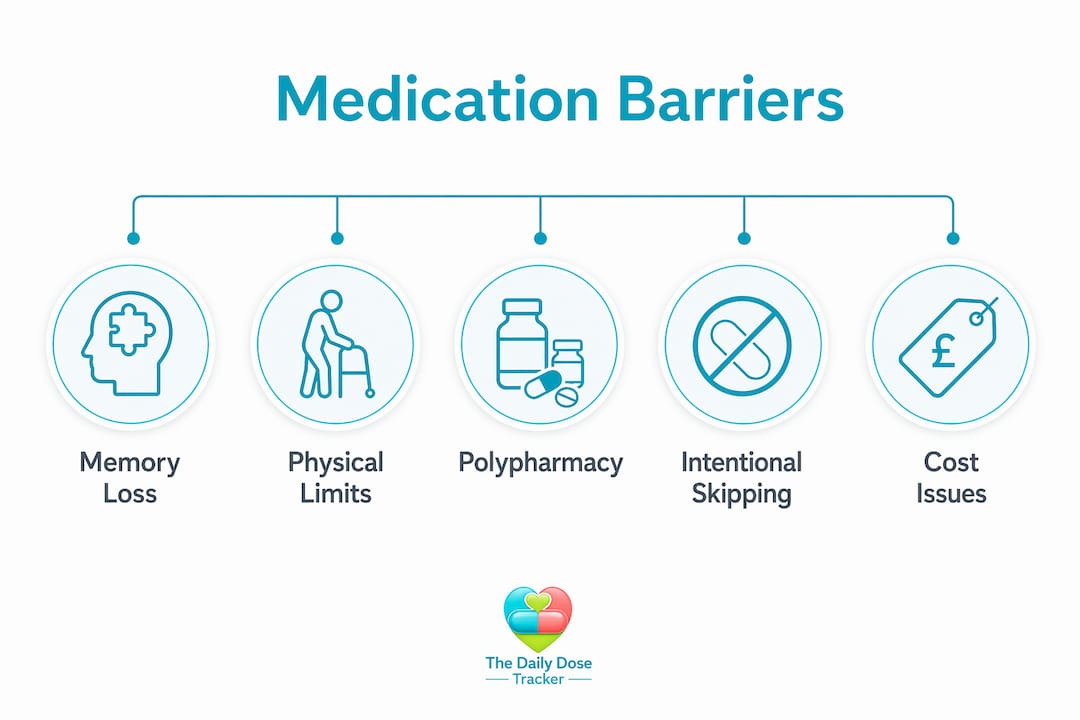
The challenges in medication adherence for older adults are multifactorial. No single barrier explains nonadherence. Carers who understand the full range of obstacles are far better placed to help.
Cognitive and literacy barriers
Memory loss is the most cited reason for missed doses. Patients with early dementia or mild cognitive impairment may genuinely not recall whether they took a tablet. Low health literacy compounds this. A patient who cannot read a medicine label clearly, or who does not understand what a medication is for, is far less likely to take it consistently.
Physical limitations
Arthritis, poor grip strength, and reduced dexterity make opening child-resistant caps genuinely difficult. Poor eyesight makes reading small-print labels unreliable. Hearing loss means verbal instructions from a pharmacist or GP may be missed or misunderstood. Clinicians can accommodate these limitations by using large-type labels, easy-open packaging, and written summaries of verbal instructions.
Polypharmacy and regimen complexity
Managing prescriptions for multiple health conditions is one of the most significant practical barriers. A patient taking eight or more medicines daily faces a complex schedule that is easy to get wrong. Dosing at different times, with different food requirements, and in different forms (tablets, patches, liquids) creates genuine confusion. The complexity of polypharmacy is a structural problem, not a personal failing.

Intentional nonadherence
Nonadherence is not always accidental. Patients may deliberately skip doses because they fear side effects, feel the medicine is not working, or deny that their condition is serious. These are psychological barriers, and they require a conversation, not a reminder alarm. A carer who assumes all missed doses are due to forgetfulness will miss this group entirely.
Socioeconomic factors
Cost is a real barrier for many older adults on fixed incomes. Patients may ration doses to make a prescription last longer. Transport difficulties can prevent timely pharmacy visits. Social isolation reduces the chance that anyone notices a problem early.
Pro Tip: Keep a written list of every medicine, including the dose, timing, and reason for taking it. AARP's caregiver guidance confirms that updated medication lists significantly reduce errors and improve adherence when shared with all members of the care team.
How to improve medication adherence in older adults
Effective strategies for elderly medication management combine organisational systems, professional support, and, where appropriate, technology. The approach must match the reason for nonadherence.
Matching the strategy to the type of nonadherence
| Type of nonadherence | Likely cause | Recommended strategy |
|---|---|---|
| Unintentional | Forgetfulness, complex schedule | Pill organisers, reminder alarms, blister packs |
| Unintentional | Physical difficulty | Easy-open caps, large-print labels, dose simplification |
| Intentional | Side effect concerns | Open conversation with GP or pharmacist |
| Intentional | Denial of illness | Patient education, motivational support |
| Structural | Cost or access | Prescription prepayment certificates, pharmacy delivery |
Organisational tools that work
Pill organisers, blister packs, and synchronised refill timings are proven practical tools. Pharmacists can provide blister packs that organise medicines by day and time, reducing confusion significantly. Synchronised refills mean all prescriptions run out at the same time, cutting the number of pharmacy trips and reducing the chance of running out of one medicine early.
Carers benefit from building a consistent daily routine around medication times. Linking doses to fixed daily events, such as breakfast or the evening news, creates a reliable habit. An elderly medication management checklist can help carers track what has been given and flag anything missed.
The pharmacist's role
Pharmacists are the most accessible medication experts in the healthcare system. They can review a full medicines list, identify interactions, suggest dose simplification, and provide senior-friendly medication training. Many community pharmacies offer Medicines Use Reviews specifically for patients on multiple long-term medicines. This service is free on the NHS and underused.
Technology as a support tool
Medication reminder apps and digital trackers add a layer of support that pill boxes alone cannot provide. They send alerts for due doses, log what has been taken, and flag overdue medicines in real time. Thedailydosetracker, for example, offers AI-powered reminders, drug interaction checks, and refill predictions across multiple devices. Technology works best as a complement to human support, not a replacement for it. A carer who relies solely on an app without understanding the patient's barriers will still miss intentional nonadherence.
Pro Tip: When setting up a medication reminder system, involve the patient in choosing the alert times. Patients who participate in medication schedule decisions are more likely to follow through consistently.
What are the risks of poor medication adherence in elderly patients?
Poor adherence carries serious clinical and economic consequences. The risks are not abstract. They show up in hospital wards, GP waiting rooms, and care home incident reports every day.
- Worsened chronic disease control. Missed doses of antihypertensives raise blood pressure. Skipped anticoagulants increase stroke risk. Partial adherence to antibiotics promotes resistance.
- Avoidable hospitalisations. A significant proportion of unplanned hospital admissions in older adults are directly linked to medication problems, including missed doses and incorrect administration.
- Premature mortality. The scale of this risk is substantial. Nonadherence contributes to approximately 125,000 deaths annually in the United States alone, with comparable patterns seen across the UK and Europe.
- Carer stress. When a relative is admitted to hospital due to a preventable medication failure, the psychological impact on family carers is significant. Guilt, anxiety, and exhaustion follow.
- Partial adherence is still harmful. Taking a medicine irregularly is not a safe middle ground. For some drugs, inconsistent dosing reduces effectiveness entirely. Bisphosphonates, for instance, must be taken correctly on an empty stomach with a full glass of water to be absorbed at all. Incorrect technique renders the dose useless.
The economic burden is equally significant. Hospital readmissions, emergency care, and long-term complications from poorly managed chronic conditions place enormous pressure on NHS resources. Preventing nonadherence is far cheaper than treating its consequences.
How to monitor medication adherence over time
Monitoring is not a one-off task. It is an ongoing process that requires consistent attention from carers, pharmacists, and clinicians.
-
Track prescription refill timing. Monitoring refill patterns is one of the most reliable early warning methods. If a 28-day supply is collected after 40 days, doses have been missed. Pharmacists and health systems use this data to identify problems before they escalate.
-
Conduct medication reconciliation at care transitions. Every time an elderly patient moves between settings, such as from hospital to home or from home to a care facility, their medicines list must be reviewed. Medication reconciliation during transitions reduces the risk of doses being duplicated, omitted, or continued when they should have stopped.
-
Use reminder calls and follow-up appointments. A brief phone call from a carer or pharmacist after a new prescription is started can catch initiation failures early. Scheduled follow-up consultations give patients the opportunity to raise concerns about side effects before they decide to stop independently.
-
Involve the patient in decisions. Patients who understand why they are taking a medicine, and who have agreed to the regimen rather than simply been told to follow it, show consistently better adherence. Shared decision-making is not just good ethics. It is good medicine.
-
Simplify regimens where possible. Dose simplification, such as switching from three-times-daily to once-daily formulations, reduces the burden on patients and carers alike. This is a conversation worth having with the prescribing GP at every annual review.
Key takeaways
Medication adherence in elderly patients requires a structured, personalised approach that addresses both the type and cause of nonadherence at every stage of the medication journey.
| Point | Details |
|---|---|
| Adherence has three phases | Initiation, implementation, and discontinuation each require different interventions. |
| Barriers are multifactorial | Cognitive, physical, psychological, and financial factors all contribute to missed doses. |
| Match strategy to cause | Forgetfulness needs reminders; intentional nonadherence needs conversation and education. |
| Pharmacists are underused | Medicines Use Reviews and blister packs are free or low-cost tools that carers should request. |
| Monitoring must be ongoing | Refill tracking and medication reconciliation catch failures before they become crises. |
Why I think we underestimate the complexity of adherence
Most conversations about medication adherence in elderly care focus on forgetfulness. Carers buy pill boxes. GPs print reminder sheets. Pharmacists add stickers to bottles. These are useful tools, but they address only one type of nonadherence.
What I have seen repeatedly is that intentional nonadherence goes undetected for months. A patient who has decided their statin is causing fatigue will not tell their GP. They will simply stop taking it. No reminder alarm addresses that. Only an honest conversation does.
The other thing I would push back on is the assumption that technology solves the problem. Apps and trackers are genuinely helpful for unintentional nonadherence. They reduce missed doses caused by forgetfulness and complex schedules. But they cannot replace the relationship between a carer and a patient. The most effective adherence support I have seen combines a reliable digital system with a carer who asks the right questions at the right time.
Age alone is a poor predictor of adherence problems. A 78-year-old with high health literacy and a simple two-medicine regimen will likely manage well. A 65-year-old with early cognitive decline and eight daily medicines will struggle. Carers who personalise their approach based on the individual, rather than the age group, get better results. That is the insight that most generic advice misses.
— Prasant
Thedailydosetracker: medication management made practical
Managing medicines for an elderly relative involves more moving parts than most people anticipate. Thedailydosetracker is a free digital platform built specifically for carers and families who need a reliable system to stay on top of complex medication routines.
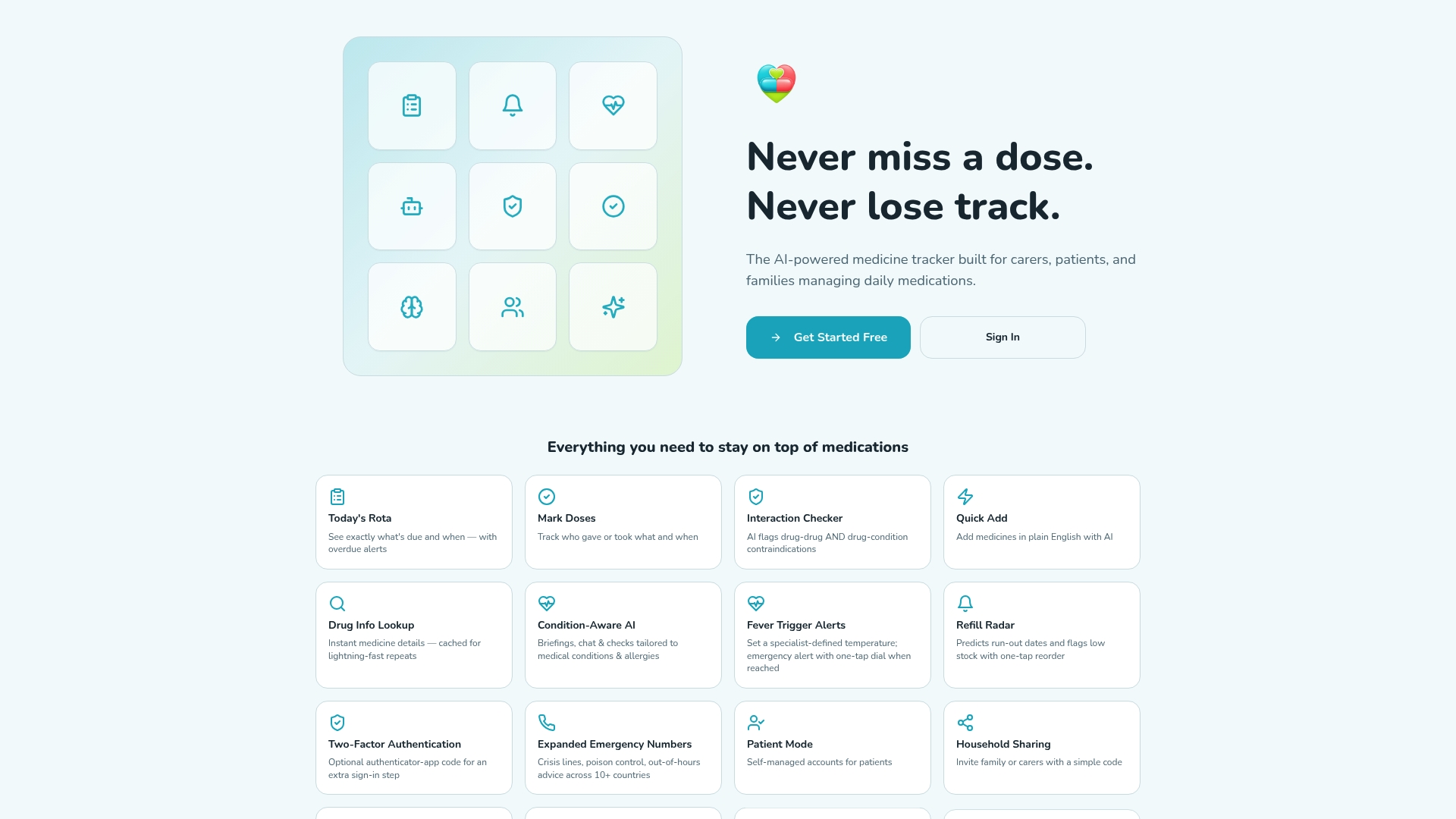
The platform provides real-time dose reminders, medication logs, refill predictions, and drug interaction checks, all accessible across multiple devices. Carers managing multiple patients can track each person's schedule from a single dashboard. For families who want to reduce medication errors at home and catch missed doses before they cause harm, Thedailydosetracker offers a structured, evidence-informed starting point. Access the free medicine tracker and set up your first medication schedule today.
FAQ
What is medication adherence in elderly patients?
Medication adherence in elderly patients is the degree to which an older adult takes their medicines as agreed with their healthcare provider, including correct dose, timing, and duration. Nonadherence is widespread, with up to half of older adults not following their prescribed regimen consistently.
Why does medication adherence matter for older adults?
Poor adherence leads directly to worsened chronic disease control, avoidable hospital admissions, and, in serious cases, premature death. The annual cost of nonadherence exceeds $100 billion and contributes to approximately 125,000 deaths each year.
What are the most common barriers to adherence in elderly patients?
The most common barriers include forgetfulness, polypharmacy, physical limitations such as poor dexterity, low health literacy, and intentional nonadherence driven by concerns about side effects. Attitudes and beliefs are as significant as practical difficulties in determining whether a patient follows their prescription.
How can carers improve medication adherence at home?
Carers can improve adherence by maintaining an updated medicines list, using pill organisers or blister packs, setting reminder alarms, and involving the patient in scheduling decisions. Pharmacist involvement with senior-friendly training and synchronised refills adds a further layer of reliable support.
What is the difference between intentional and unintentional nonadherence?
Unintentional nonadherence is caused by forgetfulness, confusion, or physical difficulty. Intentional nonadherence occurs when a patient consciously decides not to take a medicine, often due to side effect concerns or disbelief in the diagnosis. Each type requires a different response from carers and clinicians.