
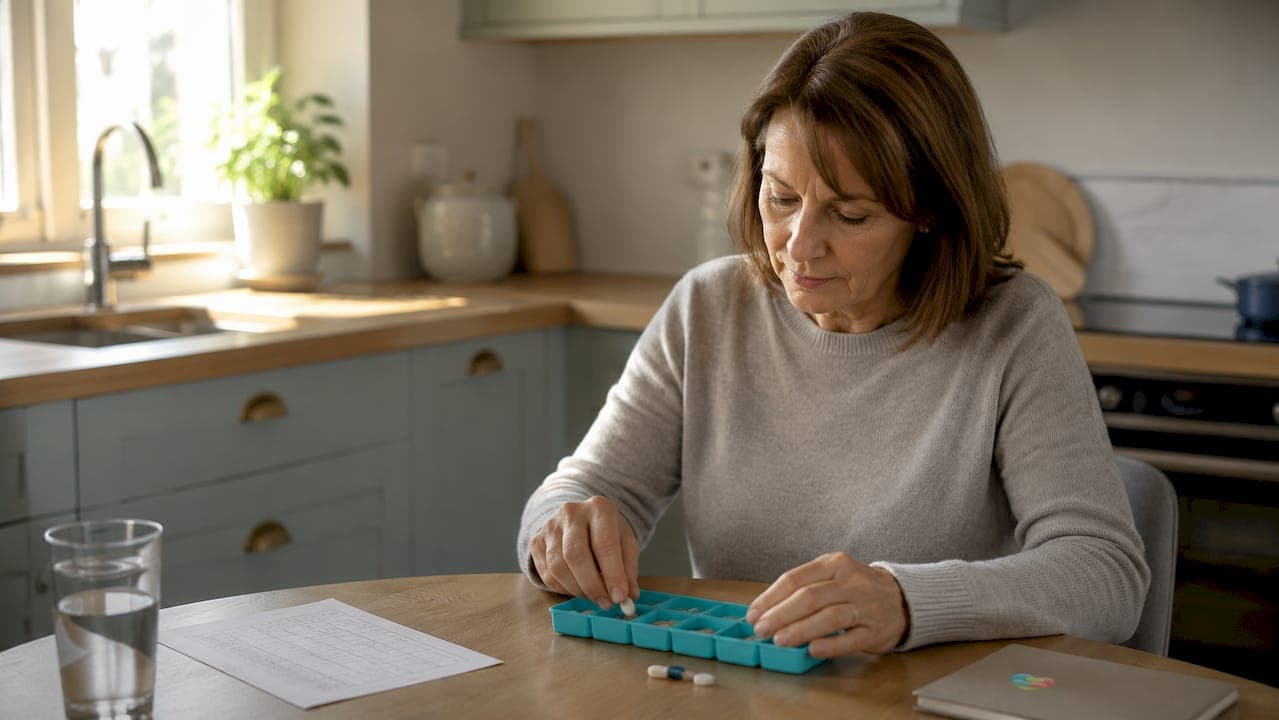
Supporting patient medication self-administration care is the structured process by which patients, carers, and healthcare professionals work together to ensure medications are taken correctly, safely, and consistently. When done well, it preserves independence, reduces hospital admissions, and improves long-term health outcomes. The challenge is that most people managing medications at home, whether for themselves or an elderly relative, receive little practical guidance beyond a prescription label. This article sets out the prerequisites, techniques, and adherence strategies that make self-administration genuinely effective.
What do you need before supporting medication self-administration?
The NHS Specialist Pharmacy Service states that the default assumption should be that patients are capable of managing their own medications unless a formal assessment indicates otherwise. This principle protects patient autonomy and prevents unnecessary dependency. Before any self-administration programme begins, a structured assessment is the non-negotiable starting point.
A thorough assessment covers three areas:
- Physical capability: Can the patient open packaging, use an inhaler correctly, or draw up an insulin dose? Conditions such as arthritis, tremor, or poor eyesight directly affect technique.
- Cognitive function: Does the patient understand what each medication is for, when to take it, and what to do if they miss a dose? Cognitive impairment requires a different level of support.
- Psychosocial factors: Beliefs about medication, fear of side effects, and social support all shape whether a patient will actually take what is prescribed.
Once the assessment is complete, the right tools make a significant difference. Medication organisers such as weekly pill boxes, blister packs prepared by a pharmacist, and large-print instruction sheets reduce preparation errors. For patients managing insulin, the Health Services Safety Investigations Body (HSSIB) found in its 2026 report that insulin self-administration requires tailored coaching and flexible training for both patients and carers, not a one-size-fits-all approach.
One area that catches families off guard is high-risk medication. Controlled substances such as morphine require professional oversight regardless of a patient's capability, due to legal and clinical requirements. Informing patients and families about these restrictions early prevents confusion and manages expectations before problems arise.
Pro Tip: Ask the GP or pharmacist for a medicines use review (MUR) before setting up any self-administration routine. This single conversation can identify unnecessary medications, flag interactions, and simplify a complex regimen before you begin.
How to train and support patients in self-administering medications
Effective training in self-administration techniques is not a single event. It is a process built on clear communication, repeated demonstration, and growing patient confidence over time.
Follow these steps to build a solid self-administration routine:
-
Start with shared decision-making. Explain what each medication does in plain language. Patients who understand the purpose of a drug are far more likely to take it consistently. Research confirms that patient-practitioner communication has a statistically significant positive association with adherence, with a pooled correlation of r=0.30 across studies. That figure represents thousands of patients where listening and clear explanation made the measurable difference.
-
Demonstrate before you delegate. Show the patient exactly how to prepare and administer each medication. For oral tablets, this means demonstrating the correct dose and timing. For inhalers or injections, it means a hands-on walkthrough. Then ask the patient to demonstrate back to you. This teach-back method catches misunderstandings before they become errors.
-
Build a consistent routine. Linking medication to an existing daily habit, such as breakfast, tooth brushing, or a morning cup of tea, is one of the most reliable self-administration techniques available. Habit stacking reduces the cognitive load of remembering.
-
Combine reminders with behavioural support. A 2026 study of 400 patients found that fewer than 1 in 3 chronic patients use medication reminders, and reminders alone do not significantly improve adherence without accompanying behavioural support. Alarms and apps work best when paired with education and caregiver involvement.
-
Record every dose. Written or digital logs create accountability and give healthcare professionals accurate information at reviews. Thedailydosetracker allows carers and patients to log doses in real time, receive alerts for overdue medications, and share records across devices, removing the guesswork from dose tracking.
-
Reinforce autonomy at every stage. Praise accurate self-administration. Avoid taking over tasks the patient can manage independently. Removing responsibility too quickly leads to what clinicians call functional deconditioning, where patients lose self-management skills they previously had.
Pro Tip: When supporting an elderly relative, use a printed medication schedule with large text and simple tick boxes alongside any digital tool. Paper backups prevent missed doses during phone battery failures or internet outages.
A review of 34 systematic studies found that nurse-led programmes improve psychosocial outcomes, while pharmacist-led programmes improve clinical outcomes including adherence. The practical implication is that the best medication self-management support draws on both disciplines, not just one.

What are the most common adherence barriers and how do you address them?
Non-adherence is not simply a matter of patients forgetting. A 2025 study of 950 adults found that 65.9% recognise the importance of their medications, yet 30% report intentional non-adherence, most commonly due to forgetfulness or dislike of the medication. That gap between knowledge and behaviour is where most medication compliance strategies fail.
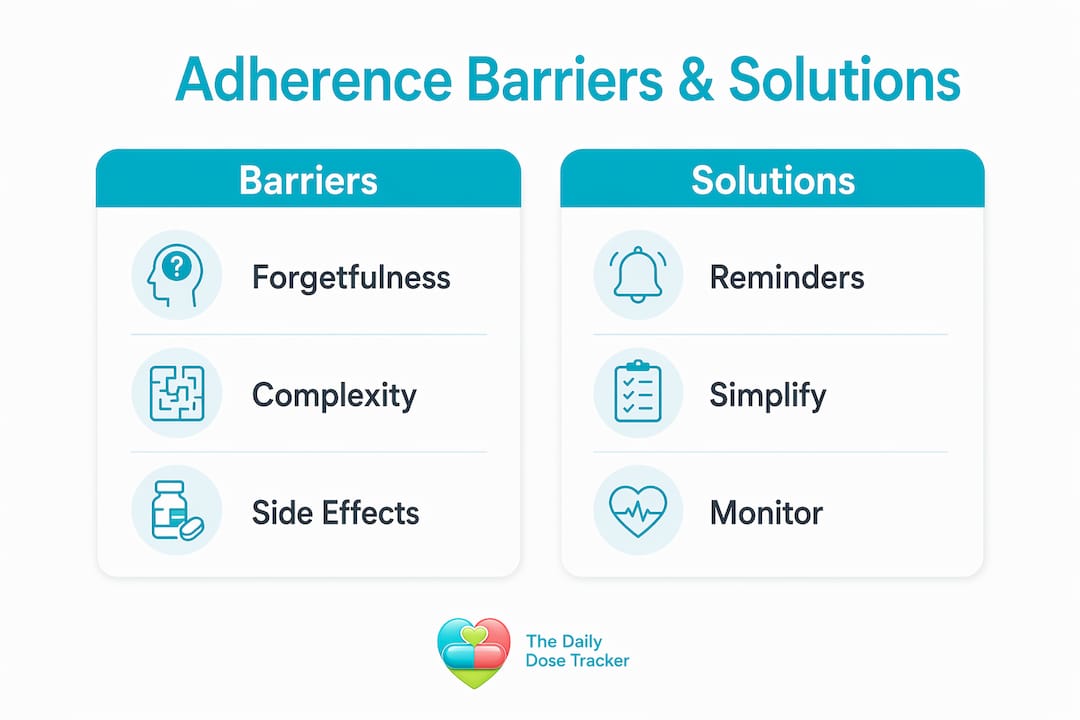
The most common barriers fall into distinct categories:
- Forgetfulness: The most frequently cited reason, particularly in older adults managing multiple medications.
- Side effects and dislike: Patients who experience nausea, drowsiness, or other effects often stop without telling their prescriber.
- Complex regimens: Multiple medications with different timings create confusion and increase the chance of error.
- Physical barriers: Difficulty swallowing tablets, opening child-resistant caps, or using inhaler devices.
- Psychosocial barriers: Depression, anxiety, health beliefs, and low confidence in managing medications independently.
The table below compares common barriers with evidence-based responses:
| Barrier | Effective response |
|---|---|
| Forgetfulness | Habit stacking, digital reminders paired with carer check-ins |
| Side effects | Open conversation with prescriber; explore alternative formulations |
| Complex regimen | Pharmacist-led simplification; blister packs |
| Physical difficulty | Adapted devices, easy-open packaging, liquid formulations |
| Low confidence | Teach-back training, gradual autonomy building, peer support |
Medication formulation matters more than most people realise. Clinical and pharmaceutical review findings confirm that simplifying drug delivery, including adjusting taste, tablet size, or device design, directly improves patient willingness to take medications. If a patient consistently refuses a tablet, asking the prescriber about a liquid or dispersible alternative is a legitimate and often effective strategy.
For elderly patients in particular, a systematic review covering 2015 to 2025 found that multilevel interventions addressing the patient, caregiver, and healthcare system together produce better adherence outcomes than digital reminders alone. This finding matters for families: your involvement as a carer is not a workaround. It is a clinically validated part of the solution. Resources on improving patient outcomes consistently highlight caregiver engagement as a core component of effective adherence programmes.
How do you maintain safety and independence in long-term self-administration?
Sustaining safe self-administration over months and years requires regular reassessment, not a set-and-forget approach. A patient's physical or cognitive status can change with illness, surgery, or simply the passage of time. The NHS SPS guidance is explicit that self-administration capability should be routinely reassessed, with independence maintained unless a new risk assessment indicates otherwise.
The table below outlines when and how to reassess:
| Trigger for reassessment | Recommended action |
|---|---|
| New diagnosis or hospital admission | Full medication review with GP or pharmacist |
| Change in physical function | Reassess device use and packaging suitability |
| Cognitive decline | Increase carer involvement; consider supervised administration |
| New high-risk medication added | Confirm professional oversight requirements |
| Patient reports confusion or errors | Immediate review; simplify regimen if possible |
Balancing safety with autonomy is the central tension in long-term medication self-management support. Removing independence prematurely causes harm. Patients who lose the ability to manage their own medications often experience a decline in confidence and overall self-care. Empowering patients in medication management, even in small ways, such as allowing them to choose the time they take a non-time-critical medication, preserves agency and supports wellbeing.
For patients with disabilities or sensory impairments, adaptations such as talking pill reminders, colour-coded organisers, and large-button medication dispensers are widely available and underused. Occupational therapists can assess and recommend specific aids, and this referral is worth requesting from a GP if standard approaches are not working. Guidance on chronic disease self-management reinforces that system-level support, including access to the right professionals, is as important as individual behaviour change.
Key takeaways
Effective medication self-administration support depends on combining structured assessment, clear patient education, caregiver involvement, and regular reassessment to maintain both safety and independence over time.
| Point | Details |
|---|---|
| Assess before you start | Complete physical, cognitive, and psychosocial assessments before any self-administration routine begins. |
| Train with teach-back | Demonstrate medication preparation and ask the patient to repeat it back to confirm understanding. |
| Pair reminders with support | Digital or written reminders only improve adherence when combined with behavioural and caregiver support. |
| Address barriers directly | Match each adherence barrier, whether physical, cognitive, or psychosocial, to a specific, evidence-based response. |
| Reassess regularly | Review self-administration capability after any health change to maintain safety without removing independence. |
Why the human element still outperforms the digital one
I have spent considerable time working with families who arrive convinced that the right app will solve their medication management problems. The app helps. Thedailydosetracker, with its real-time alerts and dose logging, genuinely reduces missed medications. But what I have observed repeatedly is that the families who achieve the best outcomes are not the ones with the most sophisticated tools. They are the ones who sat down with their relative, went through every medication together, and built a shared understanding of what each one does and why it matters.
The research on patient-centred communication bears this out. Trust and listening are not soft skills in this context. They are clinical variables with measurable effects on adherence. What I find underappreciated is the risk of over-relying on reminders as a substitute for that conversation. A patient who does not understand why they are taking a statin will eventually stop, regardless of how many alerts their phone sends.
My honest observation is that caregiver training is the most neglected part of medication self-management support. Families are handed a prescription bag and expected to figure it out. The evidence points clearly toward structured, multi-session support involving nurses and pharmacists. Advocating for that level of involvement, whether through a GP referral or a community pharmacy service, is the single most impactful thing a carer can do.
— Prasant
How Thedailydosetracker supports your medication routine
Managing medications for yourself or a family member is demanding, and even the most organised carers miss doses or lose track of complex schedules. Thedailydosetracker is built specifically for this challenge.
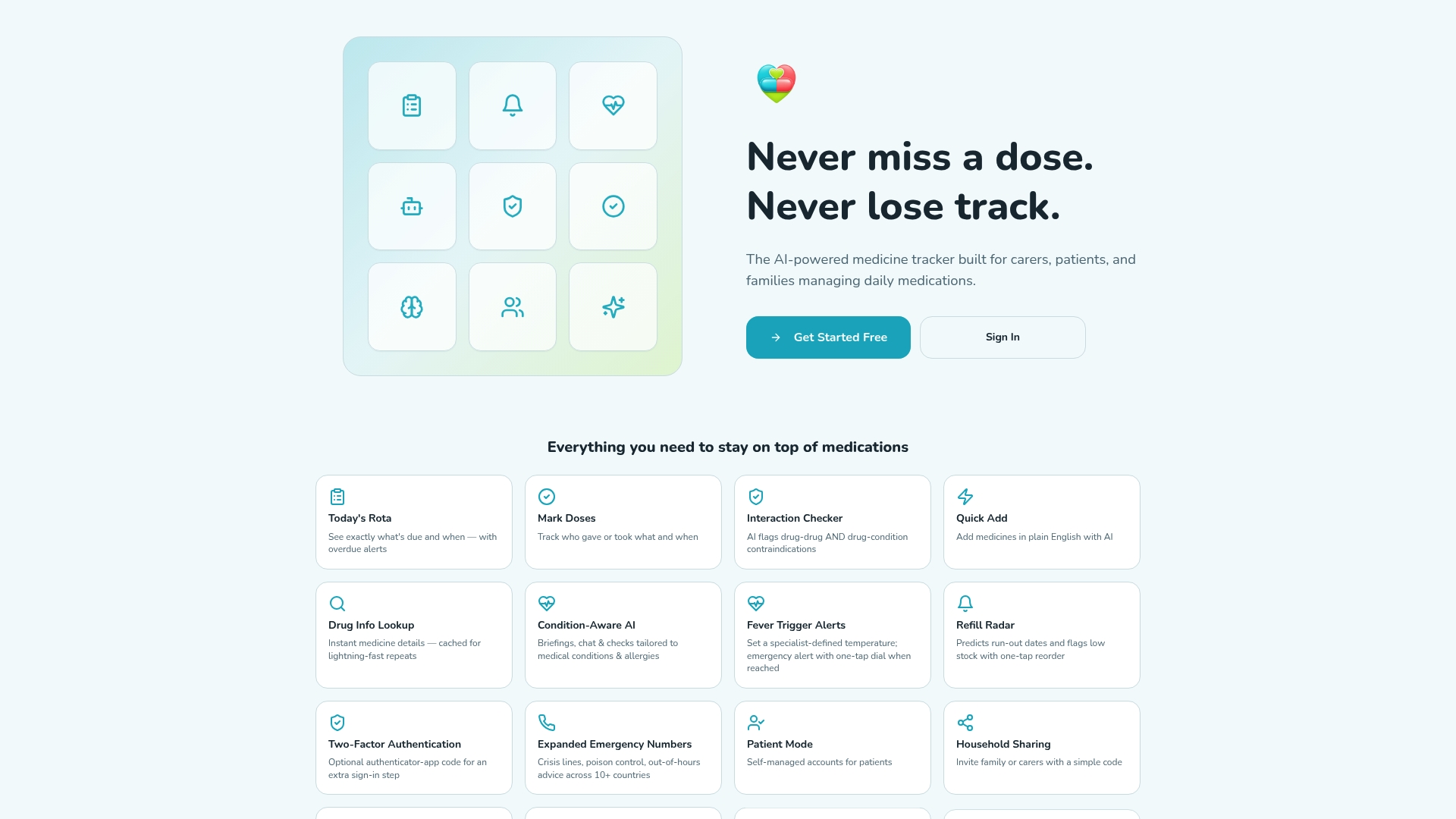
The platform lets you create detailed medication schedules, log every dose as it is taken, and receive real-time alerts for due or overdue medications. Drug interaction checks and condition-specific guidance add a layer of safety that a paper list simply cannot provide. For families managing multiple patients or sharing care responsibilities, the household sharing feature keeps everyone informed without duplicating effort. Explore the full range of medication management tools available through Thedailydosetracker, or browse the additional resources to find the right support for your situation.
FAQ
What does supporting medication self-administration mean?
Supporting medication self-administration is the structured process of helping a patient prepare, take, and record their medications independently, with appropriate guidance from carers or healthcare professionals. The goal is to maintain patient autonomy while ensuring safety and accuracy.
How do you improve medication adherence in elderly patients?
A systematic review covering 2015 to 2025 found that multilevel interventions addressing the patient, caregiver, and healthcare system together produce better adherence outcomes than reminders alone. Combining carer involvement, simplified regimens, and clear patient education is the most effective approach.
When should a patient's self-administration capability be reassessed?
Self-administration capability should be reassessed after any significant health change, including a new diagnosis, hospital admission, change in physical function, or the addition of a high-risk medication. NHS SPS guidance recommends treating reassessment as a routine part of ongoing care.
Are medication reminders enough to improve adherence?
No. A 2026 study found that reminders alone do not significantly improve adherence without accompanying behavioural support. Reminders work best when combined with patient education, carer involvement, and a clear understanding of why each medication matters.
Which medications cannot be self-administered by patients?
Certain controlled substances, including morphine and other Schedule 2 drugs, require professional oversight regardless of a patient's capability, due to legal and clinical requirements. Patients and carers should be informed of these restrictions at the start of any self-administration programme.