

Managing prescriptions for multiple health conditions is defined as the coordinated practice of tracking, reviewing, and safely combining all medicines a person takes across two or more long-term conditions, including prescription drugs, over-the-counter medicines, vitamins, and supplements. This practice, formally known as polypharmacy management, carries real stakes. Around 40% of adults aged 65 and older take five or more prescription medicines simultaneously, and over 15% take ten or more. That scale of complexity creates genuine risk of missed doses, harmful drug interactions, and duplicate therapies. The good news is that with the right tools, a single coordinated pharmacy, and regular professional reviews, you can manage multiple medications safely and confidently.
What are the key tools for managing multiple medications safely?
The foundation of safe prescription management is a single, written medication list that you carry to every appointment. A comprehensive written list should include every prescription drug, over-the-counter medicine, vitamin, and supplement, along with the dose, frequency, and the condition each one treats. Failing to maintain this single source of truth is the most common error that leads to duplicate therapies and unsafe prescribing. Update it every time a medicine changes.
Your pharmacist is one of the most underused resources in prescription management. Pharmacists are trained to spot drug interactions, flag duplications, and suggest timing adjustments that your GP may not have time to address. Many pharmacies now offer medication synchronisation, which aligns all your refills to the same day each month. Synchronisation improves adherence and makes it far easier to use blister packs or dosette boxes, since everything arrives together.

For those eligible in the United States, Medicare Part D Medication Therapy Management provides a formal, pharmacist-led review that produces a personalised written action plan, identifies duplications, and uncovers cost-saving opportunities. In the UK, NHS Medicines Use Reviews and Structured Medication Reviews serve a similar function through GP practices and community pharmacies.
| Tool | Purpose | Best for |
|---|---|---|
| Written medication list | Single source of truth for all medicines | Every patient managing 2+ conditions |
| Dosette box or blister pack | Pre-sorted doses by day and time | Complex regimens or memory difficulties |
| Medication synchronisation | All refills aligned to one monthly date | Reducing missed collections and run-outs |
| Medicare Part D MTM / NHS SMR | Pharmacist-led review with written action plan | Annual review or post-hospitalisation |
| Digital reminder app | Timed alerts for each dose | Anyone prone to forgetting doses |
Pro Tip: Take a photo of your written medication list on your phone so you always have a backup copy at appointments, in A&E, or when travelling.
How to implement step-by-step strategies for organising your prescriptions
Start by gathering every medicine in your home, including anything bought over the counter, and writing it all down in one place. Record the name, dose, how often you take it, what condition it treats, and who prescribed it. This single document becomes your reference point for every conversation with a doctor, nurse, or pharmacist.
Schedule a formal medication review at least once a year. Experts recommend reviewing immediately after any fall, emergency department visit, or hospital discharge, since care transitions are when errors most commonly creep in. Bring your written list to every review and ask your clinician to confirm that each medicine still offers a net benefit for your current health status.
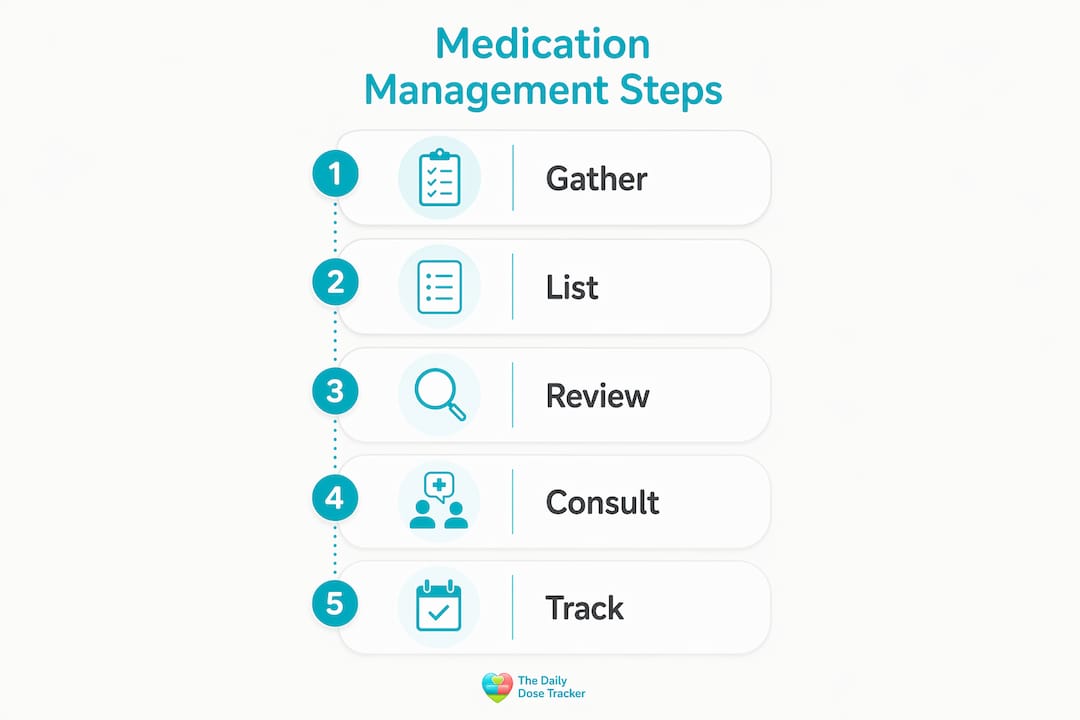
Consolidating all your prescriptions to one pharmacy is a step that many people overlook. Using multiple pharmacies fragments the safety checking systems, because most pharmacy software only cross-references prescriptions held in its own database. One pharmacy means one complete picture.
Follow these steps to build a reliable daily routine:
- Document everything. List all medicines with doses, timing, and prescribing clinician.
- Organise by time of day. Group morning, midday, evening, and bedtime doses separately in a dosette box or labelled containers.
- Set timed reminders. Use a phone alarm, smart speaker, or a dedicated app to prompt each dose window.
- Book an annual review. Diarise your medication review and request one after any hospital stay or significant health change.
- Communicate changes immediately. Tell every clinician and your pharmacist whenever a new medicine is added, stopped, or adjusted.
- Monitor and record side effects. Keep a brief symptom log so you can report patterns accurately rather than relying on memory.
Pro Tip: Use the teach-back method at appointments. After your clinician explains a change, repeat it back in your own words: "So I'm stopping the morning tablet and doubling the evening dose?" This catches misunderstandings before you leave the room.
What are the common challenges in managing multiple prescriptions?
Polypharmacy creates two distinct categories of risk: drug-drug interactions, where two medicines interfere with each other's effects, and drug-disease interactions, where a medicine prescribed for one condition worsens another. A patient taking warfarin for atrial fibrillation and ibuprofen for arthritis pain is a classic example of a dangerous drug-drug combination that can cause serious bleeding. Recognising these risks is the first step toward avoiding them.
Complexity across multiple specialists is a particular challenge. A cardiologist, a rheumatologist, and a GP may each prescribe independently without full visibility of what the others have added. You are often the only person who sees the complete picture, which is precisely why your written medication list is so powerful. Sharing it proactively at every appointment shifts the dynamic.
"Appropriate polypharmacy is not about the number of medicines a person takes. It is about whether those medicines, taken together, align with what matters most to that individual." This principle underpins the Scottish Government's 2026 to 2029 Polypharmacy Guidance, which prioritises patient values and quality of life over pill counts.
When a medicine is no longer needed, stopping it requires care. Deprescribing must be done with medical supervision to avoid rebound effects. Stopping a beta-blocker abruptly, for example, can trigger a dangerous spike in heart rate. Always taper under clinician guidance rather than stopping independently. If you feel a medicine is no longer helping, raise it at your next review rather than making the decision alone.
Watch for these warning signs that your regimen needs urgent review:
- New symptoms appearing shortly after a medicine change
- Feeling confused, dizzy, or unusually fatigued without a clear cause
- Difficulty swallowing or keeping medicines down
- Noticing you have duplicate medicines with different brand names but the same active ingredient
- Running out of one medicine significantly earlier than others, which may signal dose confusion
How do digital and professional resources support medication management?
Digital tools have changed what is possible for people managing complex regimens at home. Medication Therapy Management services identify drug interactions, duplications, and cost-saving opportunities through structured reviews, and are required for qualifying Medicare drug plans in the US. In the UK, Structured Medication Reviews through NHS primary care networks serve the same function for patients on multiple long-term medicines.
Drug interaction checkers, such as those available through DrGuide and the NHS medicines information pages, allow you to cross-reference combinations before raising them with your clinician. Digital interaction checkers are useful but cannot replace clinical judgement that considers your full health picture. Use them to prepare informed questions, not to make decisions independently.
| Resource type | Example | What it does |
|---|---|---|
| Pharmacist-led MTM review | Medicare Part D MTM, NHS SMR | Full medication audit with written action plan |
| Digital reminder and tracking app | Thedailydosetracker | Dose logging, alerts, interaction checks, carer sharing |
| Drug interaction checker | DrGuide, NHS medicines pages | Flags potential combinations for clinician discussion |
| Care coordinator or patient advocate | NHS care navigator, social prescriber | Coordinates across specialists and services |
| Home delivery and synchronisation | Community pharmacy services | Reduces missed doses through convenience |
Thedailydosetracker brings several of these functions together in one place. It logs doses, sends real-time alerts for due or overdue medicines, flags potential drug interactions, and allows household sharing so carers and family members stay informed. For families managing an elderly relative's complex regimen, the multi-patient management features mean one carer can oversee multiple people without losing track of any individual's schedule.
Pro Tip: When symptoms overlap multiple conditions, it can be genuinely difficult to tell whether you are experiencing a side effect or a new symptom. Resources like this guide on overlapping symptoms can help you frame the right questions before your next appointment.
Key takeaways
Safe management of prescriptions across multiple health conditions requires one accurate medication list, one coordinated pharmacy, and at least one formal annual review with a pharmacist or clinician.
| Point | Details |
|---|---|
| Maintain one medication list | Record every prescription, OTC medicine, vitamin, and supplement with doses and timing. |
| Use a single pharmacy | One pharmacy enables complete interaction and duplication checks across all your medicines. |
| Schedule regular reviews | Book a formal review annually and immediately after any hospital stay or fall. |
| Use adherence tools | Dosette boxes, synchronisation services, and reminder apps reduce missed and double doses. |
| Deprescribe safely | Never stop a medicine abruptly; taper only under clinician supervision to avoid rebound effects. |
Why person-centred thinking changes everything about polypharmacy
I have spent years working with people who arrive at appointments carrying carrier bags full of medicines, genuinely unsure which ones they still need. The clinical instinct is often to count the pills and reduce the number. But the Scottish Government's polypharmacy guidance gets it right: the question is not how many medicines you take, it is whether each one serves what matters most to you.
The most effective conversations I have seen are the ones where a patient brings a written list, asks "does each of these still make sense for me?", and leaves with a clear, agreed plan. That is not a complicated intervention. It is preparation and advocacy. Older adults managing five or more conditions are often the least likely to question their regimen, partly from deference and partly from the genuine cognitive load of managing complexity. Carers and family members can fill that gap by attending reviews, asking questions, and keeping the medication list current.
Technology helps, but it is not a substitute for that human coordination. A well-designed app like Thedailydosetracker reduces the cognitive burden of remembering doses and flags interactions worth discussing. It does not replace the clinician who knows your full history. The combination of good tools and good communication is what actually keeps people safe.
For anyone managing a diabetic loved one alongside other conditions, the intersection of diet, insulin timing, and other medicines adds another layer of complexity. Practical resources on carbohydrate management for diabetic patients can support the broader picture of keeping someone well, not just medicated.
— Prasant
Take control of your medication routine with Thedailydosetracker
Managing several prescriptions across different health conditions is genuinely demanding, and the margin for error is narrow. Thedailydosetracker is a free medicine management app built specifically for patients, carers, and families who need more than a basic pill reminder.
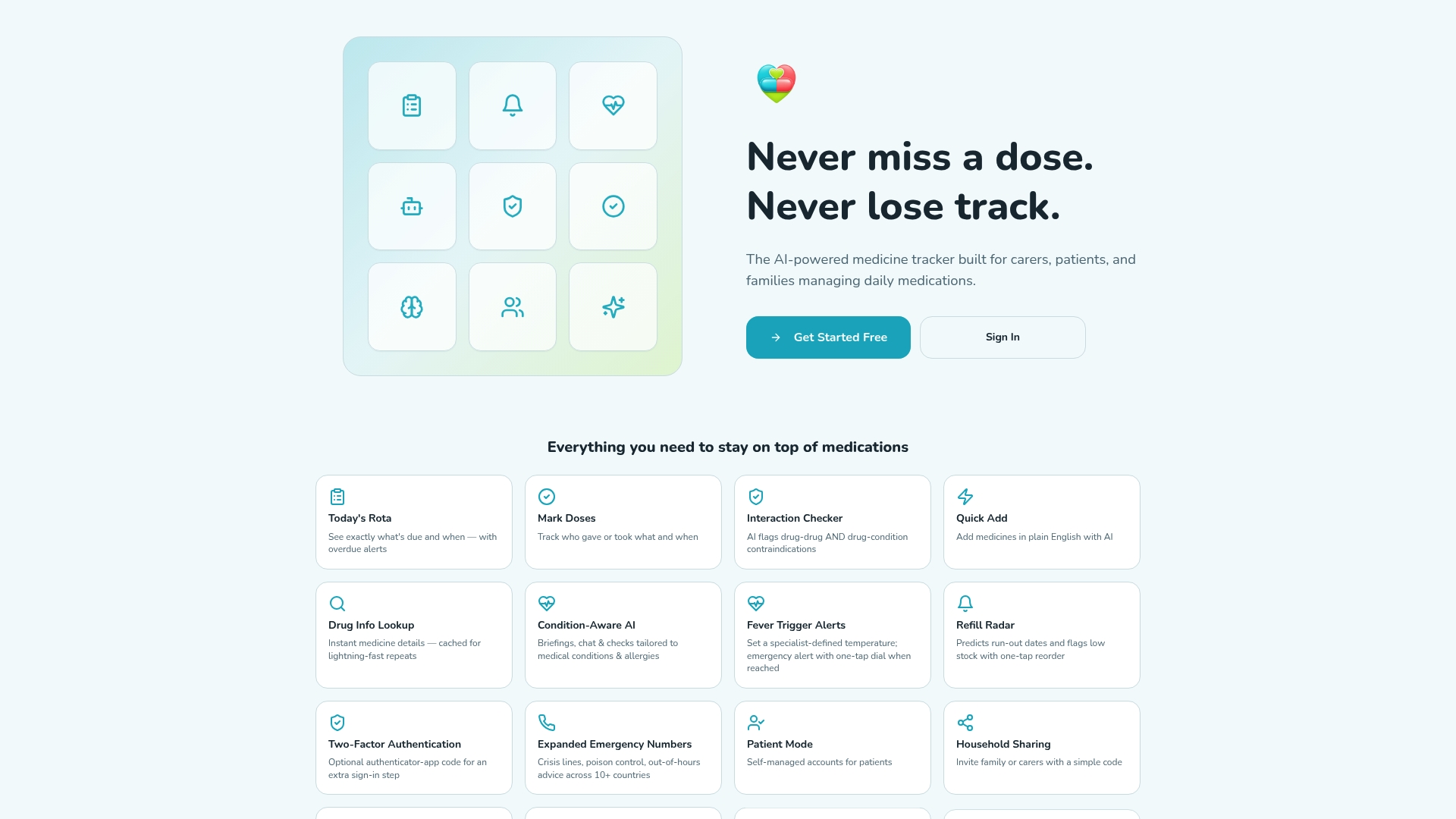
The platform logs every dose, sends real-time alerts for due and overdue medicines, runs drug interaction checks, and supports household sharing so the whole care team stays aligned. It works across multiple devices as a progressive web app and complies fully with UK GDPR standards, so your health data stays private. Whether you are managing your own complex regimen or supporting an elderly relative, explore Thedailydosetracker to see how it fits your routine.
FAQ
What is polypharmacy and when does it become a risk?
Polypharmacy is defined as the concurrent use of five or more medicines. Risk increases significantly above five medicines because the probability of drug interactions and adverse effects rises with each additional prescription.
How often should I have a medication review?
Formal reviews are recommended at least once a year and immediately after any hospital discharge, fall, or emergency department visit, since these transitions are when errors most commonly occur.
Why should I use only one pharmacy?
Using multiple pharmacies fragments interaction checking, because each pharmacy's software only cross-references prescriptions in its own database. A single pharmacy sees your complete medicines list and can flag dangerous combinations.
Can I stop a medicine if I think it is no longer helping?
No. Stopping medicines abruptly can cause serious rebound effects, particularly with beta-blockers, corticosteroids, and antidepressants. Raise concerns at your next review and ask your clinician to supervise a safe taper if deprescribing is appropriate.
What should my medication list include?
Your list should include every prescription medicine, over-the-counter drug, vitamin, and supplement, along with the dose, frequency, the condition it treats, and the name of the prescribing clinician. Carry it to every appointment and update it after every change.