

An elderly medication management checklist is a dynamic, regularly updated system that records every prescription, over-the-counter drug, and supplement an elderly person takes, alongside storage requirements, dosage instructions, and review schedules. This is the clinical standard known as a medication management plan, and it is the single most effective tool for preventing medication errors in home care settings. Research shows that 68% of households contain at least one expired medication, and the FDA has identified 127 cases of accidental ingestion of topical medications mistaken for oral ones due to poor storage. For family caregivers managing complex regimens, a structured checklist is not optional. It is the foundation of safe care.
1. What belongs on an elderly medication management checklist
The checklist must capture every substance entering the body, not just prescription drugs. That means listing all over-the-counter medicines, vitamins, herbal supplements, and topical treatments alongside their dosages, frequency, prescribing doctor, and the specific condition each one addresses. A medication without a recorded purpose is a safety risk because no carer or emergency responder can make an informed decision about it.
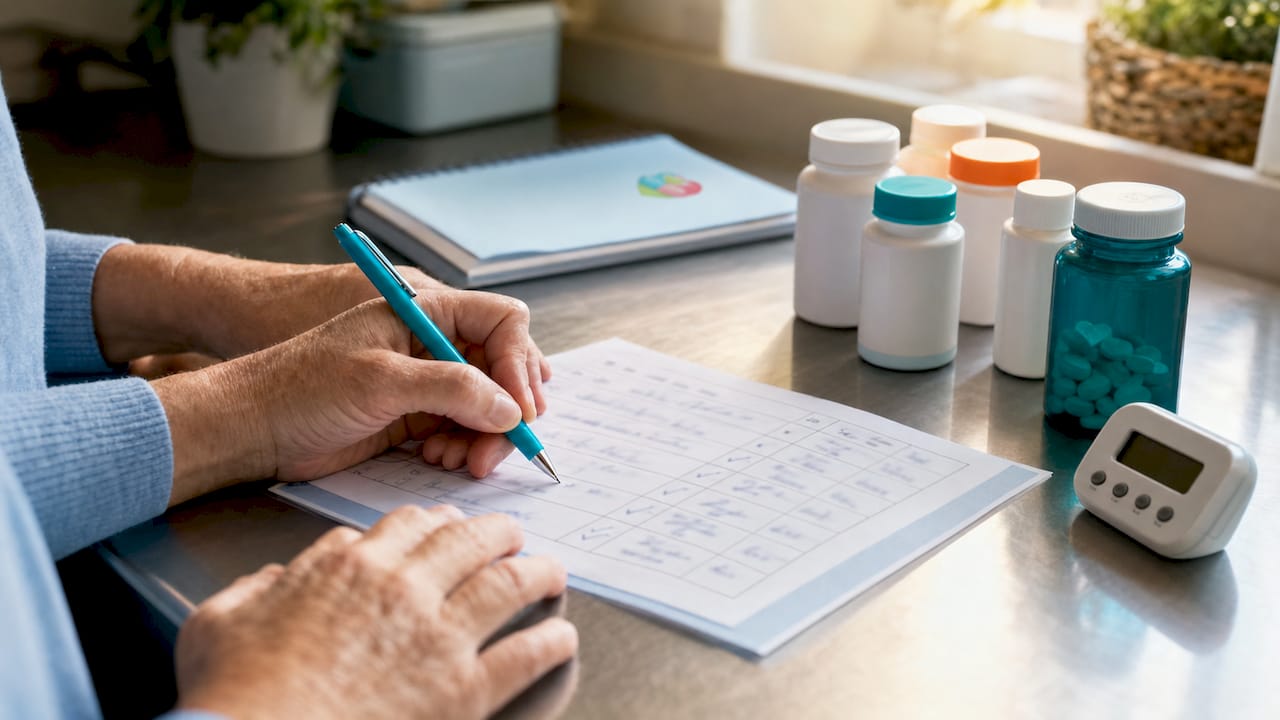
Each entry should include the medication name (both brand and generic), strength, route of administration (oral, topical, inhaled, injected), and the dispensing pharmacy. Medication adherence improves when patients and carers understand the purpose of each drug in plain language. Ask the prescribing doctor or pharmacist to write a one-sentence plain-English explanation for each medication and add it to the list.
The checklist should also record known allergies, previous adverse reactions, and any medications that have been discontinued and why. This history prevents a new provider from re-prescribing something that caused a prior problem. Keep a dated log of every change so you can trace the evolution of the regimen over time.
Pro Tip: Format the checklist as a single A4 sheet or a digital document that fits on one screen. A carer under pressure will not read a five-page document. Clarity and brevity save lives.
2. Safe storage: the rules that prevent serious errors
Correct storage is the physical equivalent of a locked filing cabinet for sensitive documents. Medications stored incorrectly lose potency, become dangerous, or get confused with one another. The checklist must include a storage section that specifies where each medication lives and why.
- Store all oral medications in a cool, dry location with humidity between 40% and 50%. Bathroom cabinets fail this test because steam from showers raises humidity and degrades tablets and capsules.
- Keep original pharmacy labels on every container. Never transfer medications to unmarked pots or bags, with the sole exception of a daily pill organiser that is filled directly from the labelled bottle.
- Physically separate oral medications, topicals (creams, gels, patches), injectables, and respiratory medications (inhalers, nebuliser solutions) in different drawers, boxes, or shelves. This single step addresses the root cause of the 127 accidental topical ingestion cases recorded by the FDA.
- Light-sensitive medications can lose up to 40% of their potency within a month if exposed to sunlight. Store them in amber bottles or opaque containers, and note this requirement on the checklist.
- Refrigerated medications such as insulin and certain eye drops require a dedicated section of the fridge, ideally in a sealed container away from food. Log the fridge temperature daily if insulin is in use.
- Secure high-alert medications (opioids, sedatives, anticoagulants) in a lockbox. Combination locks are 34% more reliable than key locks, and lockboxes stored at least four feet from the floor reduce child access by 88%.
Pro Tip: Label each storage zone with a colour-coded sticker that matches the medication category on your checklist. Red for high-alert, blue for oral, green for topical. A substitute carer can navigate the system without a briefing.
3. Building a routine that actually sticks
Medication adherence is driven more by routine consistency than by complex systems. The most elaborate pill organiser in the world fails if the carer does not have a reliable habit attached to it. The checklist should include a schedule section that maps each medication to a specific daily anchor.
- Attach doses to fixed daily events. Morning medications go with breakfast. Evening medications go with teeth brushing. Anchoring doses to non-negotiable habits removes the need to remember independently.
- Use a weekly pill organiser for oral medications. Fill it every Sunday from the original labelled bottles. This gives you a visual confirmation that doses have been taken and reduces the risk of double-dosing.
- Set up a digital medication reminder system. Apps and platforms designed for carers send alerts for due and overdue doses, which is particularly useful when multiple carers share responsibility across shifts.
- Conduct a monthly visual inspection. Check every container for expiry dates, damaged packaging, discolouration, or illegible labels. Replace anything questionable immediately.
- Schedule a full medication inventory review every six months. Tying this review to the twice-yearly clock changes (March and October in the UK) creates a reliable, memorable trigger. Bring the updated list to the next GP or specialist appointment.
- Involve all regular carers in the routine. A medication error is most likely to happen at the handover between carers. A shared, written schedule eliminates ambiguity about what has and has not been given.
- Synchronise refills at a single pharmacy. Using one pharmacy allows the pharmacist to monitor the full regimen for interactions and align refill dates, reducing the risk of running out of a critical medication.
4. Common pitfalls and how a checklist prevents them
Medication errors in elderly care follow predictable patterns. Recognising them is the first step to designing a checklist that closes each gap.
- Topical medications mistaken for oral ones. Creams and gels stored alongside tablets are the leading cause of accidental ingestion in home settings. Physical separation, as described in the storage section, is the direct solution.
- Medications from different household members becoming mixed. In a shared home, one person's blood pressure tablet can end up in another person's pill organiser. Colour-coded storage and person-specific organisers prevent this.
- Expired or degraded medications. Expired medications vary in hazard. Some lose potency gradually, which means the elderly person receives an inadequate dose. Others, such as liquid antibiotics, can develop bacterial growth and become actively harmful. Monthly checks catch these before they cause harm.
- Errors during care transitions. Hospital discharge is the highest-risk moment for medication errors. A well-maintained medication list shared with all carers and providers is the cornerstone of safe transitions. The 'Medication Command Centre' approach, where one master list is updated after every health change, is the clinical gold standard.
- Polypharmacy without regular review. Many elderly patients take five or more medications simultaneously. Without a scheduled review with the GP or pharmacist, interactions accumulate silently.
"A comprehensive, written medication list brought to every medical appointment is one of the most effective tools for preventing medication errors in elderly patients." — UCF Health
For safe over-the-counter use, the same principles apply. OTC drugs interact with prescriptions, and they must appear on the checklist with the same rigour as any prescribed medicine.
5. How to build a household medication management checklist from scratch
A household medication management checklist differs from a single-patient list because it must serve multiple people, multiple carers, and multiple providers simultaneously. The structure below applies whether you are managing one elderly parent or a complex multi-person household.
| Checklist component | What to include |
|---|---|
| Medication inventory | Name, strength, dose, frequency, route, prescriber, and purpose for every medication per person |
| Storage map | Location, temperature requirements, and light sensitivity for each medication |
| Review schedule | Monthly visual check dates and six-monthly full inventory review dates |
| Expiry and disposal log | Expiry dates for all medications and local NHS disposal instructions |
| Emergency access protocol | Location of master list, lockbox code, and instructions for substitute carers |
| New prescription procedure | Steps for adding a new medication: update list, check interactions, adjust storage |
Start by gathering every medication in the household into one place and recording each one against the inventory column. This single exercise typically reveals duplicates, expired stock, and medications that no longer have an active prescription. Discard anything that cannot be verified against a current prescription or OTC purchase.
Once the inventory is complete, assign each medication to a storage location and record it on the map. Share the completed checklist with every regular carer, the GP surgery, and the dispensing pharmacy. Store a printed copy near the medication area and a digital copy in a shared folder or app accessible to all carers. For post-hospitalisation updates, medication management protocols recommend reviewing and rewriting the entire list rather than annotating the old one, because partial updates introduce errors.
Key takeaways
A structured elderly medication management checklist, combining a complete medication inventory, correct storage, routine reviews, and shared access across all carers, is the most reliable method for preventing medication errors at home.
| Point | Details |
|---|---|
| Complete medication inventory | Record every prescription, OTC drug, and supplement with dosage, purpose, and prescriber. |
| Correct storage by category | Separate oral, topical, injectable, and refrigerated medications; use lockboxes for high-alert drugs. |
| Six-monthly full reviews | Tie inventory reviews to clock changes in March and October for a reliable annual schedule. |
| Single-pharmacy refill sync | One pharmacist monitoring the full regimen catches interactions and prevents supply gaps. |
| Shared, accessible documentation | Every carer and provider must hold the same up-to-date list to prevent transition errors. |
What I have learned from watching carers manage medication the hard way
I have spent years working alongside family carers who are doing an extraordinary job under significant pressure, and the pattern I see most often is this: the checklist exists, but it is six months out of date. A new blood pressure medication was added after a hospital stay, a supplement was quietly stopped, and nobody updated the master list. The document that was supposed to prevent errors has become a source of them.
The uncomfortable truth about senior medication guides and checklists is that the document itself is not the solution. The habit of updating it is the solution. I have seen carers use beautifully designed paper systems that were dangerously stale, and I have seen carers use a battered notebook that was updated in real time and was genuinely life-saving. The format matters far less than the discipline.
What actually works, in my observation, is assigning one named person as the medication list owner. Not a shared responsibility. One person who updates the list after every GP appointment, every pharmacy collection, and every change in condition. Everyone else reads and follows. When responsibility is shared equally, it belongs to nobody.
Technology helps, but only when it reduces friction rather than adding it. A digital platform that sends automatic reminders to update the list after a new prescription is far more useful than one that requires manual data entry across five screens. The goal is to make the right behaviour the easiest behaviour.
— Prasant
How Thedailydosetracker supports your medication checklist
Managing a medication checklist across multiple carers and providers is genuinely difficult without the right tools. Thedailydosetracker is a free digital platform built specifically for family carers and care teams managing elderly or complex patients.
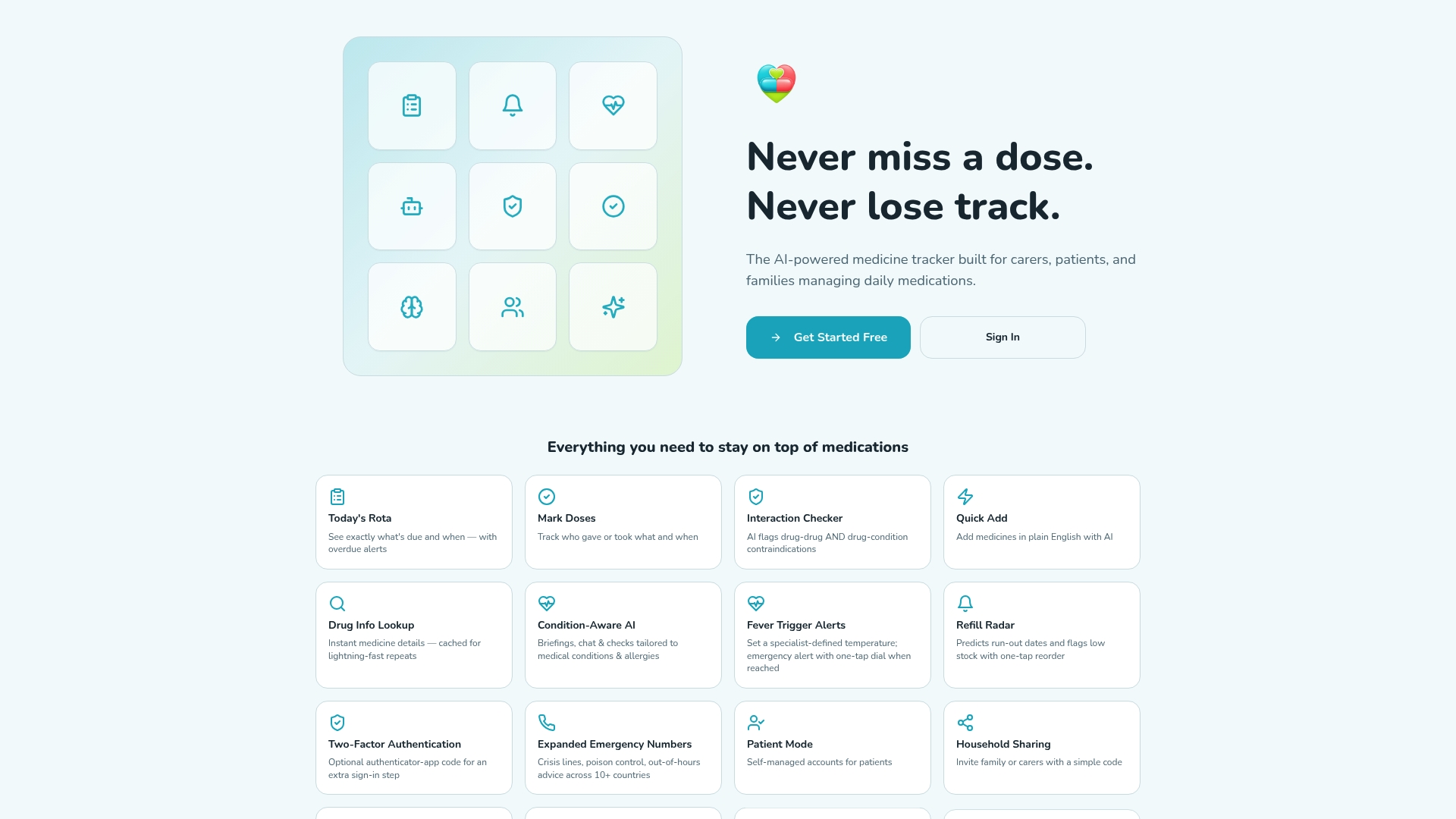
The platform stores a complete medication inventory, sends real-time alerts for due and overdue doses, and flags potential drug interactions before they become problems. Refill predictions mean you are never caught short on a critical medication. The household-sharing feature gives every carer access to the same live, updated list, which directly addresses the transition-of-care risk described throughout this article. All data is protected under UK GDPR standards, so sensitive medical information stays private. You can explore the full feature set and start managing medications for free today, with no technical setup required.
FAQ
What should an elderly medication management checklist include?
An elderly medication management checklist should record every prescription, over-the-counter drug, and supplement, including the name, strength, dose, frequency, route, purpose, and prescribing doctor. It should also include storage requirements, expiry dates, and an emergency access protocol for substitute carers.
How often should a senior's medication list be reviewed?
A full medication inventory review is recommended every six months, with monthly visual checks for expiry dates and damaged packaging. Tying the six-monthly review to the UK clock changes in March and October creates a reliable, memorable schedule.
Why should medications be stored in separate categories?
Physical separation of oral medications, topicals, injectables, and refrigerated drugs prevents accidental ingestion and dosing errors. The FDA recorded 127 cases of topical medications being accidentally ingested because they were stored alongside oral medicines.
Is it safe to transfer medications to a different container?
Medications should never be transferred to unmarked containers because the original pharmacy label carries the dosage, expiry date, and instructions. The only acceptable exception is a weekly pill organiser filled directly from the labelled bottle.
How does using a single pharmacy improve medication safety?
A single pharmacy allows the pharmacist to monitor the complete medication regimen for interactions and align refill dates across all prescriptions. This reduces the risk of dangerous drug combinations going undetected and prevents supply gaps in critical medications.