
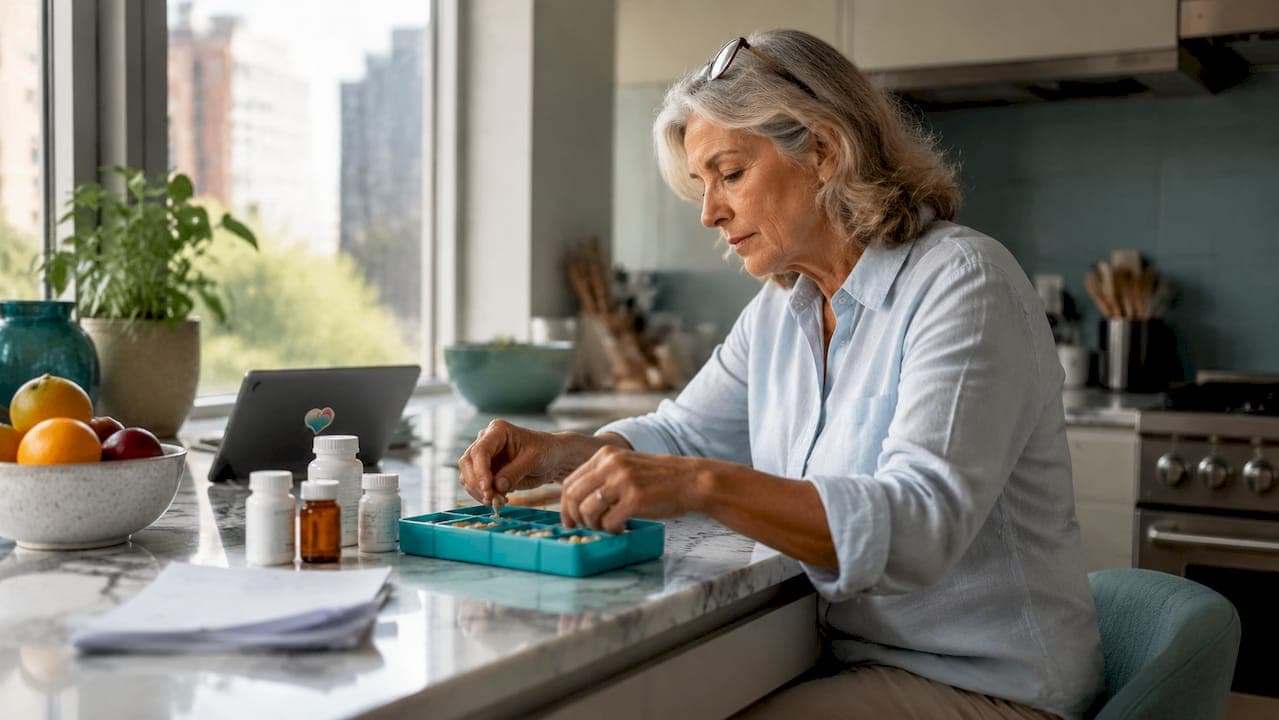
Medication errors in elderly home care are defined as any preventable event in which the wrong drug, dose, timing, or route reaches a patient outside a clinical setting. For family caregivers and healthcare providers, this is the single most consequential safety challenge in home-based care. Polypharmacy affects over 33% of older adults globally, and the risks compound quickly when complex regimens meet limited oversight. The good news is that reducing medication errors in elderly home care is achievable. Structured protocols like the Five Rights, electronic Medication Administration Records (eMAR), and tools such as pre-sorted blister packs have each demonstrated measurable results. This guide covers the causes, the tools, and the daily practices that make the difference.
What causes medication errors in elderly home care?
The root causes of medication mistakes in elderly home care fall into three categories: patient complexity, caregiver knowledge gaps, and system failures. Understanding each one is the starting point for fixing them.
Patient complexity is the most significant driver. Polypharmacy affects 66% of older Canadian adults, and the pattern holds across most high-income countries. When a patient takes five or more medications daily, the probability of adverse drug reactions, dangerous interactions, and missed doses rises sharply. Frailty and cognitive impairment add further risk: a patient with early-stage dementia may take a dose, forget they took it, and take it again within the hour.
Caregiver knowledge gaps are equally dangerous. Structured caregiver education and proactive communication reduce preventable errors, yet many family caregivers receive little formal training on what each drug does, what side effects to watch for, or how to respond when something goes wrong. A caregiver who does not know that a particular blood thinner requires consistent food intake cannot make safe decisions at the kitchen table.
System failures include the following common errors in home settings:
- Outdated medication lists that do not reflect recent prescriptions or hospital discharge changes
- Timing conflicts between drugs that require an empty stomach and those that require food
- No clear record of who administered a dose and when
- Poor handover communication between hospital discharge teams and home carers
Medication non-adherence causes 10% of preventable hospital admissions among seniors in Canada annually. That figure represents thousands of avoidable admissions, each one traceable back to a gap in the home care system rather than an inevitable consequence of ageing.
What tools and protocols prevent medication errors at home?
The most effective tools for home care medication safety combine standardised clinical protocols with practical physical and digital aids. No single tool works in isolation; the strongest outcomes come from layering them.

The Five Rights protocol
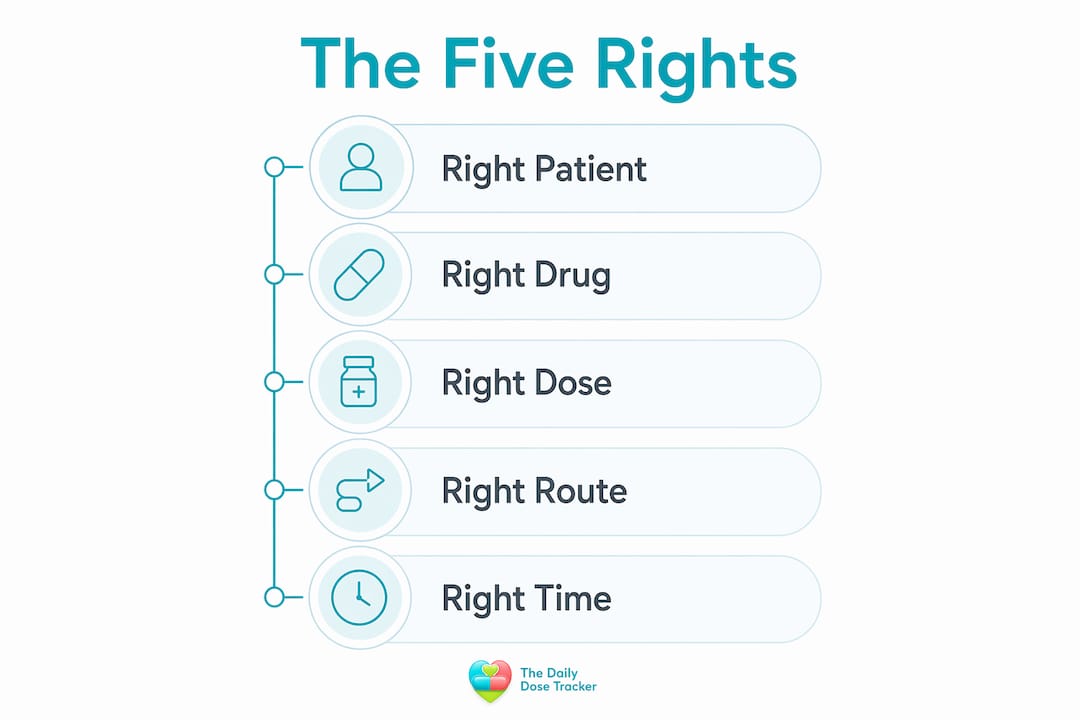
The Five Rights protocol covers the right patient, drug, dose, route, and time. When properly applied in home care settings, the Five Rights reduces administration errors by 70%. That is not a marginal improvement. It means that a structured verbal or written check before every administration catches the majority of errors before they reach the patient. Caregivers should treat this check as non-negotiable, the same way a pilot treats a pre-flight checklist.
eMAR versus paper records
| Feature | eMAR (electronic record) | Paper-based record |
|---|---|---|
| Error rate | Significantly lower | Higher due to illegibility and omissions |
| Real-time updates | Yes, immediate | No, requires manual revision |
| Audit trail | Automatic and timestamped | Manual and incomplete |
| Caregiver alerts | Built-in reminders and flags | None |
| Drug interaction checks | Available in most platforms | Not available |
eMAR adoption halves errors compared to paper systems. For families managing complex elderly regimens, this shift from paper to digital is one of the highest-return changes available.
Pre-sorted blister packs and multi-dose cards
Pre-sorted blister packs reduce confusion by labelling medications clearly by date and time, removing the need for caregivers to interpret loose bottles. Pharmacy delivery services that include pre-sorted packaging also conduct safety checks before medications arrive at the home, catching interaction risks before they become a crisis. For patients with dementia or low health literacy, this format is often the difference between consistent adherence and daily guesswork.
Pro Tip: Ask the patient's pharmacist specifically about multi-dose dispensing. Many NHS-linked and private pharmacies offer this service at no additional cost for patients on complex regimens.
For a structured overview of medication schedule best practices, Thedailydosetracker's resource library covers timing, sequencing, and caregiver coordination in detail.
How to manage complex medication regimens for elderly patients
Managing a complex regimen safely requires a repeatable daily system, not just good intentions. The following steps form the foundation of home care medication safety for seniors.
-
Conduct a full medication review at every significant health change. Reviews should occur after falls, hospital discharge, or new prescriptions, with a focus on individual needs and frailty. Do not wait for an annual GP appointment if the patient's condition has changed.
-
Organise medications by timing and food dependency. Some drugs require an empty stomach; others require food. Grouping all morning pills together without accounting for these differences is a common source of adherence failure. Build the schedule around the drug's requirements, not the caregiver's convenience.
-
Keep a written or digital log of every dose administered. Record who gave it, when, and whether the patient took it fully. This log becomes critical evidence if a patient deteriorates or if a new prescriber needs to understand recent medication history.
-
Prepare a transition-of-care checklist for every hospital discharge. Hospital discharge is the highest-risk moment for medication errors. New drugs are added, old ones are stopped, and doses change. A written reconciliation checklist reviewed with the ward pharmacist before leaving the hospital prevents the most dangerous errors.
-
Request a deprescribing review for patients on five or more medications. Deprescribing is an ongoing process that balances benefits and risks for elderly patients, not a one-off event. The 2026 clinical practice guidelines from the Medical Journal of Australia provide structured recommendations for when and how to reduce inappropriate medications safely.
Beyond these steps, communication with the wider healthcare team is non-negotiable. Caregivers who treat themselves as passive administrators rather than active clinical partners miss opportunities to flag early warning signs.
- Share the medication log with the GP at every appointment
- Report any new side effects or behavioural changes immediately, not at the next scheduled visit
- Ask the pharmacist to review the full list at least every six months
Pro Tip: Use Thedailydosetracker's medication schedule organisation tips to build a colour-coded, time-sorted schedule that any relief carer can follow without a briefing.
Caregivers treated as integral clinical partners produce measurably better medication safety outcomes. This is not a soft claim. It is the finding that underpins most current home care medication safety frameworks.
What mistakes undermine medication safety, and how do you fix them?
Even well-organised caregivers fall into predictable traps. Recognising these patterns early prevents them from becoming serious harm.
"Automated reminders are triage tools, not clinical decision-making replacements. The moment a patient's medication changes, the digital schedule must change with it." — adapted from home care medication safety guidance
Outdated schedules after health changes are the most dangerous and most common mistake. Failure to update digital schedules after hospital discharge creates a situation where the reminder system confidently prompts for a drug that has been stopped or replaced. The caregiver follows the reminder, not the new prescription, and the error is invisible until harm occurs.
Ignoring timing conflicts is the second major pitfall. Medication race conditions, where drugs conflict due to food or timing dependencies, reduce the effectiveness of standard pill boxes. A levothyroxine tablet taken with breakfast instead of 30 minutes before it loses a significant portion of its efficacy. These are not obscure pharmacological details. They are printed on the dispensing label, but caregivers under time pressure routinely miss them.
Caregiver fatigue compounds every other risk. A carer managing a complex regimen across multiple daily administrations, while also handling personal care, appointments, and household tasks, will eventually make an error through exhaustion alone. The solution is not to work harder. It is to build systems that reduce cognitive load: pre-sorted packs, digital logs, and shared schedules that distribute responsibility across a care team.
The following warning signs indicate a medication safety system that needs immediate review:
- The patient has been discharged from hospital in the past two weeks and the home medication list has not been reconciled
- No written log exists of doses administered in the past 48 hours
- The caregiver cannot name the purpose of more than half the patient's medications
- Reminder alerts are being dismissed without a physical check
For families managing these challenges, Thedailydosetracker's guide on managing complex medication schedules addresses each of these scenarios with practical resolution steps.
Key takeaways
Reducing medication errors in elderly home care requires layered systems: structured protocols, updated digital records, and caregivers who are trained and supported as clinical partners.
| Point | Details |
|---|---|
| Five Rights protocol | Applying right patient, drug, dose, route, and time reduces administration errors by 70%. |
| eMAR over paper | Electronic records halve error rates and provide real-time audit trails unavailable on paper. |
| Regular medication reviews | Reviews after every fall, discharge, or new prescription prevent outdated regimens from causing harm. |
| Deprescribing as ongoing practice | Reducing inappropriate medications for patients aged 65+ is a continuous clinical process, not a one-off event. |
| Caregiver education and communication | Caregivers who understand each drug's purpose and report changes promptly are the most effective safety check. |
What I have learned about medication safety in home care
The framing that frustrates me most in this field is the idea that medication errors in elderly home care are primarily a technology problem. They are not. Technology helps, and I will come back to that. But the most dangerous errors I have seen described in clinical literature and caregiver accounts share a common thread: a human being who did not know what they did not know.
A family member steps in to care for an elderly parent after a hospital discharge. They receive a discharge summary written for a clinician, a bag of medications, and a verbal briefing that lasts four minutes. They go home and do their best. Three days later, the patient is readmitted because a drug interaction nobody explained was silently causing harm. This is not a technology failure. It is a system that treats caregivers as passive recipients rather than active participants in clinical care.
Medication management is most effective when addressed before the patient arrives home, through coordinated pharmacy services and pre-sorted packaging. That insight points to something the home care sector still underdelivers: preparation. The hospital discharge moment is where most preventable errors are seeded, and it is where investment in caregiver briefing, pharmacist reconciliation, and pre-sorted dispensing pays the highest return.
Digital tools like Thedailydosetracker genuinely change outcomes when they are used correctly. The operative phrase is "used correctly." An app that sends reminders based on an outdated schedule is not safer than no app at all. It is more dangerous, because it creates false confidence. The value of a good digital platform is not the reminder. It is the drug interaction check, the dose log, the shared visibility across a care team, and the alert that flags when something has been missed rather than just when something is due.
My honest view is that the caregivers who achieve the best medication safety outcomes are those who ask the most questions, not those with the most sophisticated tools. Equip yourself with knowledge first. Then let the technology support what you already understand.
— Prasant
How Thedailydosetracker supports safe medication management at home
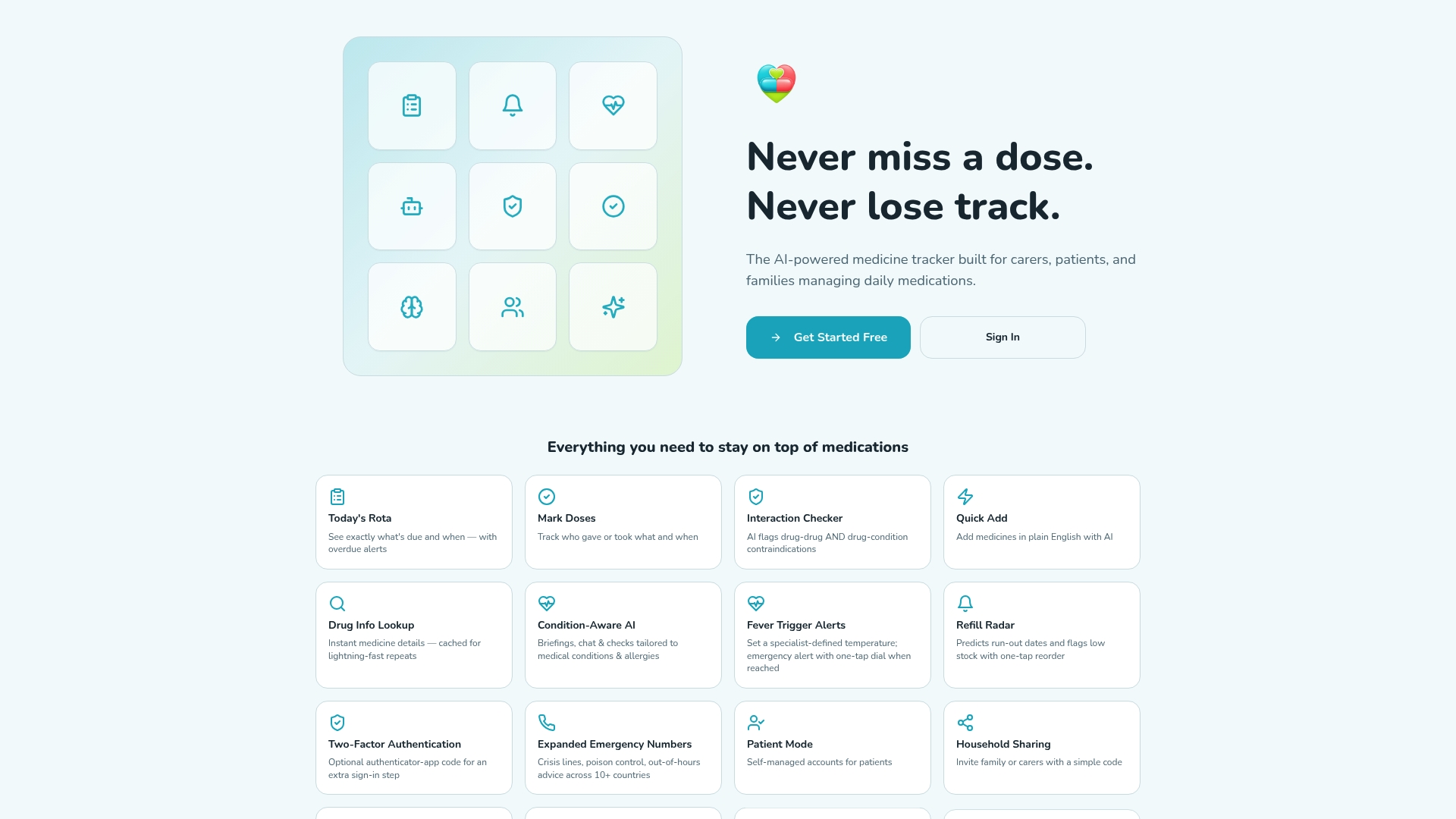
Thedailydosetracker is built specifically for the complexity that family caregivers and home care providers face every day. The platform lets you create and monitor medication schedules, log every dose with a timestamp, and receive real-time alerts for due or overdue medications. Built-in drug interaction checks and condition-specific guidance mean you are not relying on memory or a paper insert to catch dangerous combinations.
For elderly patients on complex regimens, the multi-patient management feature allows a single carer or care team to oversee several individuals without confusion. The platform is free to start and works across devices as a progressive web app, compliant with UK GDPR standards. Visit Thedailydosetracker's features and pricing to see how it fits your care situation, or go directly to the medicine management app to get started today.
FAQ
What is the most common cause of medication errors in elderly home care?
Polypharmacy is the leading cause. When elderly patients take five or more medications daily, the risk of adverse drug reactions, missed doses, and timing conflicts increases significantly, particularly when caregiver knowledge of each drug's purpose is limited.
How does the Five Rights protocol reduce medication errors?
The Five Rights protocol checks the right patient, drug, dose, route, and time before every administration. Properly applied in home care settings, it reduces medication administration errors by 70%.
When should a medication review be requested for an elderly patient?
A review should be requested after any fall, hospital discharge, or new prescription. The 2026 Scottish polypharmacy guidance recommends reviews that focus on individual frailty and the balance of benefit versus risk for each medication.
Are automated medication reminders safe to rely on?
Automated reminders are effective as a support tool but must not replace human oversight. If a patient's medication changes and the digital schedule is not updated immediately, the reminder system will prompt for the wrong drug or dose.
What is deprescribing and why does it matter for elderly patients?
Deprescribing is the supervised reduction or cessation of medications that are no longer appropriate or beneficial. For patients aged 65 and over, it is an ongoing clinical process that reduces adverse drug reactions and improves quality of life when integrated into regular prescribing reviews.