

Effective medication scheduling for dementia patients is defined as a structured, repeatable system that delivers the right drug, at the right dose, at the right time, every day, regardless of the patient's cognitive state. Setting up a medication schedule for a dementia patient requires more than a pill box and good intentions. It demands the right tools, consistent routines anchored to daily habits, and clear coordination between everyone involved in care. The risks of getting it wrong are real: missed doses accelerate symptom progression, whilst double dosing creates serious safety hazards. This guide gives family carers and healthcare providers a practical, stage-by-stage framework for building a schedule that holds.
What tools do you need for a dementia medication schedule?
The right tools depend on the patient's current stage of dementia, not on what is most convenient for the carer. Early-stage patients may manage with a simple weekly pill organiser and a written medication timetable. Mid-stage patients typically need automated dispensers with audible alarms or locked compartments to prevent accidental access.
Digital platforms add a layer of oversight that physical tools cannot provide alone. Thedailydosetracker, for example, logs each dose, sends real-time alerts for due or overdue medications, and supports multi-carer access so that every member of the care team sees the same information. That shared visibility is what prevents the most common error in dementia care: two carers each assuming the other has already given the morning dose.
Pharmacists are a significantly underutilised resource in this process. Pharmacists can simplify regimens by switching tablet formulations to patches, liquids, or combination products, which reduces the number of separate administrations needed each day. A once-daily regimen is always preferable to a four-times-daily one when managing medications for dementia.
| Tool | Best suited to | Key limitation |
|---|---|---|
| Weekly pill organiser | Early-stage, self-administering patients | No alert if dose is missed |
| Automated dispenser with alarm | Mid-stage, supervised patients | Higher upfront cost |
| Locked automated dispenser | Mid-to-late stage, wandering risk | Requires carer to reload |
| Digital tracking platform | All stages, multi-carer households | Requires a device and internet access |
| Visual medication timetable | All stages, as a secondary cue | Relies on patient reading ability |
Pro Tip: Ask the pharmacist for a structured medication review at least once every six months. Regular deprescribing reviews reduce the overall pill burden and lower the risk of adverse interactions, particularly as dementia progresses.
How do you create a consistent medication routine?
Consistency is the single most powerful tool in dementia medication management. The brain affected by dementia loses episodic memory first, but procedural memory remains intact far longer. That means a patient who cannot recall taking a tablet an hour ago can still respond reliably to a familiar sequence of actions performed in the same order, at the same time, in the same place, every day.
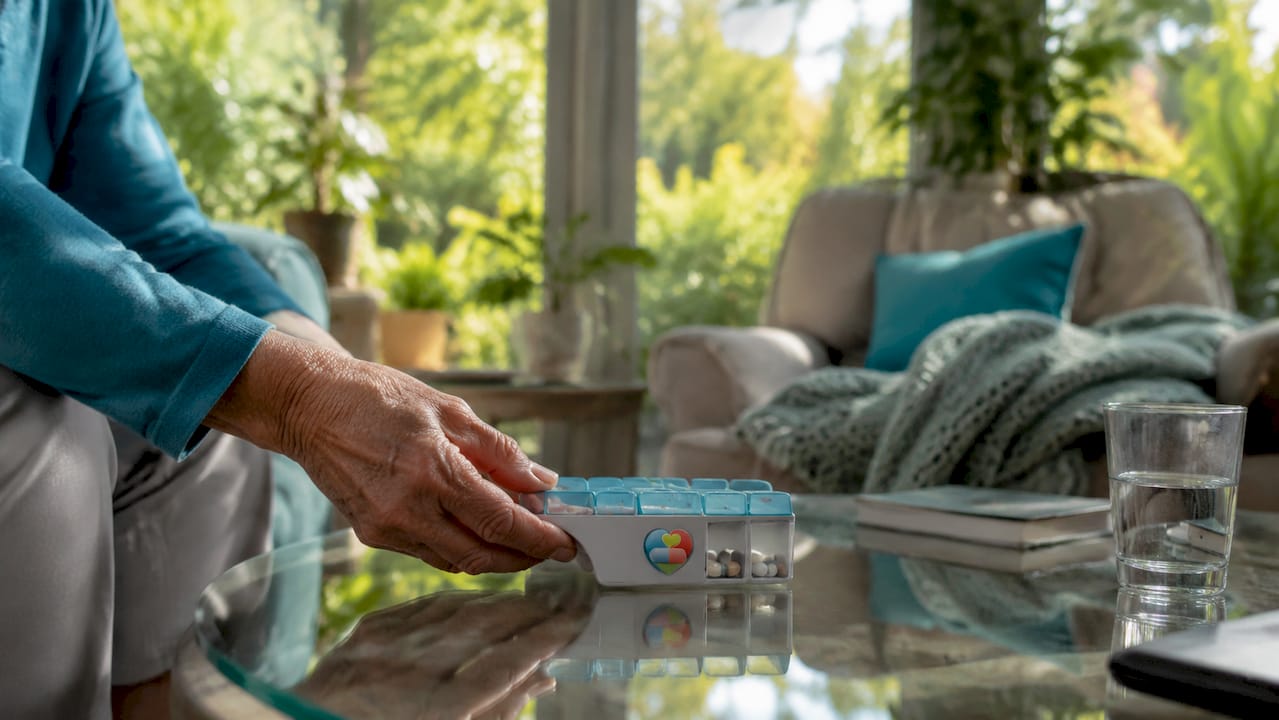
Anchoring medication to an existing daily habit is the most effective way to build that sequence. Mealtimes work particularly well because they are already structured events with clear sensory cues: the smell of breakfast, the sound of the kettle, the sight of a familiar mug. Use the same cup, the same spot at the table, and the same verbal prompt each time. That repetition builds a conditioned response over weeks.
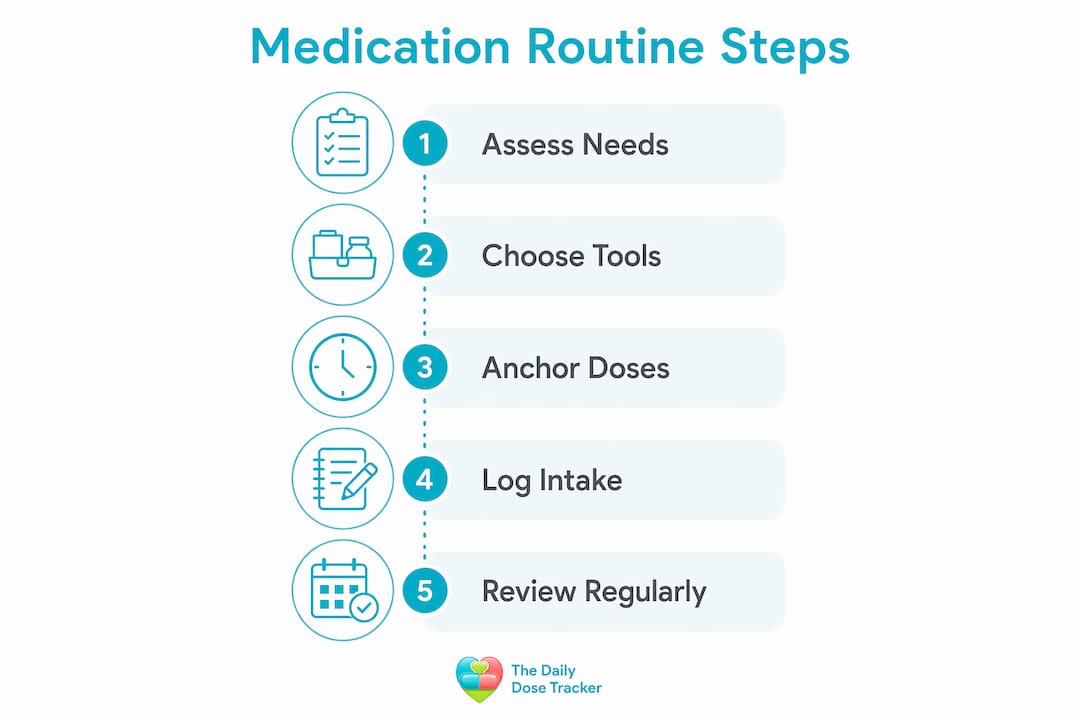
Follow these steps to build a daily medication routine from scratch:
- List every medication with its prescribed time, dose, and any food requirements. Obtain this from the prescribing GP or pharmacist.
- Map doses to existing daily events. Morning tablets go with breakfast. Evening tablets go with the main evening meal or a bedtime drink.
- Prepare the environment before the patient arrives. Set out the medication, water, and any food needed. Remove distractions.
- Use a calm, unhurried tone. Reduced sensory overload increases cooperation. Turn off the television and limit foot traffic in the room during administration.
- Log the dose immediately after it is taken, not at the end of the shift. Delayed logging is where errors enter the record.
- Set a backup alert on a digital platform or phone for every scheduled dose, so a missed administration triggers a notification rather than going unnoticed.
Medication timing matters more than most carers realise. Some drugs require consistent spacing to maintain therapeutic blood levels. Shifting a dose by two or three hours repeatedly can reduce its effectiveness significantly.
Pro Tip: Photograph the prepared medication tray before and after administration. This takes ten seconds and provides a visual record that is far harder to dispute than a written log entry.
How does medication management change as dementia progresses?
Medication management must adapt as dementia advances. What works at stage one will fail at stage three. Carers who do not adjust their approach end up managing a crisis rather than preventing one.
Early-stage patients can often self-administer with prompting. The carer's role is primarily to set up the system, provide reminders, and check the pill organiser at the end of each day. Mid-stage patients lose the ability to reliably self-administer and require supervised dosing at every administration. Late-stage patients may need direct physical assistance, including help swallowing, and the method of administration itself may need to change.
- Early stage: Patient self-administers with verbal reminders and a weekly organiser. Carer checks compliance daily.
- Mid stage: Carer supervises each dose. Automated dispenser with alarm supports the routine. Digital log maintained after every administration.
- Late stage: Carer administers directly. Locked dispenser or blister pack managed by carer. Swallowing difficulties assessed by GP or speech and language therapist.
When swallowing becomes difficult, carers sometimes consider crushing tablets. Crushing extended-release or enteric-coated drugs can render them ineffective or actively dangerous. Always consult the pharmacist before altering any tablet's form. Liquid alternatives or patches are often available and far safer.
Shared medication logs become non-negotiable when more than one carer is involved. A log that every carer can see and update in real time prevents double dosing and missed doses equally. Thedailydosetracker's multi-carer access feature is built precisely for this scenario, giving every authorised carer a live view of what has been given and what is still due.
Automated dispensing systems reduce carer burden and improve accuracy at this stage. Research involving 21 patient-carer pairs found that neuroscience-informed smart dispensers completed the medication task in an average of 2 minutes 3 seconds. That efficiency matters when a carer is managing multiple patients or a full household.
Pro Tip: Review the medication administration approach every three to six months, or after any significant change in the patient's condition. Dementia does not progress at a fixed rate, and the schedule must move with it.
What are the most common challenges and how do you overcome them?
Medication refusal is the challenge carers report most frequently, and it is almost never deliberate defiance. Refusal often signals pain, discomfort, or fear that the patient cannot articulate. The first response should be curiosity, not confrontation.
"When a dementia patient refuses medication, treat it as a communication, not a behaviour problem. Step back, assess for discomfort, try again in ten minutes with a different approach, and document the refusal. Persistent refusal over several days warrants a professional review of the medication itself."
Practical strategies for the most common challenges:
- Refusal and agitation: Offer the medication with a preferred drink or small snack. Use a calm, matter-of-fact tone. Distraction techniques, such as a brief conversation about a familiar topic, can shift the patient's focus before returning to the medication.
- Forgetfulness: Digital reminders through a platform like Thedailydosetracker send alerts to both the patient and the carer, creating a two-layer safety net. Missed doses carry serious health risks for elderly patients on cardiac, anticoagulant, or anticonvulsant therapy.
- Polypharmacy burden: A patient on eight or more medications is at high risk of errors and adverse interactions. Request a formal medication review from the GP or pharmacist. Simplifying complex regimens through deprescribing or formulation changes reduces the daily administration burden substantially.
- Carer handover gaps: Use a written or digital log that records the time, dose, and carer name for every administration. Brief the incoming carer verbally and confirm the log is up to date before handover.
- Verification errors: Never administer a medication without confirming the name, dose, and scheduled time against the prescription. This takes thirty seconds and prevents the most serious errors.
Key takeaways
Consistent, stage-appropriate medication scheduling is the single most effective way to protect a dementia patient's health and reduce carer error.
| Point | Details |
|---|---|
| Anchor doses to daily habits | Link medication times to meals or routines to use preserved procedural memory. |
| Match tools to dementia stage | Progress from pill organisers to automated dispensers as the patient's needs change. |
| Use shared digital logs | Multi-carer access prevents double dosing and missed doses across shift changes. |
| Consult the pharmacist regularly | Deprescribing reviews and formulation changes reduce the daily pill burden safely. |
| Treat refusal as communication | Persistent refusal signals discomfort and warrants a professional medication review. |
What I've learned from watching carers get this right and wrong
The carers who manage dementia medication schedules most effectively share one habit: they treat the schedule as a living document, not a fixed plan. They review it after every significant change in the patient's condition, after every hospitalisation, and after every new prescription. The carers who struggle tend to set up a system once and then defend it long after it has stopped working.
The second thing I've observed is that low-tech and high-tech tools work best together, not in competition. A visual timetable on the kitchen wall does something a digital alert cannot: it gives the patient a sense of agency and orientation. A digital platform does something a paper log cannot: it flags a missed dose to three people simultaneously at 2:00 AM. The best systems use both.
The most underused resource in every care setting I have encountered is the pharmacist. Carers rarely think to call them outside of a prescription collection. But a pharmacist can review an entire regimen, identify interactions, suggest formulation changes, and halve the number of daily administrations. That is a conversation worth having every six months without exception.
— Prasant
How Thedailydosetracker supports dementia medication management
Managing a dementia patient's medication schedule across multiple carers and changing needs is genuinely difficult. Thedailydosetracker is built for exactly this situation.
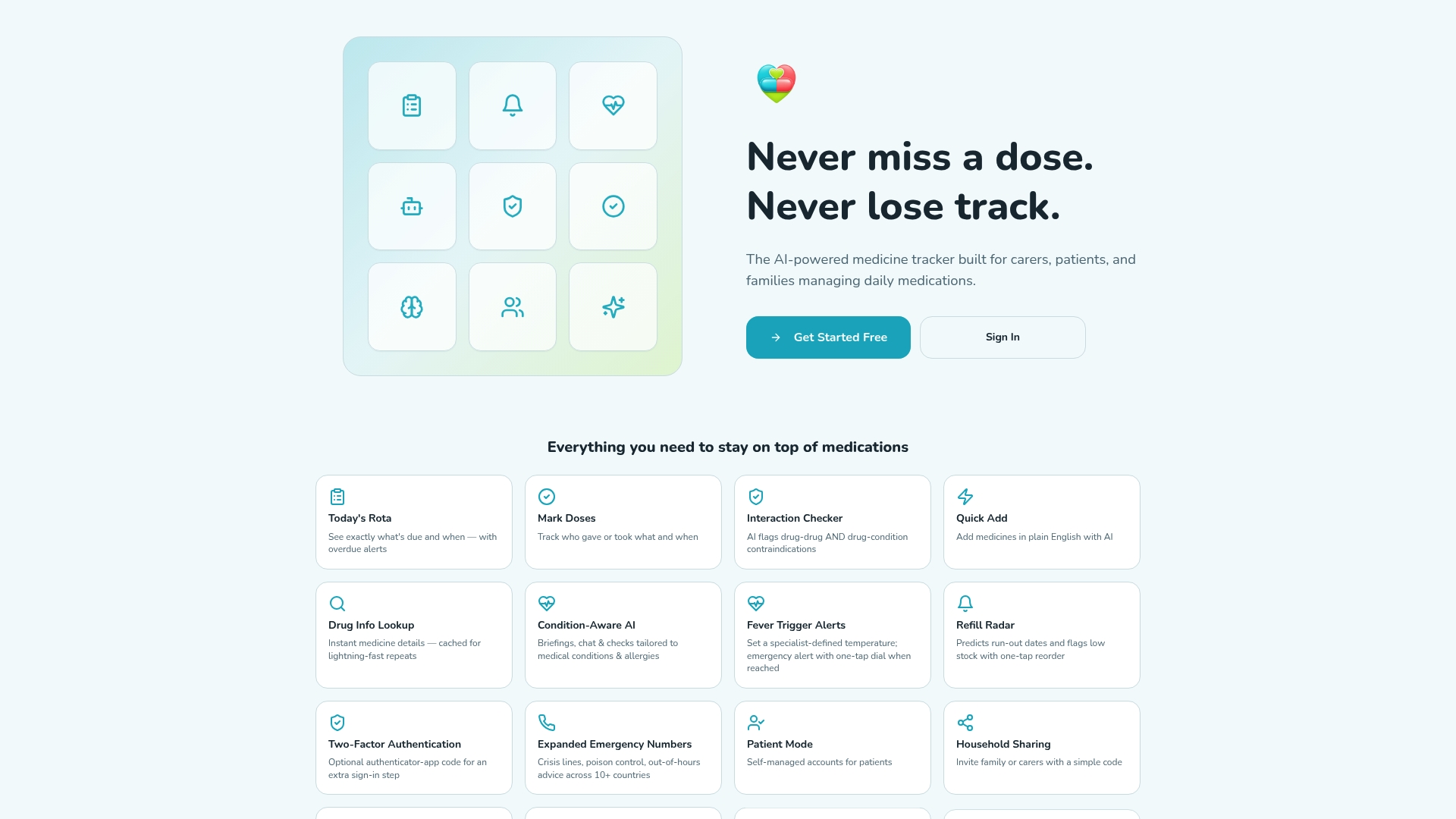
The platform creates and monitors medication schedules, logs every dose with a timestamp, and sends real-time alerts when a dose is due or overdue. Drug interaction checks and condition-specific guidance add a clinical safety layer that paper systems cannot replicate. Multi-patient management and household sharing make it practical for both family carers and professional care teams. You can explore the full feature set and get started for free, or review plan options if you are managing care at a professional level.
FAQ
What is the best way to set up a medication schedule for a dementia patient?
Anchor each dose to an existing daily habit such as a mealtime, use the same location and cup every day, and log every administration immediately. A digital tracking platform adds real-time alerts and shared carer visibility that paper systems cannot provide.
How do I handle medication refusal in a dementia patient?
Step back, assess for signs of pain or discomfort, and try again in ten minutes using a calm tone and a preferred drink. Persistent refusal over several days should prompt a professional review of the medication regimen itself.
Is it safe to crush tablets for a dementia patient who has difficulty swallowing?
Not without pharmacist approval. Extended-release and enteric-coated tablets can be harmful or ineffective if crushed. Ask the pharmacist about liquid alternatives or patch formulations instead.
How often should a dementia patient's medication schedule be reviewed?
At least every six months, or after any significant change in health, hospitalisation, or new prescription. Regular reviews allow for deprescribing and regimen simplification as the patient's condition evolves.
How do multiple carers avoid dosing errors?
Use a shared medication log that records the time, dose, and carer name for every administration. Digital platforms with multi-carer access, such as Thedailydosetracker, provide a live record visible to all authorised carers simultaneously.