

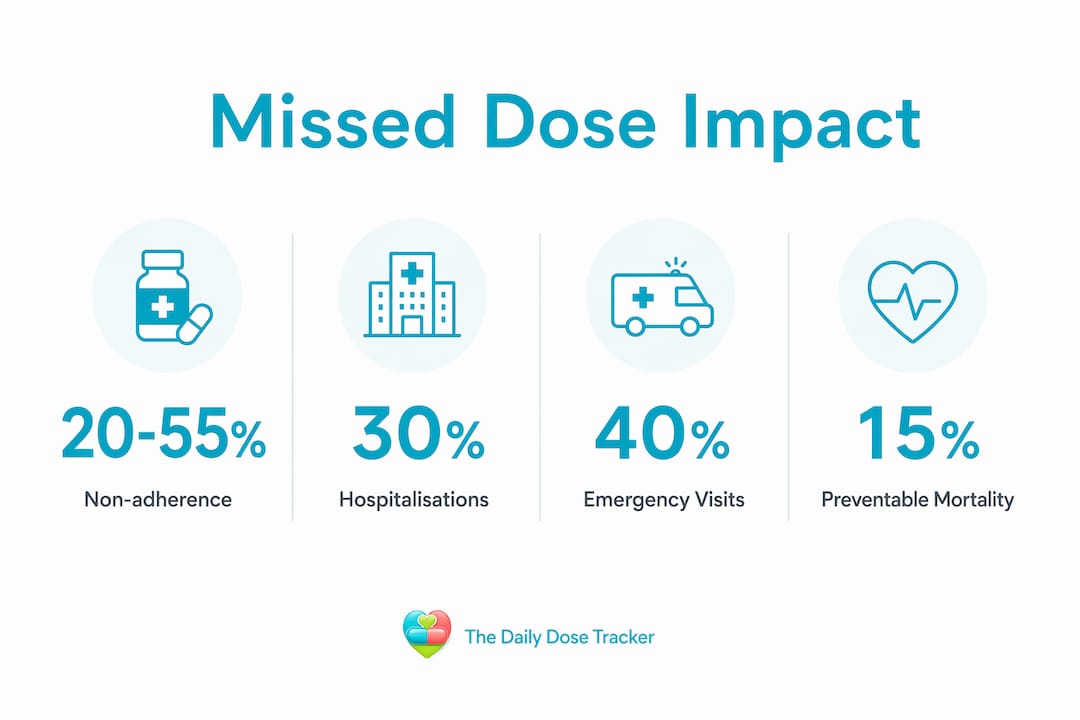
Missed medication doses are a leading cause of preventable hospitalisation in older adults, and the risks compound quickly when doses are skipped repeatedly. Medication non-adherence, the clinical term for failing to take prescribed medicines as directed, affects between 20% and 55% of older adults. That range is not a minor statistical footnote. It means that in any given care setting, up to half the elderly patients you support may not be taking their medicines correctly. Understanding why missed doses are serious for elderly individuals is the first step towards protecting someone you care for.
Why are missed doses serious for elderly patients?
Older adults carry a heavier medication burden than any other age group. Most manage at least one chronic condition, and many manage several simultaneously. When a dose is skipped, the therapeutic level of a drug in the bloodstream drops. For conditions like hypertension, heart failure, or type 2 diabetes, that drop can trigger a cascade of complications within hours.

The consequences of skipped doses are not abstract. Consider a senior managing atrial fibrillation with a blood thinner. One missed dose raises stroke risk. Two or three missed doses in a week can destabilise a condition that had been controlled for years. The effects of missed medication in elderly individuals include dizziness, confusion, and falls, symptoms that caregivers often attribute to ageing rather than medication mismanagement.
The health risks break down across several categories:
- Cardiovascular instability: Missed antihypertensives cause blood pressure spikes that increase stroke and heart attack risk.
- Diabetic crises: Skipping insulin or oral hypoglycaemics leads to dangerous blood glucose swings.
- Falls and fractures: Inconsistent dosing of medications for Parkinson's disease or osteoporosis disrupts balance and bone protection.
- Cognitive deterioration: Missing doses of anti-dementia medicines accelerates cognitive decline and increases behavioural disturbance.
- Worsening mental health: Irregular antidepressant or antipsychotic use causes mood instability and withdrawal-like effects.
The non-adherence rate linked to emergency visits and preventable mortality is a stark reminder that this is not a minor compliance issue. It is a patient safety crisis that caregivers are uniquely positioned to address.
What factors cause elderly patients to miss their medication?
The reasons older adults miss doses are rarely about unwillingness. They are structural, cognitive, and social. Recognising these factors helps you design support that actually works.
-
Cognitive impairment. Dementia and mild cognitive impairment disrupt the memory and planning needed to maintain a daily medication routine. Approximately 40.8% of individuals on anti-dementia medications show non-adherence, with nearly 30% stopping treatment within 90 days. This is not forgetfulness in the ordinary sense. It is a symptom of the very condition the medicine is meant to treat.
-
Polypharmacy. Many older adults take five or more medicines daily. Complex regimens with different timings, food restrictions, and dosing instructions create genuine confusion. Medication errors including double dosing, missed doses, and timing errors are frequently caused by this complexity.
-
Physical limitations. Arthritis, poor eyesight, and reduced dexterity make opening blister packs or reading small print genuinely difficult. These are not excuses. They are physical barriers that require practical solutions.
-
Social isolation. Older adults living alone have no one to prompt or observe their medication routine. Social isolation is statistically correlated with declining medication adherence. Social support mediates health routine maintenance, which means that loneliness is a direct risk factor for missed doses.
Pro Tip: When reviewing an elderly person's medication routine, ask them to demonstrate how they take their medicines. Physical difficulty with packaging or confusion about timing often only becomes visible when you watch the process directly.
Cognitive impairment and frailty are primary drivers of non-adherence, and the research is clear that self-management alone is insufficient as these conditions progress. Caregiver-supported systems are not optional extras. They are clinical necessities.
How can caregivers tell the difference between side effects and missed dose symptoms?
This is one of the most practically important questions a caregiver can ask. The signs of a missed dose in elderly patients and the signs of a medication side effect can look similar on the surface. Getting this distinction right determines whether you call the GP, adjust the routine, or seek emergency care.
| Symptom Pattern | Side Effect | Missed Dose |
|---|---|---|
| Timing | Appears shortly after taking the medicine | Appears hours after a scheduled dose is due |
| Consistency | Occurs reliably after each dose | Occurs inconsistently, linked to gaps in the routine |
| Nature | New or unusual symptoms after starting or changing a medicine | Return or worsening of the original condition |
| Examples | Nausea, rash, drowsiness after dosing | Blood pressure spike, blood glucose rise, increased confusion |
| Resolution | May improve as the body adjusts | Resolves when the missed dose is taken or the routine resumes |
Side effects present shortly after dosing with consistent timing, whereas non-adherence causes inconsistent symptoms tied to gaps in the medication schedule. This distinction matters because treating a missed dose symptom as a side effect can lead to unnecessary dose reductions or discontinuation, making the underlying condition worse.
Unexplained new symptoms in seniors, such as dizziness or mental fog, often indicate non-adherence rather than cognitive decline. Cross-checking a medication log before drawing any diagnostic conclusions is the most reliable first step.
Pro Tip: Keep a simple written log noting the time each dose is taken and any symptoms that follow. When you speak to a GP or pharmacist, this log transforms a vague concern into a clear clinical picture. Thedailydosetracker supports this with built-in medication logs for clinical decisions that you can share directly with healthcare providers.
What can caregivers do to prevent missed doses in elderly patients?
Preventing missed doses requires a combination of practical tools, routine design, and professional support. The importance of medication adherence is well established in clinical research, but translating that into daily caregiving practice is where most families need guidance.
Organise the physical environment first. Pill organisers with daily or weekly compartments reduce confusion and make it immediately visible whether a dose has been taken. Blister packs dispensed by a pharmacist go further by pre-sorting doses by day and time. Pill organisers, blister packs, and reminder apps significantly reduce missed doses and improve adherence in seniors. The evidence for these tools is consistent across multiple studies.
Build the routine around existing habits. Linking medication to a fixed daily event, such as breakfast, the morning news, or brushing teeth, reduces the cognitive load required to remember. For seniors with early cognitive decline, this habit-stacking approach is more reliable than relying on memory alone.
Use technology where it fits. Smartphone reminder apps, smart pill dispensers, and digital tracking platforms provide alerts for due or overdue doses. Thedailydosetracker offers real-time alerts, drug interaction checks, and multi-patient management, making it particularly suited to families managing complex medication schedules across multiple conditions.
Schedule regular medication reviews. A GP or pharmacist-led medicines review can simplify a complex regimen, identify unnecessary duplications, and adjust timing to reduce the number of daily doses. For seniors managing multiple conditions, a guide to managing prescriptions across several diagnoses is a practical starting point.
Involve professional support when needed. Home care workers, community nurses, and pharmacist-led blister pack services exist precisely for situations where family caregivers cannot be present at every dose time. Recognising when you need that support is not a failure. It is good care planning.
Caregiver-supported systems are the most effective response to cognitive decline and frailty. The research from 2015 to 2025 consistently shows that reducing reliance on self-administration improves outcomes. You are not overstepping by taking a more active role. You are responding to clinical evidence.
Key takeaways
Missed medication doses in elderly patients are a patient safety issue, not a compliance problem, and caregiver-supported systems are the most effective response.
| Point | Details |
|---|---|
| Non-adherence is widespread | Between 20% and 55% of older adults do not take medicines as prescribed, raising hospitalisation risk. |
| Cognitive decline drives missed doses | Nearly 30% of dementia patients stop anti-dementia treatment within 90 days, requiring caregiver oversight. |
| Side effects and missed doses look different | Side effects follow dosing consistently; missed dose symptoms appear when the routine breaks down. |
| Practical tools reduce errors | Pill organisers, blister packs, and reminder apps are evidence-backed tools for improving adherence. |
| Social support matters | Loneliness directly reduces medication adherence; regular contact with a caregiver is itself a health intervention. |
The part most caregivers miss until it is too late
I have worked alongside families managing elderly relatives' health for long enough to notice a pattern. The crisis rarely comes from a single missed dose. It comes from weeks of partial adherence that nobody noticed because the person seemed fine. Blood pressure crept up. Blood glucose drifted. And then one morning there was a fall, or a stroke, or a hospital admission that felt sudden but was not.
The uncomfortable truth is that most caregivers focus on the dramatic moments and underestimate the slow erosion. A senior who takes their morning medicines but forgets the evening ones half the time is not adherent. They are partially adherent, which for many conditions is almost as risky as not taking the medicine at all.
What I have found genuinely useful is shifting the framing. Stop thinking about medication management as a task and start thinking about it as a communication system. Every dose taken or missed is a data point. When you track it consistently, patterns emerge. You notice that doses are missed more often on days when the person is tired, or when the packaging changes, or when a visitor disrupts the routine. That information is clinically valuable.
The other thing I would say directly: do not wait for a GP appointment to raise concerns. Pharmacists in the UK are accessible, knowledgeable, and underused by most families. A 10-minute conversation with a pharmacist about a complex regimen can prevent months of problems. Use that resource.
— Prasant
How Thedailydosetracker supports elderly medication management
Managing medication routines for an elderly relative is genuinely demanding, and the stakes are high. Thedailydosetracker is a free medicine management platform built specifically for carers and families in situations like yours.
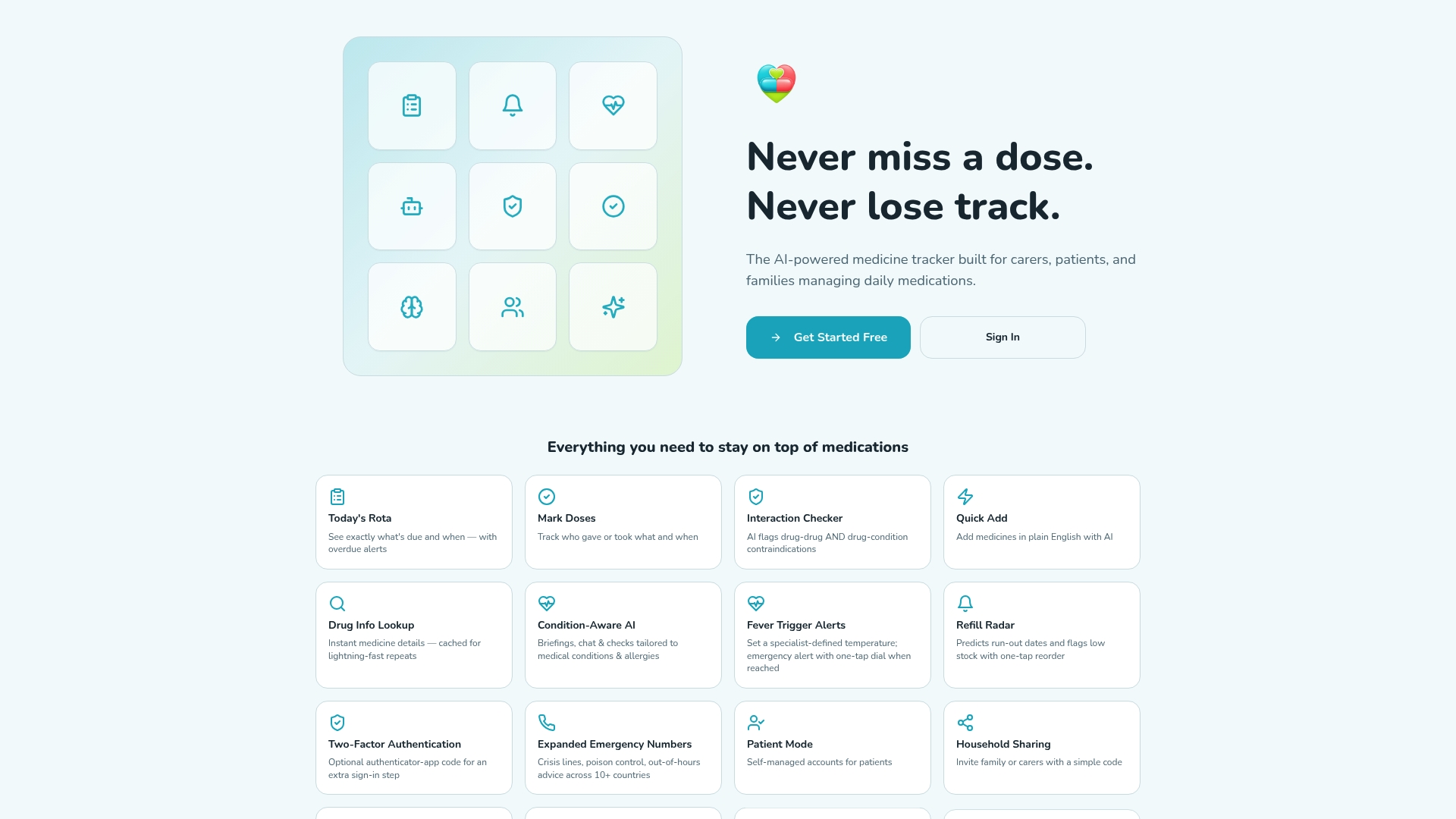
The platform lets you log doses, set real-time alerts for missed or overdue medicines, run drug interaction checks, and share records directly with healthcare providers. For families managing multiple conditions or multiple patients, the multi-patient dashboard and household sharing features remove the guesswork. You can start with the free medicine app and access all core features without a subscription. If you are looking for a structured starting point, the elderly medication management checklist on the Thedailydosetracker blog is a practical first step.
FAQ
What are the most common signs of a missed dose in elderly patients?
The most common signs include a return or worsening of the original condition, such as rising blood pressure, increased confusion, or blood glucose instability. These symptoms appear inconsistently and are linked to gaps in the medication routine rather than a new illness.
How do missed doses affect elderly patients differently from younger adults?
Older adults have less physiological reserve, meaning their bodies recover more slowly from therapeutic gaps. A single missed dose of a heart or blood pressure medicine can trigger complications in an elderly patient that a younger adult might tolerate without immediate effect.
Why do seniors forget their medications so often?
Cognitive impairment, complex regimens, and social isolation are the three primary drivers. Dementia directly impairs the planning and memory needed to maintain a daily routine, while polypharmacy creates genuine confusion even for cognitively intact older adults.
When should a caregiver contact a GP about missed doses?
Contact a GP if missed doses have caused visible symptoms, if the person has missed doses of a high-risk medicine such as a blood thinner or insulin, or if you suspect the regimen has become too complex to manage safely at home.
Can a medication reminder app genuinely reduce missed doses?
Yes. Reminder apps and pill organisers are among the most consistently evidence-backed tools for improving adherence in seniors. Digital platforms that also log doses and flag interactions provide an additional layer of safety beyond simple reminders.