
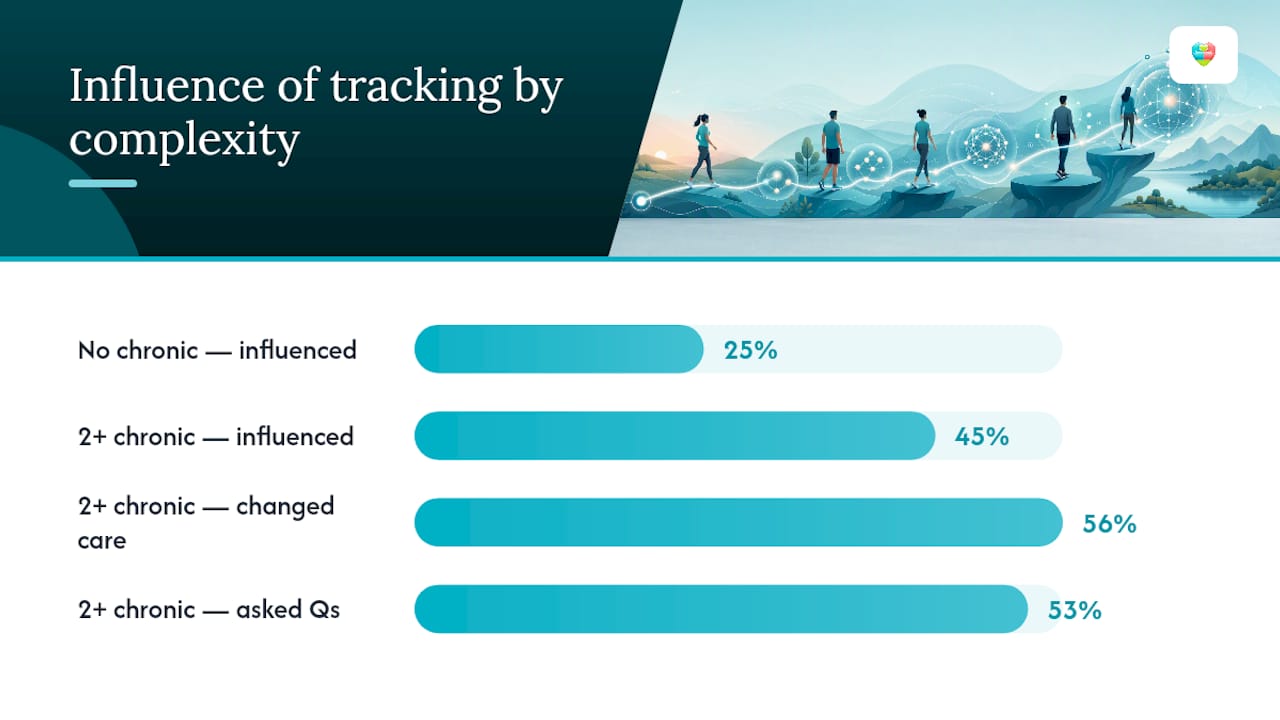
Patients track their conditions to improve medication adherence, catch deterioration before it becomes an emergency, and walk into appointments with objective data instead of a foggy memory of "some bad days last week." That's the whole case in one sentence, and the evidence backs it up: patients with two or more chronic conditions are far more likely to say tracking changed how they manage their health, with 56% reporting it shifted their approach to care and 53% using their data to ask doctors sharper questions. Platforms such as Thedailydosetracker exist precisely because this kind of record keeping, done manually, is exhausting to sustain.
This article covers the practical benefits patients report, which conditions and symptoms are worth tracking, how that data actually changes what happens in a consultation room, the tools available and their trade-offs, the real downsides nobody warns you about, and what the evidence actually supports once you strip out the marketing gloss.
- Better medication adherence through reminders and visible patterns
- Earlier detection of deterioration, before it becomes a crisis
- More productive, specific conversations with clinicians
- A stronger sense of control over an unpredictable condition
Key Takeaways
Condition tracking works best when patients pair one clear metric with a consistent sharing habit, because complex or abandoned tracking rarely changes clinical outcomes.
| Point | Details |
|---|---|
| Adherence improves with reminders | Automated dose alerts close the memory gap that causes most missed medications. |
| Multimorbidity amplifies benefit | Patients with two or more conditions report the largest gains in treatment decisions and clinician conversations. |
| Device data outweighs manual logs | Clinicians tend to trust sensor and lab readings over free-text diaries when making decisions. |
| Burden and anxiety are real risks | Tracking can feel like extra labour and trigger negative emotions if not scoped carefully. |
| Start with one metric | A single, well-shared metric sustains longer than an ambitious multi-symptom log. |
Table of Contents
- Patient benefits of condition tracking that actually show up in daily life
- Which conditions benefit most from tracking
- How tracked data actually changes what your clinician does
- Apps, wearables and medical devices: choosing the least burdensome option
- The downsides nobody mentions: burden, anxiety and bad data
- What the evidence actually shows about who benefits and by how much
- How Thedailydosetracker reduces the burden of everyday tracking
- Starting small: how to make tracking stick without burning out
- Frequently asked questions about condition tracking
- Sources
Patient benefits of condition tracking that actually show up in daily life
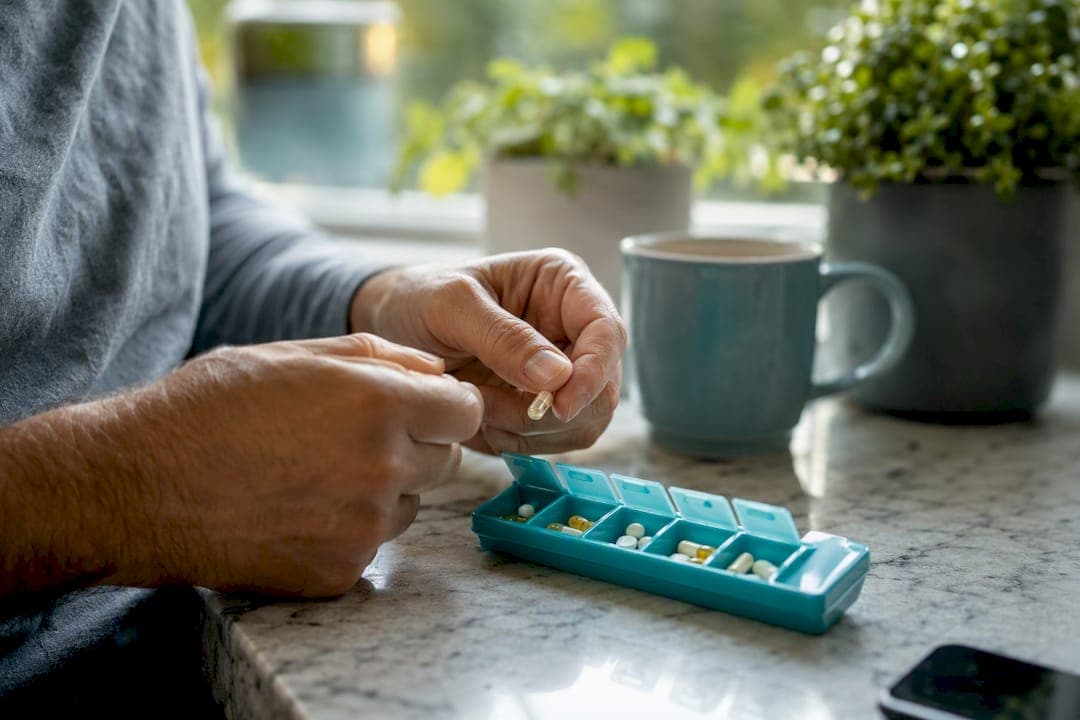
The single most common reason patients start tracking is adherence. A missed dose here or there feels harmless in the moment, but for conditions like hypertension or epilepsy, gaps in medication compliance are where things go wrong. A reminder that flags an overdue dose, paired with a visible log of what's actually been taken, closes that gap in a way that memory alone cannot. Health app users report higher treatment adherence and greater confidence managing their conditions than people who don't use any tracking tool at all, and they discuss app-derived outcomes with clinicians more often too.
Quick stat: patients with two or more chronic conditions were nearly twice as likely as those with none to say tracking influenced their treatment decisions, 45% versus 25%. That gap widens further when you look at who brings new questions to their doctor rather than just answering the usual ones.
The second benefit is subtler but arguably more valuable: richer data for appointments. A ten-minute consultation cannot reconstruct three months of symptom fluctuation from memory. A log that shows blood pressure spiking every Tuesday after a particular medication timing change, or migraines clustering around specific weather patterns, gives a clinician something concrete to act on rather than a vague "I've been feeling off." This is where tracking earns its keep. It turns a patient's lived experience into something a doctor can actually use, converting scattered memories into a pattern a clinician can act on rather than guess at.
Then there's early detection. COPD patients whose oxygen saturation trends downward over several days, or heart failure patients whose weight creeps up from fluid retention, often show warning signs well before they feel unwell enough to seek help. Catching that trend early is the difference between a medication adjustment over the phone and an ambulance.
- Fewer missed doses because reminders catch what memory misses
- More specific, evidence-backed conversations at appointments
- Deterioration flagged days before symptoms become severe
- A visible record that reinforces small wins, which sustains motivation
Pro Tip: Don't track everything at once. Pick the one metric that matters most for your condition, weight for heart failure, peak flow for asthma, mood for depression, and get that habit solid before adding a second thing.
Which conditions benefit most from tracking
Not every condition needs the same level of scrutiny, and knowing where tracking is genuinely actionable versus just interesting saves you from drowning in data that goes nowhere.
Chronic, slow-moving conditions dominate the list because small daily changes accumulate into meaningful trends:
- Diabetes: blood glucose readings, carbohydrate intake, insulin timing, and HbA1c trends over months
- Hypertension: home blood pressure readings at consistent times, correlated against medication timing and salt intake
- COPD: oxygen saturation, breathlessness scores, and frequency of rescue inhaler use
- Heart failure: daily weight (fluid retention is often the earliest warning sign) and swelling in the ankles or legs
Episodic conditions work differently. Migraine sufferers track triggers, food, sleep, stress, hormonal cycles, because the value lies in spotting patterns across dozens of episodes rather than any single one. IBS patients do something similar with food diaries. Mental health tracking, mood scores, sleep quality, medication timing, tends to reveal slow drifts that are nearly invisible day to day but obvious across a month.
Post-operative and short-term monitoring is its own category. A patient recovering from surgery might track wound appearance, pain levels, and temperature for two to four weeks, then stop entirely once the risk window closes. This is where tracking is most clearly actionable: a fever spike or a wound that looks wrong triggers an immediate call to a clinician, not a shrug.
The distinction that matters is actionable versus informative. Blood pressure trending upward over a fortnight is actionable, it changes what your doctor prescribes. A single bad night's sleep logged in isolation is informative at best. If a metric never changes what you or your clinician does, it's probably not worth the daily effort of logging it.
How tracked data actually changes what your clinician does
Data sitting in an app is worthless until it reaches the person who can act on it. Clinicians increasingly build tracked data into three parts of the care pathway.
- Medication reviews. A GP reviewing a hypertension patient's six months of home readings can adjust dosage with far more confidence than relying on a single in-clinic reading, which is notoriously prone to "white coat" spikes.
- Remote monitoring programmes. Diabetes and heart failure patients enrolled in structured RPM schemes have their glucose or weight data reviewed between visits, letting the care team intervene before a scheduled appointment even happens.
- Escalation triggers. A sharp change, a fever, an oxygen drop, a spike in blood pressure, can prompt a same-day call rather than waiting weeks for the next routine check-in.
Here's the part patients often don't expect: clinicians tend to trust device-generated data more than free-text diaries. A glucose meter reading carries more clinical weight than a written note saying "sugar felt high today," partly because sensor data is objective and partly because self-reported logs are harder to verify quickly in a packed clinic schedule. That doesn't make manual logging useless, but it does mean pairing a diary entry with an objective reading whenever possible strengthens your case.
Pro Tip: Before an appointment, export a one-page summary showing dates, peak values, and any flagged events rather than handing over weeks of raw entries. Clinicians uptake a tidy trend line far faster than a wall of numbers, and a well-prepared medication review summary tends to get more attention in a short consultation.
Consistency in format matters more than most patients realise. A log that records blood pressure at the same time each day, with the same cuff, in the same posture, is more useful than three times the data collected haphazardly. Clinicians can spot a real trend far faster in consistent data than in noisy data, no matter how much of it there is.
Apps, wearables and medical devices: choosing the least burdensome option
The tool you choose should match your condition's actual monitoring needs, not the most feature-packed option available. Smartphone apps and manual symptom diaries sit at one end of the spectrum: flexible, cheap, and adaptable to almost any symptom, but entirely dependent on you remembering to open the app and type something in. That flexibility is also their biggest weakness, because the moment life gets busy, manual logging is usually the first habit to slip.
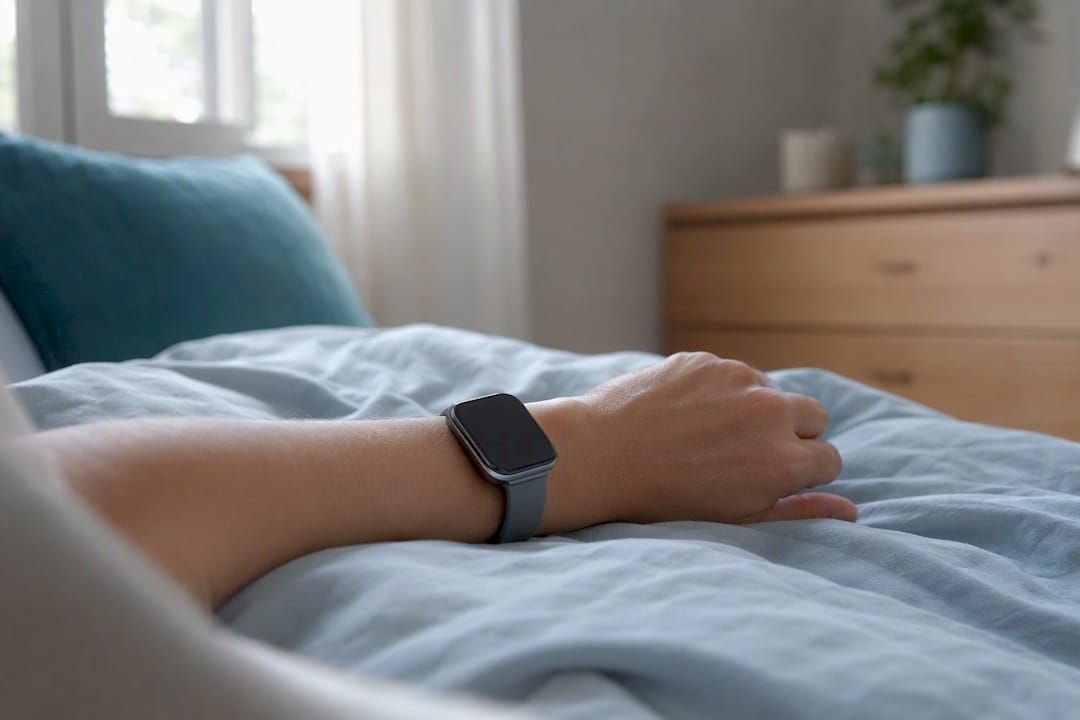
Wearables and consumer smartwatches occupy the middle ground. Recent research frames their value across three functions: monitoring, nudging, and predicting. Monitoring covers passive data collection, heart rate, steps, sleep. Nudging covers reminders and gentle behavioural prompts. Predicting is the emerging frontier, using accumulated data to flag risk before symptoms appear, though this function is still maturing and accuracy varies by device and by what's actually being measured.
Medical-grade devices sit at the top for precision. Continuous glucose monitors, validated home blood pressure cuffs, and pulse oximeters are preferred whenever a clinical decision hinges on the reading, because consumer wearables simply aren't built or certified to the same accuracy standard. A cheap fitness tracker's heart rate estimate is fine for a morning jog; it's not a substitute for a clinically validated pulse oximeter if your COPD care plan depends on that number.
Quick stat: reviews of wearable use in chronic disease note that continuous monitoring can meaningfully support early detection, but many of these technologies still haven't made the leap into routine clinical practice because of integration, accuracy validation, and policy gaps.
- Apps and diaries: flexible and free, but they demand consistent manual effort
- Consumer wearables: good for trends and nudges, weaker for clinical-grade precision
- Medical devices (CGMs, BP cuffs, oximeters): the accuracy clinicians trust, at a higher cost and less convenience
- Integration matters as much as accuracy: a device that can't export a clean summary is only half useful
Cost and access shape this choice as much as clinical need does. A validated home BP monitor costs a fraction of a CGM system, and not every patient needs continuous glucose data, most type 2 diabetics manage well with periodic fingerstick checks and a simple log.
The downsides nobody mentions: burden, anxiety and bad data
Tracking is not a neutral act. It has real costs, and pretending otherwise sets patients up to abandon it within weeks.
The most common failure mode is simple fatigue. Logging symptoms daily, on top of managing a condition that's already demanding, becomes another chore. Qualitative research on patients with multiple chronic conditions found that many describe tracking explicitly as work, not empowerment, and that the emotional weight of data can be considerable.
"You get reminded you're a sick person" was how one patient described the daily act of logging symptoms, a phrase that captures how tracking can reinforce illness identity rather than support recovery. The same research found that clinicians often placed more trust in lab and sensor data than in patients' own logs, which left some patients feeling their effort went unacknowledged.
That emotional dimension is easy to underestimate. Watching a chart of worsening numbers can trigger genuine anxiety, particularly for mental health tracking, where a low mood score staring back at you each morning can become its own trigger rather than a helpful signal.
There's also a data-quality problem. Self-reported entries are prone to recall bias, rounding, and simple inconsistency, exactly the reasons clinicians lean toward device data. And privacy deserves real scrutiny before you commit to any platform:
- Check what happens to your data if you stop using the app, does deletion mean actual deletion?
- Look for explicit UK GDPR compliance, not vague "we protect your privacy" language
- Understand who else can see shared household or multi-patient data, and whether that access is revocable
- Ask whether the platform sells or shares data with third parties for purposes beyond your care
None of this means tracking isn't worth doing. It means going in with realistic expectations about the effort and the emotional cost involved.
What the evidence actually shows about who benefits and by how much
The strongest signal in the research is that tracking's value scales with complexity. Patients managing a single, stable condition often find tracking mildly useful. Patients juggling multiple chronic conditions find it transformative, largely because they have more to lose from missed patterns and more decisions where objective data genuinely shifts outcomes.
| Study | Population | Key finding |
|---|---|---|
| Pew Research Center (2013) | US adults tracking health data | Patients with 2+ chronic conditions: 56% changed care approach, 53% asked new questions, 45% influenced treatment decisions |
| BMC Public Health / Springer | Health app users vs non-users | Higher self-reported adherence and confidence among app users; more frequent clinician discussion of app data |
| PMC review, continuous monitoring | Chronic disease populations | Early detection and tertiary prevention benefits, but many technologies remain outside routine clinical use |
| JMIR (2015) | Patients with multiple chronic conditions | Tracking often experienced as labour; clinicians favoured sensor data over self-reported logs |
Quick stat: among patients with no chronic conditions, only 25% said tracking influenced a treatment decision, compared with 45% among those managing two or more, nearly double.
The caveats matter as much as the headline numbers. Most of the strongest evidence comes from self-reported surveys and qualitative interviews rather than large randomised trials, so causation is harder to prove than correlation. Continuous monitoring technologies show real promise for early detection and prevention, but the same review notes that translation into everyday clinical workflows is slowed by inconsistent data standards, limited integration with electronic health records, and patchy policy support. In plain terms: the tools work better in research settings than they currently do in the average GP surgery.
How Thedailydosetracker reduces the burden of everyday tracking
Most of the harms described above, the daily grind of logging, the friction of getting clinicians to actually look at your data, come down to poor tool design rather than tracking itself being a bad idea. Thedailydosetracker was built around that exact problem.
Automated dose reminders and refill predictions cut the daily labour that causes most manual logs to lapse within weeks. Drug interaction checks and condition-specific guidance catch risks a patient juggling several medications might miss. Household sharing and multi-patient management matter enormously for carers managing medication for elderly relatives, where one person is often coordinating several people's schedules at once.
- Real-time alerts for overdue or upcoming doses, reducing reliance on memory alone
- Symptom and diary logging that pairs with medication data for richer clinician conversations
- Emergency contact integration for fast escalation when something looks wrong
- UK GDPR-compliant data handling, with accessibility options including dark mode and adjustable font sizes
Pro Tip: If you're caring for someone with multiple prescriptions, set up household sharing before an appointment, not after. A shared, exportable history saves the scramble of trying to remember dosage changes from memory during a ten-minute consultation.
Starting small: how to make tracking stick without burning out
The patients who keep tracking long-term almost never start by logging everything. They pick one metric that maps directly to one goal, weight for fluid retention, peak flow for asthma control, and give it a fixed cadence for sharing: weekly with a carer, or at each clinic visit.
Watch for two signals. If your log is changing a decision, a medication tweak, a call to your GP, an earlier appointment, it's working. If you're logging out of habit or anxiety with no decision ever resulting from it, that's a sign to simplify or stop. Tracking that produces no action is just extra labour dressed up as diligence, and the qualitative research on tracking fatigue backs that instinct up.
A short onboarding checklist helps:
- Choose one primary metric tied to a clear clinical goal
- Decide who sees the data and how often, weekly for a carer, monthly for a GP
- Set one reminder time and stick to it for at least two weeks before judging whether it's helping
- Tell your clinician you're tracking, and ask what format they'd find useful to review
Small, consistent, and shared beats comprehensive and abandoned every time.
Frequently asked questions about condition tracking
Why do patients use condition tracking instead of just relying on memory? Memory is unreliable for anything beyond a few days, and clinicians need patterns, not isolated moments. Tracking converts scattered recollections into a timeline that shows trends, triggers, and warning signs a single conversation could never capture.
Does condition tracking actually change what my doctor prescribes? It can. Patients with multiple chronic conditions who tracked their health were nearly twice as likely to say the data influenced a treatment decision compared with patients managing no chronic conditions, largely because objective trends give clinicians more to act on than a verbal summary.
Is it better to use a wearable or a manual log? It depends on your condition and how much daily effort you can sustain. Wearables reduce manual work but vary in accuracy; manual logs are flexible but tend to lapse without reminders. Many patients get the best results pairing occasional device readings with brief manual notes on anything unusual.
Can tracking make my anxiety worse? For some patients, yes. Watching numbers that look worrying, particularly around mood or weight, can heighten distress rather than ease it. If tracking starts feeling like a source of dread rather than reassurance, it's worth scaling back to one low-stress metric or pausing entirely.
What should I check before choosing a tracking app? Confirm it states UK GDPR compliance clearly, check what happens to your data if you delete your account, and check whether it can export a clean summary your clinician can actually use in a short appointment.
Sources
For readers who want to go deeper into the evidence, the Pew Research Center's report on patient tracking remains the clearest large-scale look at who benefits most. The BMC Public Health study on health app usage offers a more recent look at adherence outcomes, while the JMIR interview study gives essential context on the emotional side of tracking. For device-specific guidance, the PMC review on smartwatches in healthcare covers accuracy and validation questions worth raising with your GP.
- Pew Research Center — Main report (2013)
- Health apps: a cross-sectional study exploring patient motivations and usage implications | BMC Public Health (2025)
- The value of smartwatches in healthcare: monitoring, nudging and predicting — PMC