
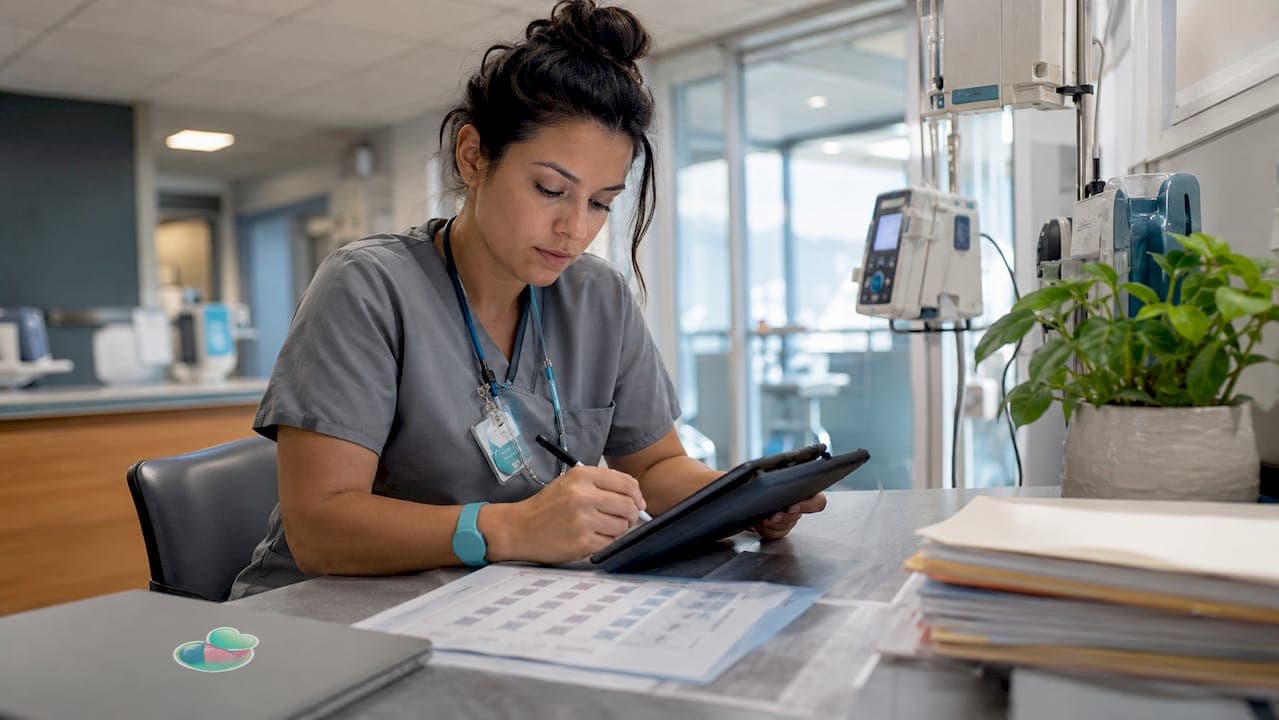
Tracking symptom medication links is the clinical practice of connecting a patient's reported or observed symptoms to specific medications, their timing, and their effects. Nurses use this practice as the foundation of safe medication management, and it is recognised within NHS guidelines, the Medication Administration Record (MAR) framework, and UK Oncology Nursing Society (UKONS) protocols. Without it, adverse drug reactions go undetected, doses are duplicated or omitted, and care teams lose the shared clinical picture they need to make good decisions. The stakes are high: incomplete follow-up documentation is a primary cause of medication errors in nursing practice.
Why nurses track symptom medication links: the clinical case
Symptom medication link tracking gives nurses the evidence they need to judge whether a drug is working, causing harm, or no longer needed. That judgement cannot be made from a single observation. It requires a pattern, and patterns require consistent, structured documentation.
The benefits are measurable. Nurse-led digital symptom monitoring that links symptoms to medication improved chemotherapy completion rates to 86.8%, compared with 70.3% in standard care. That 16-percentage-point gap represents patients who finished treatment because a nurse caught a problem early and acted on it.
The core clinical reasons nurses document these links include:
- Adverse drug reaction detection. Symptoms such as rash, nausea, or confusion, logged alongside medication timing, reveal patterns that a single clinical note cannot.
- Effectiveness monitoring. If a patient's pain score does not drop after analgesia, the nurse needs that data to escalate or adjust the plan.
- Duplication and omission prevention. The MAR reduces duplicate therapy and adverse drug events through structured documentation of what was given and when.
- Collaborative decision-making. Symptom medication data shared at handover gives the incoming nurse and the wider team a clear clinical picture without relying on memory.
Tracking is not bureaucratic box-ticking. It is the mechanism by which nurses protect patients from the compounding risks of polypharmacy and complex treatment regimens.
What are the best practices for documenting symptom medication links?
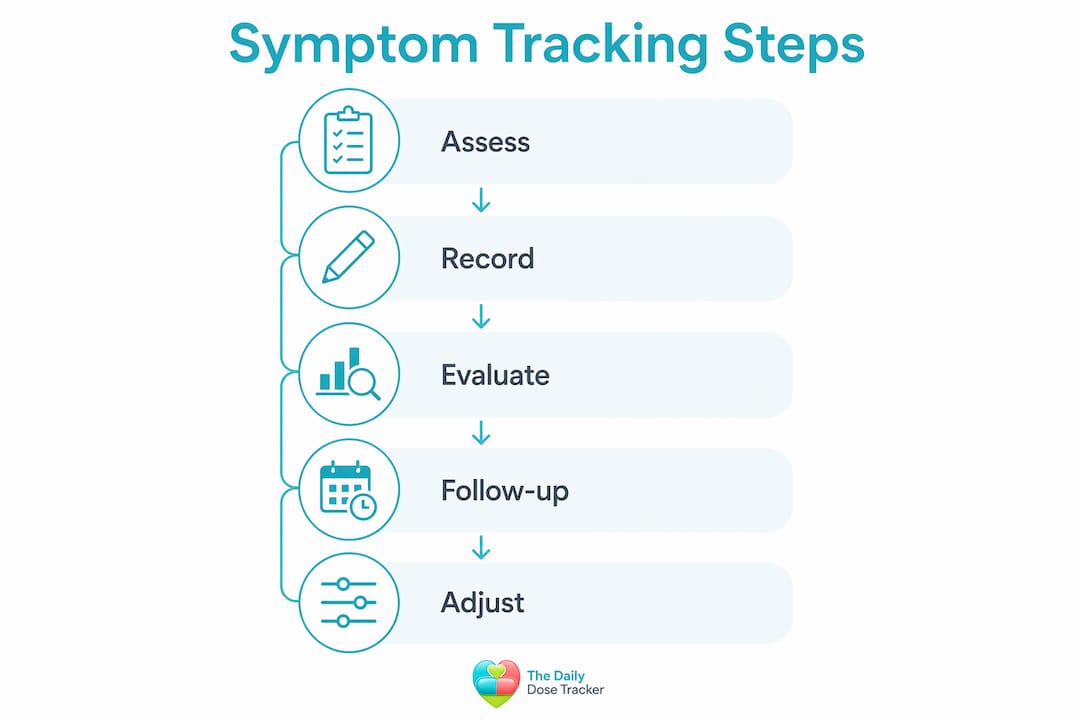
Evidence-based documentation follows a clear sequence. Nurses who apply it consistently reduce errors and produce records that genuinely support clinical decisions.
- Record the clinical trigger before administration. For PRN (as required) medications, document the symptom or score that justified the dose. A pain scale reading, a temperature, or a respiratory rate gives the next clinician the reason, not just the action.
- Administer and log the dose on the MAR. The MAR functions as a decision-support tool for interdisciplinary communication, not merely a record of what was dispensed.
- Complete a follow-up assessment within 30–60 minutes. PRN documentation standards require this window to verify whether the medication achieved its intended effect. Skipping this step is the most common pitfall in PRN tracking.
- Close the loop in writing. Record the patient's response: did the pain score drop? Did the fever resolve? A note that says "paracetamol given" without a follow-up is clinically incomplete.
- Track at consistent times. Symptom assessments taken at irregular intervals produce data that is difficult to interpret. Fixed assessment windows, such as pre-dose and one hour post-dose, create reliable comparison points.
Pro Tip: Set a recurring reminder for the 30-minute post-dose assessment on any ward system or digital tool you use. Missing this window is the single most common gap in PRN documentation, and it is the gap most likely to be flagged in a medication safety audit.
Consistency in timing matters as much as the content of the record. A symptom score taken at different points each shift tells you less than a score taken at the same point every time.
What challenges do nurses face in linking symptoms and medications?
The clinical rationale for tracking is clear. The practical barriers are equally real, and ignoring them produces advice that nurses cannot use.
Cognitive burden is the primary obstacle. Manual double-checking for high-alert medications, such as anticoagulants, insulin, and opioids, is mentally taxing. When nurses manage large patient loads, the documentation quality for lower-acuity patients often suffers first.
Fragmented reporting compounds the problem. When symptoms are logged in one system and medication records sit in another, nurses must mentally bridge two data sets on every assessment. That gap is where errors enter.
Alert fatigue is the third barrier. Digital decision support that maps symptoms to acuity tiers addresses this directly by organising alerts into Red, Amber, and Green categories. Nurses attend to urgent alerts rather than dismissing all of them because the volume is unmanageable.
The practical differences between documentation approaches are significant:
| Feature | Paper-based MAR | Digital clinical decision support |
|---|---|---|
| Alert management | Manual review | Acuity-tiered (Red/Amber/Green) |
| Follow-up prompts | Nurse-initiated | System-prompted at 30–60 minutes |
| Symptom-medication mapping | Separate records | Integrated view |
| Handover communication | Verbal or written summary | Shared digital record |
Digital medication logs reduce the cognitive load that causes errors in high-pressure ward environments. NHS episode-based review frameworks show that structuring alerts by episode rather than individual notifications helps nurses focus on urgent cases without dismissing the system entirely.
How does consistent patient symptom tracking support nurses?
Nurses depend on patient-reported data to make medication decisions, but that data is only useful when it is consistent. A patient who logs symptoms only on bad days gives their nurse a skewed picture.

Patients who track symptoms daily maintain 92% adherence compared with 63% for inconsistent trackers. That 30-percentage-point gap directly affects the quality of data nurses receive for medication evaluation. A nurse assessing whether a drug is working needs to know what the patient's baseline looks like, not just what their worst days look like.
Tracking during stable days provides clinicians with the baseline data needed to distinguish between an episodic reaction and chronic medication intolerance. Without that baseline, a nurse cannot tell whether a new symptom is a side effect of a recently started drug or a flare of an underlying condition.
Structured self-monitoring also benefits patients directly. Symptom tracking reduces illness-related anxiety and increases patient engagement in their own care. A patient who understands why they are logging symptoms is more likely to do it accurately and consistently.
Pro Tip: When educating patients about symptom logging, frame it as "recording your normal days" rather than "reporting problems." Patients who understand that stable-day data is clinically valuable are far more likely to log consistently.
Nurses who support patient self-administration with clear guidance on symptom logging receive better data and spend less time reconstructing a patient's recent history at each assessment.
What practical steps implement effective symptom medication tracking?
Moving from principle to practice requires a structured approach that fits into existing nursing workflows rather than adding to them.
- Integrate symptom data into handovers. Use the MAR and any digital symptom log as the basis for handover communication. A nurse receiving a patient should know the last symptom score, the last dose given, and the follow-up result before they enter the room.
- Coordinate with pharmacy on medication reviews. Pharmacists reviewing the MAR alongside symptom logs can identify patterns that individual nurses may miss across shifts, particularly for patients on multiple medications.
- Apply episode-based review to manage alert volume. Rather than reviewing each alert in isolation, group alerts by episode of care. This approach, supported by UKONS-informed triage frameworks, reduces alert fatigue and improves prioritisation.
- Educate patients on accurate symptom logging. Patients who understand what to record, and when, produce more reliable data. Explain the 30-minute post-dose window and why their experience in that window matters clinically.
- Use digital tools that connect symptom and medication records. A medication log used for clinical decisions is only as useful as the symptom context surrounding each entry. Platforms that integrate both reduce the manual bridging that causes errors.
Reviewing symptom medication data at regular intervals, rather than only when a problem is flagged, shifts nursing practice from reactive to anticipatory. That shift is where the greatest reduction in medication errors occurs.
Key takeaways
Nurses who systematically link symptoms to medication responses reduce errors, improve patient outcomes, and give care teams the shared clinical picture they need to act decisively.
| Point | Details |
|---|---|
| Follow-up assessment is non-negotiable | Document patient response within 30–60 minutes of PRN administration to verify effectiveness. |
| The MAR is a decision-support tool | Use it to communicate medication effectiveness across shifts, not just to record doses given. |
| Consistent patient tracking improves data quality | Daily symptom logs produce 92% adherence versus 63% with inconsistent tracking. |
| Digital acuity tiers reduce alert fatigue | Red/Amber/Green frameworks help nurses prioritise urgent cases without dismissing alerts. |
| Baseline data distinguishes reactions from intolerance | Stable-day symptom logs allow nurses to separate episodic side effects from chronic drug intolerance. |
Symptom medication tracking: what I have learned from clinical practice
Prasant writes: The conversation about symptom medication tracking in nursing often focuses on compliance and documentation standards. That framing misses the point. The nurses I have seen do this well are not thinking about audit trails. They are thinking about the patient in front of them and whether the drug is actually doing what it is supposed to do.
The 30-minute follow-up assessment is the clearest example of this. On paper, it sounds like an administrative requirement. In practice, it is the moment a nurse catches that the morphine did not touch the pain, or that the antiemetic worked but the patient is now drowsy in a way that warrants a call to the prescriber. That clinical moment only exists if the nurse goes back.
Digital tools have changed this practice significantly, and mostly for the better. Acuity-tiered alert systems mean nurses are no longer drowning in notifications of equal urgency. The shift from paper MARs to integrated digital records has reduced the mental effort of connecting symptom data to medication history. But the technology only works when the underlying clinical habit is sound. A digital system that prompts a 30-minute follow-up is useless if the nurse dismisses the prompt without completing the assessment.
The piece of this practice that I think is most undervalued is patient-generated data. Nurses who invest time in teaching patients how to log symptoms accurately receive better information at every assessment. That investment pays back many times over, particularly for patients managing complex or long-term conditions.
— Prasant
Thedailydosetracker: medication and symptom management in one place
Thedailydosetracker is built for exactly the kind of structured, consistent tracking that nursing best practice requires. The platform combines symptom logging with medication scheduling, dose alerts, and drug interaction checks in a single interface that works across devices.
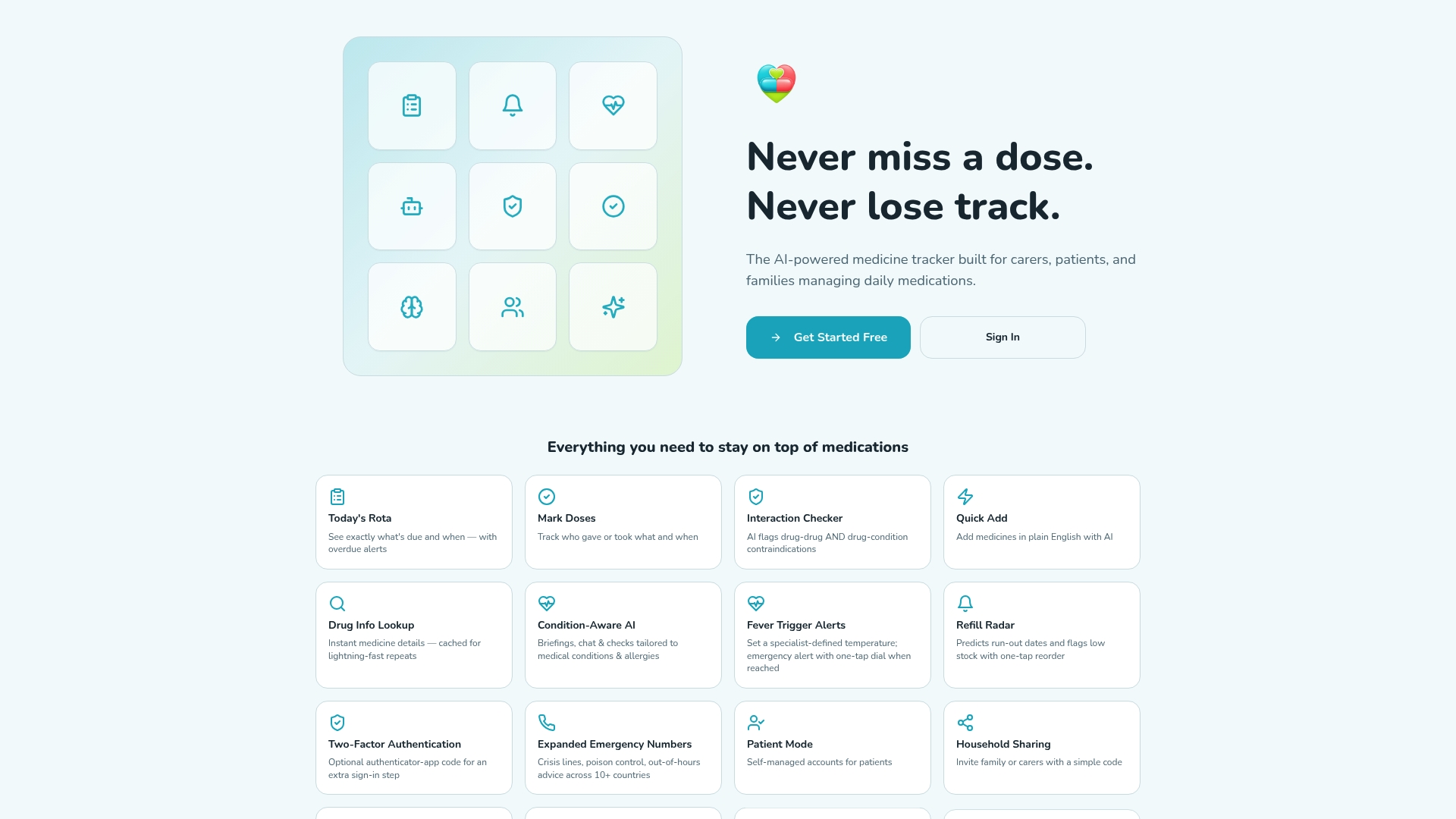
For care teams managing patients at home or in community settings, Thedailydosetracker provides real-time alerts for due or overdue doses, follow-up prompts, and a shared record that carers, patients, and clinicians can all access. The platform complies with UK GDPR standards and supports multi-patient management for professional care teams. Explore the full feature set and start tracking safely with Thedailydosetracker today.
FAQ
Why do nurses document symptom medication links?
Nurses document these links to detect adverse drug reactions, verify medication effectiveness, and prevent duplication or omission errors. The Medication Administration Record (MAR) is the primary tool for this documentation across NHS and care settings.
What is the 30-minute follow-up rule in PRN medication?
PRN documentation standards require nurses to assess and record patient response within 30–60 minutes of administration. Failing to complete this follow-up is a leading cause of medication errors and incomplete treatment evaluation.
How does consistent symptom tracking help nurses assess medication?
Patients who track symptoms daily provide nurses with reliable baseline data, enabling accurate assessment of drug effectiveness and side effects. Research shows daily trackers maintain 92% adherence compared with 63% for inconsistent trackers.
What is alert fatigue and how does technology reduce it?
Alert fatigue occurs when nurses receive too many notifications of equal urgency, causing them to dismiss alerts including critical ones. Digital systems using Red/Amber/Green acuity tiers organise alerts by clinical priority, reducing this risk.
How does the MAR support symptom medication tracking?
The MAR records what was administered, when, and why, and serves as a shared decision-support tool for the whole care team. When used alongside symptom logs, it enables nurses to identify patterns across shifts and escalate concerns accurately.