

Care plan medication alignment is the structured process of organising and synchronising every medication a patient takes to ensure accuracy, safety, and consistent therapeutic outcomes. In clinical practice, the recognised industry term for the foundational step is medication reconciliation, though the broader concept encompasses scheduling, documentation, and patient-centred planning across the entire care team. For family caregivers managing an elderly parent on multiple prescriptions, or for healthcare professionals coordinating discharge from hospital, getting this process right is the difference between safe recovery and a preventable adverse event.
What is care plan medication alignment?
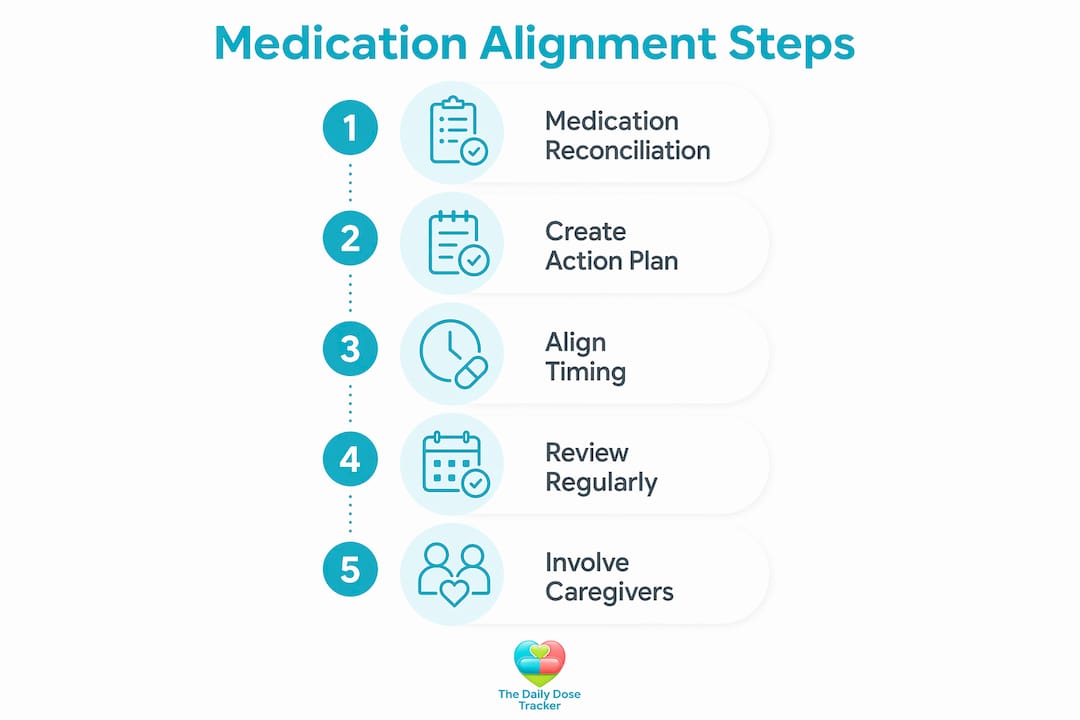
Care plan medication alignment is the coordinated approach to harmonising all medications within a patient's care plan, covering accuracy of the medication list, timing of administration, and ongoing adherence support. It draws on three interconnected processes: medication reconciliation, the Medication Action Plan (MAP), and structured scheduling. Together, these form a medication management care plan that reduces errors, prevents harmful interactions, and keeps every member of the care team working from the same information.
The stakes are high, particularly for elderly patients. Managing five or more medications significantly increases the risk of missed doses and harmful interactions, making alignment not a bureaucratic exercise but a clinical necessity. When alignment fails, the consequences range from under-treatment of chronic conditions to dangerous drug combinations that trigger hospital admissions.

Named entities central to this field include Medicare's Medication Therapy Management (MTM) programme, the Care Quality Commission (CQC) in England, and clinical frameworks such as the Best Possible Medication History (BPMH). Understanding how these connect gives both carers and clinicians a clear map for action.
What is medication reconciliation and why is it foundational?
Medication reconciliation is a formal, standardised process that prevents adverse drug events by comparing a verified medication list against current prescribing orders and correcting any discrepancies. It is the bedrock of alignment because no care plan can be accurate if the underlying medication list is wrong.
The process follows three defined steps:
- Compile the Best Possible Medication History (BPMH). This means gathering information from multiple sources: the patient, family members, community pharmacists, and GP records. Relying on patient recall alone misses up to 42% of medication errors, which is why cross-referencing sources is non-negotiable.
- Compare the BPMH with current orders. At every care transition, whether hospital admission, discharge, or transfer to a care home, the compiled list is checked against what is currently prescribed. Omissions, duplications, and dosing discrepancies are flagged at this stage.
- Resolve and document all discrepancies. Every change must be recorded with a clinical rationale. Discharge summaries alone do not meet quality standards; audit requirements demand explicit notes confirming that reconciliation was conducted and that lists were compared.
Regulatory standards in England, including CQC inspection frameworks, require this documentation to be present and accessible. For carers supporting someone through a hospital discharge, requesting a written reconciliation record is entirely appropriate and often protective.
Pro Tip: Ask the ward pharmacist for a printed reconciliation summary before leaving hospital. This single document can prevent weeks of confusion about which medications have been stopped, changed, or newly added.
How does a medication action plan support ongoing management?
A Medication Action Plan (MAP) is a personalised, written document that translates the reconciled medication list into clear, patient-centred instructions covering what each drug is for, when to take it, what side effects to watch for, and what to do if a dose is missed. It is the living document that turns a static list into a practical guide for daily life.
Under Medicare Part D in the United States, patients on eight or more chronic medications have a legal entitlement to a MAP as part of Medication Therapy Management, a right established since 2006. In the UK, equivalent guidance from the Care Quality Commission stresses that medication plans must be person-centred and adapted for individual communication needs, including large print or translated versions where required.
A well-constructed MAP typically includes:
- The full drug name, dose, and form (tablet, liquid, patch).
- The precise time and frequency of administration.
- The clinical purpose in plain language ("this lowers your blood pressure").
- Known side effects and when to seek help.
- "What if" instructions for missed doses or adverse reactions.
- Contact details for the prescribing GP and dispensing pharmacist.
The evidence for investing in this document is clear. MAPs improve adherence by 25 to 40% when co-created with patients and care teams, and they reduce hospital visits. That improvement comes specifically from the personalisation: a MAP written in plain language and fitted around a patient's daily routine performs far better than a generic printed leaflet.
Medication management plan templates must include strength, route, frequency, and PRN (as-needed) instructions, updated annually or after any medication change. For caregivers, this means the MAP is not a one-time document. It requires a scheduled review at least once a year and an immediate update whenever a prescription is added, removed, or altered.
Pro Tip: When co-creating a MAP with a patient, ask them to read the instructions back to you in their own words. This single technique reveals comprehension gaps that written text alone cannot catch.
What are best practices for aligning medication timing?
Correct timing is a pharmacological requirement, not a matter of convenience. Drug efficacy depends on pharmacological half-life and drug-specific properties that determine when a medication reaches its therapeutic window. Levothyroxine, for example, must be taken on an empty stomach in the morning to avoid absorption interference. Statins such as simvastatin work best taken at night because cholesterol synthesis peaks during sleep. Blood pressure medications are often timed to align with circadian patterns of cardiovascular risk.
| Medication type | Optimal timing | Reason |
|---|---|---|
| Thyroid medications (e.g. levothyroxine) | Morning, fasted | Food and calcium reduce absorption |
| Statins (e.g. simvastatin) | Evening | Cholesterol synthesis peaks overnight |
| ACE inhibitors / blood pressure | Evening or as directed | Aligns with circadian blood pressure patterns |
| Bisphosphonates (e.g. alendronate) | Morning, fasted, upright | Prevents oesophageal irritation |
| Iron supplements | Morning, fasted | Maximises absorption; avoid with dairy |
Beyond pharmacology, alignment with a patient's daily routine is equally important. A medication taken at the wrong time because it fits the schedule is better than one skipped entirely because the timing feels impossible. Using a single pharmacy and pill organisers improves adherence and safety by simplifying the regimen and giving pharmacists a complete picture of the patient's prescriptions to identify interactions.
For carers managing complex schedules, the practical tools that make timing alignment work include:
- Pill organisers divided by day and time of day (morning, noon, evening, night).
- Smartphone alarms or dedicated medication reminder apps.
- A medication schedule for carers that maps each drug to a specific time slot and meal context.
- Regular pharmacist reviews to check for timing conflicts between new and existing prescriptions.
How do caregivers and professionals implement and maintain alignment?
Sustained medication alignment requires clear ownership, consistent documentation, and structured communication across everyone involved in a patient's care. Without these, even a well-constructed MAP deteriorates within weeks as prescriptions change and care team members rotate.
The following practices define effective implementation:
- Assign a named coordinator. One person, whether a district nurse, GP practice pharmacist, or a family carer, must own the medication list and be the point of contact for updates. Shared responsibility without named ownership leads to gaps.
- Use digital medication logs. Accurate records of doses given, missed, or refused support clinical decisions and provide an audit trail. Platforms that support medication logs for clinical decisions give the whole care team visibility of real-world adherence patterns.
- Communicate at every care transition. Hospital discharge, GP referral, and care home admission are the highest-risk moments for alignment failure. A written handover that includes the reconciled list, the MAP, and any recent changes is the minimum standard.
- Review after every medication change. A new prescription from a specialist who has not seen the full medication list is one of the most common sources of duplication and interaction. The named coordinator must update the MAP within 48 hours of any change.
- Monitor for side effects and adherence. Regular check-ins, whether in person or via a digital platform, catch problems before they escalate. For elderly patients, subtle signs such as increased confusion or falls may indicate a timing or dosing issue rather than disease progression.
The elderly medication management checklist published by Thedailydosetracker provides a structured framework for carers to audit alignment at regular intervals, covering reconciliation status, MAP currency, and timing accuracy.
Pro Tip: Set a recurring calendar reminder every three months to review the medication list against the current MAP. Most alignment failures are not dramatic. They are slow drifts caused by small changes that were never formally updated.
Why alignment demands more than a good list
The most persistent mistake I see in medication management is the assumption that completing a reconciliation once is sufficient. Care teams produce an accurate list at discharge, file it, and move on. Six weeks later, a GP adds a new antihypertensive, a specialist changes a dose, and a carer adjusts timing to fit a new routine. None of these changes are communicated to the others. The list is now wrong, and nobody knows it.
The second challenge is the gap between documentation and practice. A beautifully written MAP means nothing if the patient cannot read it, does not understand it, or has never been asked whether the timing works for their life. Person-centred plans that adjust for communication needs and patient involvement significantly improve both adherence and safety. That is not a soft aspiration. It is a measurable clinical outcome.
What I have found genuinely effective is treating the MAP as a conversation tool rather than a form. When a pharmacist or carer sits with a patient and works through each medication together, asking "does this time work for you?" and "do you know what this one is for?", the resulting plan has far higher adherence than one produced in a clinical office and handed over. Multidisciplinary collaboration, specifically between GPs, pharmacists, and family carers, is not optional for complex patients. It is the mechanism by which alignment actually holds.
— Prasant
How Thedailydosetracker supports medication alignment
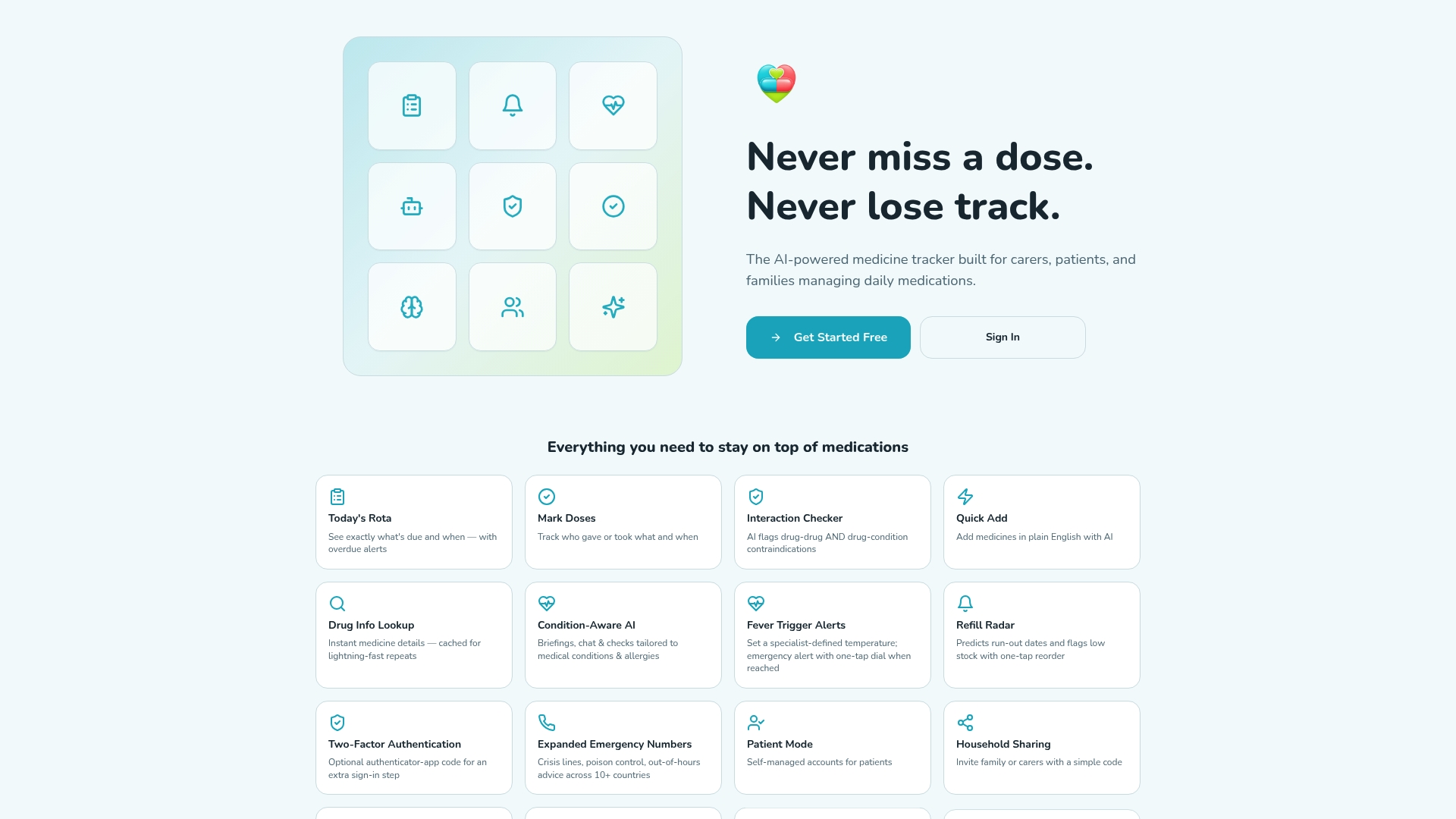
Thedailydosetracker is built specifically for the challenges described in this article. The platform allows carers and healthcare professionals to log doses in real time, set timed reminders for each medication, and receive alerts for missed or overdue doses. Its drug interaction checker flags conflicts as new medications are added, and its multi-patient management feature means one carer can oversee several complex regimens without losing track.
For families managing an elderly relative at home, the household sharing function means that a GP, a district nurse, and a family member can all view the same up-to-date medication record. Explore the full range of features and get started with the free medicine app designed for carers and families.
FAQ
What is the difference between medication reconciliation and a medication action plan?
Medication reconciliation is the process of verifying and correcting a patient's medication list by comparing multiple sources. A Medication Action Plan is the personalised document built from that verified list, giving patients and carers clear instructions for daily use.
How often should a medication action plan be updated?
A MAP must be updated at least annually and immediately after any medication change, including new prescriptions, dose adjustments, or discontinued drugs. Hospital discharge and specialist referrals are the highest-risk moments for outdated plans.
Why does medication timing matter within a care plan?
Timing affects how well a drug works and how safely it interacts with others. Thyroid medications require a fasted morning dose for proper absorption, while statins are most effective taken at night. Correct timing is a pharmacological requirement, not a scheduling preference.
Can a family carer request a medication reconciliation record?
Yes. Family carers have every right to request a written reconciliation summary, particularly at hospital discharge. This document confirms which medications have been started, stopped, or changed, and forms the basis of any updated care plan.
What tools help maintain medication alignment at home?
Pill organisers, smartphone alarms, and digital platforms such as Thedailydosetracker support daily adherence. Using a single pharmacy also allows pharmacists to identify interactions across the full prescription list, which is one of the most effective safeguards available to carers.
Key takeaways
Effective care plan medication alignment requires reconciliation, a personalised action plan, correct timing, and consistent documentation maintained by a named coordinator.
| Point | Details |
|---|---|
| Reconciliation is the foundation | Verifying medication lists across multiple sources prevents the 42% of errors missed by patient recall alone. |
| MAPs improve adherence measurably | Co-created Medication Action Plans improve adherence by 25 to 40% and reduce hospital admissions. |
| Timing is pharmacologically critical | Drug efficacy depends on when a medication is taken relative to meals, sleep, and other drugs. |
| Documentation must be explicit | Audit standards require notes confirming reconciliation was conducted, not just that a review occurred. |
| Alignment needs ongoing maintenance | Every prescription change requires an immediate update to the MAP and the care plan record. |