

Tracking symptoms alongside medication intake is the practice of systematically recording your medication details together with any symptoms you experience, creating a clear picture of how your body responds to treatment. Done well, this practice is called medication symptom monitoring, and it sits at the heart of safe, informed self-care. Research shows that nearly 28% of medication nonadherence is linked directly to side effects, many of which go undetected without structured logging. Tools like Thedailydosetracker, Bearable, and MyTherapy exist precisely because paper memory is not enough. This guide gives you the exact methods, steps, and tools to make your records genuinely useful.
What do you need to start tracking symptoms alongside medication intake?
Effective monitoring starts before you take your first dose. The most common mistake is waiting until something goes wrong before opening a journal. A symptom diary for medication should begin on the same day you start a new drug, capturing your baseline state before any side effects can appear.
The core information to record every day
Every entry in your side effects journal needs six data points: the medication name and dose, the exact time you took it, any symptoms you noticed, when those symptoms started relative to your dose, how long they lasted, and whether they improved or returned. Effective side-effect logs also capture recurrence patterns, which is the detail that most home records miss entirely. Without recurrence data, a clinician cannot tell whether a symptom is a one-off reaction or a predictable pattern tied to your dosing schedule.

Digital apps vs paper diaries: which works better?
Both formats work, but digital tools offer one clear advantage: timestamps. A paper diary relies on you writing the time accurately after the fact. A medication tracking app records the moment you log, which removes a significant source of error. The table below compares three widely used options.
| App | Symptom Logging | Medication Reminders | Carer Sharing | Free Tier |
|---|---|---|---|---|
| Thedailydosetracker | Yes, with AI insights | Yes, real-time alerts | Yes, multi-user | Yes |
| Bearable | Yes, detailed scales | Yes | No | Limited |
| MyTherapy | Yes, basic | Yes | No | Yes |
Thedailydosetracker supports household sharing and multi-patient management, which makes it the strongest choice for carers managing more than one person. Bearable offers more granular symptom scales, which suits people tracking chronic conditions with subtle fluctuations. MyTherapy is the simplest entry point if you are new to tracking health with medication and want a low-friction start.
Pro Tip: Set your logging reminder to fire 30 minutes after your usual dose time. This gives any immediate reactions a chance to surface before you record, without relying on end-of-day memory.
How do you log symptoms in relation to your medication schedule?
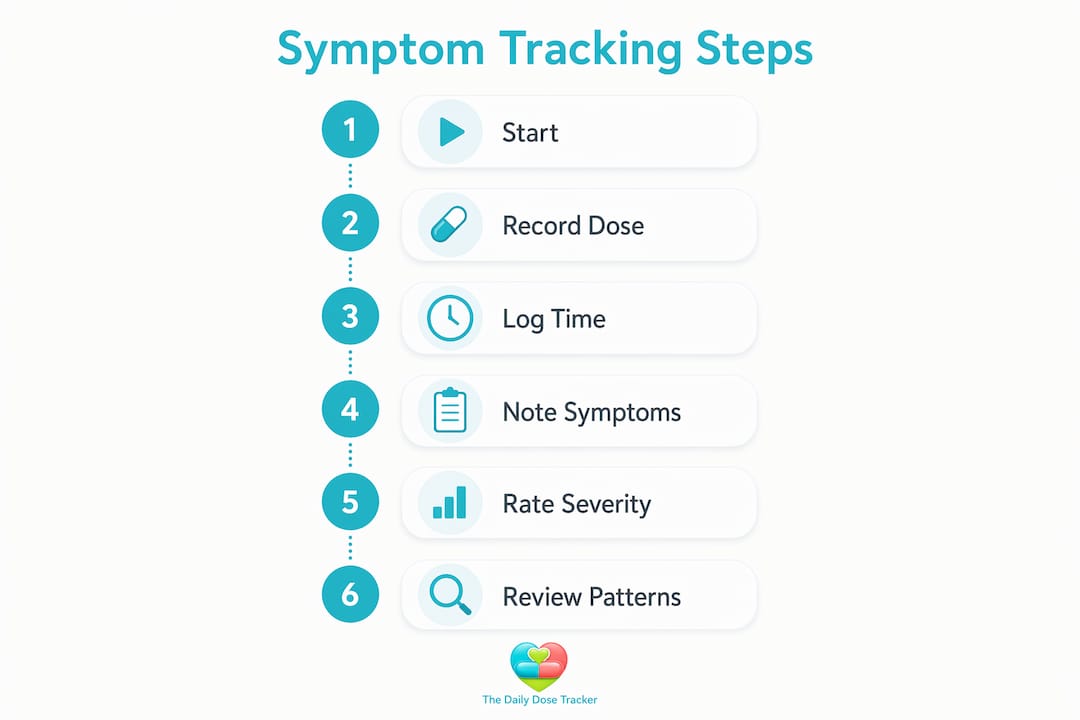
Logging with precision is what separates a useful record from a vague diary. The goal is to capture timing so accurately that a clinician can see causality at a glance, rather than relying on your verbal summary during a short appointment. Recording symptom timing relative to dose is the single most valuable thing you can do to help your doctor make a confident decision.
Follow these steps for every entry:
- Record the medication name, dose, and exact time taken. Use 24-hour format to avoid AM/PM confusion.
- Note your current symptom status immediately after dosing. Even "no symptoms" is a valuable data point for baseline comparison.
- Log any new symptom as soon as it appears. Include the start time, a severity score from 1–10, and a brief description.
- Record when the symptom eases or disappears. Duration is as important as onset.
- Note any other factors that day. Food, alcohol, sleep quality, and stress all affect how symptoms present.
- Log symptom-free days explicitly. Baseline symptom-free days are the comparison point that makes your symptom days meaningful.
When to restart intensive logging
Treat every dose change as a fresh monitoring period. Dose increases or new medications require renewed tracking for several days because delayed reactions and drug interactions can take 48–72 hours to appear. If you have been logging casually for months and your GP adjusts your prescription, return to daily detailed entries for at least one week. This is especially relevant for elderly patients on complex schedules, where interactions are harder to predict.
The most common logging mistake is recording only when you feel unwell. This creates a record that looks alarming because it contains nothing but bad days. Without the good days documented, neither you nor your clinician can judge whether your symptoms are frequent, rare, or improving over time.
Pro Tip: Use a consistent severity scale and stick to it. If "7 out of 10" means you cannot work, write that definition at the top of your journal or app notes. Scales only mean something when they are applied consistently.
How do you interpret your symptom and medication logs?
A log full of data is only useful if you know how to read it. The first pattern to look for is timing correlation: do your symptoms appear within a predictable window after each dose? If nausea appears two hours after every morning tablet, that is a timing pattern your GP can act on, perhaps by adjusting when you take the medication or adding a protective drug.
The second pattern is severity trend. Reviewing symptom logs over several timepoints captures fluctuating severity and evolving confidence, which matters because symptoms during the first eight weeks of a new treatment often look very different from symptoms at week twelve. Research found that 20–25% of patients had suboptimal adherence during periods of severe symptoms, suggesting that unmanaged side effects directly erode the motivation to keep taking medication.
Preparing your log for a GP appointment
A structured summary is far more useful than handing over a raw diary. The BBC's symptom diary template, developed with Dr Punam Krishan, is designed specifically to help patients log new or unusual symptoms before appointments. It organises entries by date, symptom type, and severity, which maps directly onto what a GP needs to triage quickly.
Before your appointment, prepare a one-page summary that includes:
- The medication name, dose, and start date
- A timeline of when symptoms first appeared relative to starting the drug
- The three most severe or frequent symptoms, with average severity scores
- Any days when symptoms were absent, to show the pattern is not constant
- Any other medications or supplements taken during the same period
Presenting a structured symptom timeline with dose timing and severity allows quick triage during short consultations. GPs typically have ten minutes. A clear one-page summary means they spend that time making decisions, not gathering information.
What are the benefits and limits of monitoring symptoms with medication?
The evidence for symptom tracking is strong. Over 53.9% of symptom check-ins in one study reported moderate to severe symptoms, yet many of those patients had not flagged concerns to their care team. Structured logging closes that gap by making invisible patterns visible. The benefits extend beyond side effect detection: patients who track consistently report greater confidence in their treatment, a stronger sense of control, and better conversations with clinicians.
"Symptom tracking not only helps patients feel better, but also identifies adherence risks caused by side effects." — A Short Patient-Reported Outcome Measure for Oral Anticancer Agents
The limits are real too. Symptom tracking cannot diagnose a condition, and it cannot replace clinical judgement. Some side effects appear weeks after a dose change, which means a short logging period will miss them entirely. Memory lapses are another genuine problem: retrospective logging, where you fill in yesterday's entries from memory, is significantly less accurate than real-time recording. The solution is not perfection. Consistent, honest logging over time is more valuable than a flawless record kept for three days.
For carers managing prescriptions across multiple conditions, the challenge is scale. Tracking symptoms for one person is manageable. Tracking for two or three people with different medications requires a system, not just a notebook.
Key takeaways
Consistent, timed symptom logging is the most reliable method for connecting medication intake to health outcomes and improving clinical communication.
| Point | Details |
|---|---|
| Start logging on day one | Begin your symptom diary the same day you start a new medication to capture a true baseline. |
| Record symptom-free days | Logging good days gives clinicians the comparison data needed to identify real patterns. |
| Restart after dose changes | Treat every prescription adjustment as a new monitoring period for at least one week. |
| Summarise before appointments | Prepare a one-page timeline of symptoms, severity, and timing to make GP consultations productive. |
| Use a digital tool for accuracy | Apps with timestamped entries reduce recall errors that undermine paper-based records. |
Why simple tracking changed everything i thought i knew about side effects
I spent years watching people manage chronic conditions with nothing but a vague sense that "this tablet makes me feel off." The frustration was not the symptoms themselves. The frustration was the inability to explain them clearly enough for anyone to act on them. When patients started using structured logs, something shifted. Not because the symptoms changed, but because the conversation around them did.
The insight that surprised me most was how often symptoms people attributed to their condition were actually tied to dosing timing. A patient convinced that their fatigue was permanent discovered it peaked reliably four hours after their morning dose. That single timing detail changed their treatment plan. No new tests, no referrals. Just data that was already there, waiting to be recorded.
The emotional benefit is underrated. Regaining a sense of control over something as unpredictable as a chronic illness matters enormously. A journal for symptoms and drugs is not just a clinical tool. It is evidence that you are paying attention, that your experience is real, and that you have something concrete to bring to every appointment.
My honest advice: start with three data points per entry. Medication name, time taken, and one sentence about how you feel. Build from there. Complexity added too early kills the habit. Thedailydosetracker is built around this principle, letting users start simply and add detail as the habit forms.
— Prasant
How Thedailydosetracker makes symptom and medication logging easier
Thedailydosetracker is built for exactly the kind of structured monitoring this article describes. The platform combines medication reminders, dose logging, and symptom recording in one place, with AI-based insights that flag patterns you might miss on your own.
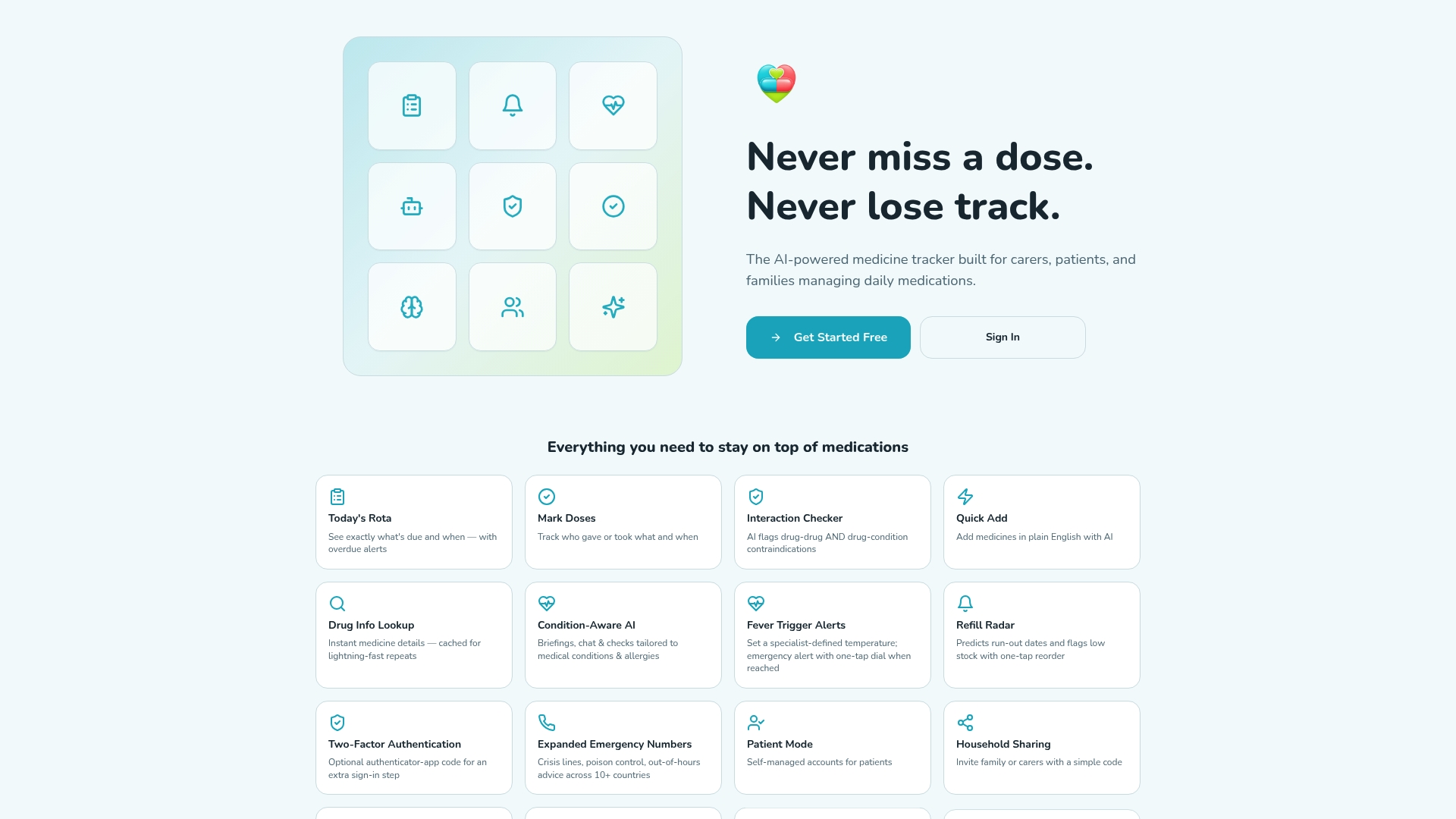
Carers managing multiple patients can log symptoms for each person separately, with household sharing and real-time alerts for due or overdue doses. The platform also supports drug interaction checks and appointment scheduling, so your symptom records sit alongside the rest of your health management in one accessible place. Thedailydosetracker complies with UK GDPR standards, keeping your health data private and secure. Start your free medication and symptom tracker today and bring your first structured log to your next appointment.
FAQ
What is the best way to start a symptom diary for medication?
Begin your diary on the same day you start a new medication, recording the drug name, dose, and time taken alongside your current symptom status. Include symptom-free days from the start, as these provide the baseline your clinician needs to identify genuine patterns.
How often should i log symptoms when taking medication?
Log at least once daily, and record any new symptom as soon as it appears rather than waiting until the end of the day. After a dose change, increase to two or three check-ins per day for the first week to catch delayed reactions.
Can a medication tracking app replace a paper diary?
A medication tracking app is more accurate than a paper diary because it timestamps entries automatically, removing the recall errors that affect retrospective logging. Paper diaries remain useful as a backup, but digital tools provide more reliable data for clinical discussions.
How do i share my symptom log with my GP effectively?
Prepare a one-page summary showing the medication name, start date, a timeline of symptoms with severity scores, and any symptom-free periods. Structured symptom timelines allow GPs to triage quickly during short appointments without needing to read through raw diary entries.
Does tracking symptoms actually improve medication adherence?
Yes. Research shows that identifying side effects early through structured logging reduces the likelihood of stopping medication without clinical guidance. Patients who understand the pattern behind their symptoms report greater confidence in continuing treatment.