

A chronic condition medication checklist is a detailed, up-to-date record of every medicine you take, and it is one of the most effective tools for staying safe when managing a long-term illness. The formal term used by healthcare professionals is a "medication list" or "personal medication record," and the 2026 Scottish Government polypharmacy guidance places it at the centre of safe, person-centred prescribing. Without a complete record, drug interactions go undetected, doses get missed, and appointments become less productive. This guide gives you a practical, thorough checklist framework built around current best practice.
1. What should a chronic condition medication checklist include?
A complete chronic condition medication checklist must cover every substance you put into your body, not just prescription medicines. A comprehensive medication list must include prescriptions, over-the-counter drugs, vitamins, minerals, herbal supplements, eye drops, patches, and creams, updated immediately upon any change. That scope matters because what you buy at a pharmacy without a prescription can affect how your prescribed medicines work.
For each item on your list, record the following:
- Medication name (brand and generic where known)
- Strength and dose (for example, 10mg, one tablet)
- Route (oral, topical, inhaled, injected)
- Frequency (twice daily, every eight hours, as needed)
- Reason for use (for example, blood pressure, pain relief)
- Prescribing doctor's name and contact number
- Dispensing pharmacy name and phone number
- Start date and any known end date
Non-prescription supplements and over-the-counter remedies are frequently hidden causes of dangerous drug interactions and must appear on your list. St. John's Wort, for instance, reduces the effectiveness of several common medicines including anticoagulants and antidepressants. Fish oil at high doses can increase bleeding risk when taken alongside blood thinners.
Pro Tip: Update your checklist the same day any medicine changes. A dated entry takes thirty seconds and prevents confusion at your next appointment.

2. How to organise your medication list for daily use
Organisation turns a static list into a working tool. Patient portals often generate excessively long, disorganised medication lists. Using a fillable PDF template provides a compact, at-a-glance layout that works far better for complex regimens.
Follow these steps to keep your list manageable:
- Choose one format and stick to it. A single-page fillable PDF or a dedicated section in a digital health app works better than scattered notes across multiple apps and paper.
- Date every version. Save files with a clear date in the filename, such as "MedicationList_June2026.pdf." This prevents confusion when you share it with a new specialist.
- Link your list to your pill organiser. Fill your weekly organiser directly from the checklist. Any discrepancy between the two signals an error worth investigating.
- Set reminders tied to the list. Alarms on your phone or a dedicated medication tracking app can prompt you to take each item at the right time.
- Print a copy for your wallet or bag. A folded card with your current medicines is invaluable in an emergency when you cannot access your phone.
- Share it with your care team at every visit. Hand it over at the start of each appointment rather than waiting to be asked.
Saving a dated digital copy of your medication list allows quick sharing with new specialists and reduces transcription errors. Digital lists can sometimes be imported directly into electronic health records by healthcare providers, saving time and reducing the risk of copying mistakes.
Pro Tip: Keep your medication list in the same folder as your appointment letters. You will never leave home without it.
3. What role do healthcare providers and pharmacists play?
Healthcare providers and pharmacists are not passive recipients of your medication list. They use it actively to keep your treatment safe. Medication reconciliation, which means comparing your current medicines against health records, should occur at every healthcare visit and whenever a new medicine starts. This process catches errors before they cause harm.
Pharmacists carry particular weight in this process. Pharmacists are crucial in identifying drug-related issues, resolving duplications, flagging inappropriate dosing, and coordinating with specialists for consistent care. Pharmacist interventions reduce hospital readmissions, improve disease control, and strengthen adherence. That is a significant return for a conversation that costs nothing.
Patients with complex regimens may qualify for a structured service called Medication Therapy Management. A comprehensive medication review results in a personal action plan for safer medication management, identifying duplications, interactions, and cost-saving alternatives. Ask your GP or pharmacist whether you are eligible.
"The most effective medication reviews are not just about counting pills. They are about understanding what matters to the patient, what they are actually taking, and whether each medicine still makes sense for their life and goals." Adapted from 2026 Scottish Government polypharmacy guidance
Your care plan medication alignment should reflect every conversation you have with your team. When your checklist and your care plan match, the risk of error drops considerably.
4. Common challenges in managing chronic condition medications
Managing medicines for a long-term condition is rarely straightforward. Several predictable problems arise, and a well-maintained checklist addresses most of them directly.
Polypharmacy should be assessed beyond pill count, focusing on harm versus benefit and involving person-centred dialogue about treatment necessity and sustainability. The 2026 guidance emphasises asking "What matters to me?" to align prescribing with patient goals. A checklist makes that conversation concrete because you arrive with evidence, not estimates.
| Challenge | How a checklist helps |
|---|---|
| Polypharmacy risk | Gives providers a full picture to assess harm versus benefit |
| Missed doses | Paired with reminders, it creates a reliable daily routine |
| Unreported side effects | Prompts you to note symptoms and raise them at appointments |
| Therapeutic duplication | Makes it easy for pharmacists to spot two medicines doing the same job |
| Self-discontinuation | Reminds you to contact your provider rather than stopping unilaterally |
Patients often stop medications unilaterally due to side effects. Experts advise contacting providers for dose adjustments or alternatives instead. Unplanned discontinuation can diminish disease control and pose serious risks. Your checklist should include a column for side effects you have noticed, so you can report them accurately rather than stopping the medicine without guidance.
For patients managing multiple prescriptions, the guide on managing prescriptions for multiple conditions offers practical strategies that complement a well-kept checklist.
5. Practical tips to make your checklist work long-term
A checklist only delivers value when you use it consistently. These habits separate patients who benefit from those who do not.
- Bring your list to dental appointments. Dentists prescribe antibiotics and analgesics that interact with common chronic condition medicines. Many patients forget this entirely.
- Review your list before every repeat prescription request. Check that every item still reflects what you are actually taking, not what was prescribed six months ago.
- Ask your pharmacist to review your list annually. A pharmacist can spot interactions and duplications that neither you nor your GP may notice.
- Use a medication tracking app with reminder functionality. Thedailydosetracker offers real-time alerts for due and overdue doses, drug interaction checks, and refill predictions, all linked to your personal medication record.
- Simplify where possible. Ask your prescriber whether any medicines can be combined into a single dose or whether any are no longer needed. Fewer medicines mean fewer opportunities for error.
- Keep a symptom log alongside your checklist. Noting when symptoms appear in relation to doses helps your provider make faster, better decisions.
Pro Tip: When a new specialist adds a medicine, ask them to confirm it is safe alongside everything already on your list. Do not assume they have checked.
The medication schedule best practices guide covers daily organisation in detail and pairs well with the checklist approach described here.
Key takeaways
A complete, dated, and regularly reviewed chronic condition medication checklist is the single most effective tool for preventing medication errors and supporting adherence in long-term illness management.
| Point | Details |
|---|---|
| Include everything | List prescriptions, supplements, OTC drugs, patches, and creams without exception. |
| Update immediately | Change your list the same day any medicine starts, stops, or changes dose. |
| Share at every appointment | Hand your checklist to every provider, including dentists and new specialists. |
| Use professional reviews | Ask your pharmacist for an annual medication review to catch interactions and duplications. |
| Pair with reminders | Link your checklist to a tracking app or pill organiser to support daily adherence. |
Why I think most patients underestimate the checklist
Patients who manage chronic conditions well tend to share one habit. They treat their medication list as a living document, not a form they filled in once and forgot. I have seen the difference this makes firsthand. When someone arrives at an appointment with a current, organised list, the consultation is faster, safer, and more productive. When they arrive without one, the first ten minutes are spent reconstructing history from memory, and errors creep in.
The mistake I see most often is unilateral discontinuation. A side effect appears, the medicine feels like the obvious culprit, and the patient stops taking it without telling anyone. The 2026 guidance is clear on this: stopping a medicine without guidance can reduce disease control and create new risks. A checklist with a side effects column changes this behaviour. It gives patients a place to record what they notice and a prompt to raise it at the next appointment rather than act alone.
The other thing I would say is this: your pharmacist is an underused resource. Most patients see their pharmacist as someone who hands over a bag of medicines. In reality, a pharmacist can review your entire regimen, identify problems your GP may not have spotted, and help you simplify a complex schedule. Your checklist is the starting point for that conversation.
Organised medication records do not just reduce errors. They shift the dynamic of every healthcare interaction. You become an informed participant rather than a passive recipient. That shift matters more than any single medicine on your list.
— Prasant
Thedailydosetracker: your medication checklist, always up to date
Managing a chronic illness means your medication list changes regularly. Keeping it accurate across every appointment, refill, and specialist visit is where most patients struggle.
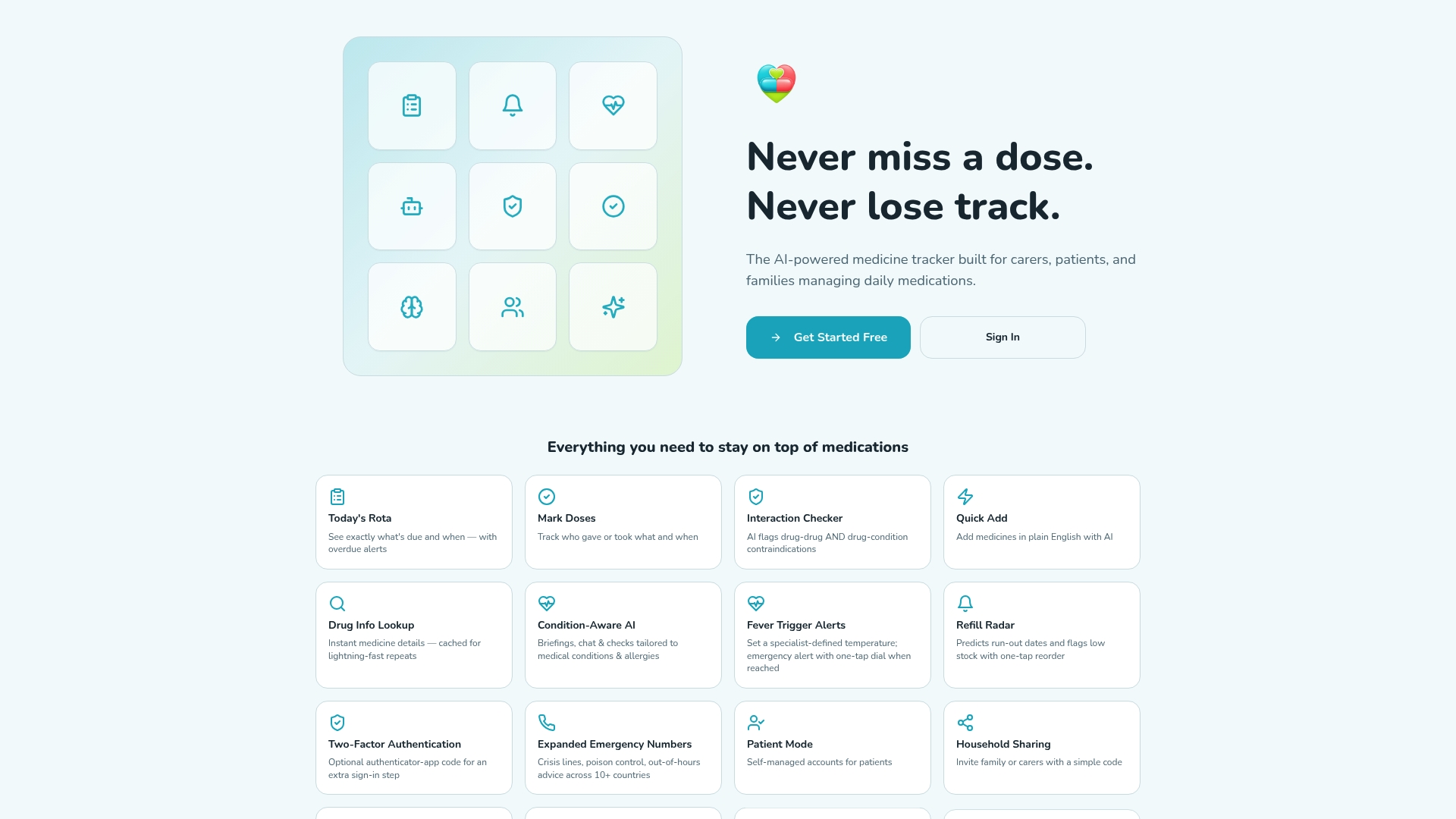
Thedailydosetracker is a free app built for exactly this. It lets you create and track your medication list with real-time dose alerts, drug interaction checks, and refill predictions. You can share your record with carers, family members, or your care team in seconds. The app works across multiple devices and complies with UK GDPR standards, so your data stays private. Whether you manage your own medicines or support someone else, Thedailydosetracker keeps every detail in one place, always current, always accessible.
FAQ
What is a chronic condition medication checklist?
A chronic condition medication checklist is a complete, up-to-date record of every medicine a patient takes, including prescriptions, over-the-counter drugs, vitamins, and supplements. It supports safe medication management by preventing interactions and missed doses.
How often should I update my medication list?
Update your list immediately whenever a medicine starts, stops, or changes in dose or frequency. Waiting until your next appointment increases the risk of errors during that gap.
Should I include supplements and vitamins on my checklist?
Yes. Supplements and over-the-counter remedies are frequent causes of interactions and must appear on your list. St. John's Wort and fish oil are two common examples that significantly affect prescribed medicines.
What is medication reconciliation?
Medication reconciliation is the process of comparing your current medicines against your health records at every healthcare visit. It catches discrepancies, duplications, and errors before they cause harm.
Can a pharmacist help me manage my medication checklist?
Yes. Pharmacists can conduct comprehensive medication reviews, identify drug interactions, and suggest simplifications to your regimen. Patients with complex chronic condition regimens may qualify for a structured Medication Therapy Management service.