
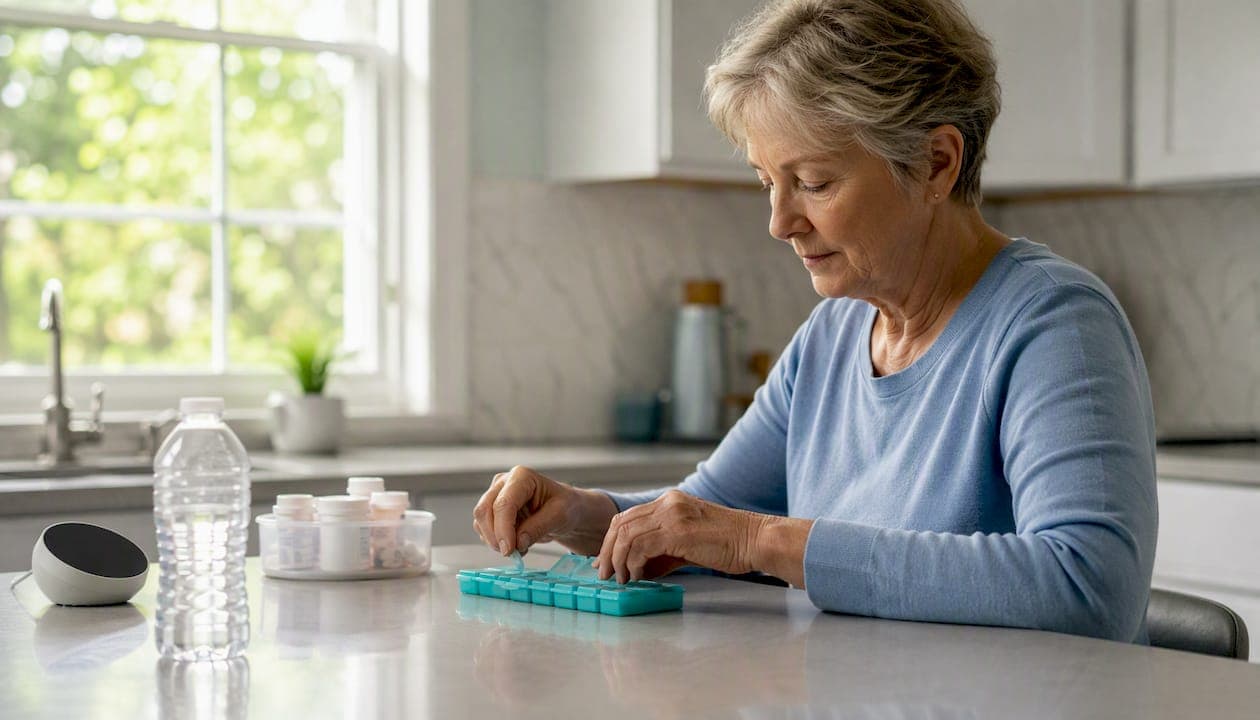
Patient-reported dose logs improve medication adherence, sharpen clinical decision-making, and reduce dosing errors — three gains that matter enormously when you are managing a long-term condition. A systematic review of eHealth tools found that electronic self-monitoring prompted appropriate medication changes and improved symptoms across several randomised controlled trials. The core case for keeping a log is straightforward:
- Better adherence: visible dose history creates a feedback loop that makes missed doses harder to ignore.
- Clearer titration: clinicians can base dose adjustments on recorded data rather than approximations from memory.
- Fewer errors: structured records catch duplications, missed doses, and timing drift before they become clinical problems.
Key takeaways
Patient-reported dose logs improve adherence, sharpen titration decisions, and give clinicians the evidence they need to act, provided the logs are kept contemporaneously and shared in a structured format.
| Point | Details |
|---|---|
| Accuracy depends on timing | The BMJ Open study found an ICC of 0.992 when diaries were completed close to events; delayed entries are less reliable. |
| EHR integration multiplies value | Digital logs linked to EHR systems enable automated clinician alerts and reduce manual transcription errors. |
| Format matters less than consistency | Paper, app, or device all work; choose the one you will use reliably on a difficult day. |
| Privacy requires active choices | Use GDPR-compliant tools, share via secure patient portals, and confirm data-access rules before setting up shared logs. |
| Thedailydosetracker covers the checklist | Dose logging, PDF export, household sharing, and UK GDPR compliance in one free-to-start platform. |
This article is general information, not a substitute for advice from a qualified doctor. Consult a qualified healthcare professional about your own circumstances before acting on anything here.
Table of Contents
- 1. What does the research say about dose log benefits?
- 2. How dose logs make clinical appointments more useful
- 3. Paper, app, or device: which format should you use?
- 4. How to start your dose log: a practical checklist
- 5. Limitations, biases, and UK data-protection considerations
- 6. Beyond routine care: other uses for dose tracking
- Why dose logs matter more than most people think
- Thedailydosetracker: a GDPR-aware log for UK patients and carers
- Sources
1. What does the research say about dose log benefits?
The evidence base is stronger than most patients realise. A systematic review published in JMIR examined 14 studies, including several RCTs, and found that eHealth self-monitoring tools prompted medication changes and symptom improvements, particularly when the tool supported two-way communication with a clinician.
Accuracy is a separate question from effectiveness, and the data here is reassuring. A BMJ Open validation study found that a 14-day daily diary produced an intraclass correlation coefficient (ICC) of 0.992 against pill counts, with a Bland–Altman mean difference of approximately 0.048 pills. In plain terms: when patients record doses close to the event, self-report is highly accurate.
Device-level evidence adds another layer. A literature review on dose-memory and dose-reminder devices found improved adherence for conditions including asthma, diabetes, and HIV when those functions were present. The psychological mechanism matters here: patients reported greater confidence and reduced cognitive load, not just better numbers.
| Study | Setting | Key finding |
|---|---|---|
| JMIR systematic review | eHealth self-monitoring, multiple RCTs | Medication changes and symptom improvements across several trials |
| BMJ Open diary validation | Opioid consumption, 14-day diary | ICC = 0.992 vs pill count |
| Dose-memory device review | Asthma, diabetes, HIV | Improved adherence and patient confidence |
| EHR digital pill diary | Decentralised chemotherapy trials | Automated alerts, reduced transcription errors |
Pro Tip: Record each dose within two hours of taking it. The BMJ Open data shows accuracy drops when entries are reconstructed from memory at the end of the day.
2. How dose logs make clinical appointments more useful
A structured log moves a consultation from "I think I took it most days" to a timestamped record a clinician can actually use. That shift matters most for dose-dependent medicines where titration decisions hinge on whether the patient has genuinely been stable at the current dose.
Clinicians gain several concrete advantages:
- Reduced transcription errors: recorded doses feed directly into medication reconciliation rather than relying on verbal recall.
- Adverse-event pattern recognition: when side-effect onset is timestamped alongside dose, clinicians can identify whether a symptom correlates with a specific dose level or timing.
- Titration confidence: for GLP-1 receptor agonists, opioids, or immunosuppressants, a four-week log showing consistent dosing is the prerequisite for a safe upward adjustment.
- Medication reconciliation: logs surface discrepancies between what was prescribed and what was actually taken, which is especially valuable at hospital discharge or GP handover.
EHR-integrated digital pill diaries go further, enabling automated in-basket alerts to clinicians when doses are missed and generating configurable reports for study teams. The Epic/MyChart implementation described in that research captured dose, date, and reason for non-adherence, all stored within the patient's existing record.
Individual dose records also have an analogue in radiology. Research on radiation dose tracking shows that logging individual patient exposures supports optimisation and justification of subsequent procedures, with national implementations across several European settings. The principle is identical: individual records, not population averages, drive better decisions for that specific patient.
For carers supporting elderly patients, why GPs review medication records explains how to present logs effectively at appointments.
3. Paper, app, or device: which format should you use?
| Format | Ease of use | Clinician sharing | Accuracy risk | Privacy control |
|---|---|---|---|---|
| Paper diary | High | Manual/scan | Recall gaps if delayed | Full local control |
| Simple electronic diary | High | Screenshot/PDF | Lower if logged promptly | Depends on app |
| Dose-memory device | Moderate | Device download | Low (automated) | Device-level |
| Full medication-management app | Moderate | PDF/portal export | Low | GDPR compliance varies |
Paper diaries have one genuine advantage: no battery, no login, no friction. For patients who struggle with technology, a printed template kept next to the medicine is often the most reliable system. The dose-memory device review found that automated recording removes the recall problem entirely, though sharing data with a GP still requires an extra step.
Full medication-management apps close that gap. They log doses, export summaries, and can flag missed doses in real time. The trade-off is that you need to choose a tool that is genuinely GDPR-compliant, particularly if you are sharing household data or managing someone else's medications.
Pro Tip: Pick the format you will actually use on a bad day, not the one that looks best in a demo. A paper log completed consistently beats a sophisticated app opened twice a week.
For a fuller comparison of digital medication log safety, including error-reduction evidence, the linked guide covers the technical detail.
4. How to start your dose log: a practical checklist
Getting started takes about five minutes. The fields below are what clinicians actually find useful.
- Choose your format — paper template, spreadsheet, or a GDPR-compliant app.
- Set a reminder — tie logging to the act of taking the dose, not a separate alarm.
- Record these fields every time:
- Exact dose and formulation (e.g., 10 mg tablet, 0.5 mg injection)
- Date and time taken
- Missed dose: yes/no, and the reason if yes
- Lot or pen number for multi-dose injectables
- Any symptoms: onset time, severity on a simple 1–10 scale
- Injection site, where relevant
- Weekly weight if your medicine is dose-adjusted by weight
- Review weekly — scan for patterns before your next appointment.
- Export or summarise before appointments — bring a 4–12 week summary, not raw daily entries.
- Share via a secure route — patient portal, PDF export, or a printed summary handed directly to your clinician.
For preparing logs for clinical decisions, the step-by-step guide covers export formats and how to annotate a summary for a GP appointment.
5. Limitations, biases, and UK data-protection considerations
Self-report is not perfect. Knowing the main failure modes helps you avoid them.
- Social desirability bias: patients sometimes record the dose they intended to take rather than the one they actually took. Logging immediately after the dose, rather than at the end of the day, reduces this.
- Recall gaps: the BMJ Open study's high accuracy depended on contemporaneous recording. Reconstructed entries from memory are substantially less reliable.
- Cumulative dose misinterpretation: a log showing consistent dosing does not mean the dose is correct. Never use dose history alone to make a significant change without clinician input.
On privacy: UK GDPR applies to any digital tool that stores health data. Before choosing an app, confirm it processes data within the UK or EEA, has a clear privacy policy, and does not share identifiable data with third parties without consent. When sharing logs externally, use your NHS patient portal or a password-protected PDF rather than an unencrypted email attachment.
Pro Tip: If you manage medications for a child or another adult, check the consent and data-access rules. The differences between child and adult medication tracking are worth understanding before you set up a shared log.
6. Beyond routine care: other uses for dose tracking
Dose logs are not only for daily self-management. Decentralised clinical trials increasingly rely on patient-reported diaries to capture adherence data without requiring clinic visits, as the EHR-integrated pill diary research demonstrates for chemotherapy protocols. Carers managing multiple household members benefit from multi-patient logs that separate records by person while keeping everything in one place.
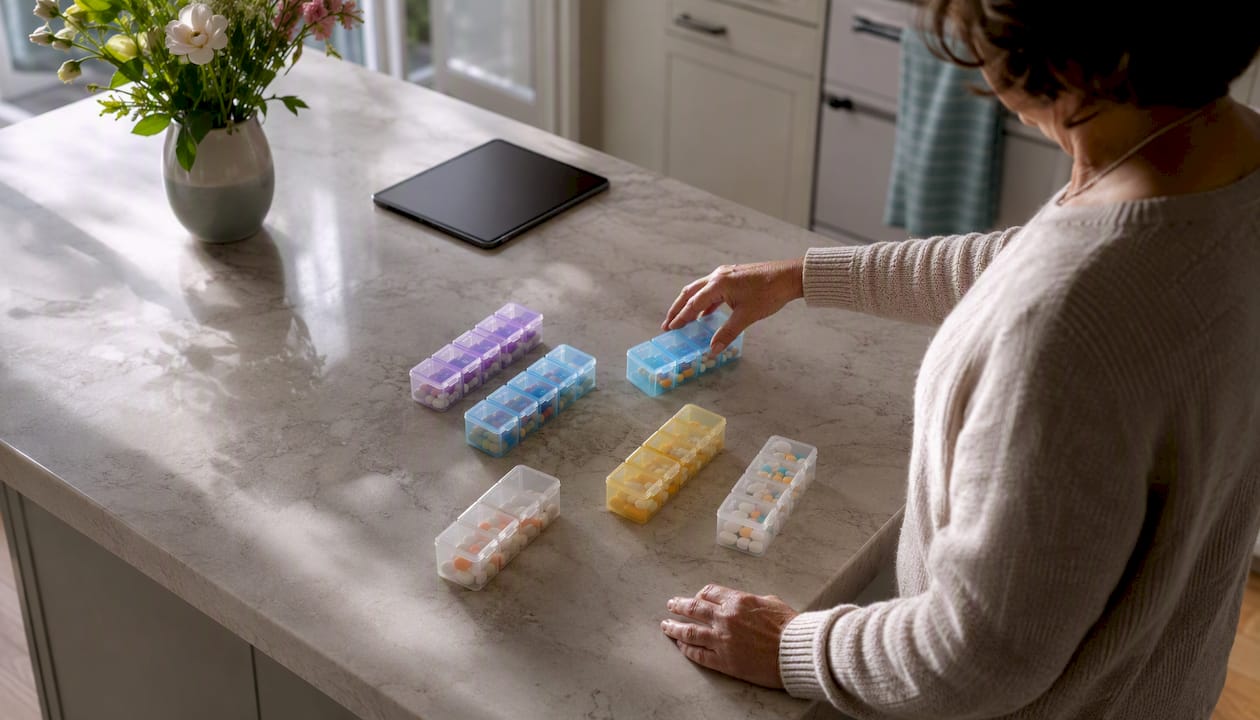
Near-term developments worth watching: tighter EHR integration that pushes patient-entered data directly into GP systems, automated clinician alerts triggered by missed-dose thresholds, and anonymised aggregated registries that let researchers study real-world adherence patterns at scale. Feedback visualisations, showing a patient their own adherence trend over time, are also improving and are likely to become a standard feature of medication-management tools.
Why dose logs matter more than most people think
The honest case for dose logs is not that they are convenient. It is that memory is a genuinely poor substitute for a record when the stakes are a titration decision or an adverse-event investigation. Clinicians spend a significant portion of consultation time reconstructing what a patient actually took, and that time is wasted when a clean log exists. A log does not need to be elaborate: date, dose, and a one-line symptom note is enough to transform a vague conversation into a productive one. Start with a simple format this week and bring a four-week summary to your next appointment. The difference in what your clinician can do with that information is immediate.
Thedailydosetracker: a GDPR-aware log for UK patients and carers
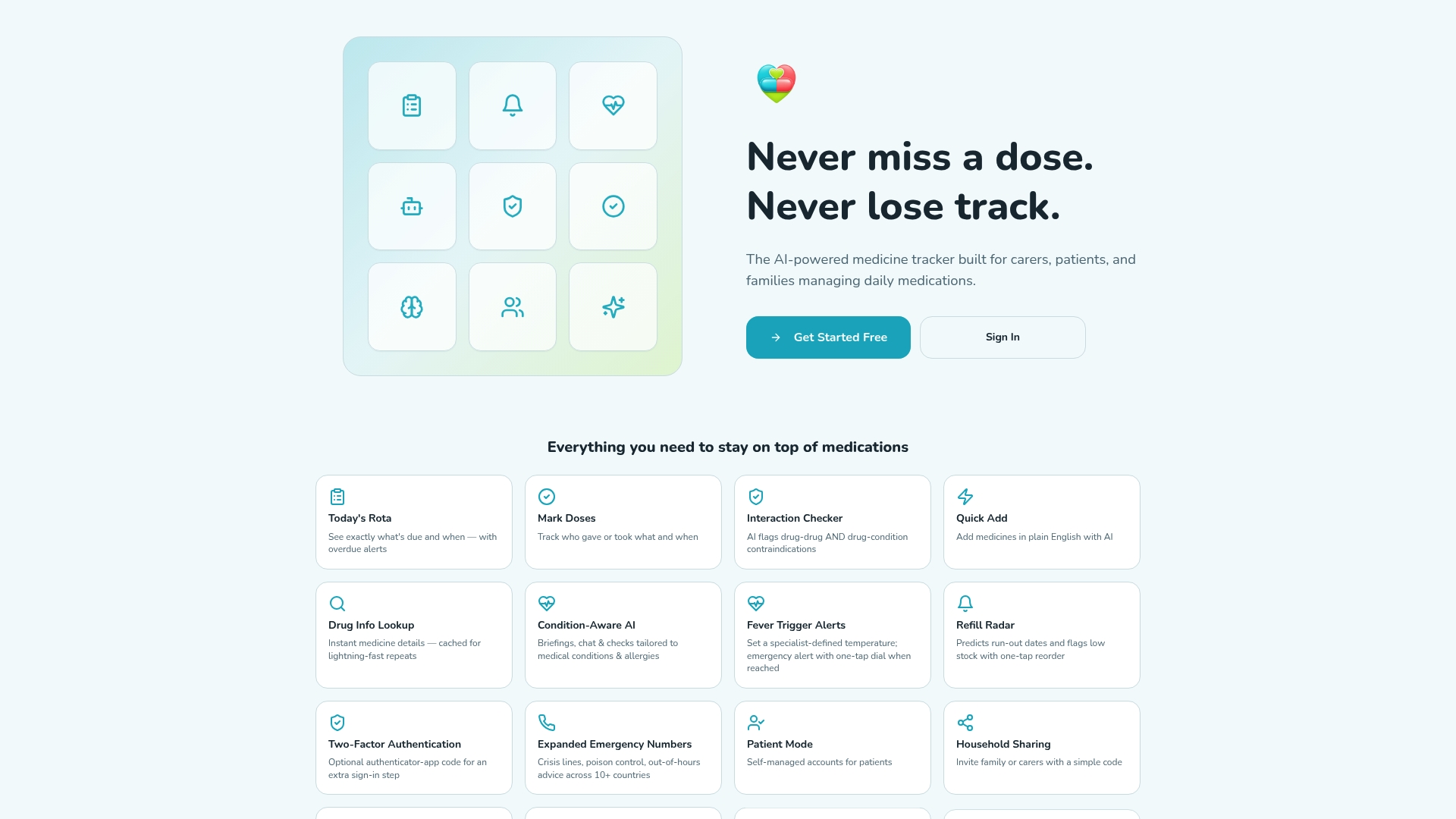
Thedailydosetracker is built specifically for the kind of structured logging this article describes. It covers the checklist fields above: exact dose, date and time, missed-dose reasons, symptom notes, and injection site. Exports are available as PDFs formatted for clinical review, and the household-sharing feature lets carers manage multiple patients without mixing records. Drug interaction checks and real-time missed-dose alerts add a safety layer that paper cannot. The platform complies with UK GDPR, so your health data stays protected. A free plan covers core logging; advanced features including multi-patient management, AI-based insights, and appointment scheduling are available on paid tiers. Visit The Daily Dose Tracker to start a free plan and see whether it fits your routine.
Sources
- The Use and Effects of Electronic Health Tools for Patient Self-Monitoring and Reporting of Outcomes Following Medication Use: Systematic Review
- The effect of medical device dose-memory functions on patients’ adherence to treatment, confidence, and disease self-management
- Accuracy of self-reported opioid consumption using a 14-day daily diary (BMJ Open)