

GPs review medication records to confirm that every medicine a patient takes is still safe, still working, and still aligned with what the patient actually wants from their treatment. That is the short answer. The fuller picture involves the NHS structured medication review (SMR) model, which frames the process as a shared decision-making conversation rather than a routine admin task. Reviews reduce medicine-related harm, cut waste from medicines no longer needed, and catch dangerous interactions before they cause a hospital admission.
A quick note on terminology: many people search for "why GPs review medication records" using the abbreviation GPS, but in UK clinical practice GP stands for General Practitioner, not Global Positioning System. The two are unrelated; this guide covers the clinical process.
Pro Tip: Before any review, write down every medicine you or the person you care for takes, including over-the-counter products and supplements. A single up-to-date list saves more time in the consultation than almost anything else you can do.
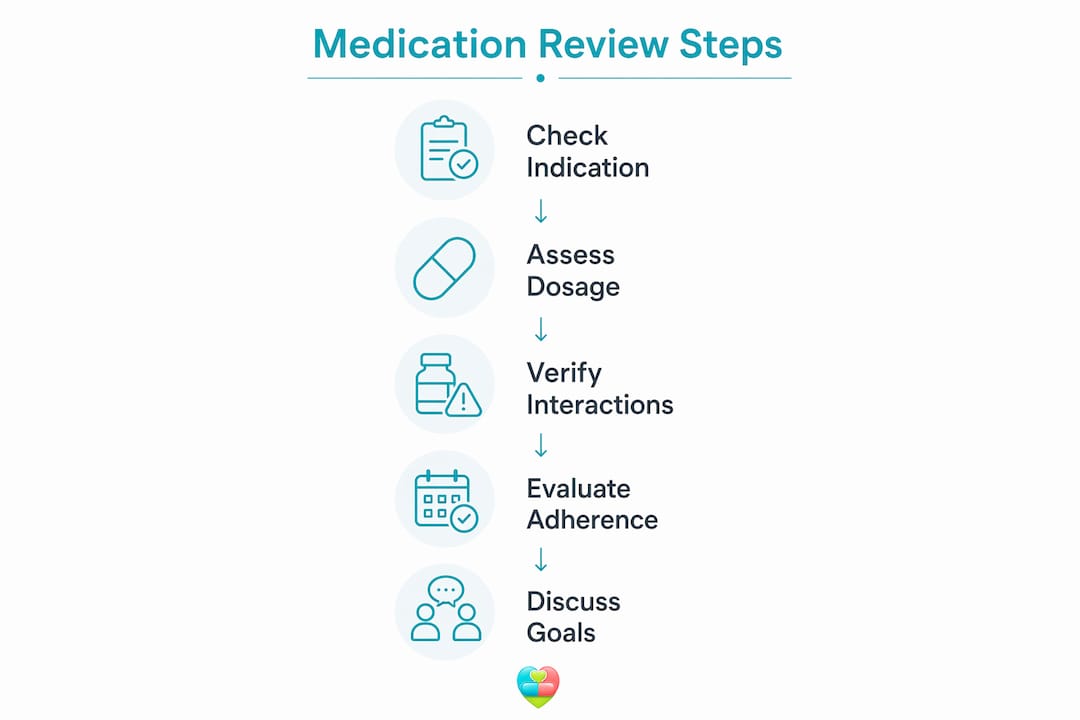
- GPs check that each medicine still has a clear indication and is doing what it should.
- Practice pharmacists, who lead much of the SMR work within Primary Care Networks (PCNs), review interactions, doses and adherence.
- Reviews reduce adverse events and medicine waste, particularly for people on multiple medicines.
Table of Contents
- What does a GP actually check during a medication review?
- Who takes part, and what does shared decision-making mean for you?
- When do medication reviews happen, and how can you request one?
- Why accurate records prevent harm
- How to prepare for a medication review: your checklist
- How digital medication logs make GP reviews safer
- What happens after the review?
- UK rules on sharing medication records and your privacy rights
- Key takeaways
- The gap between a tidy record and a safe one
- Thedailydosetracker: built for exactly this preparation
- Useful sources
What does a GP actually check during a medication review?
The structured medication review follows a systematic set of clinical checks. Each one has a specific safety rationale.
| Clinical check | Why it matters |
|---|---|
| Indication | Is there still a reason to prescribe this medicine? |
| Dose and frequency | Is the dose appropriate for current weight, age and renal function? |
| Effectiveness | Is the medicine achieving its intended outcome? |
| Side effects | Are reported symptoms caused by a medicine rather than a new condition? |
| Drug interactions | Do any combinations create risk, especially with new additions? |
| Adherence | Is the patient actually taking the medicine as prescribed? |
| OTCs, herbals and supplements | Do non-prescription products interact with prescribed ones? |
| Duplication | Is the same drug class prescribed twice from different sources? |
Reviews can be conducted face to face, by telephone, or as a notes review where the clinician works through the record without the patient present. Remote reviews are common for straightforward repeat prescriptions, but they shift accuracy responsibility squarely onto the information available in the record. If that record is incomplete, the clinician is working blind.
Who takes part, and what does shared decision-making mean for you?
Medication reviews are not a solo GP task. The typical participants include:
- GP — overall clinical responsibility and prescribing decisions.
- Practice pharmacist or PCN pharmacist — often leads the SMR, particularly for complex patients.
- Community pharmacist — can flag concerns and contribute consultation summaries.
- Practice nurse — monitors chronic conditions and may conduct structured reviews.
- Patient — the central voice; their goals and quality-of-life preferences shape every decision.
- Carer — provides real-world observations the clinician cannot access from the record alone.
- Specialist — may need to be consulted when secondary-care medicines are involved.
NHS guidance is explicit that the review should centre the patient's own goals, not just the clinical checklist. That means the conversation should cover what matters to the patient: whether a medicine fits their daily life, whether side effects are tolerable, and whether they would prefer a different approach.
Pro Tip: Carers can prepare two or three specific observations before the appointment: a symptom that started after a dose change, a missed dose pattern, or a practical problem with the medicine (difficulty swallowing, timing conflicts). Concrete examples move the conversation faster than general concerns.
When do medication reviews happen, and how can you request one?
Reviews are not only annual events. Common triggers include:
- Starting a new medicine, particularly one that interacts with existing therapy.
- Taking multiple regular medicines, which multiplies interaction risk.
- Experiencing new or unexplained symptoms that may be adverse effects.
- Discharge from hospital, where new medicines are often added or existing ones changed.
- A care transition, such as moving into a care home or changing GP practice.
- Routine repeat-prescription renewal, where the GMS contract supports periodic review.
Patients, carers, community pharmacists, and hospital teams can all request a medication review. You do not need to wait for the practice to initiate one. Contact the surgery, explain the reason, and ask for a review to be scheduled or for the pharmacist to call you.
Anyone on a repeat prescription has the right to ask their GP practice for a review. If you are a carer, you can make that request on behalf of the person you support, provided appropriate consent is in place.
Why accurate records prevent harm
Incomplete medication records are a genuine patient safety risk. When a GP cannot see the full picture, they may miss a dangerous interaction, misattribute a side effect to a new condition, or prescribe a drug that duplicates one already started by a specialist.
GP records frequently lack medicines started in secondary or private care, because those prescribers do not always share information automatically. A patient discharged from hospital with two new medicines may have neither recorded at their GP practice unless someone actively reconciles the discharge letter.
A patient taking a blood thinner prescribed by a cardiologist and an over-the-counter anti-inflammatory bought at a pharmacy has a serious interaction risk. If neither the cardiologist's prescription nor the OTC purchase appears in the GP record, no automated alert fires. The only defence is an accurate, complete list.
Adding outside medicines to the GP repeat list, where clinically appropriate, is one of the most effective safety steps a carer or patient can take.
How to prepare for a medication review: your checklist
Preparation takes fifteen minutes and significantly improves what the clinician can do in the time available.
What to collect:
- A complete list of all current medicines, including doses and frequency.
- Empty boxes or photographs of packaging for anything recently changed.
- Non-prescription products: vitamins, herbal remedies, supplements, and regular OTC medicines.
- A brief note of any symptoms that started or changed after a medicine was added or adjusted.
- Adherence notes: doses regularly missed, timing difficulties, or medicines stockpiling.
- Questions you want answered before the appointment ends.
Before the appointment:
- Gather any hospital discharge letters or specialist correspondence issued since the last review.
- Contact the practice in advance if you have a discharge letter with new medicines; do not wait until the day.
- Confirm consent arrangements if you are a carer attending on behalf of someone else. The practice needs explicit consent to discuss another person's records with you.
- Ask whether the review will be face to face, by telephone, or a notes review, so you know whether to attend.
A patient medication history guide can help you structure this information before the appointment.
How digital medication logs make GP reviews safer
Remote and notes-based reviews rely entirely on the accuracy of available information. A digital medication log that is updated in real time gives a clinician something a handwritten list cannot: a time-stamped, verifiable record of what was taken, when, and whether doses were missed.

| Digital feature | Clinical benefit | How a GP uses it |
|---|---|---|
| Real-time dose logging | Accurate adherence data | Identifies missed doses without relying on recall |
| Medication history export | Portable, complete record | Reduces transcription errors at the review |
| Drug interaction alerts | Pre-emptive safety check | Flags combinations before the review appointment |
| Symptom diary | Links symptoms to dose changes | Supports side-effect attribution |
| Household sharing | Carer visibility | Carer and patient present consistent information |
| Audit trail | Accountability | Confirms when changes were made and by whom |
Thedailydosetracker provides all of these features in a single UK GDPR-compliant platform. Carers managing multiple household members can log doses, record symptoms, and export a clean medication history to share with the practice before or during a review. The clinical decision support built into the platform flags potential interactions before they reach the GP's desk.
What happens after the review?
Most reviews produce at least one change. Common outcomes include:
- Deprescribing: stopping a medicine that is no longer indicated or is causing harm.
- Dose adjustment: increasing or reducing a dose based on current clinical status.
- Monitoring plan: blood tests or blood pressure checks scheduled to track a medicine's effect.
- Updated repeat prescription: the practice record reflects agreed changes.
- Referral: to a specialist or community pharmacy for follow-up.
- Safety flag: a note added to the record alerting other clinicians to a specific risk.
Once a review is complete, ask for a written summary of any changes agreed. If a planned change has not appeared on your repeat prescription within two weeks, contact the practice to check.
The practice pharmacist or GP is responsible for implementing changes. Community pharmacy may be asked to follow up on adherence or to counsel on a new medicine. Update your digital log as soon as changes are confirmed so the record stays accurate for the next review.
UK rules on sharing medication records and your privacy rights
The NHS Summary Care Record (SCR) holds a core set of medicines, allergies and adverse reactions from the GP record. It is accessible to authorised NHS staff involved in your care, including out-of-hours services and hospital teams.
GP Connect Update Record extends this further. It allows community pharmacy professionals to send structured consultation summaries directly into GP practice workflows, creating a task for the practice team to review and file. From 1 October 2025, GP practices are required to have Update Record enabled within their clinical system for specified community pharmacy services. Summaries arrive in structured format; the practice team can file with one action or reject after review.
Key points for patients and carers:
- You can ask your GP practice what information is held on your SCR and who has accessed it.
- You have the right to opt out of the SCR or restrict what it contains; discuss this with your practice.
- Any digital platform you use to log medication must comply with UK GDPR. Thedailydosetracker operates under UK GDPR standards.
- Consent is required before a carer can access or discuss another person's records with the practice.
Pro Tip: If you use a private prescription or buy medicines abroad, tell your GP practice explicitly. These will not appear in NHS records automatically and must be added manually to avoid a gap in the safety picture.
Key takeaways
GPs review medication records to keep every medicine safe, effective, and aligned with the patient's goals — and accurate records are the single most important factor in making that possible.
| Point | Details |
|---|---|
| Reviews protect safety | GPs check indication, interactions, dose, and adherence to prevent harm and reduce hospital admissions. |
| Preparation matters | Bring a complete medicine list including OTCs, supplements, and any hospital discharge letters. |
| Anyone can request a review | Patients, carers, and pharmacists can all ask the GP practice to schedule a review. |
| Digital logs improve accuracy | Real-time dose logging and exportable histories give clinicians verified data for remote and notes reviews. |
| Thedailydosetracker supports reviews | The platform's household sharing, interaction checks, symptom diary, and medication history export map directly to GP review preparation. |
The gap between a tidy record and a safe one
The conventional wisdom is that medication reviews are primarily a clinical task. They are not. The quality of a review is almost entirely determined by the quality of the information that goes into it, and most of that information comes from the patient or carer, not the system.
GPs work from what they can see. When a patient is taking seven medicines from three different prescribers and none of them communicate automatically, the GP's record is a partial picture at best. The review conversation then becomes a reconstruction exercise rather than a genuine clinical assessment.
What actually changes outcomes is the preparation that happens before the appointment: a carer who has logged every dose for the past month, noted the two days the medicine was skipped and why, and photographed the packaging of the supplement bought online. That information is worth more than any checklist. The clinician can act on it. A vague "I think I take it most days" cannot be acted on.
Shared decision-making only works when both sides of the conversation have accurate information. The patient and carer hold half of it.
Thedailydosetracker: built for exactly this preparation
Preparing for a GP medication review used to mean a pile of boxes, a handwritten list, and hoping you remembered everything. Thedailydosetracker replaces that with a single, exportable record that covers every medicine, every dose, and every symptom note in one place.
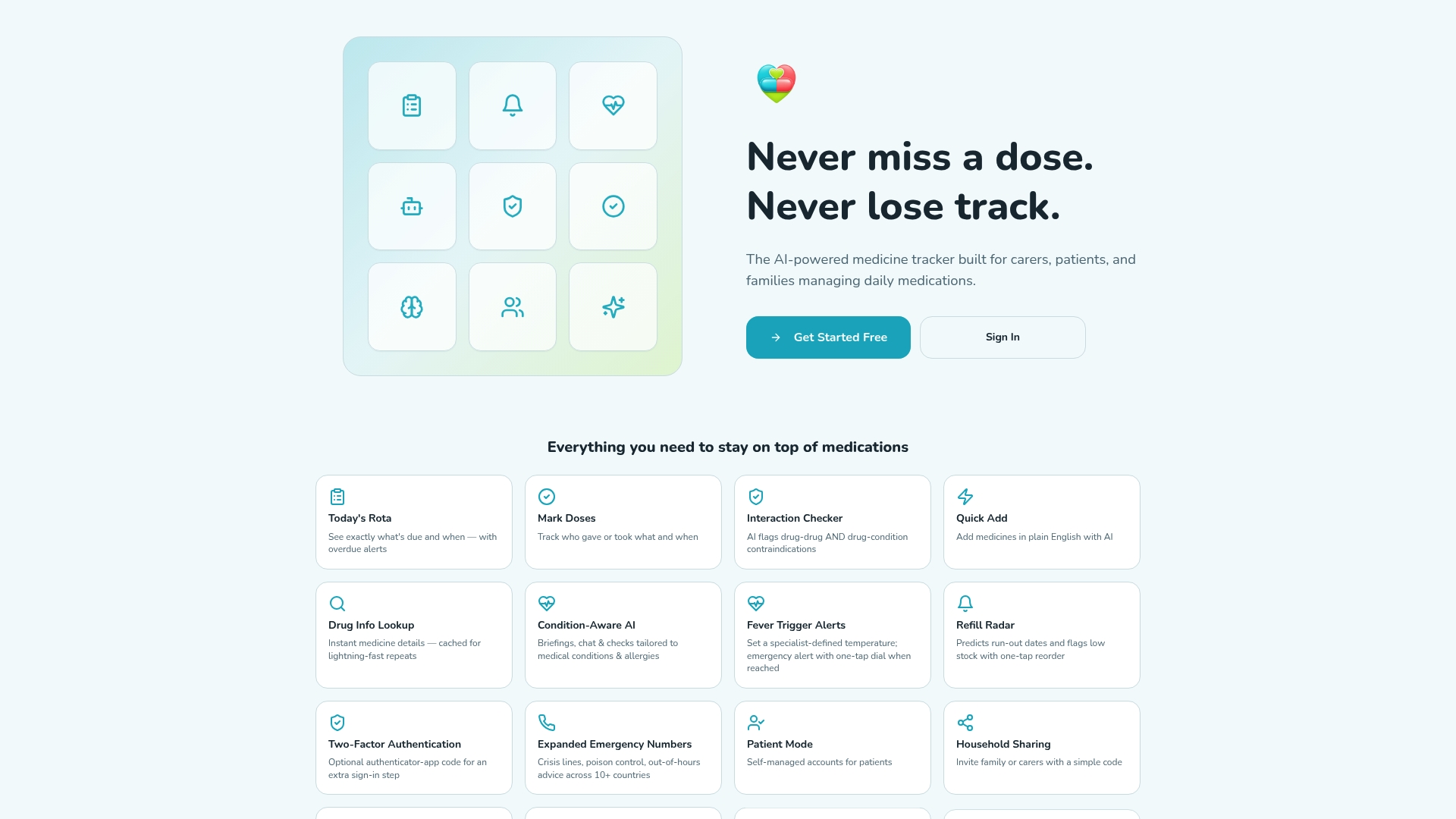
The platform's household sharing means a carer and the person they support see the same real-time record. Drug interaction checks flag combinations before the appointment. The symptom diary links observations directly to dose changes, giving the GP the kind of time-stamped evidence that changes a clinical decision. Medication history export produces a clean, shareable document the practice can use immediately.
Thedailydosetracker complies with UK GDPR, works across all devices as a progressive web app, and includes accessibility options including dark mode and adjustable font sizes. The free tier covers core scheduling and logging; advanced features including multi-patient management, AI-based interaction checks, and appointment scheduling are available on paid plans.
See the full plan options and start building the record your GP actually needs.
Useful sources
- NHS England: Structured Medication Reviews and Medicines Optimisation — the primary NHS policy page on SMRs, shared decision-making and PCN pharmacist roles.
- GP Connect Update Record: Frequently Asked Questions — explains how community pharmacy summaries flow into GP workflows and the October 2025 requirement.
- BJGP: Medicines Prescribed Elsewhere — peer-reviewed analysis of why outside prescriptions are missed in GP records and how to address the gap.
- PMC: Medication Review Literature Review — open-access review of medication review methods, including evidence on remote and notes-based reviews.
- PMC: GP Prescribing Priorities — peer-reviewed analysis of how GPs prioritise medicines and why a central accurate list is the strongest safety defence.