

A medication review is a structured evaluation by a healthcare professional of every medicine a patient takes, with the goal of making treatment safer and more effective. The medication review process explained simply: a pharmacist, doctor, or nurse examines your full medication list, checks for problems, and works with you to agree on any changes. This process covers prescription drugs, over-the-counter medicines, vitamins, and herbal supplements. In the UK, NHS standards recognise several formal types of review, including Structured Medication Reviews (SMRs), Comprehensive Medication Reviews (CMRs), and Targeted Medication Reviews (TMRs). For patients managing multiple conditions, and for the family carers supporting them, understanding this process is the first step towards safer, more confident medication management.
What are the types of medication reviews and how do they differ?
Not all medication reviews are the same. The type you receive depends on your clinical complexity, your age, and the setting where you receive care.
A Comprehensive Medication Review is the most thorough option. It is a structured, interactive appointment lasting 20–30 minutes, covering every medicine in detail. A Targeted Medication Review is shorter and more focused. TMRs typically happen quarterly and address a specific concern, such as a new diagnosis or a recent side effect. That focused approach makes TMRs practical for ongoing monitoring without requiring a full clinical workup each time.
Structured Medication Reviews sit within the NHS framework and are particularly common for patients with polypharmacy, meaning those taking five or more medicines. SMRs follow a defined clinical process and are usually led by a clinical pharmacist working alongside a GP.
| Review type | Duration | Frequency | Focus |
|---|---|---|---|
| Comprehensive Medication Review (CMR) | 20–30 minutes | Annual or as needed | All medicines, full clinical picture |
| Targeted Medication Review (TMR) | Shorter, focused | Quarterly | Specific concern or condition |
| Structured Medication Review (SMR) | Variable | As clinically indicated | Polypharmacy, complex patients |
The key difference between types is depth, not intent. All three share the same goal: making sure every medicine you take is still necessary, still safe, and still working.
What happens during a medication review? Step-by-step breakdown
A medication review appointment follows a clear sequence. Knowing the steps helps you prepare and get more from the time you have with your clinician.
Step 1: Compile the full medication list. The clinician gathers every medicine you take, including prescriptions, over-the-counter products, vitamins, and herbal remedies. This list forms the foundation of the entire review.

Step 2: Assess each medicine individually. The clinician checks whether each medicine is still necessary, whether the dose is correct, and whether it interacts with anything else on the list. Side effects and contraindications are reviewed at this stage.
Step 3: Discuss your experience. You describe how you actually take your medicines, any side effects you have noticed, and any doses you have missed. This is where medication adherence problems surface and can be addressed.
Step 4: Agree on recommendations. The clinician proposes changes, which might include stopping a medicine, adjusting a dose, or switching to a safer alternative. These recommendations are made with you, not just for you.
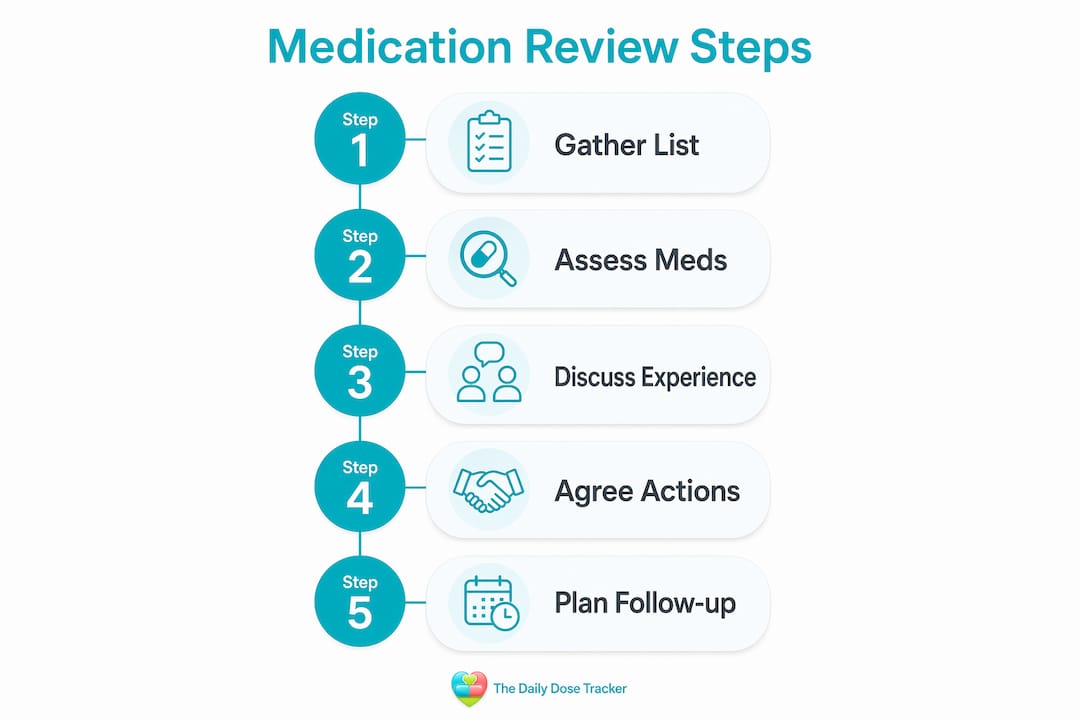
Step 5: Plan the next steps. A follow-up plan is agreed, including when to return, what to monitor, and who to contact if problems arise.
Pro Tip: Bring every physical medication container to the appointment, including creams, eye drops, and supplements. Patients frequently omit these from verbal lists, and they can cause dangerous drug interactions that a clinician cannot catch without seeing them.
The review is a two-way conversation, not a passive check-up. Your observations about how medicines affect your daily life are clinical data. Share them.
What are the key benefits of medication reviews for patients and carers?
The benefits of medication review extend well beyond a tidy prescription list. For patients managing several conditions, and for the carers coordinating their care, the gains are concrete and measurable.
Clinical interventions during reviews corrected inappropriate drug combinations in 12.5% to 40% of cases within three months. That range reflects how much variation exists in patient complexity, but even the lower figure represents a significant reduction in avoidable harm. Catching a harmful drug combination before it causes a hospital admission is precisely what the review process is designed to do.
Patients also report a benefit that does not appear in clinical data: reassurance. Personalised medication information eases anxiety about managing complex regimens. Knowing why you take each medicine, and that a clinician has checked they all work safely together, reduces the daily stress of managing multiple treatments. For carers, that clarity translates directly into more confident, accurate administration.
The benefits of medication review include:
- Safer prescribing. Harmful combinations and outdated doses are identified and corrected.
- Reduced polypharmacy. Medicines that are no longer necessary are stopped, reducing the overall burden.
- Better adherence. Patients who understand their medicines take them more consistently. This is particularly relevant for elderly medication management.
- Improved communication. The review creates a documented record that all members of the care team can reference.
- Patient confidence. Leaving the appointment with a clear, agreed plan reduces uncertainty.
Structured medication reviews improve prescribing accuracy in measurable ways, even though current evidence does not yet show a reduction in mortality or hospital admissions. That distinction matters. The process works at the level of safety and quality of life, and that is a meaningful outcome for most patients and carers.
Common challenges and nuances in medication reviews
Medication reviews are not straightforward clinical tick-box exercises. Several real-world complications affect how they work in practice.
The most common misconception is that a review will result in medicines being stopped. Clinicians weigh benefits against risks in a complex trade-off analysis. A medicine flagged by criteria such as the Beers list is not automatically discontinued. If the benefit still outweighs the risk for that specific patient, it stays. Deprescribing is a deliberate, evidence-based decision, not a default outcome.
Medication reviews require multidisciplinary collaboration between physicians, pharmacists, nurses, and carers. No single professional has the full picture. A pharmacist may identify an interaction that a GP missed. A carer may report an adherence pattern that neither clinician knew about. The review works best when everyone contributes.
Incomplete medication lists are the most common practical problem. Patients routinely omit over-the-counter drugs, herbal supplements, and topical creams from what they report. These omissions create blind spots that can lead to dangerous interactions.
Key challenges to be aware of:
- Incomplete disclosure. Patients do not always mention supplements, vitamins, or creams. Every product counts.
- Coordination gaps. When care is split across multiple providers, medication lists can become inconsistent.
- Patient anxiety. Some patients fear that medicines will be stopped without adequate explanation. Open dialogue during the review addresses this directly.
- Time constraints. Shorter appointments limit depth. Preparation before the review compensates for this.
Pro Tip: Before your appointment, use a free online drug interaction checker to flag any concerns you want to raise. Arriving with specific questions makes the conversation more productive and helps the clinician focus on what matters most to you.
How to prepare effectively for a medication review
Preparation is the single biggest factor within your control. A well-prepared patient gets more from a medication review than one who arrives without a list.
Preparing a detailed medication list that includes each medicine's purpose, dose, and frequency improves the efficiency of the review and prevents critical issues from being overlooked. Add the date you started each medicine if you know it. That context helps the clinician assess whether a medicine is still appropriate.
Steps to prepare for your medication review:
- List every medicine. Include prescriptions, over-the-counter products, vitamins, herbal remedies, eye drops, and topical creams. Use your medication history guide as a template if you are a carer managing someone else's medicines.
- Bring the physical containers. Labels contain information, including strength and instructions, that verbal descriptions often miss.
- Note any side effects. Write down symptoms you have noticed and when they started. Be specific: "I feel dizzy about an hour after taking the blood pressure tablet" is far more useful than "I feel a bit off."
- Prepare questions. Ask why each medicine is prescribed, what to do if you miss a dose, and whether any medicines can be stopped.
- Track adherence honestly. If you regularly miss doses, say so. The clinician cannot help with a problem they do not know exists.
For carers managing prescriptions across multiple health conditions, maintaining a live, accurate medication record between appointments is as important as the review itself. A digital tool that logs doses, flags interactions, and records symptoms makes that preparation far less burdensome.
Key takeaways
A medication review is the most reliable way to catch prescribing problems before they cause harm, and preparation by the patient or carer directly determines how much value the appointment delivers.
| Point | Details |
|---|---|
| Know your review type | CMRs take 20–30 minutes; TMRs are shorter and quarterly; SMRs target complex patients. |
| Bring everything | Physical medication containers, including creams and supplements, prevent dangerous omissions. |
| Preparation improves outcomes | A detailed list with doses, purposes, and noted side effects makes the review more efficient. |
| Reviews correct real problems | Clinical interventions corrected inappropriate drug combinations in 12.5–40% of cases within three months. |
| Active participation matters | Sharing your adherence patterns and symptoms gives clinicians the information they need to help. |
Why patients underestimate what a medication review can do
Most patients I speak with think of a medication review as a formality. They expect a clinician to glance at a list, nod, and send them on their way. That expectation leads to passive attendance, and passive attendance wastes the appointment.
The most valuable thing I have observed in medication reviews is not the clinical correction of a harmful drug combination, though that matters enormously. It is the moment a patient realises they have been taking a medicine for a condition that resolved years ago. Nobody told them to stop. Nobody checked. The review caught it.
Patients also tend to wait for the clinician to lead every part of the conversation. A medication review is not a consultation where you sit and receive information. It is a structured dialogue. The clinician brings clinical knowledge. You bring lived experience of what it actually feels like to take these medicines every day. Both are necessary.
The hardest thing to change is the habit of omitting non-prescription products from the conversation. People do not think of a vitamin supplement or a herbal remedy as a "real" medicine. Clinically, it is. Some supplements interact with anticoagulants, antidepressants, and thyroid medications in ways that cause genuine harm. Full disclosure is not optional.
My honest advice: treat the medication review as the most useful clinical appointment you attend all year. Prepare for it accordingly.
— Prasant
Thedailydosetracker: your medication management tool between reviews
A medication review happens once or twice a year. The work of managing medicines safely happens every single day.
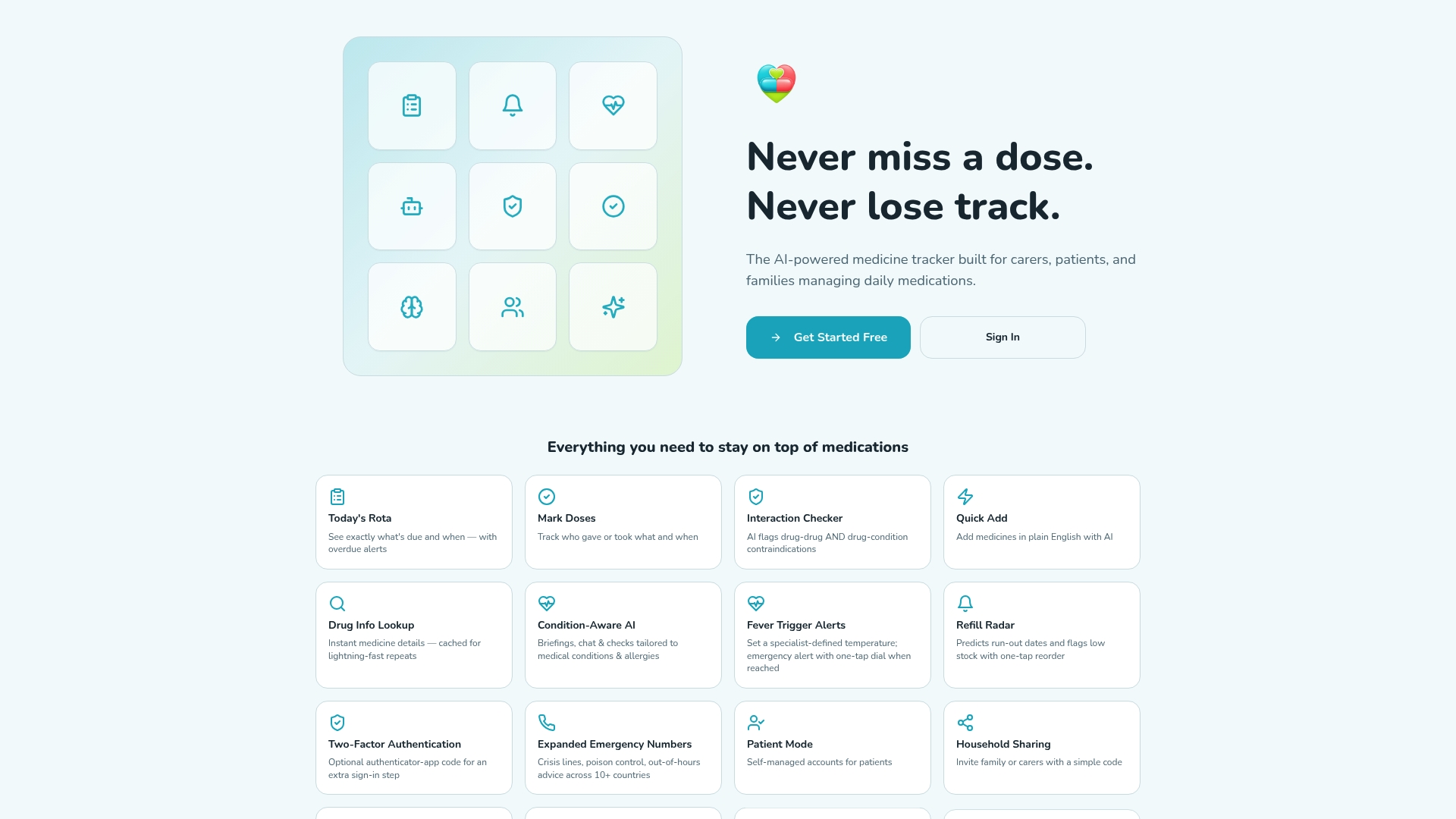
Thedailydosetracker is a free digital platform built for carers and families managing complex medication regimens. It helps you maintain an accurate, up-to-date medication list, log every dose, and receive real-time alerts for due or overdue medicines. The platform includes drug interaction checks, symptom logging, and appointment scheduling, giving you the organised records you need to walk into your next medication review fully prepared. Visit the Daily Dose Tracker app to get started and make every review count.
FAQ
What is a medication review?
A medication review is a structured evaluation by a healthcare professional of all medicines a patient takes, with the aim of improving safety and treatment effectiveness. It covers prescriptions, over-the-counter products, vitamins, and supplements.
How long does a medication review take?
A Comprehensive Medication Review typically lasts 20–30 minutes. Targeted Medication Reviews are shorter and more focused, usually conducted quarterly to address a specific clinical concern.
Who carries out a medication review?
Medication reviews are an interprofessional responsibility, typically involving a clinical pharmacist, GP, and nurse, with input from carers where relevant. No single clinician holds the complete picture alone.
What should I bring to a medication review appointment?
Bring every physical medication container, including creams, eye drops, vitamins, and herbal supplements. Patients frequently omit these from verbal lists, and they can cause interactions that a clinician cannot identify without seeing them.
Do medication reviews always result in medicines being stopped?
Not necessarily. Clinicians weigh the benefits of each medicine against its risks for that specific patient. A medicine may be flagged for review but remain prescribed if the benefit still outweighs the risk.