

Why shared medication apps are essential for family coordination
Families managing medication for children or multiple members face a coordination problem that paper lists and text threads cannot solve. Shared medication apps centralise every schedule, dose, and reminder in one place that all carers can see and update in real time. The result is fewer missed doses, fewer dangerous errors, and far less stress for everyone involved.
The core benefits are worth stating plainly:
- Centralised schedules mean every carer sees the same information, not a version that was correct three days ago.
- Synchronised reminders alert all relevant family members, not just the person who set them up.
- Interaction warnings flag potentially dangerous combinations before a dose is given.
- Dosage tracking creates a clear log so no one guesses whether a medicine was taken.
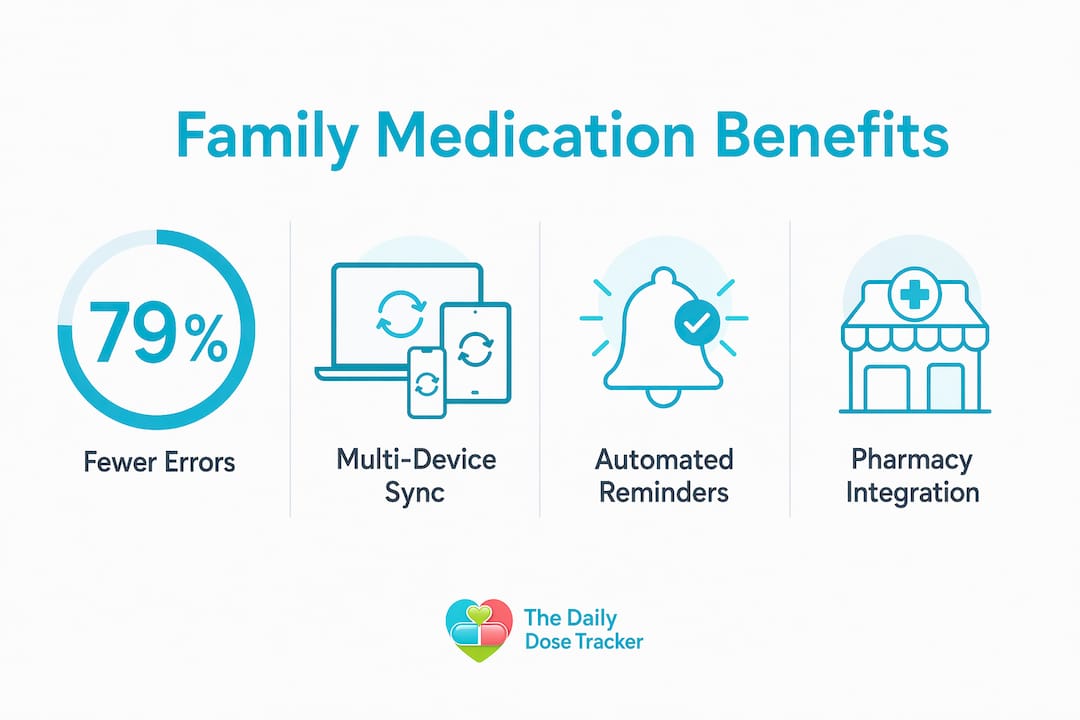
- Multi-device syncing keeps a parent at work and a grandparent at home on the same page simultaneously.
Medication non-adherence results in a significant number of deaths and costs in the United States, with poor communication cited as a leading cause. Shared apps address that communication gap directly.
What makes family medication management so difficult?
The common challenges managing family medications are rarely about forgetting. They are about coordination breaking down across multiple people with different information.
- Conflicting instructions: one carer gives a dose before breakfast; another thinks it is after. Neither is wrong about what they were told.
- Duplicated or missed doses: without a shared log, two carers can both administer a medicine within an hour of each other.
- Prescription changes: a new dose or a stopped medication does not always reach everyone who needs to know.
- Refill gaps: no single person tracks when a prescription is running low, so supplies run out unexpectedly.
- Privacy tensions: families often need to share enough information to keep someone safe without exposing sensitive diagnoses to every relative involved.
A substantial portion of people miss doses because they silenced alerts without realising it. When only one person receives a reminder, that single point of failure puts the whole regimen at risk.

How these apps actually improve adherence and coordination
Real-time syncing is the feature that changes everything. When one carer logs a dose, every other authorised family member sees it immediately. There is no need to call and check; the app confirms it.

Automated reminders reduce non-adherence, but the bigger gain comes from assigning responsibility. Designating a dedicated coordinator to manage updates reduces coordination errors significantly, according to a University of Michigan study on family medication practices. The app does not replace that person; it gives them the tools to do the job properly.
Pharmacy integration removes another common failure point. When a refill alert reaches every carer automatically, the chance of a medication gap drops considerably. For families managing medication at home across shifts or distances, that kind of automated tracking is genuinely difficult to replicate manually.
Technology alone is not enough, though. A Health Affairs study found that a notable proportion of errors occur when alerts are ignored or dismissed. Apps reduce the margin for error; human oversight closes it.
Key features to look for, including the Medicines for Children app
The best apps for UK families go well beyond a simple reminder. They are built around the specific demands of paediatric and multi-member regimens.
"The Medicines for Children app will help parents manage their children's medicines more safely and effectively, providing trusted, up-to-date information in a format that is easy to use at home." — Royal College of Paediatrics and Child Health
The Medicines for Children app is a strong example of UK-centred design. It addresses child-specific dosage, timing, and administration details that generic apps overlook, and it is backed by clinical authority rather than commercial interest.
Beyond paediatric tools, the features that matter most for family coordination are:
- Granular privacy controls so sensitive diagnoses are not visible to every family member with access.
- Drug interaction databases that check combinations against current prescribing standards.
- Multi-user profiles allowing one account to cover children and adults with separate schedules.
- Clinician and pharmacy integration so prescription changes flow through automatically.
- Accessible interfaces with options such as dark mode and adjustable text for older or less tech-confident carers.
Apps that check a very large number of drug combinations provide a level of safety checking that no paper list can match. UK GDPR compliance is a non-negotiable requirement for any app handling health data in this country; always verify it before sharing sensitive information.
What families and carers actually say about using these tools
The emotional dimension of caregiving is where shared apps often have their quietest but most meaningful impact. Carers describe fewer daily check-in calls, less anxiety about whether a dose was given, and a genuine sense of shared responsibility rather than one person carrying everything.
"Family support plays a big role in staying on schedule. Apps that notify a caregiver when a dose is missed can prompt quick follow-ups, turning a potential gap into a brief conversation rather than a crisis." — Family Medication Tracking Apps overview
The AARP Family Caregivers guidance notes that technology must balance being informative with supporting the emotional side of caregiving. An app that sends a calm, non-intrusive confirmation that a dose was taken does something a phone call cannot: it reassures without interrupting. For carers managing children and adult family members simultaneously, that reassurance is not a luxury.
Families also report that shared apps make it easier to involve extended family, such as grandparents or older siblings, without handing over full access to every health detail. Permission-based sharing lets carers decide exactly who sees what.
What Thedailydosetracker data shows about family medication management
Families who review their medication schedules weekly experience 79% fewer scheduling errors than those who only update reactively, according to Thedailydosetracker's 2023 internal data. That figure points to something the app is specifically built around: regular, low-effort engagement rather than crisis-driven updates.
| Metric | Before app adoption | After app adoption |
|---|---|---|
| Weekly scheduling errors | Baseline (reactive updates) | 79% reduction with weekly reviews |
| Missed doses from silent alerts | Common single-carer risk | Mitigated by multi-user notifications |
| Coordination errors with designated lead | Higher without assigned role | — |
| Human error from ignored alerts | Present in all tech-supported systems | — |
Thedailydosetracker is built to UK GDPR standards, with household sharing, multi-patient profiles, and AI-powered interaction checks. The platform also includes fever alerts, refill predictions, and symptom logging, features that matter most when managing children or complex adult regimens. Managing children and adult medications in a single app removes the need to switch between tools as a family's needs change.
Pro Tip: Set a ten-minute weekly calendar review with whoever coordinates your family's medication. Thedailydosetracker's data shows this single habit cuts scheduling errors more than any other change.
Thedailydosetracker: built for families who need more than a reminder
Most families do not need another reminder app. They need a system that keeps every carer informed, flags risks before they become errors, and grows with the family's needs.
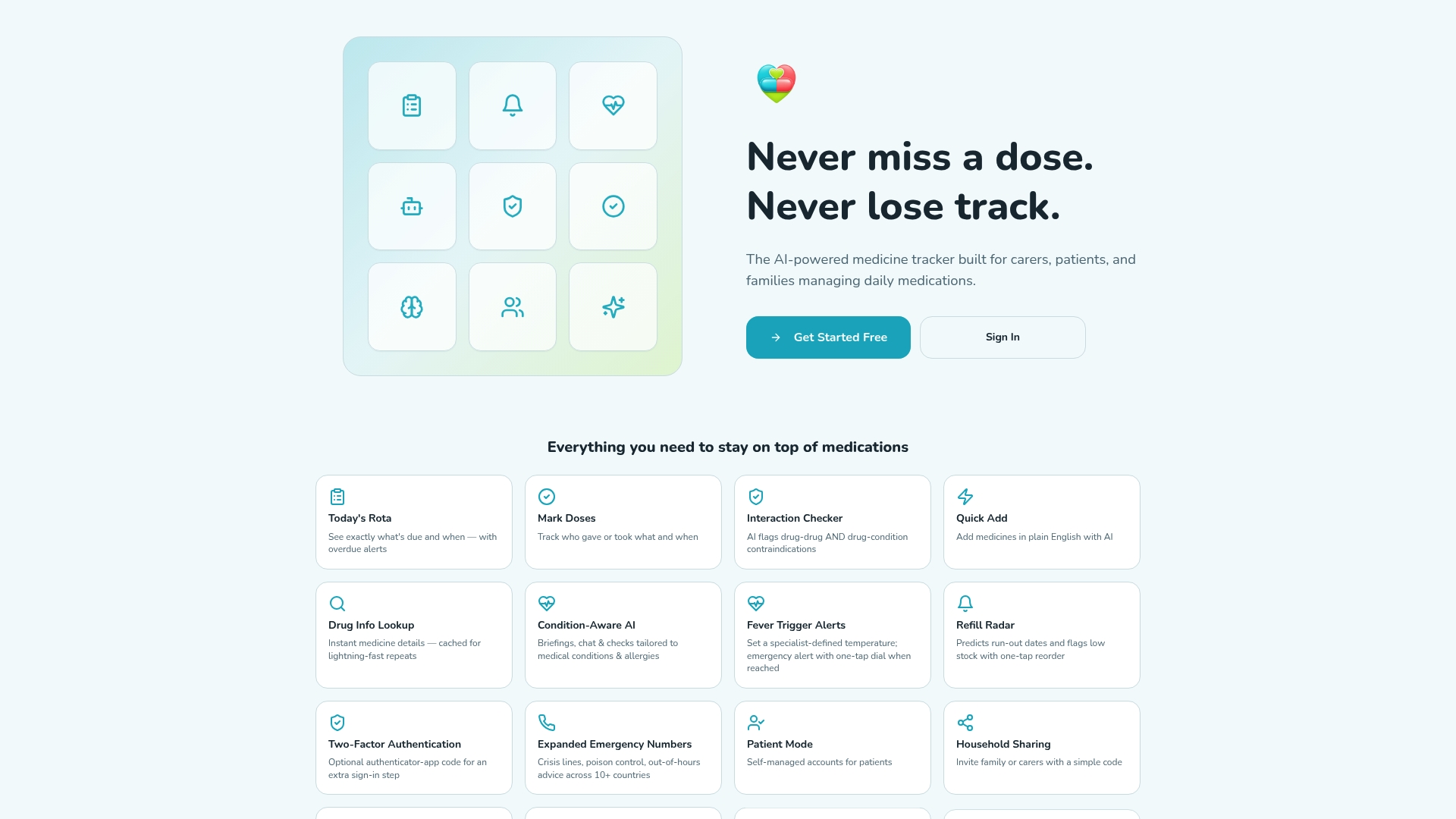
Thedailydosetracker does exactly that. It supports household sharing across multiple devices, covers both children's and adult medication schedules in one account, and checks drug interactions against current standards. Carers get real-time alerts for due and overdue doses, refill predictions, and emergency contact integration. Privacy is handled through UK GDPR-compliant controls, so you decide who sees which details. For families managing a child's paediatric regimen alongside an elderly parent's complex schedule, that flexibility is what separates a useful tool from one that gets abandoned after a week. See the full features and pricing and start a free account today.
Key takeaways
Shared medication apps reduce errors and missed doses most effectively when every carer uses the same real-time system, with a designated coordinator and weekly schedule reviews built in.
| Point | Details |
|---|---|
| Coordination is the core problem | Poor communication, not forgetfulness, drives most missed doses and medication errors in families. |
| Weekly reviews cut errors sharply | Families who review schedules weekly see 79% fewer scheduling errors than those who update only reactively. |
| Designate one coordinator | Assigning a single person to manage updates reduces coordination errors by 63%, per University of Michigan research. |
| Human oversight remains essential | 23% of errors occur even with alerts active, because people dismiss notifications without acting on them. |
| Thedailydosetracker covers the full picture | It combines household sharing, paediatric and adult profiles, interaction checks, and UK GDPR compliance in one platform. |