

Medication non-adherence leads to poorer disease control, avoidable hospital admissions, increased mortality, and substantial costs to the NHS and wider economy. The consequences of skipping medication span every major chronic condition and affect patients, families, carers, and health systems simultaneously. Systematic reviews confirm that non-adherence increases the risk of disease progression, hospitalisation, and death across long-term conditions, and that no single intervention reliably reverses it.
The principal harms fall into three categories:
- Clinical: worsening disease control, treatment failure, acute complications, preventable hospital admissions, and excess mortality
- Economic: avoidable direct NHS costs (emergency care, readmissions, intensified treatment) and indirect costs including lost productivity, long-term disability, and informal carer burden
- Psychosocial: reduced health-related quality of life, higher rates of depression and anxiety, social withdrawal, and caregiver strain
Estimates from a review of systematic reviews place the annual cost of medication non-adherence across Europe at between €80 billion and €125 billion, with comparable scale in the United States. The UK bears a proportionate share of that burden through avoidable NHS expenditure and lost economic output.
Key takeaways
Non-adherence to prescribed medicines is the single most common and costly preventable cause of avoidable hospital admissions, disease progression, and premature death in chronic disease management.
| Point | Details |
|---|---|
| Scale of the problem | Around half of medicines for long-term conditions are not taken as prescribed, making non-adherence a major public health issue. |
| Clinical consequences | Non-adherence increases risk of disease progression, hospital admissions, treatment failure, and mortality across cardiovascular, metabolic, respiratory, and mental health conditions. |
| Economic burden | European annual costs are estimated at €80–125 billion; the NHS bears a proportionate share through avoidable admissions, escalated treatment, and medication wastage. |
| Stopping abruptly is dangerous | Abrupt discontinuation of antidepressants, beta-blockers, corticosteroids, antiepileptics, and antiretrovirals can cause medical emergencies; always seek clinical advice first. |
| Multi-component interventions work | Combining shared decision-making, regimen simplification, pharmacy support, and digital tools produces better adherence outcomes than any single tactic alone. |
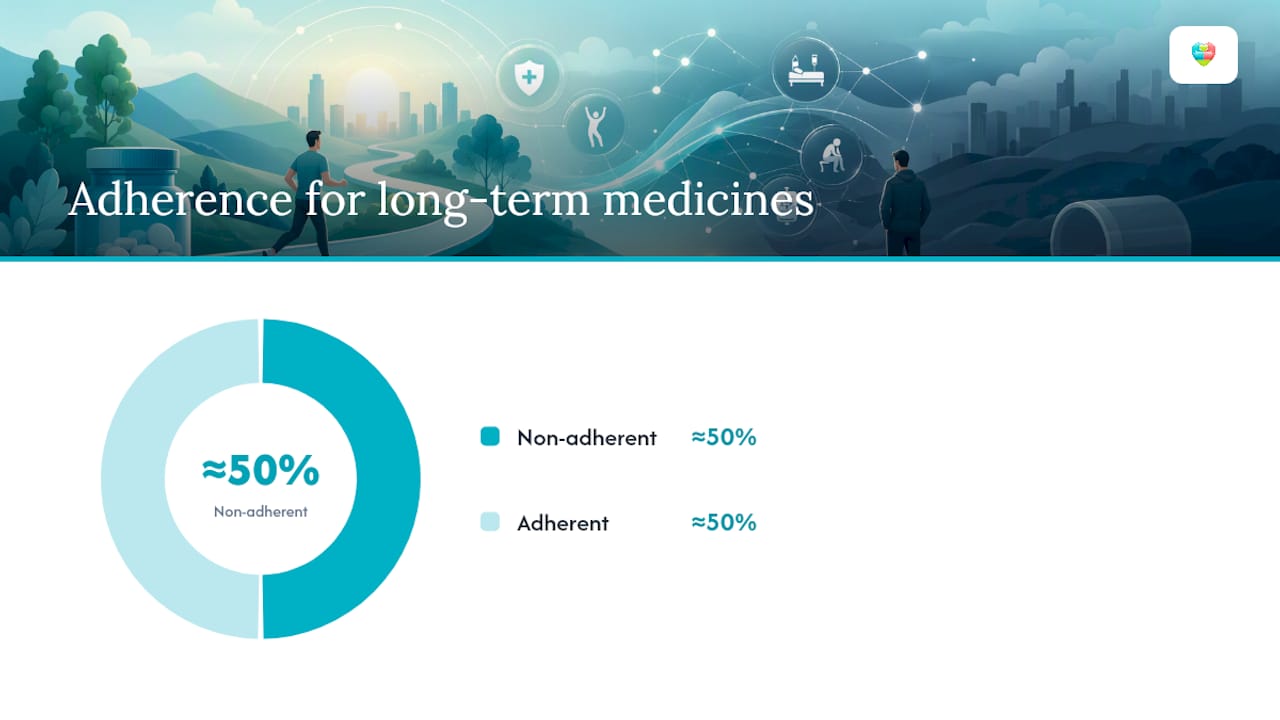
Table of Contents
- What medication non-adherence means and how it is measured
- How common is non-adherence and what drives it?
- Clinical harms linked to non-adherence, by outcome and condition
- How non-adherence affects health-care costs and the wider economy
- How non-adherence affects quality of life and mental health
- Immediate physiological risks from stopping medicines abruptly
- What reduces non-adherence: evidence-based strategies for UK practice
- Limitations of the evidence and where research gaps remain
- Why the real cost of non-adherence is still being underestimated
- Thedailydosetracker: medication management for carers and patients
- Sources
What medication non-adherence means and how it is measured
The terms adherence, compliance, and concordance are often used interchangeably, but they carry distinct meanings. NHS Specialist Pharmacy Service guidance sets out clear definitions that clinicians and researchers should apply consistently.
Core terms:
- Adherence: the extent to which a patient's behaviour matches agreed recommendations from their prescriber, covering when, how, and how much medicine is taken
- Persistence: the duration over which a patient continues to take a medicine, from initiation to discontinuation
- Concordance: a broader concept describing a shared decision-making process between patient and clinician; it is a consultation model, not a behaviour measure
- Primary non-initiation: a prescription is issued but never dispensed or started; this is often invisible to prescribers
- Secondary non-persistence: a medicine is started but discontinued before the recommended duration ends
- Intentional non-adherence: a deliberate choice to reduce or stop doses, often driven by beliefs about necessity or concerns about side effects
- Unintentional non-adherence: doses missed through forgetfulness, confusion, or practical barriers rather than a conscious decision
Understanding the medication regimen a patient is expected to follow is the starting point for any adherence assessment, because complexity itself is a driver of non-adherence.
Measurement methods and their limitations:
Pharmacy refill data, expressed as the Medication Possession Ratio (MPR) or Proportion of Days Covered (PDC), is the most scalable approach and is used in NHS prescribing analyses. PDC is generally preferred because it avoids inflating adherence when patients stockpile medicines. Electronic monitoring devices (such as MEMS caps) provide the most granular dose-timing data but are costly and impractical at scale. Pill counts are simple but easily manipulated. Self-report is the most common method in clinical practice and research, yet it consistently overestimates adherence because patients recall or report what they intend rather than what they do. Biological markers (drug plasma levels, HbA1c, viral load) provide objective adherence proxies for specific conditions but are indirect and affected by pharmacokinetic variability.
No single method captures the full picture. Combining two approaches, such as PDC alongside a validated self-report tool, gives a more reliable estimate than either alone.
How common is non-adherence and what drives it?
Approximately half of all medicines prescribed for long-term conditions are not taken as prescribed. That figure has remained broadly stable across decades of research and applies across high-income countries including the UK.
The Merck Manual notes that non-adherence is responsible for substantial avoidable morbidity and mortality and accounts for a notable share of hospital admissions and care use. Forgetting is the most commonly cited reason patients give, but the drivers are far more heterogeneous than that.
Modifiable drivers (amenable to intervention):
- Beliefs about medicine necessity or concerns about side effects (the most consistent intentional driver)
- Regimen complexity and polypharmacy (four or more medicines significantly increases missed doses)
- Poor patient-clinician communication and inadequate counselling at initiation
- Practical access barriers: cost, transport to pharmacy, dispensing delays
- Low health literacy and difficulty understanding instructions
- Lack of routine or habit anchors for dose-taking
Non-modifiable or harder-to-change drivers:
- Cognitive impairment and dementia (particularly relevant in elderly patients)
- Severe mental illness affecting insight into treatment need
- Socioeconomic deprivation limiting access to medicines and follow-up
- Asymptomatic conditions where patients feel no immediate benefit from treatment
The challenges managing family medications are especially acute in households where one carer coordinates medicines for multiple people, because the cognitive load multiplies with each additional regimen.
Clinical harms linked to non-adherence, by outcome and condition
Non-adherence is not a passive failure. Missing doses lets plasma drug concentrations fall below therapeutic thresholds, which can trigger rebound phenomena, accelerate disease progression, or allow treatment resistance to develop. Systematic review evidence consistently links poor adherence to increased symptom burden, treatment failure, acute complications, hospital admissions, and premature death across multiple long-term conditions.
Cardiovascular disease
Adherence to antihypertensives, statins, and antiplatelet agents is directly associated with cardiovascular event rates. Patients who discontinue statins after an acute coronary syndrome face substantially higher rates of recurrent myocardial infarction and cardiovascular death. Non-adherence to antihypertensives is one of the most common reasons for apparently treatment-resistant hypertension, a condition that carries its own elevated stroke and renal disease risk. The Merck Manual cites analyses associating non-adherence with around 125,000 deaths from cardiovascular disease annually in some estimates, though this figure derives from US modelling and should be interpreted as an order-of-magnitude indicator rather than a precise UK figure.
Diabetes
Poor adherence to oral hypoglycaemics or insulin is reflected in elevated HbA1c, which predicts microvascular and macrovascular complications over time. Patients with type 2 diabetes who are non-adherent to their medicines have higher rates of retinopathy, nephropathy, peripheral neuropathy, and lower-limb amputation. These are not abstract risks: they translate directly into reduced mobility, loss of employment, and dependence on social care.

COPD and asthma
Inhaler technique and adherence are both poor in a large proportion of patients with obstructive airways disease. Non-adherence to inhaled corticosteroids in asthma is a leading cause of preventable acute exacerbations and emergency department attendance. In COPD, poor adherence to maintenance bronchodilators accelerates functional decline and increases hospitalisation rates.
Mental health
Adherence to antipsychotics and mood stabilisers is particularly challenging. Patients who stop antipsychotics are at substantially higher risk of relapse, compulsory admission, and suicide. The intentional driver here is often insight-related: patients who feel well attribute their stability to recovery rather than medication, then stop and deteriorate. Observational cohort data confirm increased mortality in patients with severe mental illness who discontinue maintenance treatment early.
HIV
Even brief gaps in adherence can allow viral replication, select resistant strains, and compromise future treatment options. This is one of the clearest examples of how small, repeated missed doses carry consequences disproportionate to their apparent size.
Oncology and endocrine conditions
Early discontinuation of adjuvant endocrine therapy in hormone-receptor-positive breast cancer, for example, is associated with higher recurrence rates. Patients often stop because of side effects that feel manageable in isolation but accumulate over a five-to-ten-year treatment course.
Timeline and progression
Short-term missed doses typically cause acute events: an exacerbation, a rebound hypertensive episode, a hypoglycaemic swing. Long-term poor persistence causes irreversible structural damage: renal scarring, cardiac remodelling, neuropathy. The distinction matters clinically because the window for intervention differs. Catching non-adherence early, before organ damage accumulates, is where the greatest clinical benefit lies.
| Outcome | Evidence summary |
|---|---|
| Hospital admissions | Multiple studies link non-adherence to increased odds of hospitalisation; avoidable admissions are a consistent finding across cardiovascular, respiratory, and metabolic conditions |
| Mortality | Systematic reviews report elevated mortality risk in non-adherent patients across cardiovascular disease, mental health, HIV, and oncology |
| Disease progression | Poor adherence accelerates microvascular complications in diabetes, structural lung decline in COPD, and viral resistance in HIV |
| Treatment failure | Non-adherence is a leading cause of apparent treatment resistance in hypertension, epilepsy, and HIV |
Pro Tip: When a patient's condition appears refractory to treatment, check adherence before escalating therapy. Objective measures such as PDC or a plasma drug level are more reliable than asking the patient directly.
How non-adherence affects health-care costs and the wider economy
The economic consequences of skipping medication extend well beyond the cost of the medicines themselves. A review of systematic reviews found that non-adherent patients consistently incur higher medical costs, greater resource use, and worse clinical outcomes than adherent patients, with European-wide annual costs estimated at €80–125 billion.
Direct cost drivers for the NHS:
- Avoidable emergency admissions and readmissions triggered by uncontrolled chronic disease
- A&E attendances for acute exacerbations, hypoglycaemic episodes, and hypertensive crises
- Additional diagnostics to investigate apparent treatment failure
- Intensified or escalated pharmacotherapy when first-line agents appear ineffective
- Medication wastage from unused prescribed medicines
NHS England has estimated the cost of unused and wasted medicines at around £300 million per year, a figure that reflects both primary non-initiation and secondary non-persistence. The WHO's adherence report identifies medicine wastage and access barriers as compounding economic drivers that operate alongside clinical non-adherence.
Indirect costs (often underestimated):
Indirect costs from lost productivity, long-term disability, informal carer burden, and premature mortality are frequently absent from NHS cost analyses, which focus on direct healthcare expenditure. Yet for conditions such as poorly controlled diabetes or heart failure, the productivity losses from reduced working capacity and early retirement can exceed the direct treatment costs. Caregiver burden, including time off work and psychological strain on family members, adds a further layer of economic impact that rarely appears in health-economic models.
Illustrative economic modelling example
This is an illustrative estimate based on the direction and magnitude of effects reported in the literature, not a precise projection, and actual savings depend on the patient population, intervention cost, and baseline adherence rate.
Where economic savings are realised by improving adherence:
- Fewer emergency admissions and shorter inpatient stays
- Reduced need for escalated pharmacotherapy and specialist referral
- Lower rates of long-term complications requiring social care and disability support
- Decreased medication wastage through better dispensing and initiation support
- Reduced carer absence from work and associated productivity gains
How non-adherence affects quality of life and mental health
The effects of medication non-adherence on health-related quality of life (HRQoL) are both direct and cyclical. Poorly controlled disease causes symptoms that reduce physical function, sleep quality, and social participation. Those functional losses then feed back into motivation to take medicines, creating a cycle that is difficult to interrupt without addressing the psychosocial dimension alongside the clinical one.

Patients with heart failure who are non-adherent to diuretics and ACE inhibitors experience more frequent episodes of fluid overload, fatigue, and breathlessness, all of which limit daily activity and social engagement. Patients with poorly controlled diabetes face mobility restrictions, visual impairment, and the psychological burden of managing a progressive condition. These are not minor inconveniences: they are the kind of functional losses that drive depression, social withdrawal, and dependence on others.
Depression and anxiety are both causes and consequences of non-adherence. Patients with depression are significantly less likely to adhere to medicines for any condition, not just antidepressants. Conversely, the experience of worsening disease from non-adherence amplifies psychological distress, which further erodes motivation to take medicines. Managing family medications in this context places considerable strain on carers, who often absorb the emotional and practical consequences of a family member's deteriorating health.
Screening cues for psychosocial drivers of non-adherence (for clinicians):
- Patient expresses ambivalence about whether the medicine is "really necessary"
- Reported side effects that seem disproportionate to the pharmacological profile
- Repeated missed appointments or late prescription requests
- Signs of depression, anxiety, or social isolation at review
- Carer reporting that the patient "keeps forgetting" or "refuses" doses
Pro Tip: Ask "What concerns do you have about this medicine?" rather than "Are you taking it?" The open question surfaces intentional non-adherence that a yes/no question will not. It also signals that the clinician is willing to negotiate, which itself improves adherence.
Immediate physiological risks from stopping medicines abruptly
Abrupt discontinuation carries risks that are qualitatively different from the gradual clinical deterioration caused by long-term poor adherence. When plasma concentrations drop suddenly, the body's compensatory mechanisms, which have adapted to the presence of the drug, can overshoot, producing withdrawal or rebound phenomena that are sometimes more dangerous than the original condition.
WebMD's patient guidance on stopping medication describes withdrawal and rebound symptoms from abrupt cessation and highlights the medicines where stopping without clinical supervision carries immediate danger.
Medication classes where abrupt stopping is particularly hazardous:
- Antidepressants (especially SSRIs and SNRIs): discontinuation syndrome causes dizziness, electric-shock sensations, nausea, and severe mood disturbance; symptoms can begin within 24–48 hours of the last dose
- Beta-blockers and antihypertensives: rebound hypertension and tachycardia after abrupt withdrawal can precipitate angina or myocardial infarction in patients with coronary artery disease
- Corticosteroids (long-term use): adrenal suppression means the body cannot mount a stress response; abrupt stopping risks adrenal crisis, which is a medical emergency
- Antiepileptics: sudden cessation substantially increases seizure risk, including status epilepticus
- Antiretrovirals (HIV): even brief gaps allow viral replication and can select for resistance mutations that compromise future treatment options
- Antibiotics: stopping a course early does not cause withdrawal in the pharmacological sense, but it allows partially treated infections to persist and selects for antibiotic-resistant organisms
The mechanism differs across classes. For beta-blockers, upregulation of adrenergic receptors during treatment means that removing the drug suddenly exposes those receptors to full sympathetic stimulation. For antiepileptics, the sudden loss of inhibitory tone destabilises neuronal firing thresholds. For antiretrovirals, the issue is not pharmacodynamic rebound but viral kinetics and resistance selection.
Immediate clinical action checklist if a patient has stopped medication:
- Establish which medicine was stopped, the dose, and how long ago
- Assess for withdrawal or rebound symptoms (vital signs, mood, neurological status)
- Do not automatically restart at the previous dose without clinical review; some medicines require retitration
- For corticosteroids, assess adrenal function before restarting if the gap was prolonged
- For antiretrovirals, seek specialist HIV pharmacy input before restarting to assess resistance risk
- Document the episode and explore the reason for stopping to prevent recurrence
For carers supporting elderly patients, missed doses carry specific physiological risks that differ from those in younger adults, including altered drug clearance and a narrower therapeutic window for many medicines.
What reduces non-adherence: evidence-based strategies for UK practice
Multi-component, tailored interventions work better than any single tactic. Systematic review evidence consistently shows that single approaches, such as a reminder alone or a leaflet alone, produce modest effects at best. The most effective programmes combine at least two elements: one that addresses beliefs or motivation, and one that addresses practical barriers or regimen complexity.
Evidence-based interventions:
- Shared decision-making and medication review: involving patients in treatment decisions improves both initiation and persistence; structured medication reviews (available through NHS community pharmacies and GP practices) identify barriers and rationalise regimens
- Regimen simplification: once-daily or prolonged-release formulations improve persistence compared with multiple daily dosing; reducing pill burden in polypharmacy patients is one of the most practical levers available at the point of prescribing
- Community pharmacy services: NHS Medicines Use Reviews (MURs) and the New Medicines Service (NMS) provide structured adherence support at the point of dispensing; the NMS has evidence of improved adherence at 10 weeks for new medicines in asthma, hypertension, type 2 diabetes, and antiplatelet therapy
- Pharmacist-led interventions: pharmacist counselling at initiation and follow-up calls are among the better-evidenced single-profession interventions, particularly for complex regimens
- Technological supports: reminder applications, smart dispensers, and digital dose-logging tools can reduce unintentional non-adherence; their effect is strongest when embedded in existing routines rather than used as standalone alerts
- Adherence counselling and motivational interviewing: addressing beliefs about medicine necessity and concerns about side effects through structured conversation is the most effective approach for intentional non-adherence
NICE guidance (CG76 on medicines adherence) recommends that clinicians routinely ask about adherence in a non-judgemental way, address patient concerns about medicines, and consider the patient's perspective before changing or escalating treatment.
Implementation checklist for a clinical consultation or care plan:
- Ask about adherence at every review using an open, non-judgemental question
- Explore beliefs about necessity and concerns about side effects explicitly
- Review the full regimen for complexity; simplify where possible (once-daily options, combination tablets)
- Refer to community pharmacy for NMS or structured medication review where eligible
- Agree a practical plan for missed doses (what to do, not just what not to do)
- Consider a digital tool or reminder system tailored to the patient's routine
- Schedule a follow-up specifically to review adherence, not just disease control
A clinician working in a busy general practice described reviewing a patient with apparently treatment-resistant hypertension who had been on three antihypertensives for two years. A structured medication review revealed the patient was taking only the morning tablet reliably and skipping the evening doses because of work patterns. Switching to a single once-daily combination tablet brought blood pressure under control within six weeks, without adding a fourth agent.
Pro Tip: Pair dose-taking with an existing daily habit, such as brushing teeth or making morning coffee, rather than setting a standalone phone alarm. Habit-pairing produces more durable adherence than reminder alerts alone, because the cue is intrinsic to the routine rather than an external interruption.
For carers managing medicines for a family member, practical medication routine improvements and a structured patient-centred medication plan are the two most effective starting points.
Limitations of the evidence and where research gaps remain
The evidence base for medication non-adherence is large but methodologically uneven. Clinicians and researchers should read effect sizes with an awareness of the following constraints.
Common methodological problems:
- Heterogeneity in how adherence is defined and measured across studies makes pooling results unreliable; a PDC threshold of 80% is widely used but arbitrary, and studies using different thresholds are not directly comparable
- Self-report bias consistently inflates adherence estimates; studies relying solely on self-report overstate the problem's resolution
- Short follow-up periods (often 6–12 months) miss the long-term clinical consequences that matter most for chronic conditions
- Confounding by indication is pervasive: patients who adhere to medicines tend to have better health behaviours generally, so some of the apparent benefit of adherence may reflect healthier lifestyle rather than the medicine itself
- Publication bias favours positive intervention findings; neutral or negative trials of adherence interventions are underrepresented
Research gaps:
- Long-term economic evaluations in UK healthcare settings are sparse; most health-economic modelling uses US or European cost data that may not translate directly to NHS tariffs and pathways
- High-quality randomised controlled trials of complex, multi-component adherence interventions with hard clinical endpoints (mortality, hospitalisation) remain limited; most RCT evidence uses surrogate outcomes such as adherence rates or HbA1c
- Psychosocial and indirect costs are systematically underestimated in economic analyses; carer burden, lost productivity, and quality-of-life losses rarely appear in NHS cost-effectiveness models
- Digital adherence tools have a growing evidence base, but most trials are short, small, and conducted in selected populations; generalisability to routine NHS practice is uncertain
Practical implications for interpreting studies:
- Treat adherence rate improvements of less than 5–10 percentage points with scepticism unless they are accompanied by clinical outcome data
- Prefer studies using objective adherence measures (PDC, electronic monitoring, biological markers) over self-report alone
- Check whether economic modelling studies use UK-specific unit costs; EU or US figures may differ by an order of magnitude from NHS tariffs
- For complex interventions, ask whether the control arm received usual care or an active comparator; the difference substantially affects the apparent effect size
Why the real cost of non-adherence is still being underestimated
The evidence is clear enough: non-adherence causes harm, costs money, and is largely preventable. What the literature has not yet fully reckoned with is how much of the burden is invisible.
Direct NHS costs, avoidable admissions, A&E visits, and escalated prescribing are measurable and increasingly well-documented. But the costs that do not appear in NHS dashboards are arguably larger. A patient with poorly controlled heart failure who can no longer work full-time. A family carer who reduces their hours to manage a parent's deteriorating condition. The psychological toll of watching someone you care for cycle through hospital admissions that a better-supported medicine routine might have prevented.
Clinicians are trained to treat disease. They are less consistently trained to treat the gap between what is prescribed and what is actually taken. That gap is where a large proportion of chronic disease burden lives. Addressing it requires a shift in consultation culture: from assuming adherence to routinely assessing it, from prescribing and moving on to following up specifically on whether the medicine is being taken and why it might not be.
Three priorities stand out for clinical practice. First, ask about adherence at every review, not just when disease control is poor. Second, simplify regimens wherever possible; the evidence for once-daily formulations improving persistence is consistent and the intervention costs nothing at the point of prescribing. Third, use the resources already available: community pharmacy services, structured medication reviews, and digital tools that help patients and carers build reliable dose-taking habits.
For households managing complex medication routines, a platform like Thedailydosetracker provides real-time dose alerts, drug interaction checks, and multi-patient management in one place, reducing the cognitive burden on carers and creating a shared record that clinicians can reference. That kind of practical support does not replace clinical intervention, but it closes the gap between what is agreed in the consultation room and what happens at home.
Thedailydosetracker: medication management for carers and patients
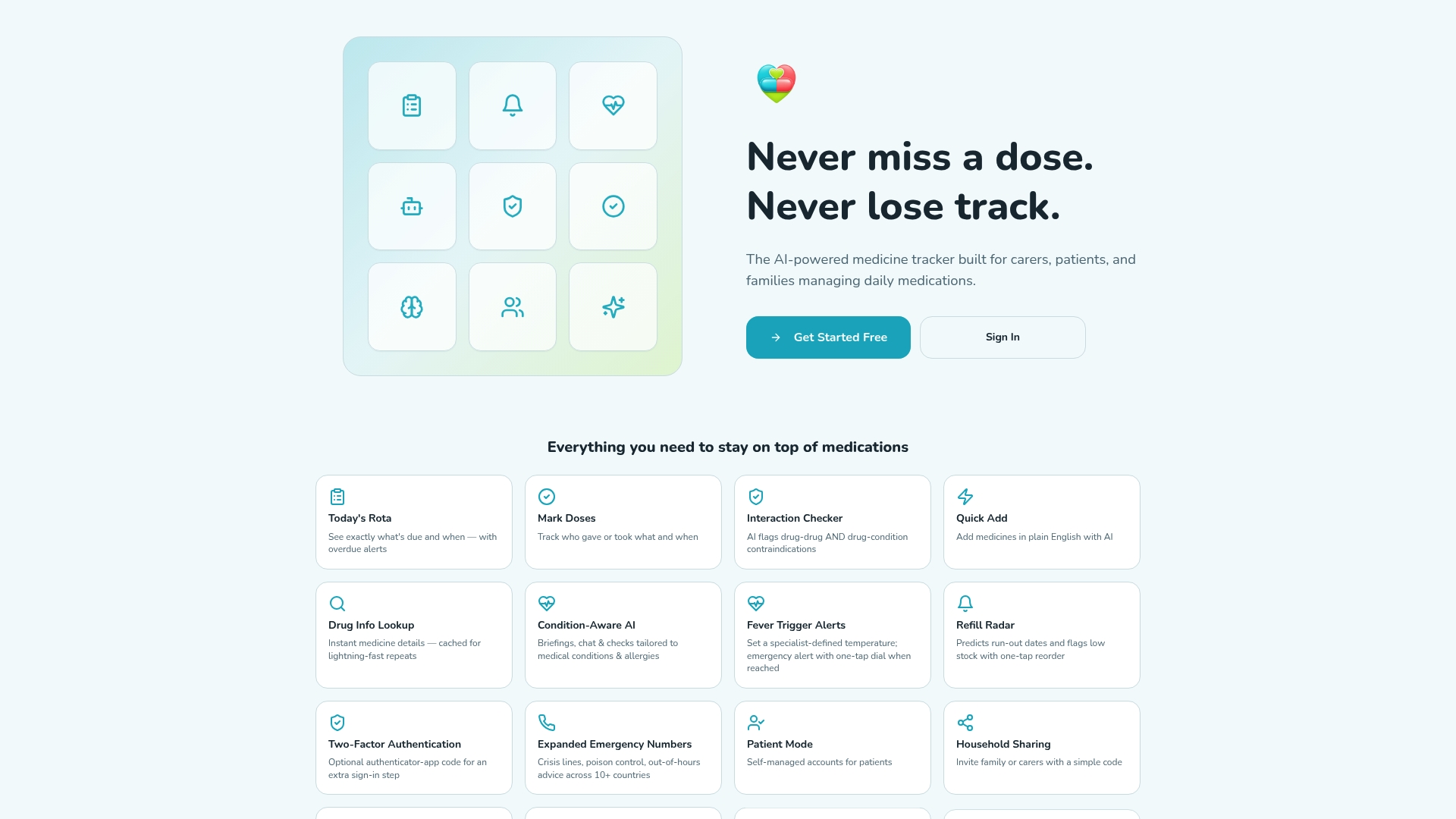
Managing medicines for yourself or someone you care for is harder than it looks. Thedailydosetracker is built for exactly that: a freemium platform that gives carers, patients, and care teams real-time dose alerts, drug interaction checks, condition-specific guidance, and multi-patient management across any device.
The free plan covers core scheduling and dose logging. The Individual and Pro subscriptions unlock AI-powered insights, appointment management, symptom diaries, refill predictions, and emergency contact integration. Everything is built to UK GDPR standards.
Sources
The sources below provide the primary evidence base for this article. Each is worth consulting directly for condition-specific detail or methodological depth.
- Understanding Treatment Adherence in Chronic Diseases: Challenges, Consequences, and Strategies for Improvement
- Defining and understanding medication adherence
- The 'cost' of medication nonadherence: consequences we...
- Adherence to Medication - Merck Manual
- Why You Shouldn’t Skip Your Medication
This article is general information, not a substitute for advice from a qualified doctor. Consult a qualified healthcare professional about your own circumstances before acting on anything here.