
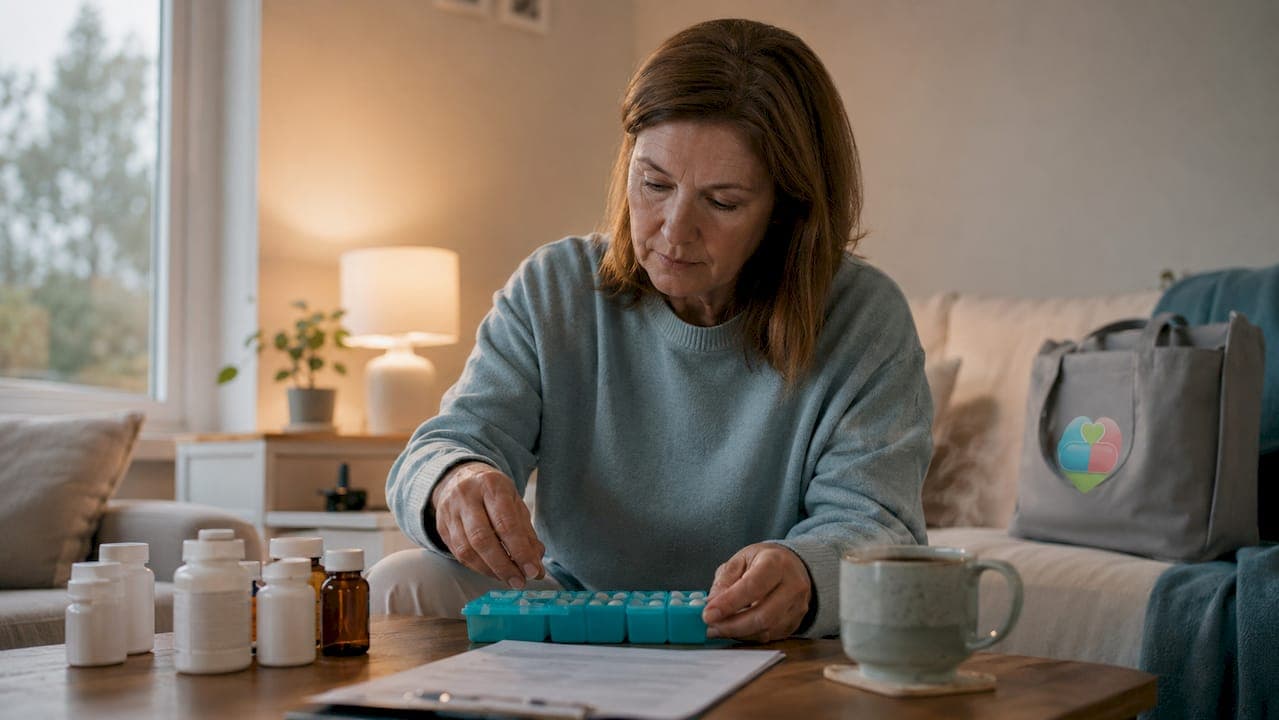
Family medication safety is defined as the systematic process of managing, monitoring, and storing medicines at home to prevent errors and protect every member of the household. Medication errors cause approximately 125,000 preventable deaths annually, yet family involvement alone reduces home medication errors by nearly 50%. That figure reframes the carer's role entirely. You are not a passive helper. You are a critical safety checkpoint. This guide covers the risks, the routines, and the practical tools that make safe medication use achievable for any family, including those managing complex or elderly care.
What are the common medication safety risks families face at home?
Administration errors are the most common source of harm in home medication management. Missed doses, wrong timing, and incorrect quantities account for the majority of incidents. Knowledge gaps and risky habits, such as splitting tablets that should not be split or skipping doses to save money, compound the problem significantly.
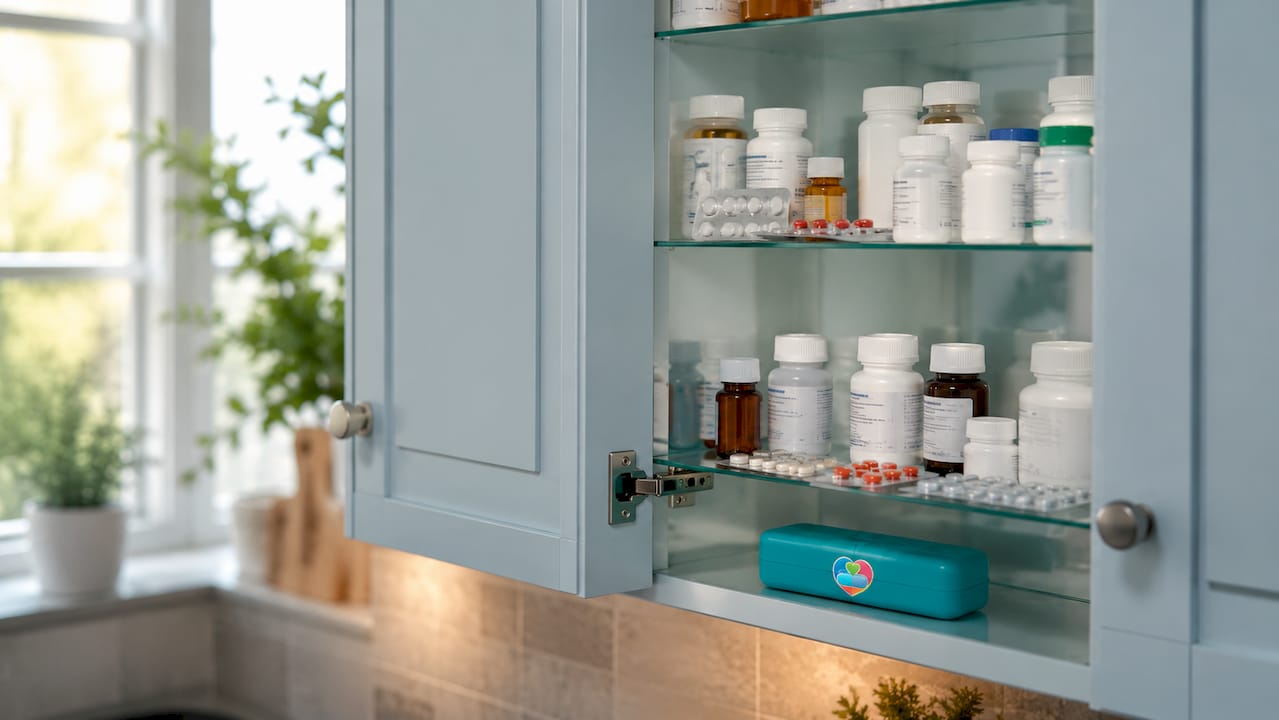
Storage mistakes create a separate category of risk. Medicines kept in humid bathrooms or warm kitchens degrade faster than the label assumes. Unlocked cabinets in homes with children or confused elderly relatives are a direct hazard, not a theoretical one.
Transitions of care account for 50–60% of medication errors, making hospital discharge one of the most dangerous moments in any patient's journey. New prescriptions get added, old ones get forgotten, and no single person holds the complete picture. The result is duplication, dangerous interactions, or abrupt withdrawal from a medicine the patient still needs.
Common risks carers should watch for include:
- Missed or doubled doses due to poor record-keeping
- Medicines taken at the wrong time relative to food or other drugs
- Over-the-counter products and supplements that interact with prescriptions
- Expired medicines kept in circulation because no one checks the dates
- Unsupervised self-administration by elderly relatives with cognitive decline
Pro Tip: Keep a printed list of all current medicines on the fridge door. Emergency responders and visiting clinicians can act faster when the information is immediately visible.
For a deeper look at reducing errors in elderly home care, the patterns that cause the most harm and the fixes that work are well documented.
How to organise and maintain an accurate medication list
A master medication list is the single most effective document a carer can maintain. Caregivers who keep up-to-date lists reduce adverse drug events by 41%. That reduction comes not from the list itself but from the discipline of updating it within 24 hours of any change, particularly after a hospital discharge or a new prescription.
Every entry on the list should include:
- The medicine's brand name and its generic equivalent
- The dose in milligrams or millilitres, exactly as prescribed
- The schedule, including time of day and whether it is taken with food
- The name of the prescribing clinician
- The therapeutic purpose, for example "blood pressure" or "pain relief"
- Any supplements or over-the-counter medicines taken alongside
The list must travel with the patient. A physical copy in a binder and a digital copy on a shared phone note both serve this purpose. The key is that any clinician, pharmacist, or emergency responder can access it within seconds.
Supplements and over-the-counter products belong on the list too. St John's Wort, for example, interacts with antidepressants, anticoagulants, and several cardiac medicines. Omitting it from the record is a genuine clinical risk, not a minor oversight.
Pro Tip: After every GP or hospital appointment, photograph any updated prescription or discharge letter and attach it to your digital medication record the same day. Delay is where errors enter.
Regular pharmacist reviews use this list as their starting point. A pharmacist can cross-check every entry against the Beers Criteria, a clinical guideline listing 30 medication classes with elevated risks for older adults, and flag anything that warrants a conversation with the prescriber.
What practical tools and routines improve medication adherence?
Pill organisers remain the most widely used tool in home medication management, but they carry a specific limitation. Pillboxes alone can create false confidence. A filled compartment does not confirm the correct medicine was placed there or that it was taken at the right time. Cross-checking against a written or digital log is the step most carers skip.
The following table compares the most common medication management approaches by their primary strength and best use case:
| Tool | Primary strength | Best use case |
|---|---|---|
| Weekly pill organiser | Visual confirmation of daily doses | Single patient, simple regimen |
| Written medication log | Timestamped record of doses taken | Any setting, low technology access |
| Smartphone reminder app | Timed alerts and dose logging | Carers managing multiple patients |
| Automatic refill service | Prevents supply gaps | Long-term, stable prescriptions |
| Digital tracking platform | AI-powered alerts, interaction checks | Complex or multi-medicine regimens |
Habit stacking is a behavioural technique that links taking a medicine to an existing daily routine. Habit stacking improves adherence by 28%. Pairing a morning tablet with the act of making tea, for instance, removes the need to remember separately. The existing habit carries the new one.
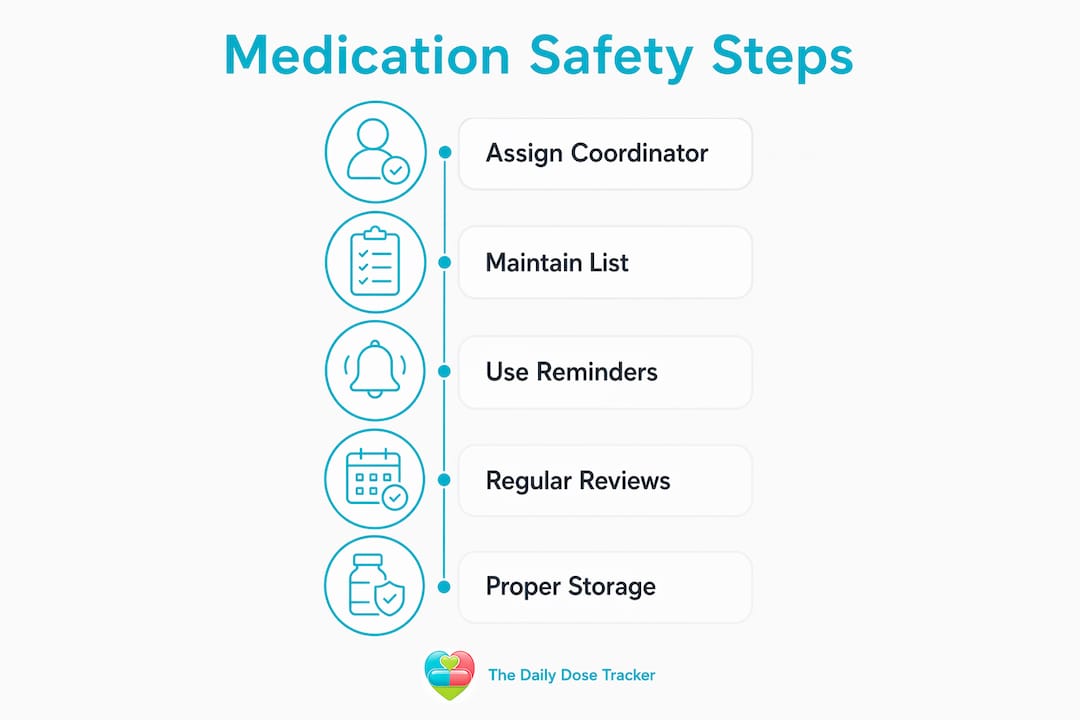
Assigning a single medication coordinator within the family reduces confusion and missed doses by creating one point of responsibility. When everyone assumes someone else is managing the medicines, no one is. A named coordinator handles the list, the reminders, and the communication with clinicians.
Routine medication reviews every 6–12 months with a GP or pharmacist identify unnecessary medicines and catch interactions before they cause harm. Polypharmacy, the use of five or more medicines simultaneously, is common in elderly care and raises the risk of adverse events substantially.
Pro Tip: Ask the pharmacist for a Medicines Use Review at least once a year. This is a free NHS service and takes around 20 minutes. It often surfaces interactions or duplications that no single clinician has spotted.
For practical scheduling guidance, medication schedule best practices for carers covers timing strategies that reduce the cognitive load on the carer significantly.
How to store, handle, and dispose of medicines safely
Correct storage directly affects whether a medicine works as intended. Heat, humidity, and light all degrade active ingredients faster than the expiry date assumes. The bathroom cabinet is one of the worst places to store medicines, despite being the most common choice.
Safe storage principles every household should follow:
- Store medicines in a cool, dry place away from direct sunlight, ideally below 25°C
- Use a locked box or cabinet when children, confused elderly relatives, or anyone at risk of self-harm lives in or visits the home
- Keep medicines in their original packaging with the patient information leaflet intact
- Check expiry dates every three months and remove anything out of date immediately
- Store medicines separately from cleaning products and food to avoid accidental confusion
Expired medicines should never be left in circulation. Degraded active ingredients can be ineffective or, in some cases, harmful. The risk is not theoretical for medicines like tetracycline antibiotics, which can become toxic as they break down.
Proper disposal means using drug take-back locations or sealing medicines with unpalatable materials, such as coffee grounds or cat litter, before placing them in household waste. Flushing medicines down the sink or toilet contaminates water supplies unless the medicine appears on an approved flush list. In the UK, most community pharmacies accept unwanted medicines for safe disposal at no charge.
If accidental ingestion or exposure occurs, call the NHS 111 service immediately or contact a poison control resource. In the United States, the American Association of Poison Control Centers operates a 24-hour hotline on 1-800-222-1222. Acting within the first few minutes significantly improves outcomes.
Pro Tip: Set a quarterly calendar reminder to audit your medicine storage. Check dates, confirm everything is locked away correctly, and dispose of anything no longer in use. Fifteen minutes every three months prevents serious incidents.
Key takeaways
Safe medication management at home requires a maintained medication list, a named coordinator, correct storage, and regular professional reviews working together as a system.
| Point | Details |
|---|---|
| Maintain a master medication list | Update within 24 hours of any change to reduce adverse drug events by 41%. |
| Assign a medication coordinator | One named person prevents fragmented information and missed doses. |
| Use habit stacking for adherence | Linking doses to existing routines improves adherence by 28%. |
| Store and dispose of medicines correctly | Use locked storage and pharmacy take-back schemes to prevent accidental harm. |
| Schedule regular professional reviews | A GP or pharmacist review every 6–12 months catches polypharmacy risks early. |
What I have learned from years of watching families manage medicines
The hardest part of family medication safety is not the information. Most carers can recite the rules. The hardest part is sustaining the discipline when life is busy, when the patient resists, or when the carer is exhausted.
I have seen families with perfect medication lists fall apart at the point of communication. A hospital discharge happens on a Friday afternoon, the GP surgery is closed, and the discharge letter lists three new medicines with no clear instructions on what to stop. The carer makes a judgement call under pressure, and that is exactly when errors enter.
Technology supports the process, but it does not replace the human layer. A digital tracker sends a reminder. It does not notice that the patient looks confused or that the tablet was palmed rather than swallowed. That observation requires a person who is present and paying attention.
The emotional toll on carers is real and consistently underestimated. Managing medicines for a parent with dementia or a partner with multiple chronic conditions is relentless work. Building a support network, whether that is a second family member who shares the coordinator role or a community pharmacist who knows the patient by name, makes the system more resilient when the primary carer is unavailable.
My strongest recommendation is this: treat the medication review appointment as non-negotiable. Carers who attend these reviews with a current medication list and a written list of concerns get far more from the appointment than those who attend unprepared. The clinician can only work with what you bring.
— Prasant
How Thedailydosetracker supports your family's medication routine
Managing medicines for a family member with complex needs is demanding work. Thedailydosetracker is built specifically for carers and families in that position.
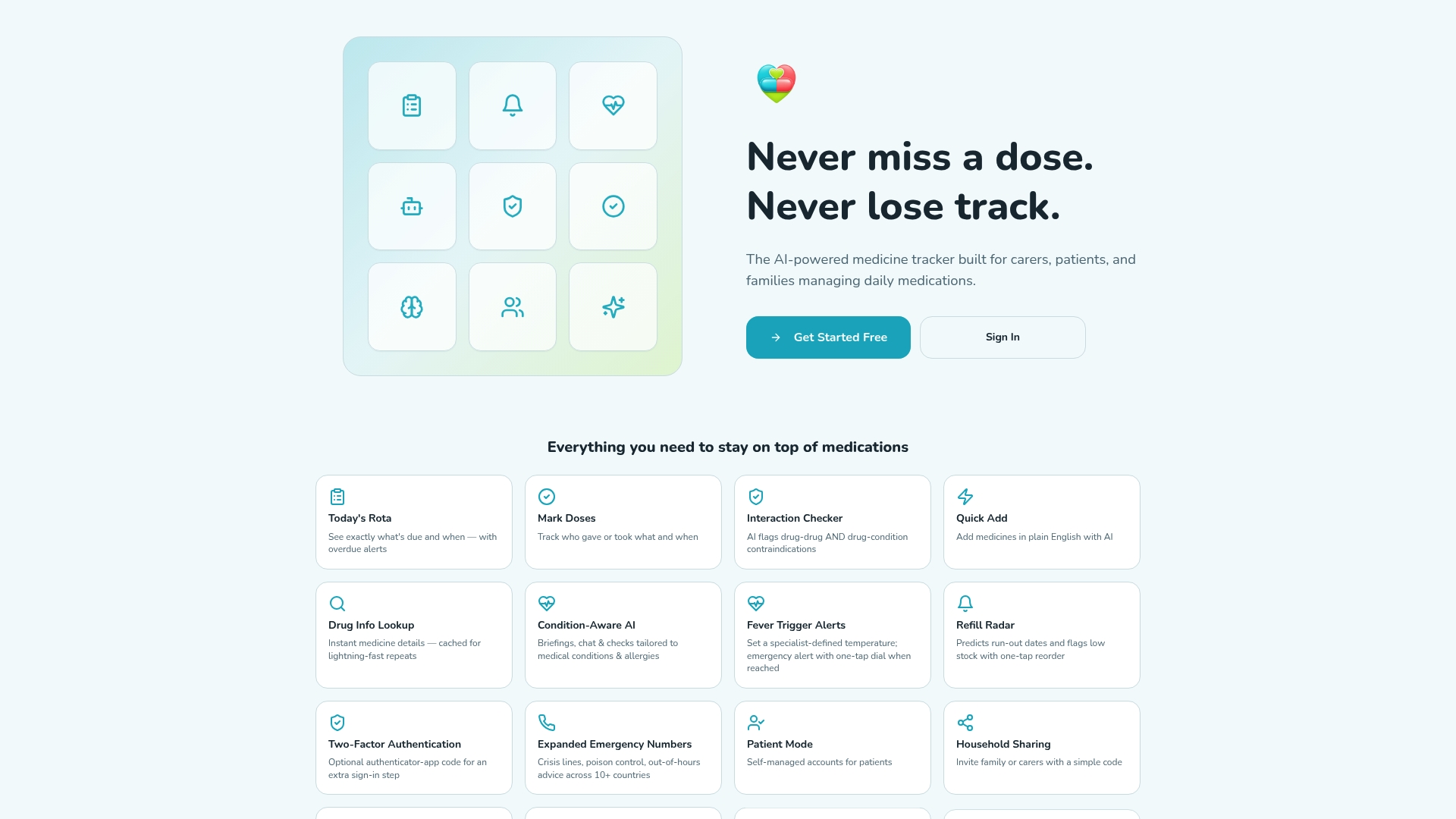
The platform logs every dose, sends real-time alerts for due or overdue medicines, and runs drug interaction checks across the full medication list. It supports multi-patient management, so one carer can oversee several household members from a single account. Features like symptom logging, refill predictions, and emergency contact integration mean the information you need is always in one place. Thedailydosetracker complies with UK GDPR standards and works across devices as a progressive web app. Start with the free plan and see how it fits your caregiving routine. Additional resources for carers are available on the important links page.
FAQ
What is family medication safety?
Family medication safety is the systematic process of managing, storing, and monitoring medicines at home to prevent errors and protect health. It includes maintaining accurate medication lists, correct storage, and regular professional reviews.
How do I reduce medication errors at home?
Assign a single medication coordinator, maintain an up-to-date medication list, use timed reminders, and schedule a professional medicines review every 6–12 months. Family involvement reduces home errors by nearly 50%.
When should I update the medication list?
Update the list within 24 hours of any change, particularly after a hospital discharge, a new prescription, or the stopping of an existing medicine. Prompt updates are the single most effective way to prevent errors during care transitions.
Are pillboxes enough to manage medicines safely?
Pillboxes help with daily organisation but are not sufficient on their own. Cross-checking the pillbox against a written or digital log is necessary to confirm the correct medicines were placed and taken at the right time.
How should I dispose of unwanted medicines in the UK?
Take unwanted medicines to any community pharmacy, which will dispose of them safely and free of charge. Do not flush medicines or place them loose in household waste, as both methods create environmental and safety risks.