

Clinical medication reconciliation is the formal process of obtaining the most accurate possible list of a patient's current medicines, comparing it with current prescribing orders, identifying any discrepancies, and documenting the outcome so every clinician involved in that patient's care is working from the same verified record. For UK clinicians, the practical rule is straightforward: reconcile at every transition of care, and in acute inpatient settings aim to complete it within 24 hours of admission. NICE (QS120/NG5), the Care Quality Commission (CQC), and the Institute for Healthcare Improvement (IHI) all treat this as a non-negotiable patient safety step, not an administrative courtesy.
Key takeaways
Medicines reconciliation at every transition of care, completed within 24 hours in acute settings, is the single most effective procedural step for preventing medication errors at handover.
| Point | Details |
|---|---|
| Reconcile at every transition | Admission, transfer, discharge and prescriber change all require a verified medicines list. |
| 24-hour acute standard | NICE QS120 and CQC guidance set reconciliation within 24 hours of admission as the quality benchmark. |
| BPMH needs two sources | Cross-check patient recall against GP records and community pharmacy history to catch omissions. |
| Document who, when and what | Record the clinician, timestamp, sources consulted, discrepancies found and actions taken for every reconciliation. |
| Thedailydosetracker supports the process | The platform's medication history export and audit trail give carers and teams a reliable baseline for the BPMH at each transition. |
Table of Contents
- What is clinical medication reconciliation and why does it matter?
- When must reconciliation be performed?
- Who should perform reconciliation in UK settings?
- What to capture on the reconciled medicines list
- Five practical steps for reconciliation at the bedside
- Documentation standards and communicating the reconciled list
- What UK standards and governance frameworks apply?
- How does reconciliation differ from a medication review?
- Practical tips and common pitfalls
- How digital tools can support the reconciliation process
- A worked example: admission, reconciliation and discharge
- Why making reconciliation routine changes everything
- Thedailydosetracker supports safer medication transitions
- Sources
What is clinical medication reconciliation and why does it matter?
The IHI defines medication reconciliation as identifying the most accurate list of a patient's current medicines, including name, dosage, frequency and route, then comparing that list with current orders, recognising discrepancies, and documenting any changes so a complete, communicated medicines list is available to every prescriber. That definition has become the international standard, and UK policy sits squarely within it.
The scope is broader than many clinicians initially assume. Reconciliation covers:
- Prescribed medicines (regular, as-required and recently stopped)
- Over-the-counter (OTC) products, including analgesics, antacids and antihistamines
- Herbal and complementary preparations
- Vitamins, minerals and dietary supplements
- Topical preparations, patches and devices (inhalers, insulin pens)
- Vaccines and immunoglobulins
The clinical purpose is threefold: prevent unintended discrepancies from becoming prescribing errors, reduce adverse drug events at handover points, and give the receiving team a verified baseline so they can make informed therapeutic decisions rather than educated guesses.
When must reconciliation be performed?
Reconciliation is triggered by any change in the clinical team responsible for a patient's medicines. The primary triggers in UK practice are:
- Admission to hospital (emergency or elective)
- Transfer between wards or clinical areas within the same trust
- Return from theatre or a procedure suite
- Transfer between care settings (hospital to care home, hospital to community, mental health unit to GP)
- Discharge back to primary care or self-care
- Change of prescriber without a physical transfer (e.g. consultant handover)
For acute inpatient settings, NICE quality standards and CQC guidance set the expectation that reconciliation is completed within 24 hours of admission. In practice, high-risk patients should be prioritised for immediate reconciliation rather than waiting the full 24 hours. High-risk flags include patients on anticoagulants, insulin, antiepileptics, immunosuppressants, or lithium; patients with five or more regular medicines (polypharmacy); elderly patients with cognitive impairment; and any patient where the admitting team cannot obtain a reliable history from the patient alone.
Discharge reconciliation deserves equal attention. Errors introduced at discharge, particularly omissions of medicines that were continued during admission, are a common source of readmission and GP workload.
Who should perform reconciliation in UK settings?
Responsibility is shared, and the distribution of tasks matters.
- Pharmacists and pharmacy technicians typically lead on obtaining the best possible medication history (BPMH) and identifying discrepancies, because their training in medicines information and access to dispensing records makes them the most accurate source.
- Specialist medicines reconciliation nurses carry out reconciliation in some trusts, particularly in mental health and community settings, where pharmacy resource is limited.
- Doctors and advanced nurse practitioners resolve clinical discrepancies, make prescribing decisions and sign off the reconciled list.
- Ward nurses often initiate the process on admission by taking an initial medicines history, which the pharmacist then verifies.
The BPMH is the pharmacist's primary contribution. Resolving a discrepancy that requires a prescribing decision belongs to the prescriber. Documenting the outcome and communicating it to the next team is a shared responsibility, but someone must own it explicitly.
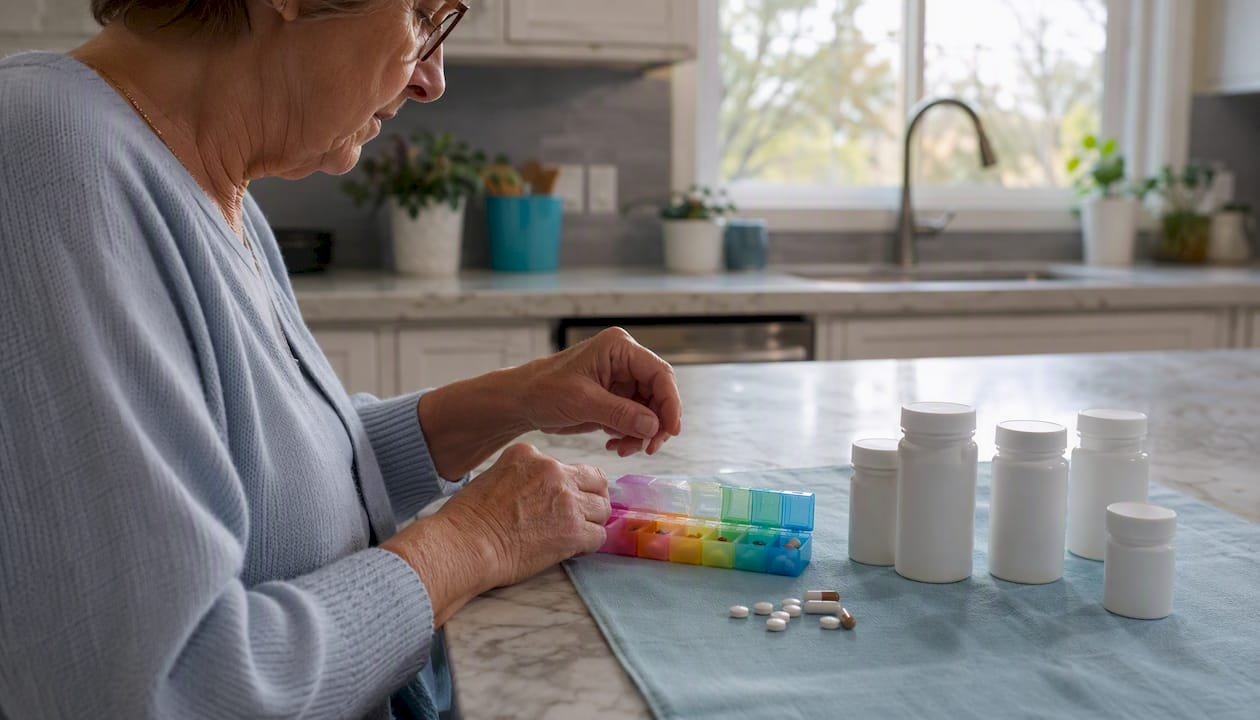
NHS England's medicines optimisation guidance is clear that patients and carers are equal partners in this process, not passive recipients. A patient who knows their own medicines well is one of the most reliable sources available. Carers, particularly those managing medicines for elderly relatives, often hold information that no clinical record captures. Involving them is not a courtesy; it is a clinical necessity. For carers who want structured guidance on preparing accurate medication lists, a resource like the medication history guide for carers can help them arrive at transitions better prepared.
What to capture on the reconciled medicines list
A reconciled list is only as useful as the data it contains. The minimum fields are:
- Generic drug name (and brand name where clinically significant, e.g. modified-release preparations)
- Dose and formulation (tablet, liquid, patch, inhaler device)
- Route of administration
- Frequency and timing (including any variable dosing schedules)
- Indication (why the medicine was started)
- Start date and, where relevant, stop date or planned review date
- Prescriber responsible for the medicine
- Source of information (patient, carer, GP record, community pharmacy dispensing history)
- Reason for any change made during reconciliation
- Allergies and adverse drug reactions, with reaction type specified
- OTC products, herbal preparations and supplements, clearly labelled as such
Pro Tip: Use BNF generic names and DM+D codes wherever possible. Timestamp every entry and note the reliability of each source. A history taken from a patient with cognitive impairment carries different weight than one cross-checked against a GP system and a community pharmacy record. Record that distinction explicitly.
Five practical steps for reconciliation at the bedside
The ASHP guidance for pharmacists describes reconciliation as a three-phase process: verification, clarification and reconciliation. In UK clinical practice, that maps to five bedside steps.
-
Obtain the best possible medication history (BPMH). Interview the patient and, where available, their carer. Ask specifically about OTC medicines, inhalers, eye drops, patches and anything bought online. Then cross-check with at least two independent sources: the GP summary care record, community pharmacy dispensing history, medicines administration records from a previous admission, or a carer-held medicines list. Single-source histories routinely miss dose changes and recently stopped medicines.
-
Verify and cross-check. Compare the patient's account with each source. Flag any discrepancy between what the patient reports and what the GP record shows. Note the date of the last dispensing for each medicine, because a medicine dispensed six months ago may no longer be taken.
-
Compare the BPMH with current inpatient orders. Lay the BPMH alongside the inpatient drug chart or electronic prescribing system. Common discrepancy types include:
- Omission: a medicine the patient was taking has not been prescribed on admission
- Commission: a medicine has been prescribed that the patient was not taking
- Dose or frequency difference: the prescribed dose differs from the pre-admission dose without a documented reason
- Therapeutic duplication: two medicines from the same class prescribed simultaneously
-
Resolve discrepancies with the prescriber and document rationale. Not every discrepancy is an error. A prescriber may intentionally omit a medicine during admission. What matters is that intentional changes are documented with a reason, and unintentional ones are corrected. The PCNE/EDQM guidelines on medication review confirm that reconciliation is the essential first step before any broader therapeutic review, and that an accurate BPMH is central to preventing medication-related problems.
-
Communicate the reconciled list to the receiving team and update the shared record. A reconciled list that stays on a single ward's drug chart has not completed the process. The discharge summary must reflect the reconciled list, and the GP must receive a clear account of what changed and why.
Documentation standards and communicating the reconciled list
Where you record the reconciliation matters as much as what you record. The Tees, Esk and Wear Valleys NHS Trust procedure illustrates the mandatory fields most NHS trusts require: who completed the reconciliation, the date and time, which sources were consulted, what discrepancies were found and what action was taken.
Where to document:
- The electronic health record (EHR) or electronic prescribing and medicines administration (EPMA) system, visible to the full multidisciplinary team
- The medicines administration record (MAR)
- The discharge summary, with a dedicated reconciliation section
Minimum audit trail fields:
- Name and professional role of the person who completed reconciliation
- Date and time of completion
- Sources consulted (with reliability noted)
- Discrepancies identified
- Actions taken and by whom
- Outstanding issues requiring follow-up
How to communicate:
- A verbal handover huddle for immediate safety-critical information (e.g. a high-risk medicine that was omitted and has now been added)
- Written or electronic discharge information sent to the GP, community pharmacy and, where relevant, the care home or district nursing team
- Patient-held information: a printed or digital medicines list the patient can show to any clinician
Failing to update the central record immediately after reconciliation means the next prescriber sees outdated information, which negates the safety work already done. The CQC's guidance on medicines reconciliation makes this point directly: the reconciled record must be accessible to everyone involved in that patient's care, not filed away in a single system.
What UK standards and governance frameworks apply?
The authoritative references for UK reconciliation practice are:
- NICE QS120 and NG5: set the quality standard for medicines reconciliation in adults admitted to hospital, including the 24-hour timing expectation and the requirement for a documented reconciled list
- CQC guidance: inspectors assess whether providers have a documented medicines reconciliation process, staff trained to carry it out, and evidence of audit
- NHS England medicines optimisation framework: positions reconciliation within the broader medicines optimisation agenda and links it to structured medication reviews
- WHO High5s initiative: the international patient safety programme that frames reconciliation as a global safety priority and provides a factsheet many NHS trusts use to anchor local policy
- IHI evidence base: the IHI definition and evidence reviews underpin most national guidance
Quality measures worth monitoring locally:
- Proportion of admissions with reconciliation completed within 24 hours
- Percentage of reconciled lists with all mandatory fields completed
- Rate of unresolved discrepancies at discharge
- Audit of high-risk medicines (anticoagulants, insulin, antiepileptics) for reconciliation accuracy
- Patient and carer involvement rate
Governance expectations at trust level include a written local policy, defined training and competency requirements for each role, clear escalation pathways when a discrepancy cannot be resolved, and a routine audit cycle feeding into quality improvement. Trusts without a current policy should use the UK clinical reconciliation best practices guide as a starting framework.
How does reconciliation differ from a medication review?
The distinction is operational, not semantic. Reconciliation is a time-bound verification step: it asks "is this patient receiving what they were taking before, and are any differences intentional?" It happens at a specific transition point and should be completed within a defined window.
A structured medication review is a broader diagnostic and therapeutic assessment: it asks "is this patient on the right medicines for their current clinical condition, at the right doses, with acceptable risk?" It is not time-constrained in the same way and requires clinical judgement about appropriateness, not just accuracy.
The PCNE/EDQM guidelines are explicit that reconciliation is the prerequisite for a medication review, not a substitute for one.
When reconciliation should trigger escalation to a full medication review:
- Suspected inappropriate therapy identified during reconciliation (e.g. a medicine with no documented indication)
- Complex polypharmacy where interactions or cumulative burden are a concern
- Adverse effects that appear linked to the current regimen
- Unclear or absent indication for a long-term medicine
For escalation, involve the ward pharmacist for a clinical medicines review, the GP for primary care-based review, or a specialist pharmacist or consultant where the clinical complexity warrants it.
Practical tips and common pitfalls
Embedding reconciliation in routine workflows:
- Map reconciliation to specific roles in job plans and ward rotas, not to "whoever is available"
- Use a standard template for the BPMH interview, so no field is missed under time pressure
- Add reconciliation as a standing item on admission and discharge checklists
- Prioritise high-risk patients first: anticoagulants, insulin, narrow therapeutic index medicines, polypharmacy in elderly patients
Common pitfalls:
- Relying on patient recall alone without cross-checking against a second source
- Fragmented records across multiple systems with no single reconciled view
- Completing reconciliation but not updating the central EHR immediately
- No clear ownership: everyone assumes someone else has done it
Red flags requiring immediate escalation:
- Antidotes present in the patient's medicines bag (suggests a recent reversal event)
- Insulin or anticoagulant dosing uncertainty with no GP record to verify
- Multiple prescribers with no shared record of who is responsible for which medicine
- A patient who cannot recall their medicines and has no carer or medicines list available
Pro Tip: Ask the patient to bring all their medicines, including anything bought from a pharmacy or health food shop, to every admission and appointment. A physical medicines bag check, cross-referenced against the GP record, is one of the most reliable ways to catch omissions that no electronic record captures. For carers supporting this process, the role of the carer in medication management sets out exactly how to prepare.
How digital tools can support the reconciliation process
The features that make a digital tool genuinely useful for reconciliation are specific. A centralised, live medication list that all members of the multidisciplinary team can view and update in real time reduces the risk of omission and duplication at handover. Interoperability with EHRs and the ability to export a reconciled list directly into a discharge summary removes a manual transcription step that is a known source of error. NHS England's medicines optimisation framework supports digital integration as a means of improving accuracy and reducing the burden on individual clinicians.
Features worth evaluating in any digital medication management tool:
- Centralised live medication list with timestamped entries
- Multi-user access with role-based permissions (clinician, carer, patient)
- Import and export for discharge summaries and GP notifications
- Drug interaction checks and condition-specific alerts
- Audit trail showing who added or changed each entry and when
- Household or multi-patient sharing for carers managing more than one person
- UK GDPR-compliant data handling
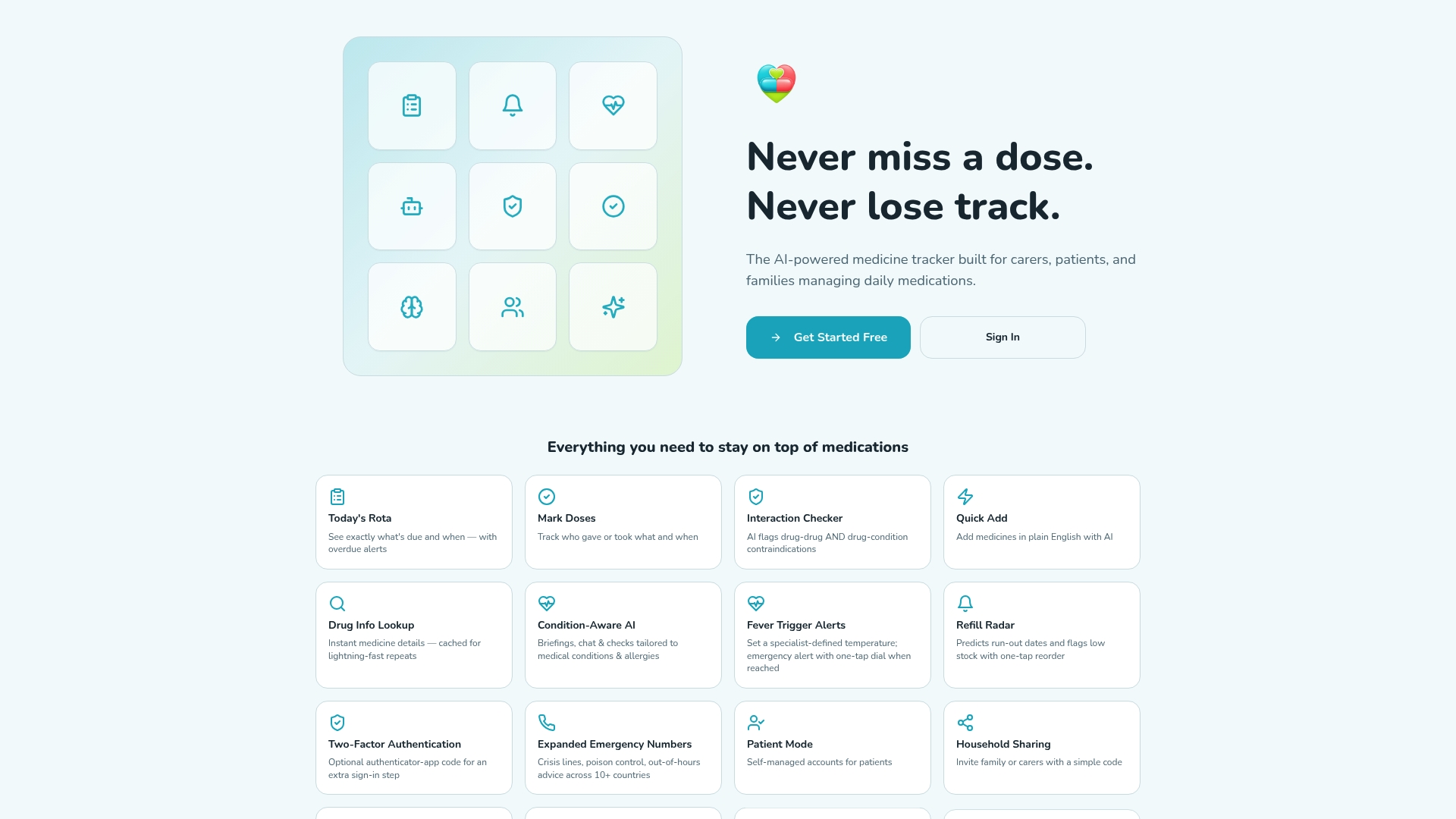
Thedailydosetracker offers all of these features in a device-agnostic progressive web app. It supports multi-patient management, real-time dose alerts, drug interaction checks and medication history export, with full UK GDPR compliance. For clinical teams, the audit trail and household sharing functions are particularly relevant: they give carers and patients a structured way to maintain an accurate medicines list between appointments, which means the BPMH at the next transition starts from a better baseline.
Pro Tip: Encourage patients and carers to export their medication history from Thedailydosetracker before any planned admission or outpatient appointment. A printed or PDF medicines list, timestamped and sourced, gives the admitting team a reliable starting point and reduces the time needed to compile the BPMH from scratch.
A worked example: admission, reconciliation and discharge
Vignette: A 74-year-old woman is admitted via the emergency department with a fall. She takes multiple regular medicines and lives alone. Her GP record is accessible via the summary care record, but she cannot recall all her medicines by name.
BPMH sources consulted: Patient interview (partial), summary care record, community pharmacy dispensing record (obtained by phone), medicines bag brought in by her daughter.
Discrepancy identified: The GP record shows she was prescribed warfarin 3 mg daily. The community pharmacy dispensing record shows the last supply was four months ago. The patient's medicines bag contains no warfarin. Her daughter confirms she stopped taking it "because it made her feel unwell" but did not inform the GP.
Resolution: The admitting pharmacist flagged the discrepancy to the medical team. The prescriber reviewed the indication (atrial fibrillation), assessed bleeding and stroke risk, and made a documented decision to restart anticoagulation with a direct oral anticoagulant (DOAC) after discussion with the patient and her daughter. The GP was notified of the change.
Before and after reconciliation:
| Medicine | Pre-admission (GP record) | Reconciled list (on admission) |
|---|---|---|
| Warfarin 3 mg daily | Prescribed | Stopped (patient-initiated); DOAC substituted |
| Amlodipine 5 mg daily | Prescribed | Confirmed, continued |
| Atorvastatin daily | Prescribed | Confirmed, continued |
| Ibuprofen (OTC) | Not recorded | Added (patient-reported, regular use) |
| Vitamin D supplement | Not recorded | Added (patient-reported) |
Discharge checklist:
- Reconciled medicines list updated in EHR and signed off by prescriber
- Discharge summary sent to GP with clear explanation of anticoagulation change
- Patient and daughter given written medicines list and counselled on new DOAC
- Community pharmacy notified of change
- Follow-up INR monitoring cancelled; DOAC monitoring plan documented
Why making reconciliation routine changes everything
The gap between knowing reconciliation matters and actually doing it reliably at every transition is where patient harm happens. Trusts that treat it as a tick-box exercise on admission paperwork miss the point: the value is in the comparison step, not the list itself. A medicines list that has never been checked against a second source is not a reconciled list; it is a transcription.
What tends to shift outcomes is embedding the comparison into the admission workflow so it cannot be skipped. When a pharmacist reviews the drug chart against the BPMH before the ward round rather than after, discrepancies are caught while the prescriber is still present and can act immediately. That single procedural change, moving reconciliation upstream of the ward round rather than treating it as a post-admission task, produces a disproportionate reduction in unresolved discrepancies at discharge.
The other underappreciated element is the carer. Families who manage medicines at home often know more about what a patient actually takes than any clinical record does. Treating them as informants rather than visitors is one of the most cost-effective accuracy improvements available, and it costs nothing to implement.
Thedailydosetracker supports safer medication transitions
For clinical teams and carers who want a structured way to maintain an accurate, shareable medicines list between care transitions, Thedailydosetracker provides a practical complement to clinical reconciliation processes. The platform's real-time dose tracking, drug interaction checks, medication history export and multi-patient management give carers and patients a reliable record they can bring to any admission or appointment, reducing the time clinicians spend reconstructing a BPMH from scratch.
Thedailydosetracker is not a substitute for clinical judgement or prescribing decisions. Clinicians retain full responsibility for reconciliation, prescribing and therapeutic review. The platform supports the process by giving patients, carers and care teams a centralised, auditable medicines record that travels with the patient across settings.
Explore the pricing and subscription options to see which plan fits your team or caseload, or visit the support and integration resources for privacy, UK GDPR and workflow information.
Sources
The following guidance documents are the primary references for UK reconciliation practice. Local policy should be aligned with these standards, and audit metrics should be benchmarked against them.
- Medication reconciliation (IHI definition) — NCBI Bookshelf
- Structured medication reviews and medicines optimisation — NHS England
- High5s factsheet: medication reconciliation — WHO
- Medication reconciliation guidance document for pharmacists — ASHP
- Medicines reconciliation procedure Ref: PHARM-0026-v6.1 — Tees, Esk and Wear Valleys NHS Trust