

An overdue dose escalation in everyday medication management means a missed or late dose has triggered an increasing alert priority within a medication tracking system. The system flags the event, requires a response, and may notify a carer, clinician, or care team if no action is taken. This is entirely different from the clinical trial meaning of "dose escalation," which refers to a controlled, stepwise increase of a drug's dose in a research setting to identify safe limits. If you are a carer or patient reading this because a dose has just been missed, here is what to do first:
- Check the patient — are they well, confused, or showing new symptoms?
- Identify the medicine — some drugs are high-risk if even one dose is late (insulin, anticoagulants, antiepileptics).
- Act on the class-specific rule or call for help — ring NHS 111, your local pharmacist, or the GP for guidance; call 999 if the situation is life-threatening.
Pro Tip: Keep the British National Formulary (BNF) bookmarked on your phone. It gives plain-language missed-dose guidance for most medicines and is updated regularly by NICE and the MHRA.
Key takeaways
An overdue dose escalation in medication management means a missed or late dose has triggered an escalating alert in a tracking system, requiring immediate documentation and action, not a change to the prescribed amount.
| Point | Details |
|---|---|
| Overdue dose vs. dose escalation | In home care, "overdue dose escalation" means an alert priority rising on a missed dose, not an intentional dose increase. |
| Act in order | Check the patient, identify the medicine, apply the class rule, document the event, then call NHS 111 or a pharmacist if unsure. |
| High-risk classes need fast action | Insulin, anticoagulants, antiepileptics, methotrexate, opioids, and psychiatric medicines all carry specific missed-dose rules; consult the BNF or MHRA guidance. |
| Document every late dose | Recording the time and reason for a late dose gives clinicians the context they need and satisfies audit requirements. |
| Thedailydosetracker | Provides real-time overdue alerts, audit trails, drug interaction checks, and household sharing to reduce missed doses and support carers. |
Table of Contents
- What does an overdue dose actually mean?
- How clinical dose escalation differs from a missed dose alert
- What to do right now if a dose is overdue
- High-risk medicines and quick rules for missed doses
- How to reduce overdue doses with routines and pharmacy support
- What to look for in a medication app
- When should you call for urgent help?
- What to tell your pharmacist, GP, or NHS 111
- The part of this that most carers underestimate
- Thedailydosetracker: real-time alerts for carers who cannot afford gaps
- Sources
What does an overdue dose actually mean?
An overdue dose is a scheduled administration event that was not completed within the expected time window. In clinical systems, medication administration records typically highlight overdue tasks visually (often in red) once a set window has passed, and require the clinician or carer to chart the dose as given late, mark it "not done," or reschedule it. That audit trail matters: it tells the next person in the care chain exactly what happened and when.
Common reasons doses become overdue include:
- Schedule complexity — multiple medicines at different times create more opportunities for gaps.
- Polypharmacy — patients on five or more medicines are statistically more likely to miss a dose.
- Cognitive or physical difficulties — dementia, poor dexterity, or fatigue affect self-administration.
- Transition errors — discharge from hospital is a high-risk moment when medicine lists change.
- Supply gaps — a delayed repeat prescription or pharmacy stock issue can interrupt a regimen.
- Incorrect time windows in software — a poorly configured app may not alert at the right moment.
The phrase "dose escalation" in this everyday context simply means the alert level escalates the longer the dose remains unaddressed, not that the dose amount is being increased.
How clinical dose escalation differs from a missed dose alert
Clinical dose escalation is a regulated, data-driven process used in phase-1 drug trials to find the maximum tolerated dose (MTD) or recommended dose for expansion (RDE). It has nothing to do with a missed dose at home.
In a trial, researchers start participants on a low dose and increase it in defined steps, monitoring for toxicity at each level. Traditional rule-based methods such as the 3+3 design assign small cohorts of three patients per dose level and escalate only if toxicity stays below a threshold. A review of contemporary dose-escalation methods found that while 3+3 remains widely used, model-based and model-assisted designs (continual reassessment method, mTPI, BOIN) identify the MTD more accurately by using all accumulated data rather than just the most recent cohort.
A three-step dose-optimisation framework now used in oncology trials adds a randomised optimisation stage after the initial escalation, helping select multiple recommended doses for further study. This is a highly technical, ethics-committee-approved process conducted under MHRA oversight.
Key concepts at a glance:
- MTD — maximum tolerated dose; the highest dose with acceptable toxicity in a trial.
- RDE/RP2D — recommended dose for expansion or phase-2 dose; the dose taken forward.
- 3+3 — rule-based cohort design; simple but less precise than newer methods.
- Model-based designs — use statistical models (CRM, BOIN) to allocate doses more efficiently.
Pro Tip: If a doctor mentions "dose escalation" in a clinical context, ask whether they mean a trial protocol or an adjustment to your current prescription. The two conversations are completely different.
What to do right now if a dose is overdue
Follow this checklist in order. Do not double-dose without specific guidance.
- Check the patient first — look for new symptoms: confusion, pain, breathlessness, or signs of a reaction.
- Find the prescription or medicine label — confirm the drug name, dose, and scheduled time.
- Check when the last dose was given — use your dose log, pill organiser, or app history.
- Apply the class-specific rule (see the next section) — for most medicines, a dose missed by a few hours can be taken immediately unless the next dose is due soon.
- Document the late administration — note the time given and the reason it was late. Many systems prompt for a reason code when a dose is administered more than roughly 60 minutes after schedule.
- Contact NHS 111, your pharmacist, or GP if you are unsure — do not guess with high-risk medicines.
- Call 999 if the patient is unconscious, seizing, or showing signs of severe bleeding or breathing difficulty.
When you call, have the drug name, dose, time of last administration, and current symptoms ready. A short script: "My patient/relative takes [drug name] [dose] at [time]. The last dose was [time]. They are currently [symptoms]. What should I do?"
Pro Tip: Dose logs shared with your GP or pharmacist give clinicians an instant picture of adherence patterns, which speeds up their advice significantly.
High-risk medicines and quick rules for missed doses
Certain drug classes carry serious risks when a dose is missed. The BNF, MHRA, and NICE all publish medicine-specific guidance; always check there for nuances beyond these general rules.
- Insulin — check blood glucose immediately. Follow your clinician's sliding-scale or PRN guidance; never guess the correction dose. Contact your diabetes team or NHS 111 if unsure.
- Anticoagulants (warfarin, apixaban, rivaroxaban) — a single missed dose raises clot risk. Take it as soon as you remember the same day; never double-dose the next day. Seek advice if two or more doses are missed.
- Antiepileptics (lamotrigine, levetiracetam, sodium valproate) — missed doses increase seizure risk. Take as soon as possible; contact the GP or neurology team if a dose is more than a few hours late. Missed doses in elderly patients carry additional fall and injury risk.
- Methotrexate — taken weekly; if a dose is missed, do not take it the next day. Contact the prescriber before the next scheduled dose.
- Oral contraceptives — rules vary by pill type and how late the dose is. Follow the patient information leaflet precisely; additional contraception may be needed.
- Opioids (morphine, oxycodone, fentanyl patches) — missing a dose can cause withdrawal symptoms. Contact the prescribing team; never adjust the dose independently.
- Psychiatric medicines (antipsychotics, lithium, SSRIs) — abrupt gaps can cause withdrawal or relapse. Contact the GP or mental health team; do not stop or restart without guidance.
Key principle from the BNF and MHRA: for any high-risk medicine, the safest rule is to contact a pharmacist or prescriber before acting if you are uncertain. A two-minute phone call prevents most serious errors.
How to reduce overdue doses with routines and pharmacy support
Simple changes prevent the majority of missed doses. Start with the lowest-effort interventions.
- Once-daily consolidation — where clinically safe, ask the GP or pharmacist whether medicines can be consolidated to a single daily time. Fewer administration events mean fewer opportunities to miss.
- Synchronised repeat prescriptions — align all repeat prescriptions to the same collection date to avoid supply gaps.
- Dosette boxes and blister packs — pharmacy-prepared compliance aids make it immediately obvious whether a dose has been taken. Many community pharmacies in the UK offer this service free or at low cost.
- Shared household schedules — a written or digital schedule visible to everyone in the household reduces reliance on one person's memory.
- Medication reconciliation at transitions — whenever a patient moves between hospital, care home, and home, request a formal medicines reconciliation to catch any changes or omissions.
Pro Tip: Ask your GP surgery about medication routine improvements at your next review. Many practices can refer carers to a clinical pharmacist for a free medicines use review.
What to look for in a medication app
The best apps for reducing overdue doses combine real-time alerts with a clear escalation path and an audit trail. When evaluating any tool, look for:
- Real-time overdue alerts — notifications that fire when a dose window closes, not just a daily summary.
- Escalation paths — adherence platforms commonly send overdue summaries to a treatment monitor or carer if a dose remains open the following day.
- Reason codes and audit logs — the ability to record why a dose was late supports clinical decisions and regulatory compliance.
- Drug interaction checks — catches dangerous combinations before they are administered.
- Refill reminders — prevents supply gaps that cause missed doses.
- Household sharing and multi-patient management — essential for carers managing more than one person.
- Accessibility options — dark mode, adjustable font size, and device-agnostic access matter for older carers and patients.
Thedailydosetracker covers all of these. It provides real-time overdue alerts, audit trails with reason logging, drug interaction checks, refill predictions, emergency contact integration, and household sharing across multiple devices. For carers managing complex medication regimens, having one platform that escalates alerts and logs every event removes the guesswork from handovers.
When should you call for urgent help?
Get urgent help immediately if a missed dose is accompanied by any of the following:
- Severe confusion or sudden drowsiness — particularly after missed antiepileptics, insulin, or psychiatric medicines.
- Loss of consciousness or unresponsiveness — call 999.
- Seizure — call 999; do not attempt to restrain the patient.
- Signs of severe bleeding — unusual bruising, blood in urine or stools after a missed anticoagulant dose; call 999 or go to A&E.
- Chest pain or breathlessness — call 999.
- Severe withdrawal symptoms — agitation, tremor, or hallucinations after missed opioids or psychiatric medicines; call NHS 111 or 999 depending on severity.
Where to call in the UK:
- 999 — life-threatening emergencies only.
- NHS 111 — urgent but not life-threatening; available 24 hours a day, seven days a week.
- Local pharmacist — same-day advice on most missed-dose questions; no appointment needed.
- GP surgery — same-day urgent appointments for complex or high-risk cases.
When you call, tell the operator: the drug name and dose, the time the last dose was taken, what symptoms the patient has now, and any relevant conditions or allergies.
What to tell your pharmacist, GP, or NHS 111
Having the right information ready cuts the call short and gets you better advice. Before you ring, gather:
- Patient's full name and date of birth.
- Exact medicine name (brand and generic if known) and formulation (tablet, patch, liquid).
- Prescribed dose and frequency.
- Time and date of the last dose taken.
- Reason the dose was missed (supply issue, forgot, patient refused).
- Current symptoms or observations.
- Relevant medical conditions and any known allergies.
- A printed or exported dose log if you have one — most medication apps can generate this in seconds.
An audit trail or reason code from your tracking app gives the clinician an instant timeline without you having to reconstruct it from memory.
The part of this that most carers underestimate
Managing an overdue dose well is less about knowing every pharmacological rule and more about having a system that removes the need to remember everything under pressure. The carers who handle these moments best are not the ones who have memorised the BNF. They are the ones who have already written down the drug names, already set up an alert, and already know which number to call.
NHS 111 is genuinely useful here. Pharmacists, too, are underused. Most missed-dose questions can be resolved in a two-minute call with a community pharmacist who knows the patient's record. The mistake is waiting until the situation feels serious enough to warrant a call. By then, a dose has often been doubled, skipped entirely, or the patient has been left in an anxious limbo for hours.
Digital tools reduce that gap. A platform that logs every dose, flags overdue events in real time, and gives you a shareable history means the clinician on the other end of the phone has context before you have finished your first sentence.
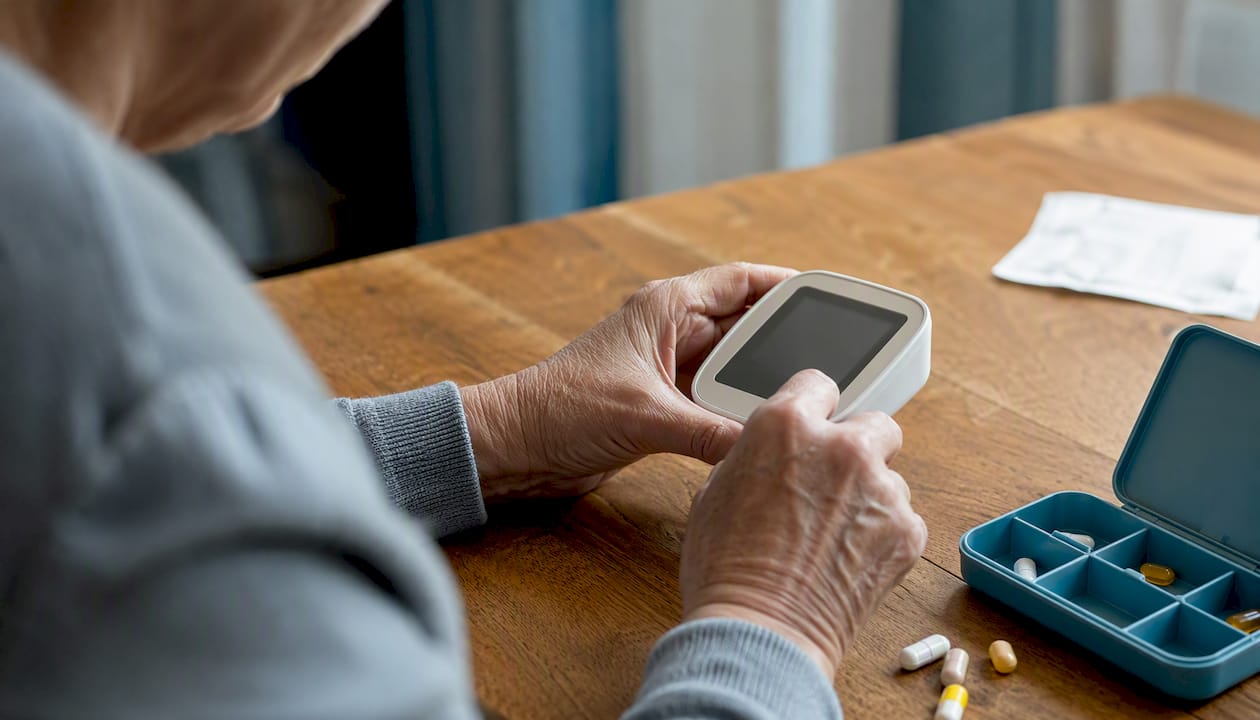
Thedailydosetracker: real-time alerts for carers who cannot afford gaps
Missing a dose is stressful enough. Trying to reconstruct what happened afterwards, with no log and no timestamps, makes it worse.
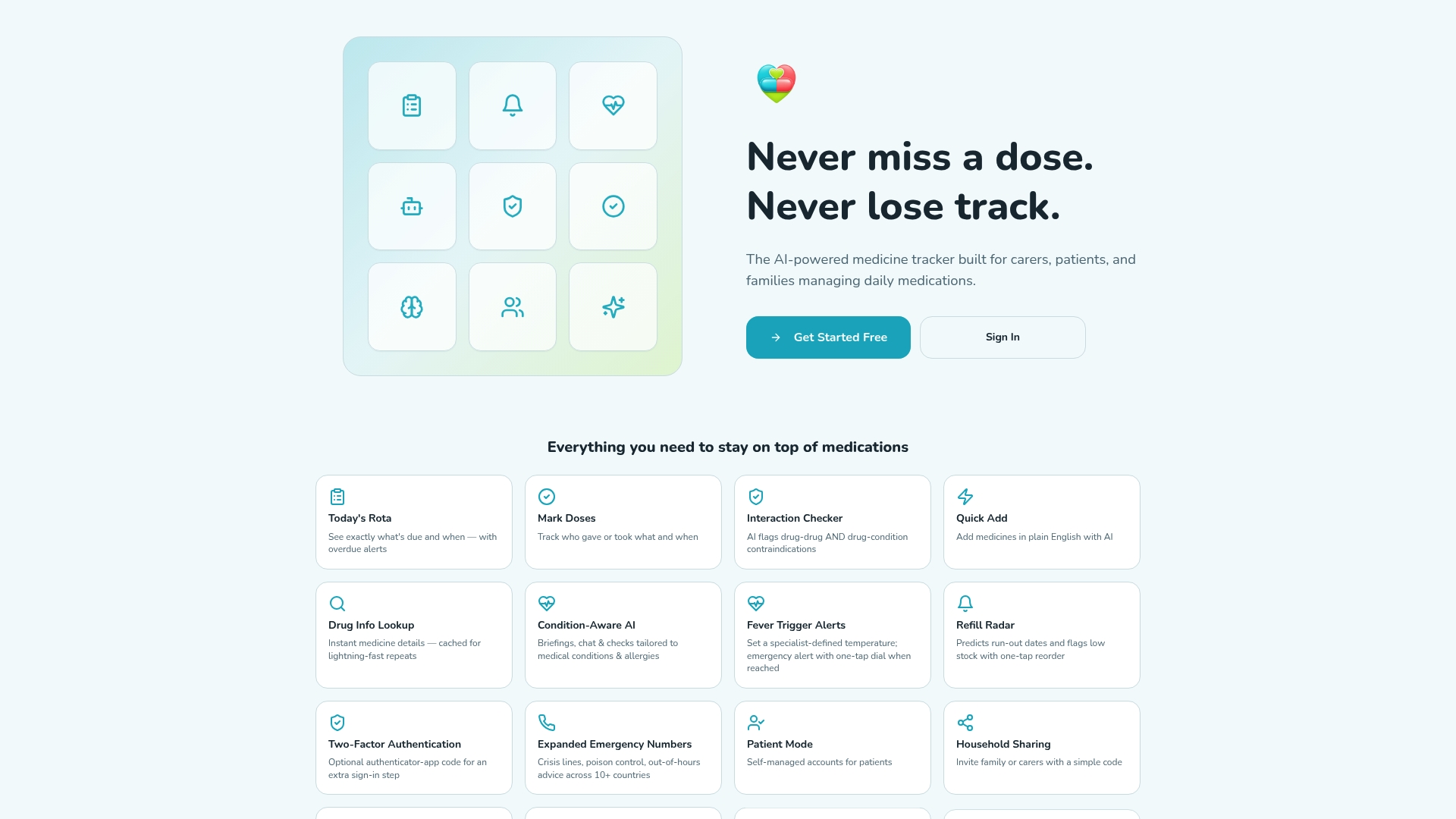
Thedailydosetracker gives carers and patients real-time overdue alerts the moment a dose window closes, an audit trail with reason logging for every late or missed event, drug interaction checks, refill predictions, and household sharing across all devices. There is no complex setup: the free tier covers core scheduling, and the Individual and Pro plans unlock multi-patient management, AI-based insights, and appointment tracking for those managing more complex regimens. It complies with UK GDPR and works on any device via a progressive web app.
See the full feature list and start with the free plan today.
Sources
- Pmc
- Review Contemporary dose‑escalation methods for early phase studies in the immunotherapeutics era
- Medication Administration Tasks
- Troubleshoot Medication Administration Alerts
This article provides general information only and is not a substitute for professional medical advice. Always confirm missed-dose guidance with your pharmacist, GP, or NHS 111, particularly for high-risk medicines.