
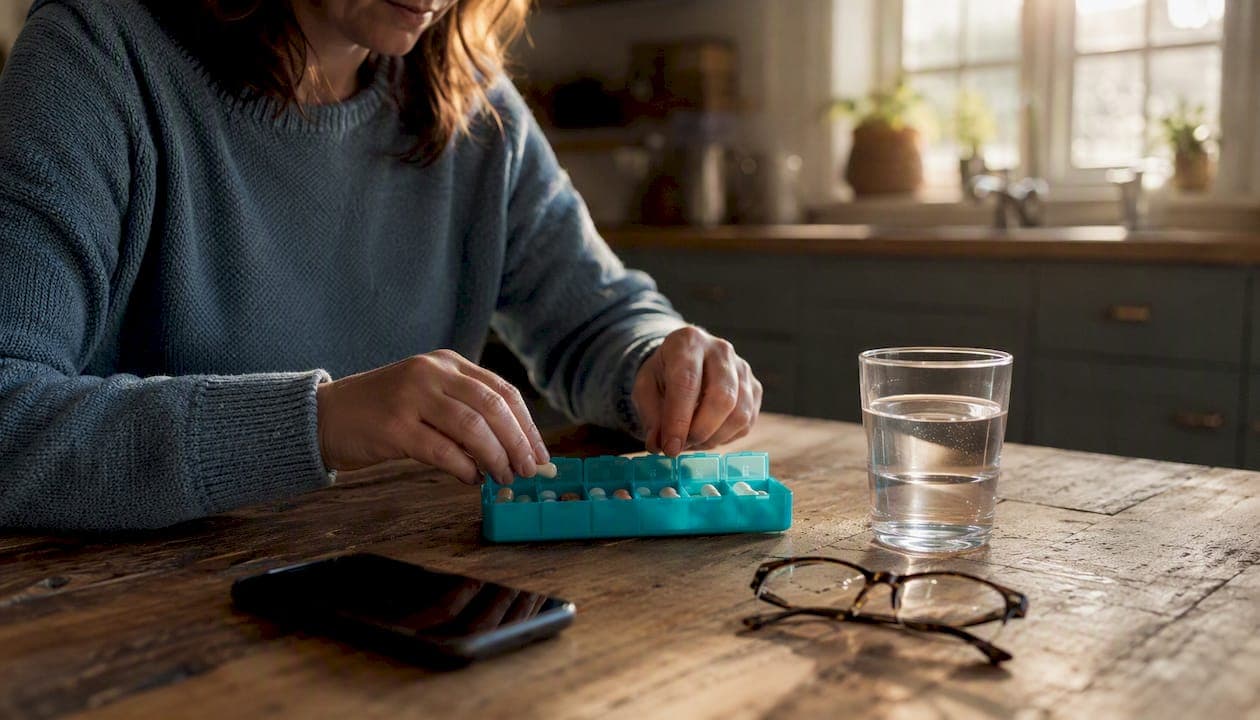
A household refill reminder is an automated alert that prompts a carer or household member to reorder, collect, or restock prescribed medicines for people who share a home. The concept is straightforward, but getting it right in practice is where most households fall short. NICE guideline CG76 frames medication adherence as behaviour that must be supported through tailored, person-centred interventions rather than a single fix, and a well-configured refill reminder is one of those components. A 2026 systematic review confirms that informal carers routinely struggle with medication regimens, including ordering errors and supply gaps. Thedailydosetracker is one purpose-built platform that addresses this directly and appears as a worked example later in this guide.
Three things to do right now:
- Check your household medication list is current and includes every prescribed medicine for every person in the home.
- Set a buffer window of 7–14 days before each medicine runs out, so a missed alert does not immediately cause a gap in supply.
- Assign a named person to act on each alert, plus a backup contact in case the primary carer is unavailable.
Key takeaways
A household refill reminder is most effective when it combines automated supply prediction, a named responsible person, a documented backup, and a confirmation receipt that closes the loop.
| Point | Details |
|---|---|
| Define the responsible person | Name a primary carer and a backup before configuring any alert system. |
| Keep the medicine list current | Review every household member's medicines whenever a prescription changes. |
| Set a 10–14 day buffer | Build in enough lead time so a delayed alert does not cause a supply gap. |
| Involve the pharmacy | Ask your pharmacist to align repeat dates and advise on supply intervals. |
| Reminders are one component | Per NICE CG76, pair alerts with person-centred clinical review for full adherence support. |
| Thedailydosetracker | Provides refill prediction, household sharing, and GDPR-compliant audit logs for carers managing multiple patients. |
Table of Contents
- What is a household refill reminder, and why do carers need one?
- Why reminders matter for safety and adherence
- How household refill reminders work in practice
- Who should manage household refill reminders?
- Features to prioritise when choosing a refill reminder tool
- How to set an effective household refill reminder
- What refill reminders cannot do
- How Thedailydosetracker implements household refill reminders
- The gap most carers miss
- Thedailydosetracker: household refill reminders without the manual tracking
- Sources
What is a household refill reminder, and why do carers need one?
The term "household refill reminder" is not a clinical standard; the recognised term in pharmacy and adherence literature is a medication refill alert or supply reminder. Both describe the same thing: a scheduled notification, triggered by an estimated days-supply calculation, that tells someone it is time to reorder or collect a prescription before the current supply runs out.
For a single patient managing their own medicines, a basic phone alarm can work. For a household where one carer manages medicines for a parent, a spouse, and perhaps a child with a long-term condition, the logistics multiply fast. The BMJ Open qualitative study on caregiver challenges found that family carers are frequently not formally identified in healthcare records, leaving them cut off from prescription renewal communications and up-to-date medication lists. That gap is where supply interruptions begin.
A properly configured household refill reminder closes that gap by automating the calculation, routing the alert to the right person, and logging that the action was taken.
Why reminders matter for safety and adherence
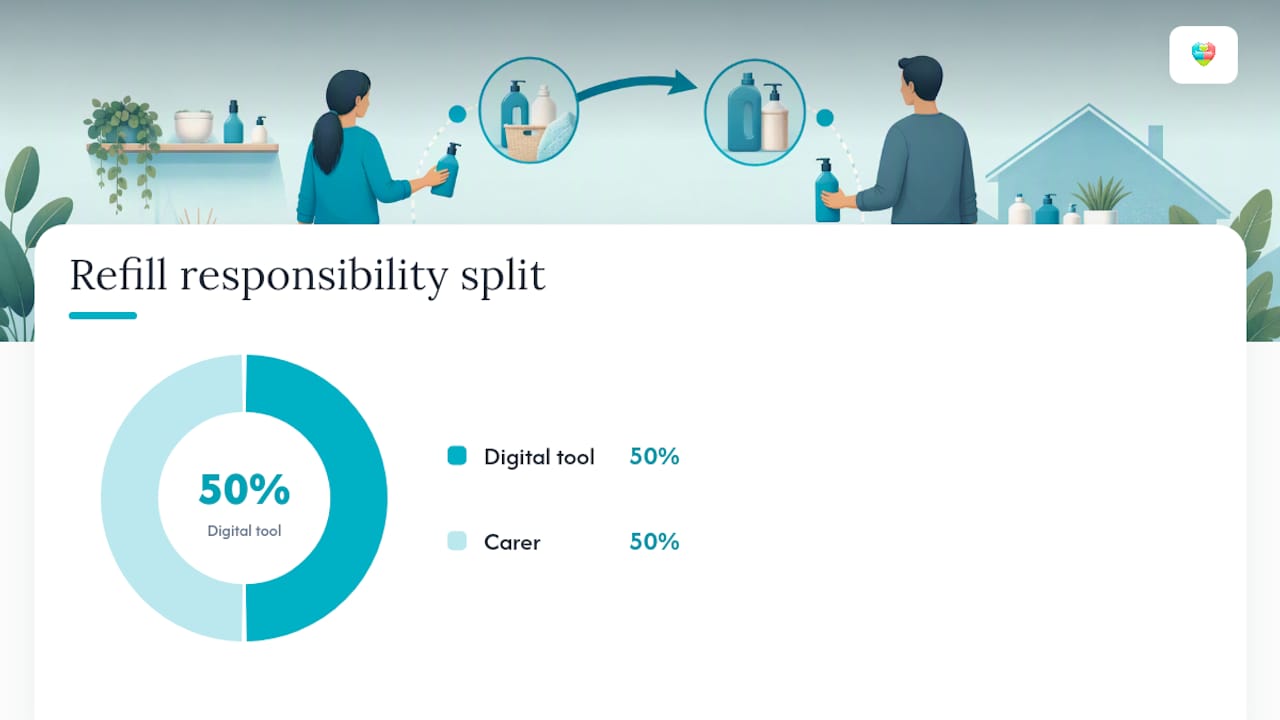
Missed supplies are rarely the result of carelessness. The 2026 systematic review on informal caregiver medication management found that carers in one sample of participants helped order medicines at a rate around half, and in a spousal-carer sample, that involvement was even higher. Refill management is already happening in most households; it just is not always systematised.
NICE is clear that non-adherence is common, often unintentional, and linked to avoidable health deterioration. The guidance recommends multifaceted support targeted at the specific barriers a person faces, which for many carers means practical tools that reduce cognitive load and remove the need to remember supply dates manually.
Key risks that household refill reminders directly address:
- Interruptions to long-term therapy (antihypertensives, anticoagulants, antiepileptics) where even a short gap carries clinical risk.
- Ordering errors caused by managing multiple medicines with different supply durations.
- Carer burnout from tracking supply dates across several household members without a system.
How household refill reminders work in practice
The refill lifecycle follows four steps: estimate supply → trigger alert → reorder or collect → confirm. A digital tool automates steps one and four; the carer handles steps two and three with the pharmacy or GP surgery.
Common delivery channels and how they fit household scenarios:
| Channel | Practical pros | Practical cons | Best household fit |
|---|---|---|---|
| App push notification | Immediate, logged, free | Requires smartphone and app install | Primary carer managing multiple patients |
| SMS | Accessible, no app needed | No audit trail; easy to miss | Backup carer or older patient |
| Audit trail; easy to forward | Slower to act on | Professional care team coordination | |
| Pharmacy automated call | No device needed | One-way; no confirmation | Patients living alone with limited tech |
| Automated repeat prescription | Fully hands-off | Requires GP setup; less flexible | Stable, long-term medicines only |
The 2026 systematic review notes that carers use everything from handwritten lists to smartphone apps, and many express interest in purpose-built apps that reduce manual calculation. The benefits of digital medication reminders are most apparent when a household manages three or more medicines across two or more people.
Who should manage household refill reminders?
Assign a named responsible person and a documented backup before configuring any reminder system. Without that, alerts get ignored because everyone assumes someone else has acted.
Roles and expected actions:
- Patient (where able): confirms supply levels, approves reorder requests, and retains decision-making authority over their own medicines.
- Primary carer: sets up and monitors alerts, places orders, and communicates with the pharmacy.
- Secondary carer or backup: receives forwarded alerts when the primary carer is unavailable; must have access to the shared medication list.
- Pharmacist: aligns repeat prescription dates, advises on supply intervals, and flags clinical concerns during collection or delivery.
- Named clinician (GP or specialist): reviews the medicine list at scheduled intervals and authorises prescription renewals.
The BMJ Open caregiver study underlines that carers excluded from healthcare records cannot fulfil these responsibilities reliably. Documenting the carer's role formally, and asking the GP surgery to add them as a named contact, is a practical first step before any digital tool is configured. A guide to the carer's role in medication management covers this in more detail.
Pro Tip: Ask the GP surgery to add a carer's name and contact details to the patient record and to copy them into prescription renewal communications. This single step removes the most common cause of supply gaps in household care.
Features to prioritise when choosing a refill reminder tool
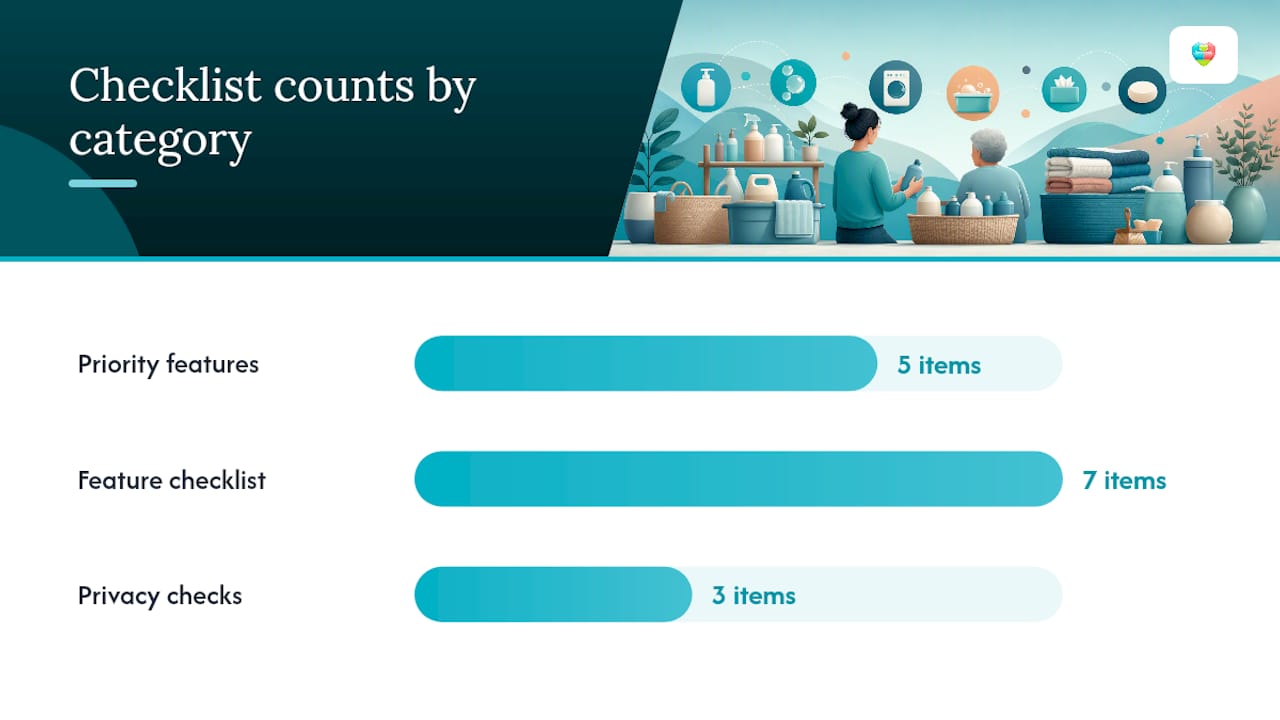
Lead with these five: refill prediction, household sharing, pharmacy integration, audit trails, and GDPR-compliant data handling. Everything else is secondary.
Feature checklist:
- Refill-prediction algorithm: calculates days of supply from dose frequency and quantity dispensed, not just a fixed calendar interval.
- Multi-patient support: manages separate medicine lists for each household member under one account.
- Permissioned sharing: lets a primary carer delegate alerts to a secondary carer without sharing full account access.
- Confirmation receipts: logs when an alert was acknowledged and when the reorder was placed.
- Pharmacy integration or export: connects to repeat prescription services or exports a medication list for the pharmacist.
- Accessible interface: adjustable font size, dark mode, and screen-reader compatibility for older carers and patients.
- Audit log: records all changes to the medicine list and alert settings for use in medication reviews.
Privacy and safety items to verify:
- UK GDPR compliance and encrypted data storage.
- Clinician access controls that separate read and write permissions.
- Clear data export in a format usable at a GP or pharmacy appointment.
The Specialist Pharmacy Service notes that improving adherence typically requires multiple tailored approaches. A tool that covers only calendar alerts but lacks confirmation receipts or household sharing will leave gaps in a complex household.
How to set an effective household refill reminder
- Compile an up-to-date medicine list. Include every prescribed medicine for every household member: name, dose, frequency, and quantity per prescription. Use the elderly medication management checklist as a starting template.
- Choose your channels and set buffer days. A 10-day buffer works for most monthly prescriptions. Medicines with a narrow therapeutic window (warfarin, lithium, antiepileptics) warrant a 14-day buffer.
- Set permissions and assign a backup. Document who receives each alert and who acts as backup. Store this in writing, not just in the app.
- Link to pharmacy or repeat prescription. Ask your pharmacy whether they offer automated refill reminders or home delivery, and align repeat prescription dates so all medicines for one person come due at the same time.
- Run a short trial period. Set alerts for one medicine for two weeks, confirm the notification reaches the right person, and check the confirmation receipt logs correctly before rolling out to the full household list.
Pro Tip: For PRN (as-needed) medicines and households where two people use the same medicine at different doses, track actual usage weekly rather than relying on a fixed interval. A shared digital log prevents double-ordering and catches unexpectedly fast consumption early.
What refill reminders cannot do
Reminders manage supply. They do not manage therapy. That distinction matters in practice.
Limitations to be clear about with carers and care teams:
- They do not address intentional non-adherence, where a patient has decided to stop or reduce a medicine.
- They cannot detect swallowing difficulties, side effects, or changes in a patient's condition that make a medicine inappropriate to continue.
- Poorly calibrated alerts produce alert fatigue, where carers begin ignoring notifications because too many arrive too early.
Red flags that require a pharmacist or clinician rather than a reminder adjustment:
- Abrupt changes in how often a medicine is being taken or collected.
- Multiple consecutive missed supplies for the same medicine.
- A patient expressing confusion about what a medicine is for or how to take it.
- Any suspected adverse reaction, even a mild one.
NICE's evidence review found that no single reminder intervention suits all patients; the right response to persistent non-adherence is a clinical conversation, not a louder alert.
How Thedailydosetracker implements household refill reminders
Thedailydosetracker maps directly onto the refill lifecycle described above. Here is how its features correspond to each stage:
- Estimate supply: the platform's refill-prediction algorithm calculates days remaining based on dose frequency and quantity, flagging low-supply medicines before they become urgent.
- Trigger alert: real-time push notifications reach the primary carer and any delegated household members simultaneously.
- Reorder or collect: the medication history export gives carers a ready-made list to present at the pharmacy or GP surgery.
- Confirm: confirmation receipts and an audit log record when alerts were acknowledged and actions taken.
Household sharing allows a primary carer to manage separate medicine lists for multiple patients under one account, with permissioned access for secondary carers. Data is handled in line with UK GDPR, and the interface includes dark mode and font-size controls for accessibility.
Pro Tip: Use Thedailydosetracker's multi-patient dashboard to align refill dates across household members. When all repeat prescriptions fall due within the same week, a single pharmacy visit or delivery covers everyone, cutting the number of separate ordering tasks significantly.
The platform's common challenges guide for family medications provides additional context on how household sharing and refill prediction work together in practice.
The gap most carers miss
The conventional wisdom is that carers need better reminders. What they actually need is a system where the reminder reaches the right person, is confirmed, and feeds back into a shared record. A phone alarm does the first; it fails on the second and third.
The BMJ Open research makes a point that rarely gets enough attention: carers who are not formally identified in healthcare records are effectively invisible to the clinical team. They manage medicines daily but receive no prescription renewal notices, no medication review invitations, and no alerts when a prescription changes. A digital refill reminder tool cannot fix that structural gap on its own, but it can create an audit trail that makes the carer's contribution visible, which is useful evidence when advocating for formal recognition.
Three quick wins worth doing this week: set a 10-day buffer on every long-term medicine, ask your pharmacy to align all repeat prescription dates for the same patient, and write down a backup contact name before you configure any alert system. The third one is the most skipped and the most consequential.
Thedailydosetracker: household refill reminders without the manual tracking
Managing refill dates across a household manually is where supply gaps happen. Thedailydosetracker removes that manual layer: its refill-prediction engine calculates days of supply automatically, routes alerts to the right carer, and logs confirmations so nothing falls through.
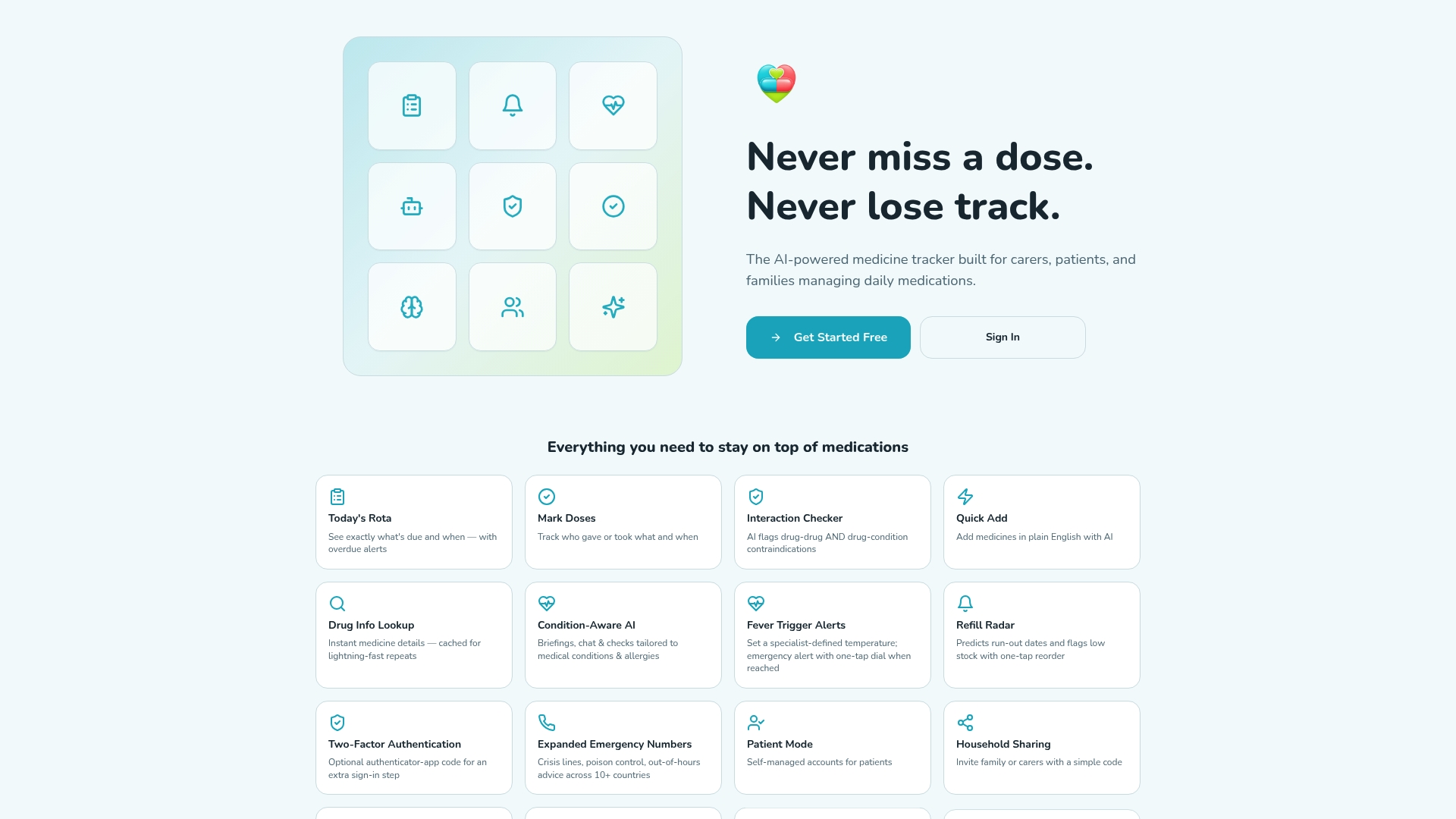
The free tier covers core scheduling and alerts. Paid Individual and Pro subscriptions unlock multi-patient management, household sharing with permissioned access, medication history export, and the full audit log. All data is handled under UK GDPR. For carers managing medicines for more than one person, the Pro tier's multi-patient dashboard is the feature that makes the biggest practical difference.
Start with the free plan and add household members as your needs grow.
Sources
- Medicines adherence: involving patients in decisions about prescribed medicines and supporting adherence (NICE guideline CG76)
- Caregivers’ challenges in engaging with the health system to optimise medication management of older care recipients (BMJ Open)
- Challenges and Strategies of Informal Caregivers in Medication Management for Older Adults (Int J Older People Nursing, 2026)
- Defining and understanding medication adherence (Specialist Pharmacy Service)
This article is general information, not a substitute for advice from a qualified doctor. Consult a qualified healthcare professional about your own circumstances before acting on anything here.