

Self-managing medications for independent living is a practical skill that lets people with chronic health conditions or elderly individuals control their own treatment safely, without relying on daily external support. The formal term used in healthcare is medication self-management, and it sits at the centre of most independent living plans for older adults. Done well, it reduces hospital admissions, preserves autonomy, and gives patients genuine confidence in their own care. Thedailydosetracker and structured programmes like Medication Self-Management Education Programs (MSEPs) exist precisely because this skill can be taught, practised, and improved at any age.
What does self-managing medications for independent living actually require?
Medication self-management is defined as a patient's ability to organise, take, and monitor their own medicines correctly without direct clinical supervision. Research from the ABLYMED study confirms that older age and slower information processing are directly associated with poorer medication self-management performance, as measured by objective video assessments. That finding matters because it tells us this is not simply a matter of willingness. Physical and cognitive capacity both shape what is realistic for any individual.
Several factors determine whether a person can self-manage safely. Polypharmacy, defined as taking five or more medicines simultaneously, multiplies the risk of errors. Physical limitations compound the problem. 40% of older adults report difficulty handling eye drops, and 19% struggle to open standard medication packaging. These are not minor inconveniences. They are barriers that, left unaddressed, lead directly to missed or incorrect doses.
A formal medication review is the starting point for any honest self-assessment. High-quality medication reviews should happen at least once a year, and after any fall, hospitalisation, or emergency. A GP or pharmacist can identify which medicines are still necessary, which doses are correct, and whether the current regimen is realistic for the patient to manage alone.
One underappreciated risk is the gap between self-perception and actual ability. Research shows a consistent mismatch between how patients rate their own medication management skills and how they perform on objective assessments. This means that feeling confident is not the same as being safe. A clinical check provides the honest baseline that self-assessment alone cannot.
- Cognitive capacity: Memory, attention, and processing speed all affect the ability to follow complex schedules.
- Motor ability: Arthritis, tremors, and reduced grip strength make handling tablets, inhalers, and drops harder.
- Polypharmacy burden: More medicines mean more interactions, more timing conflicts, and more room for error.
- Health literacy: Understanding what each medicine does and why it matters drives adherence.
Pro Tip: Ask your pharmacist to conduct a structured Medicines Use Review (MUR). This is a free NHS service that identifies practical barriers specific to your regimen, not just a list of what you are taking.
What tools and strategies support effective medication self-management?
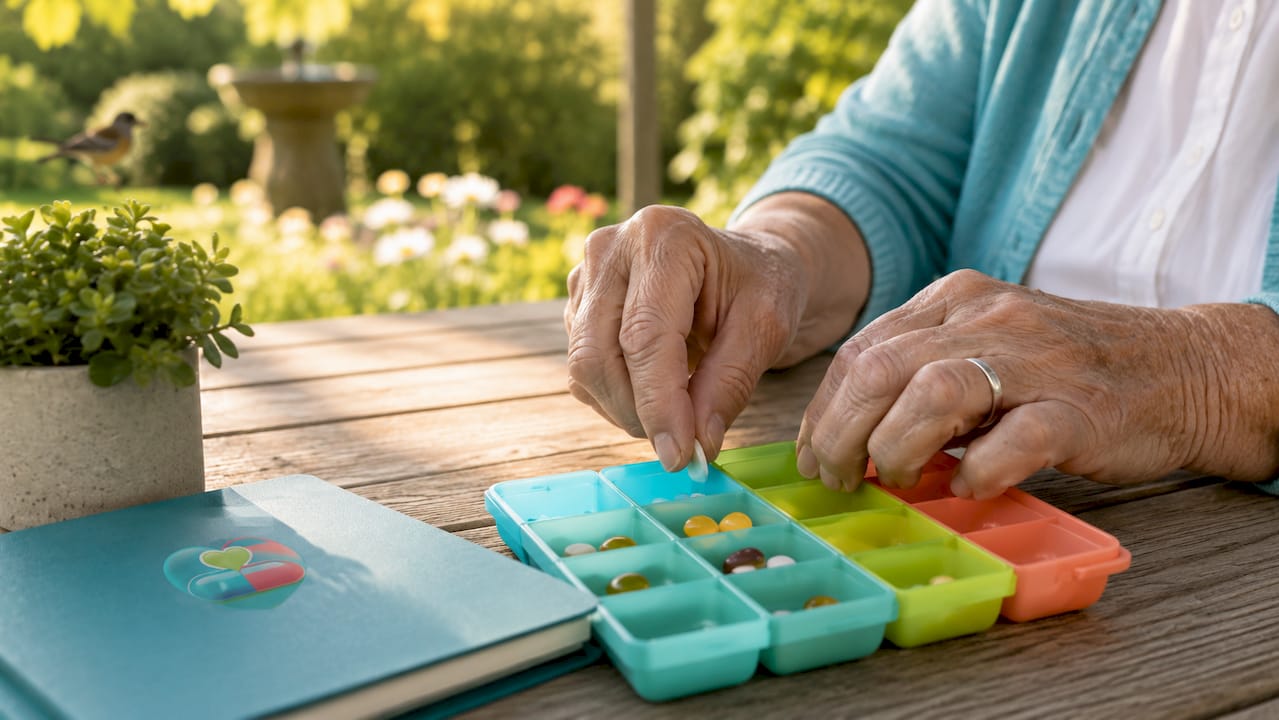
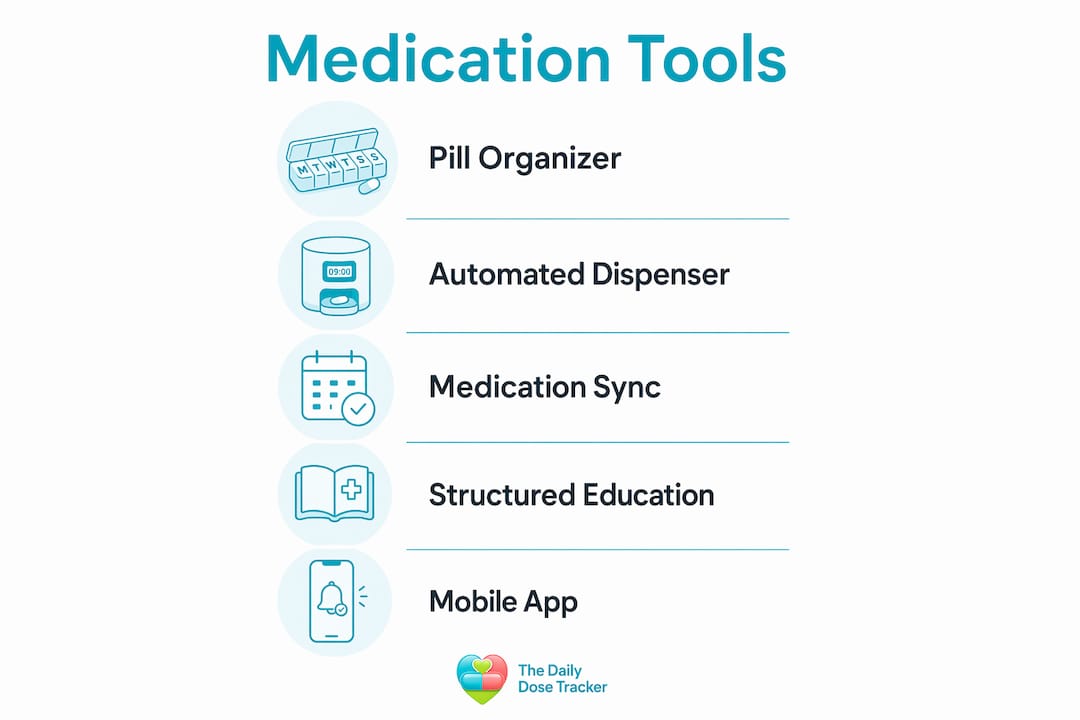
The right tools reduce the cognitive load of managing a complex regimen. Pill organisers, automated dispensers, and digital reminder platforms each address a different layer of the problem. A 12-month pilot of automated digital dispensing devices with over 70 participants found that the technology helped people remain in their own homes and reduced their reliance on external care. That is a significant outcome for any tool.
Medication synchronisation is one of the most practical and underused strategies available. Lining up all prescription refills on the same collection date reduces the number of pharmacy visits and closes the gaps that lead to running out of a medicine. It requires one conversation with a pharmacist to set up, and it pays dividends every month afterwards.
Structured education makes a measurable difference. A systematic review of 34 studies found that multi-session Medication Self-Management Education Programs delivered by multidisciplinary teams improve both quality of life and self-efficacy. Pharmacist-led programmes specifically improve adherence for conditions like hypertension. Education is not a one-off event. It works best as an ongoing relationship with a healthcare team.
| Tool or strategy | Primary benefit | Best suited for |
|---|---|---|
| Weekly pill organiser | Prevents double-dosing and missed doses | Simple, stable regimens |
| Automated dispenser | Dispenses correct dose at correct time | Complex or high-risk regimens |
| Digital reminder app (e.g., Thedailydosetracker) | Real-time alerts, dose logging, refill tracking | All patients, especially those living alone |
| Medication synchronisation | Aligns all refills to one date | Patients on multiple prescriptions |
| Pharmacist-led MSEP | Builds knowledge and adherence habits | Newly diagnosed or poorly controlled conditions |
Pro Tip: Thedailydosetracker supports drug interaction checks and refill predictions alongside standard reminders. For patients managing multiple conditions, these features catch risks that a basic alarm cannot.
How to build a step-by-step medication routine at home
A reliable home routine removes the daily decision-making that leads to errors. The sequence below works for most patients managing their own medicines independently.
- Compile a complete medication list. Include every prescribed medicine, over-the-counter product, vitamin, and supplement. Note the dose, timing, and purpose of each one. This list becomes the foundation of every conversation with your GP or pharmacist.
- Set up a weekly pill pack or blister system. Prepare medicines for the week ahead on the same day each week, for example every Sunday morning. This makes it immediately visible whether a dose has been taken.
- Activate digital reminders. Use a platform like Thedailydosetracker to set alerts for each dose. The role of reminders in patient health is well established. Reminders reduce missed doses and remove the mental burden of tracking timing across a busy day.
- Schedule a regular pharmacist or GP review. Book this at least annually, or sooner after any change in health. Bring your complete medication list to every appointment.
- Log symptoms and side effects. Keep a brief daily note of how you feel. Thedailydosetracker includes a symptom logging feature that makes this straightforward. Patterns in your notes give clinicians the evidence they need to adjust your regimen.
- Use the teach-back method. After any change to your medicines, repeat the new instructions back to your pharmacist or GP in your own words. This confirms understanding and catches misinterpretations before they become errors.
"The teach-back method is one of the most reliable ways to confirm that a patient has genuinely understood a change to their medicines. It is not about testing the patient. It is about testing whether the explanation was clear enough."
This routine takes roughly 20 minutes to set up each week once the system is in place. The upfront effort is small compared to the safety it provides.
How do you troubleshoot common medication errors at home?
The most frequent problems in medication self-management are predictable, and most are preventable. 20% of patients aged 70 and over reported running out of medicines, and 5% mixed up their medications in a general practice survey. Both errors carry serious clinical risk, particularly for patients managing conditions like diabetes, heart failure, or anticoagulation therapy.
- Running out of medicines: Set a refill reminder at least seven days before the last dose. Medication synchronisation, as described earlier, eliminates this problem for most patients.
- Missed doses: A missed dose of most medicines should be taken as soon as remembered, unless the next dose is due soon. Never double up without checking with a pharmacist first. The consequences of missed doses for elderly patients can be severe, particularly for blood pressure or anticoagulant medicines.
- Mixing up medicines: Colour-coded pill organisers and clear labelling reduce this risk. If packaging looks similar, ask the pharmacist to label containers more clearly or switch to blister packs.
- Managing physical barriers: Ergonomic packaging, tablet-splitting tools, and liquid formulations are available for patients who struggle with standard formats. Ask your pharmacist to tailor the presentation of your medicines to your physical ability.
When cognitive or physical decline makes self-management genuinely unsafe, the right response is not to push through. Seeking support from a carer, district nurse, or care agency is a practical decision, not a failure. Deprescribing, the process of safely reducing or stopping medicines that no longer provide net benefit, is another option worth discussing with your GP. Fewer medicines, managed well, is safer than many medicines managed poorly.
Pro Tip: If you manage medicines for a family member as well as yourself, Thedailydosetracker's multi-patient management feature lets you track both regimens from a single account, with separate alerts for each person.
Key takeaways
Safe, consistent medication self-management requires honest assessment of your physical and cognitive capacity, the right organisational tools, and at least one annual review with a pharmacist or GP.
| Point | Details |
|---|---|
| Assess your real capacity | Objective clinical assessment reveals risks that self-assessment alone misses. |
| Use synchronisation and organisers | Aligning refill dates and using pill packs prevents the most common errors. |
| Education improves adherence | Multi-session MSEPs and pharmacist-led programmes measurably improve outcomes. |
| Digital tools reduce reliance on memory | Platforms like Thedailydosetracker log doses, track refills, and flag interactions automatically. |
| Review medicines at least annually | Annual reviews, and reviews after any health event, identify medicines that no longer help. |
Why I think most people underestimate what medication self-management actually takes
I have spent years looking at how older adults and people with chronic conditions approach their medicines, and the pattern I see most often is quiet overconfidence. People assume that because they have been taking the same tablets for years, they have the system under control. The research tells a different story. The gap between perceived ability and actual performance is one of the most consistent findings in this field, and it is the gap that causes the most harm.
What actually works is not willpower or routine alone. It is the combination of honest self-assessment, the right physical tools, and a genuine relationship with a pharmacist who knows your full regimen. Digital platforms have changed what is possible here. The benefits of digital medication reminders go well beyond a simple alarm. When a platform logs your doses, tracks your symptoms, and flags a potential interaction, it is doing the work that used to require a clinical visit.
My honest view is that the patients who manage their medicines best are not the ones who try hardest to do it alone. They are the ones who build a small, reliable support system around themselves, whether that is a pharmacist, a digital tool, or a family member with shared access to their medication schedule. Independence does not mean doing everything without help. It means staying in control of your own health decisions, with the right support in place to make those decisions safely.
— Prasant
How Thedailydosetracker supports your medication routine
Managing a complex medication regimen at home is easier with a purpose-built tool behind you.
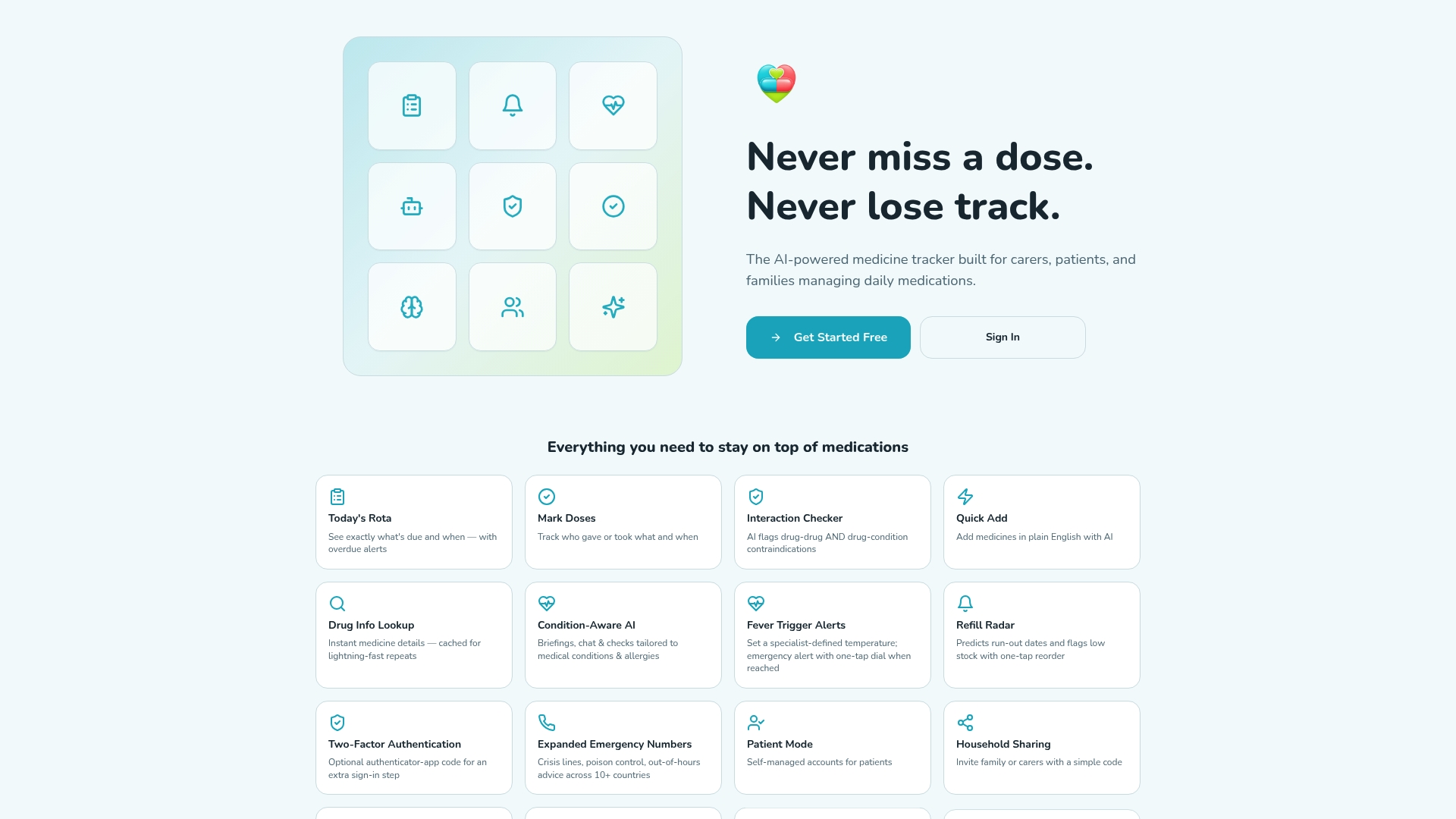
Thedailydosetracker is a free medicine app designed for patients, carers, and families managing daily medication routines. It sends real-time alerts for due and overdue doses, runs automatic drug interaction checks, and predicts when refills are needed before you run out. The platform supports multiple patients from a single account, making it practical for anyone caring for an elderly relative alongside their own health needs. It is built for accessibility, with adjustable fonts and dark mode, and complies fully with UK GDPR standards. You can explore the full feature set and start for free today.
FAQ
What is medication self-management?
Medication self-management is a patient's ability to organise, take, and monitor their own medicines correctly without direct clinical supervision. It includes knowing what each medicine is for, taking it at the right time, and recognising when something has changed.
How often should older adults have a medication review?
High-quality medication reviews should occur at least once a year, and after any fall, hospitalisation, or emergency. A pharmacist or GP can identify medicines that no longer provide net benefit and adjust the regimen accordingly.
What are the most common medication errors in older adults?
Running out of medicines and mixing up tablets are the most frequently reported problems. Research shows 20% of older polymedicated patients ran out of their medicines, and 5% mixed up their medications, both of which carry serious clinical risk.
Can digital tools genuinely help with medication adherence?
A 12-month pilot study of automated digital dispensing devices found that over 70 participants maintained independence at home and reduced their reliance on external care. Digital reminder platforms produce similar adherence benefits when designed for accessibility.
What is deprescribing and when should I consider it?
Deprescribing is the supervised process of reducing or stopping medicines that no longer provide net benefit. It requires a patient and provider discussion, careful monitoring, and a gradual taper. It is particularly relevant for older adults managing five or more medicines simultaneously.