

Health reminders are structured prompts that help patients remember critical tasks such as taking medication, attending appointments, and following care plans. The role of reminders in patient health is well established: SMS reminders increase outpatient appointment attendance by approximately 11%, and interactive text reminders raise prescription fulfilment by 19% in patients with congestive heart failure. These are not marginal gains. They translate directly into fewer missed doses, fewer hospital readmissions, and better long-term outcomes for patients managing chronic conditions. For carers, patients, and health professionals alike, understanding how reminders work, and where they fall short, is the foundation of effective patient health management.
How do reminders improve patient adherence and appointment attendance?
Reminders work by addressing two specific behavioural problems: inattention and imperfect memory. Patients do not miss doses or appointments because they do not care. They miss them because daily life competes for attention and because due dates are easy to forget. Research confirms that reminders reduce these frictions, particularly when combined with incentives, producing a measurable lift in adherence.
The type of reminder matters considerably. SMS reminders and phone calls are the most studied formats in clinical settings.

| Reminder type | Mechanism | Effectiveness |
|---|---|---|
| SMS (standard) | Passive text alert at scheduled time | Increases appointment attendance (RR 1.14) |
| Phone call | Direct verbal prompt from staff | Increases appointment attendance (RR 1.11) |
| Interactive SMS | Patient clicks a link or responds to confirm | Raises prescription fulfilment by 19% |
| Behaviourally framed SMS | Includes cost or social norm messaging | Reduces missed appointments by up to 33.7% |
Interactive reminders outperform passive ones because they require a response. When a patient clicks a link in a text message, the act of engaging with the reminder reinforces the intention to act. Interactive text nudges also reduced 30-day hospital readmissions by 6% in heart failure patients, with the odds of filling a prescription rising 52% for those who had previously been readmitted.
Personalisation amplifies these effects further. Generic "do not forget" alerts perform significantly worse than reminders that name the patient and link the action to a tangible benefit. A reminder that reads "John, your appointment on Thursday helps manage your blood pressure" carries far more weight than an anonymous alert.
Pro Tip: When setting up reminders for a patient, include their name and the specific medication or appointment. This single change consistently improves engagement compared to generic alerts.
What are the nuances and challenges of reminder systems in healthcare?
Reminders are not a universal fix. Several factors limit their effectiveness, and ignoring these limits leads to wasted effort and, in some cases, widened health inequalities.
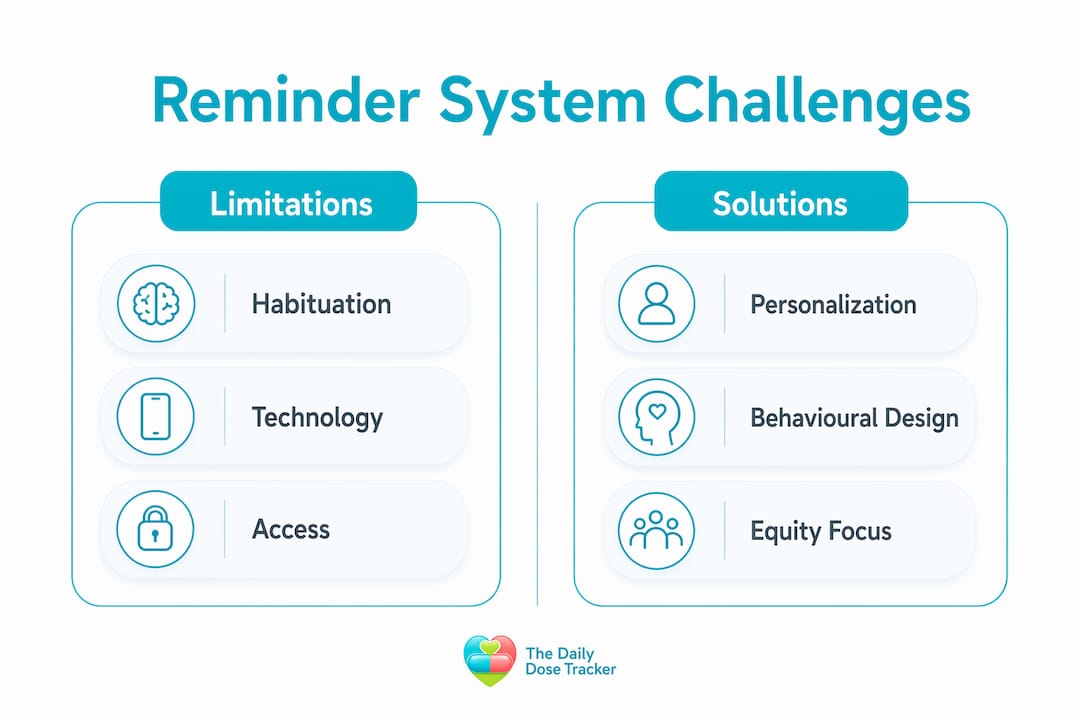
The most common problem is habituation. When patients receive the same reminder repeatedly, they begin to ignore it. Simple reminders risk this habituation effect, which is why behavioural framing, such as messaging that highlights the cost of a missed appointment to the health service or uses social norm language, can re-engage patients who have tuned out standard alerts.
Beyond habituation, reminder systems face several structural challenges:
- Digital exclusion. Older patients or those without smartphones may not receive or act on SMS or app-based alerts. A reminder that never reaches the patient achieves nothing.
- Language barriers. Reminders written only in English exclude patients whose first language is different. Translated or multilingual alerts are not a luxury; they are a clinical necessity for diverse populations.
- Privacy concerns. Patients and carers report high satisfaction with technology-facilitated reminders overall, but privacy concerns remain a barrier, particularly around data sharing and third-party access to health information.
- Cognitive and sensory impairments. Patients with dementia, hearing loss, or visual impairment may not process a standard SMS alert. Vulnerable patients often require caregiver-assisted or multi-modal strategies that combine auditory alarms, visual cues, and digital alerts.
- Notification fatigue. Too many reminders from too many sources cause patients to mute or dismiss alerts wholesale, reducing the effectiveness of even well-designed prompts.
Equity is the thread running through all of these challenges. A reminder system designed only for digitally literate, English-speaking adults with reliable smartphones will fail a significant portion of the patients who need it most.
How can reminders be effectively integrated into patient health management?
Effective reminder integration requires more than switching on notifications. It requires deliberate design, an understanding of the patient's context, and a plan for what happens when a reminder is ignored.
- Personalise every alert. Use the patient's name, the specific medication name, and the time it is due. Vague reminders produce vague responses.
- Match the format to the patient. An elderly patient with limited smartphone experience may respond better to a phone call or a visual pill organiser paired with an auditory alarm than to an app notification.
- Combine reminders with education. A reminder that explains why a medication matters, even briefly, increases the likelihood of adherence. Patients who understand the purpose of a drug are more likely to take it consistently.
- Address barriers beyond the reminder itself. Setting reminders alone is insufficient if the patient cannot afford the medication or cannot get to the pharmacy. Reminders work best when integrated with broader care plans that account for transport, cost, and health literacy.
- Review and adjust regularly. A reminder schedule that worked three months ago may no longer fit the patient's routine. Carers and health professionals should review reminder settings at each care review.
- Avoid notification fatigue. Limit reminders to genuinely critical tasks. Sending ten alerts a day trains patients to ignore all of them.
For carers managing complex medication schedules, the challenge is multiplied across several patients, each with different drugs, timings, and needs. Platforms that support multi-patient medication management reduce the cognitive load on carers and lower the risk of missed doses across an entire household.
Pro Tip: Pair each new medication reminder with a brief written note explaining what the drug does and what to watch for. Patients who understand their treatment are significantly more likely to follow through.
What evidence supports the impact of reminders on health outcomes?
The evidence base for health reminders is substantial and growing. Systematic reviews, behavioural trials, and clinical studies consistently show that well-designed reminders produce measurable improvements in adherence, attendance, and clinical outcomes.
"Behaviourally-informed reminders that highlighted the institutional cost of a missed appointment produced a 4.3 percentage point decrease in no-shows, representing a 33.7% relative reduction across hospital clinics. This finding demonstrates that the content of a reminder matters as much as its delivery."
The table below summarises key findings from clinical research:
| Study focus | Intervention | Key outcome |
|---|---|---|
| Outpatient appointment attendance | SMS and phone call reminders | 11% increase in attendance (RR 1.11–1.14) |
| Prescription fulfilment (heart failure) | Interactive SMS with clickable link | 19% increase in fulfilment |
| Hospital readmissions (heart failure) | Interactive SMS nudges | 6% reduction in 30-day readmissions |
| Missed appointments (hospital clinics) | Behaviourally framed SMS | 33.7% relative reduction in no-shows |
| Medication adherence (HIV) | Reminders combined with incentives | Significant increase in attentiveness and adherence |
The benefits of digital medication reminders extend beyond individual patients. Reduced readmissions lower costs for health services. Improved prescription fulfilment reduces the clinical complications that arise from undertreated conditions. The evidence from congestive heart failure patients is particularly striking because this is a population where missed doses carry serious, sometimes fatal, consequences.
Behavioural insights research adds an important layer to this picture. The success of a reminder depends not just on whether it arrives, but on how it is framed. Reminders that invoke social norms, such as noting that most patients attend their appointments, or that highlight the cost of non-attendance to the NHS, consistently outperform neutral alerts. This finding has direct implications for how health services and carers should design their reminder communications.
Key takeaways
Reminders improve patient health outcomes most reliably when they are personalised, behaviourally framed, and integrated into a broader care plan rather than used as standalone alerts.
| Point | Details |
|---|---|
| Reminders increase attendance | SMS and phone call reminders raise outpatient appointment attendance by approximately 11%. |
| Interactive formats outperform passive ones | Clickable SMS reminders raised prescription fulfilment by 19% in heart failure patients. |
| Behavioural framing reduces no-shows | Cost and social norm messaging cut missed appointments by up to 33.7% in hospital clinics. |
| Personalisation drives engagement | Named, specific reminders significantly outperform generic alerts in patient response rates. |
| Integration with care plans is essential | Reminders fail when underlying barriers like medication cost or transport are not addressed. |
Reminders, technology, and the human element: my perspective
The evidence for reminders is compelling, but I think the healthcare sector still underestimates one thing: a reminder is only as good as the relationship it sits within. I have seen well-designed digital alert systems fall flat because the patient felt no connection to the message. The technology worked perfectly. The human context was missing.
What I find genuinely encouraging is the shift towards behaviourally informed design. The finding that framing a reminder around the cost of a missed appointment to the health service reduces no-shows by a third is not just a statistic. It tells us that patients respond to being treated as participants in a shared system, not just recipients of instructions.
My concern is equity. Digital reminder systems, however well-designed, risk leaving behind the patients who need the most support: older adults without smartphones, patients with cognitive impairment, and those from communities with lower digital literacy. Medication adherence in elderly patients requires a different approach entirely, one that combines technology with human oversight.
For carers and health professionals reading this: do not treat reminders as a set-and-forget solution. Review them regularly. Ask the patient whether they are working. Adjust the format, the timing, and the message as the patient's needs change. The reminder is a tool. The care is yours.
— Prasant
How Thedailydosetracker supports medication reminders and patient care
Thedailydosetracker is built specifically for carers, patients, and health professionals who need more than a basic alarm. The platform sends real-time alerts for due and overdue doses, supports multi-patient management across a single household, and includes drug interaction checks and AI-based insights to flag potential risks before they become problems.
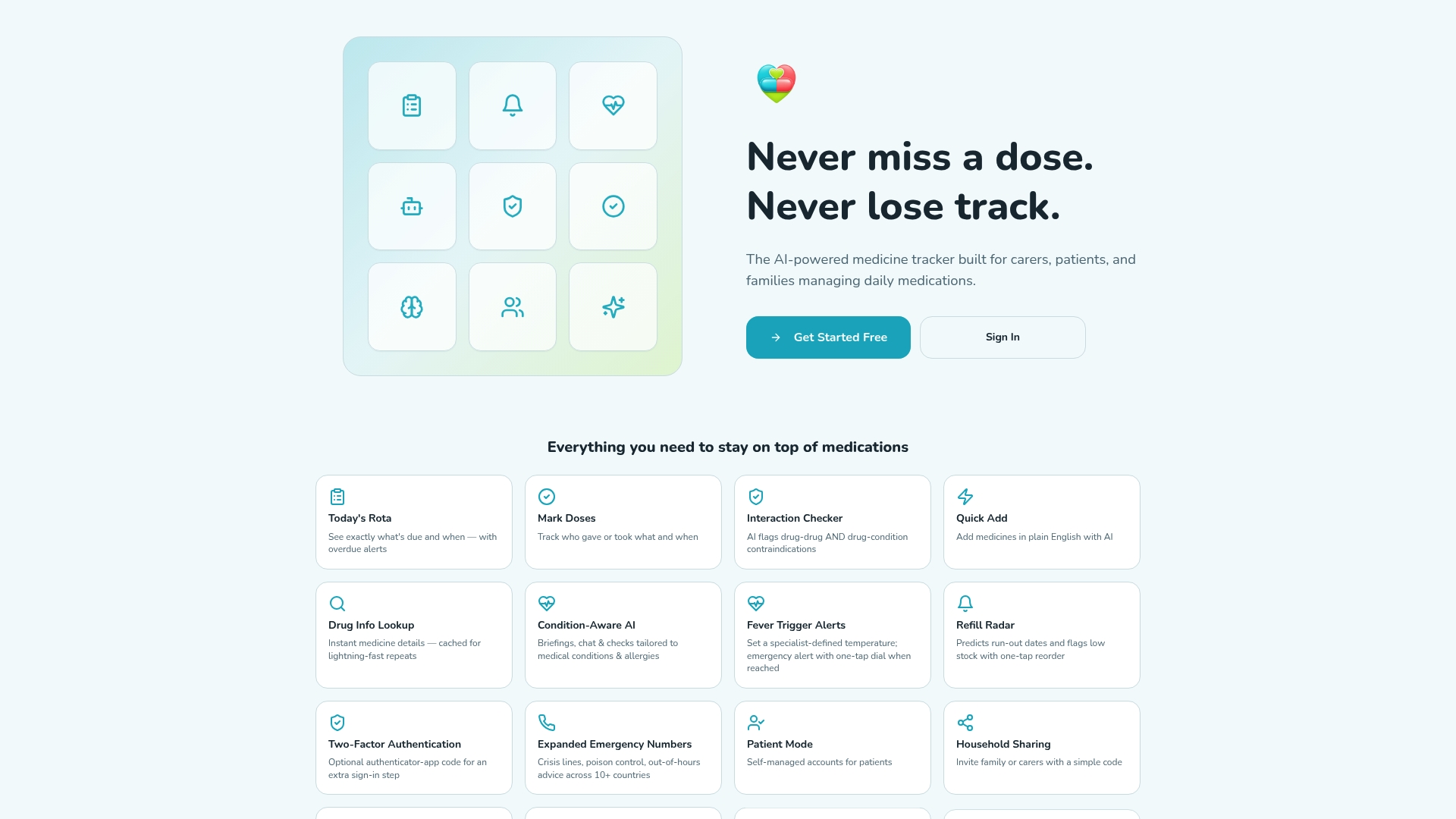
Carers managing complex schedules can use Thedailydosetracker to personalise reminders by patient, medication, and time, reducing the risk of missed doses across an entire care plan. The platform also supports appointment scheduling, symptom logging, and emergency contact integration. Explore the free app and plans to see how Thedailydosetracker fits into your patient health management routine, or review the available pricing options to find the right level of support.
FAQ
What is the role of reminders in patient health?
Reminders are structured prompts that reduce forgetfulness and inattention, helping patients take medication on time and attend appointments. Evidence shows they increase outpatient attendance by approximately 11% and prescription fulfilment by up to 19%.
What type of reminder is most effective for medication adherence?
Interactive SMS reminders, which require the patient to click a link or respond, outperform passive alerts. In heart failure patients, interactive text nudges raised prescription fulfilment by 19% and reduced 30-day readmissions by 6%.
How can carers use reminders for complex medication schedules?
Carers should personalise reminders with the patient's name and specific medication, match the format to the patient's abilities, and review settings regularly. Platforms that support carer medication scheduling reduce errors across multi-patient households.
Why do some patients stop responding to reminders?
Habituation occurs when patients receive the same alert repeatedly and begin to ignore it. Behaviourally framed reminders that include social norm or cost messaging can re-engage patients who have tuned out standard notifications.
Are digital reminders suitable for elderly or cognitively impaired patients?
Not always on their own. Elderly and cognitively impaired patients often need multi-modal strategies that combine auditory alarms, visual cues, and caregiver support alongside digital alerts to ensure reminders are received and acted upon.