

Preventive medication management is the proactive process of optimising medication use to prevent illness, reduce adverse events, and improve therapeutic outcomes before problems arise. Known formally within structured healthcare as Medication Therapy Management (MTM), this approach is especially critical for patients managing complex regimens, multiple chronic conditions, or care transitions. The Centers for Medicare and Medicaid Services mandates MTM programmes under Medicare Part D to improve medication use and reduce adverse events. For carers and patients, understanding this framework is the first step toward genuinely safer, more effective care.
What is preventive medication management?
Preventive medication management is a structured, ongoing process of reviewing, monitoring, and adjusting medications to prevent harm and maximise therapeutic benefit. It goes well beyond simply taking tablets on time. The goal is to catch problems before they cause a crisis, whether that means identifying a dangerous drug interaction, spotting a medication no longer suited to a patient's condition, or confirming that every prescription still serves a clear purpose.
The formal framework most closely aligned with this approach is Medication Therapy Management. MTM programmes bring together pharmacists and physicians to review all medications a patient takes, including over-the-counter drugs and supplements, and to recommend changes that improve outcomes. This collaboration is what separates preventive medication management from simple adherence reminders.
Carers managing elderly relatives or patients with multiple diagnoses will recognise the challenge immediately. A patient with heart disease, type 2 diabetes, and osteoporosis may take eight or more medications daily. Without a structured review process, interactions and duplications accumulate silently. Preventive medication management creates the regular checkpoints that catch these issues early.

What are the core components of preventive medication management?
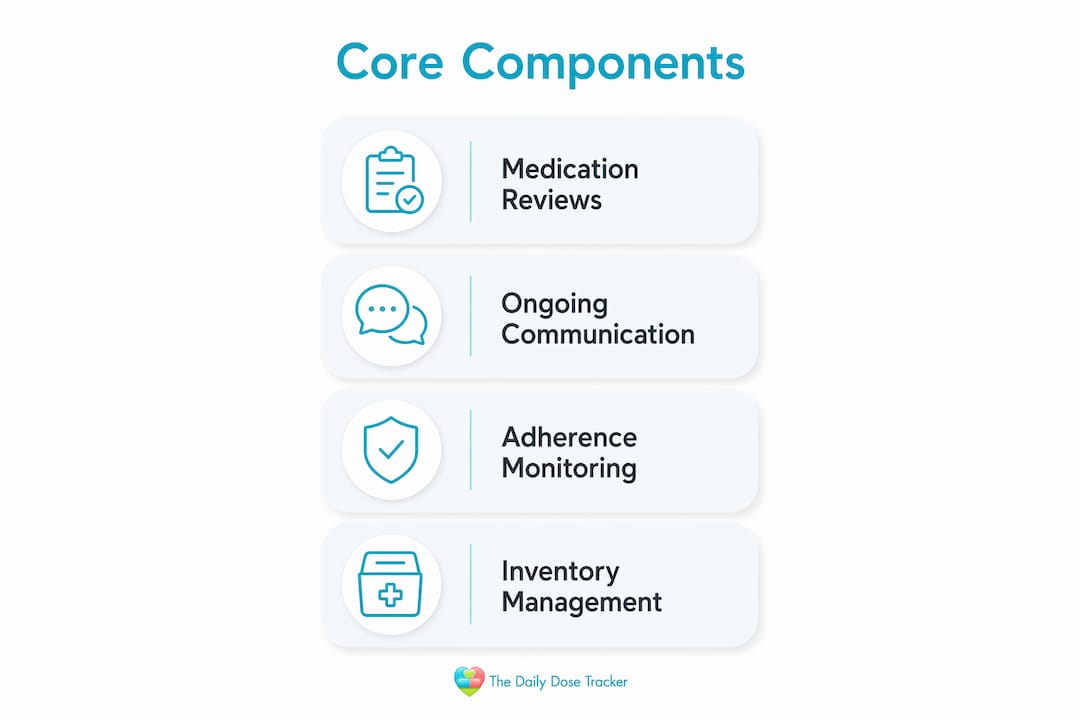
The four core components of preventive medication management are structured medication reviews, ongoing communication, medication adherence monitoring, and inventory management. Each one addresses a different failure point in complex regimens.
1. Comprehensive and targeted medication reviews
MTM programmes deliver two types of review. A Comprehensive Medication Review (CMR) takes place at least once a year and covers every medication a patient takes. A Targeted Medication Review (TMR) happens quarterly and focuses on specific safety concerns or adherence problems identified since the last review. The CMR gives the broad picture; the TMR catches what changes between annual appointments. Relying on the CMR alone leaves a patient exposed for up to eleven months between checks.
2. Ongoing patient and provider communication
Medication management is an ongoing process, not a one-off appointment. Patients and carers should maintain open, regular communication with both their GP and their pharmacist. This means reporting new symptoms, flagging any supplements or herbal remedies, and asking questions when a new prescription is added. Silence is one of the most common causes of preventable medication harm.
3. Medication adherence monitoring
What is medication adherence in this context? It is the degree to which a patient takes medications as prescribed, at the right dose, at the right time, and for the right duration. Poor adherence is one of the leading drivers of avoidable hospital admissions in the UK. Monitoring adherence is not about surveillance; it is about identifying barriers, whether those are side effects, cost, confusion, or physical difficulty opening packaging.
4. Medication inventory management
Keeping an updated medication list that includes every prescription, over-the-counter medicine, vitamin, and supplement is a non-negotiable foundation. This list should travel with the patient to every appointment and every care handoff. Without it, prescribers make decisions based on incomplete information.
Pro Tip: Keep a single printed or digital medication list that includes the drug name, dose, frequency, and the condition it treats. Update it every time anything changes, and bring it to every appointment.
How does deprescribing fit into preventive medication management?
Deprescribing is the planned, supervised process of reducing or stopping medications that are no longer beneficial or that carry risks outweighing their benefits. Within a preventive medicine approach, deprescribing is not a failure. It is an active clinical decision.
Preventive medications such as statins and anticoagulants present a particular challenge. Unlike pain relief, they do not produce an immediate, perceptible effect when stopped. A patient who discontinues a statin will not feel worse the next day. This makes it easy to stop without realising the long-term consequences, and equally easy for a clinician to continue a prescription past the point where it genuinely helps.
Deprescribing decisions should be guided by four quantitative factors:
- Time to benefit: How long does the medication need to be taken before it produces a measurable health gain?
- Number needed to treat: How many patients must take the medication for one to benefit?
- Life expectancy: Does the patient's expected lifespan allow enough time to realise the benefit?
- Goal of care: Does continuing the medication align with what the patient and family actually want?
Shared decision-making is the mechanism that brings these factors together. Carers play a vital role here. They often hold context that a clinician sees only briefly, including how a patient's quality of life has changed, what side effects they have mentioned at home, and what their personal priorities are.
Stopping preventive medications abruptly without clinical guidance carries real risk. Some medications require gradual tapering. Others interact with remaining prescriptions in ways that only become apparent after withdrawal. Deprescribing should always be a conversation, never a unilateral decision.
Pro Tip: If you or your loved one wants to stop a preventive medication, raise it at the next GP or pharmacist review rather than stopping independently. Bring the medication list and ask specifically about time to benefit.
What are practical medication safety tips for patients and carers?
Medication safety in daily life depends on consistent habits, not heroic interventions. The following practices reduce the most common causes of preventable harm.
- Store medicines safely. Approximately 100 young children are treated in US emergency rooms every day after accessing medicines left within reach. The CDC recommends keeping all medicines out of sight and reach of children, with child-resistant caps re-locked after every use. The same principle applies in homes where elderly patients with cognitive impairment live.
- Maintain one authoritative medication list. A trustworthy, updated medication list used at every care handoff is the single most effective tool for preventing medication errors. Include the prescriber's name alongside each entry.
- Tell every provider everything. GPs, hospital doctors, and pharmacists each see only part of the picture. Carers should proactively share the full medication list at every contact, including supplements and over-the-counter products.
- Never change doses independently. Adjusting a dose or stopping a medication without clinical advice is one of the most common causes of avoidable harm. If a medication seems wrong, contact the prescriber before making any change.
- Dispose of unused medicines correctly. Return unused or expired medications to a pharmacy rather than flushing them or placing them in household waste. This prevents accidental ingestion and environmental harm.
- Know the signs of medication errors in elderly patients. Confusion, sudden falls, or unexpected changes in behaviour can all signal a medication problem rather than a new illness.
How to manage preventive medications during care transitions?
Care transitions, moving between hospital and home, or from home to a care facility, are the highest-risk moments in any medication regimen. Prescriptions get added, removed, or altered during a hospital stay, and those changes do not always reach the GP or community pharmacist in time.
The table below shows the key differences between managing medications at home versus during a care transition.
| Factor | Stable home setting | During a care transition |
|---|---|---|
| Medication list accuracy | Updated at routine reviews | Requires immediate reconciliation on admission and discharge |
| Number of prescribers involved | Typically one GP | Multiple hospital doctors, ward pharmacists, and community team |
| Risk of duplication or omission | Low with good habits | High without formal handoff process |
| Carer role | Monitoring and prompting | Active advocacy and verification |
| Digital tool value | Scheduling and reminders | Real-time alerts and shareable records |
Carers managing complex prescriptions for multiple conditions should request a full medication reconciliation at every discharge. This is a formal check that compares what the patient was taking before admission with what they are being sent home with. Discrepancies are common and often go unnoticed without an advocate present.
Digital tools that support multi-patient management and real-time dose logging are particularly valuable during transitions. Thedailydosetracker offers drug interaction checks, refill predictions, and emergency contact integration, all of which address the specific vulnerabilities that appear when care settings change. Keeping a complete medication history accessible across devices means critical information is never left behind when a patient moves between settings.
Key takeaways
Preventive medication management requires structured reviews, accurate medication records, and shared clinical decisions to reduce harm and improve outcomes across complex regimens.
| Point | Details |
|---|---|
| MTM is the formal framework | CMS-mandated MTM programmes use annual CMRs and quarterly TMRs to catch medication problems proactively. |
| Updated medication lists prevent errors | A complete, current list shared at every care handoff is the most effective single safeguard against preventable harm. |
| Deprescribing is a clinical decision | Stopping preventive medications requires a risk-benefit review covering time to benefit, life expectancy, and patient goals. |
| Care transitions carry the highest risk | Medication reconciliation at every hospital discharge is the key intervention to prevent omissions and duplications. |
| Carers are active participants | Carers hold context clinicians lack and should advocate, verify, and communicate at every stage of the process. |
Why medication management is never a one-off task
I have spent years watching carers and patients treat medication reviews as a box to tick once a year. The annual GP appointment happens, the repeat prescription is renewed, and everyone assumes the job is done. That assumption is where harm quietly accumulates.
The quarterly TMR exists precisely because a year is too long to wait. A patient's kidney function, weight, or other prescriptions can change significantly in three months. A medication that was appropriate in january may be actively harmful by april. Carers who understand this push for more frequent contact, not because they distrust their clinical team, but because they know the picture changes.
The other pattern I see regularly is over-reliance on memory. A carer who manages four or five medications for a loved one will often carry the full list in their head. That works until it does not, typically at 2am in an A&E department when a nurse asks what the patient takes. A written or digital list is not a sign of disorganisation. It is the most basic form of medication safety available to any family.
The hardest conversation in preventive medication management is deprescribing. Families often interpret a suggestion to stop a medication as giving up. Deprescribing experts are clear that stopping a preventive medication should never feel like rationing. It is a patient-centred decision grounded in evidence about whether the medicine still serves the person taking it. Carers who understand this framing can have that conversation with confidence rather than fear.
— Prasant
Thedailydosetracker and preventive medication management
Managing a complex medication regimen at home is demanding work. Thedailydosetracker is built specifically for carers and patients who need more than a basic reminder app.
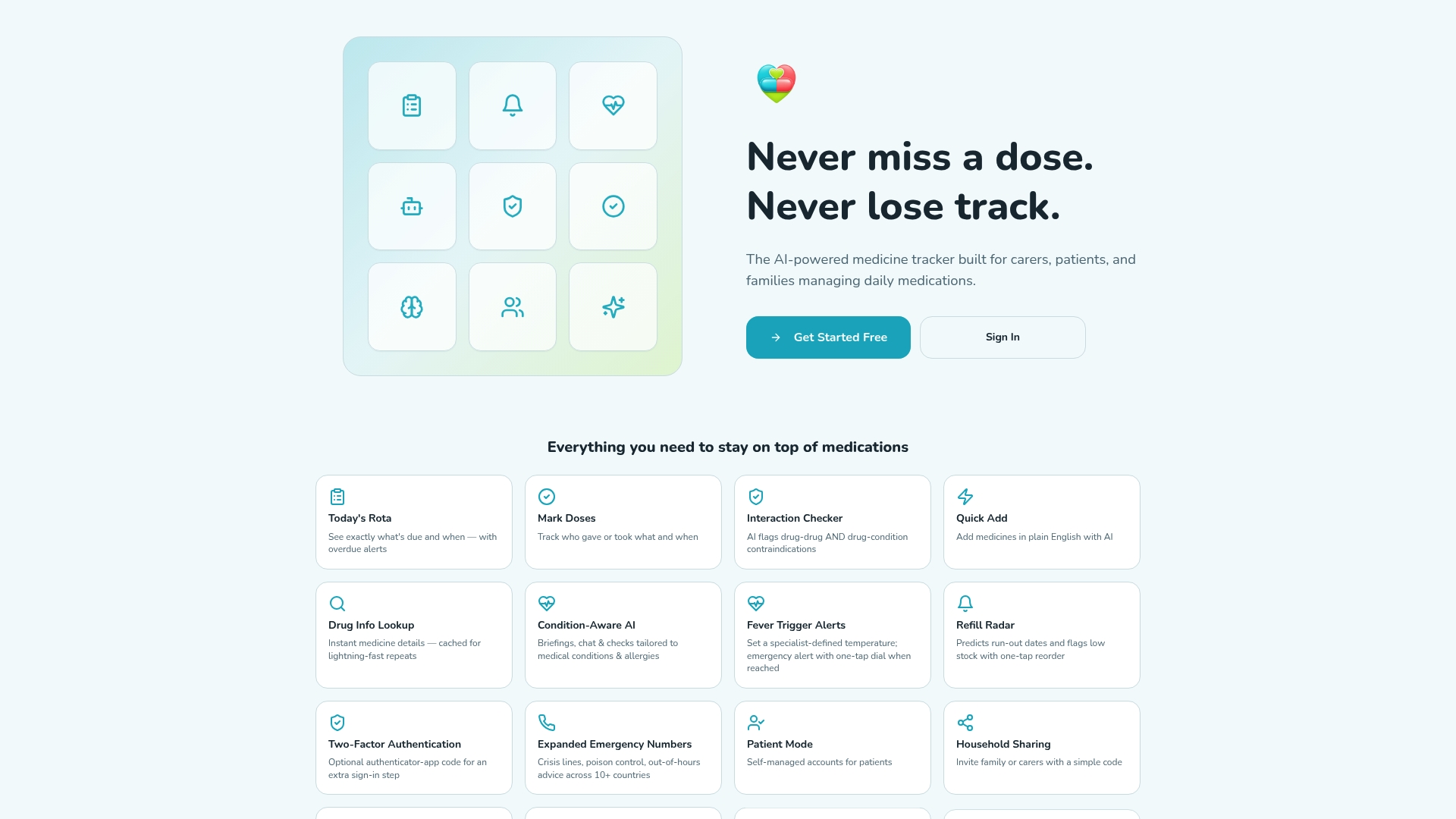
The platform supports medication schedule best practices with real-time dose alerts, drug interaction checks, and refill predictions. Its household sharing feature means multiple carers can stay aligned on the same patient's regimen without relying on phone calls or handwritten notes. For families managing care transitions, the shareable medication records and emergency contact integration address the exact vulnerabilities that cause harm at discharge. Access the full feature list and free plan to see how Thedailydosetracker fits your situation.
FAQ
What is preventive medication management in simple terms?
Preventive medication management is the ongoing process of reviewing and adjusting medications to prevent illness and adverse events before they occur. It includes structured reviews, adherence monitoring, and regular communication between patients, carers, and healthcare providers.
What is Medication Therapy Management (MTM)?
MTM is a structured programme, mandated by CMS under Medicare Part D, in which pharmacists and physicians collaborate to review all of a patient's medications and recommend changes that improve outcomes and reduce risk.
How often should medications be reviewed?
MTM programmes require at least one Comprehensive Medication Review per year and quarterly Targeted Medication Reviews. Patients with complex or changing regimens may benefit from more frequent contact with their pharmacist or GP.
What is deprescribing and when is it appropriate?
Deprescribing is the supervised reduction or stopping of medications that no longer provide net benefit. It is appropriate when a medication's time to benefit exceeds a patient's life expectancy or when the risks outweigh the goals of care, always decided through shared clinical discussion.
How can carers reduce medication errors during hospital discharge?
Carers should request a formal medication reconciliation at every discharge, comparing the pre-admission list with the discharge prescription. Bringing a complete, updated medication list to the hospital and asking about any changes before leaving significantly reduces the risk of omissions or duplications.