
The practical next step is simple. Pick a tracker built for pregnancy, confirm your current prescriptions with your midwife or GP, and start logging today so you have a real record ready for your next appointment.
TL;DR:
- Digital medication trackers improve adherence during pregnancy, especially when reminders are flexible and tailored to daily routines.
- Exportable logs and clear notes on missed doses help clinicians understand adherence patterns and inform care decisions.
- Blood sugar control and hemoglobin levels benefit from digital interventions for gestational diabetes and iron supplementation, but they do not replace clinical judgment.
- Privacy compliance, minimal permissions, and household sharing controls are essential to protect sensitive pregnancy medication information.
- Consistent, real-time logging of all doses and symptoms provides a reliable record to support safe and effective pregnancy medication management.
Table of Contents
- What a pregnancy medication tracker does and what the evidence shows
- Key features to look for in a pregnancy medication tracker
- How to set up and use a medication tracker safely during pregnancy
- Common barriers in pregnancy and how digital tools help (and where they don't)
- Privacy, security and data sharing: practical checks before you start
- Making tracking stick during pregnancy
- How The Daily Dose Tracker supports pregnancy medication tracking
- Selected evidence and guidance to read next
- Sources
- FAQ
What a pregnancy medication tracker does and what the evidence shows
A pregnancy medication tracker sends dose reminders, records what you have actually taken, and turns that record into something you can hand to a clinician. That sounds simple, but the evidence behind it is stronger than most people expect.
A 2026 randomised controlled trial published in Scientific Reports tested daily smartphone reminders against no reminders for pregnant women taking multivitamin supplements.
The adherence gap in pregnancy: Medication diary research puts average implementation adherence during pregnancy at around 74.2%. That figure hides a sharp split: chronic-condition medicines sit near 86% adherence, while short-term prescriptions drop to roughly 53.7%. Reminders help most where habit hasn't formed yet.
Beyond vitamins, a systematic review and meta-analysis in PLOS Digital Health found digital interventions for gestational diabetes were linked to better glycaemic control, with some analyses showing reduced risk of caesarean delivery. Separate trials on iron supplementation show similar patterns, better adherence, better haemoglobin outcomes, though trial quality across this field still varies. None of this replaces a prescriber's judgement. A tracker is an adjunct that sits alongside clinical care, not instead of it.
Key features to look for in a pregnancy medication tracker
Not every medication app is built with pregnancy in mind. Before you commit to one, check it covers these essentials:
- Flexible dose reminders that allow a realistic time window rather than a rigid single minute, since morning sickness and shifting routines make exact timing unrealistic some days.
- Exportable medication logging, so you can produce a clean history for your midwife or obstetrician instead of scrolling through a phone screen in the waiting room.
- Drug interaction and condition-specific checks, flagging anything that needs a second look given pregnancy-specific risk.
- Multi-patient and household sharing, useful if a partner, parent, or professional carer also needs visibility.
- Accessibility options such as adjustable font size and dark mode, plus progressive web app access so it works across your phone, tablet, and laptop without a separate install.
- Refill prediction to stop you running out mid-week, and emergency contact integration for when something needs immediate attention.
- A visible disclaimer stating the tool supports, but never replaces, clinical advice.
Pro Tip: Look for an app that lets you attach a short note to a missed or delayed dose. "Skipped, felt nauseous" tells your clinician far more than a blank gap in the log, and it takes ten seconds to type.
How to set up and use a medication tracker safely during pregnancy
Getting the setup right in week one saves weeks of messy data later. Follow these steps in order:
- Compile a full medication list first. Include every prescription, over-the-counter medicine, and supplement, then confirm exact doses with the prescribing clinician before entering anything into the app.
- Anchor reminders to daily routines. Tie doses to mealtimes or bedtime rather than arbitrary clock times, and set an allowable window (say, 30 to 60 minutes either side) so a late lunch doesn't trigger a missed-dose alert.
- Log every dose as it happens, including missed doses, delayed doses, and any symptoms or side effects worth flagging.
- Export a concise report before each appointment. Share it with your clinician directly or via read-only access where the platform supports it.
| Situation | What to do |
|---|---|
| One dose missed by a few hours | Log it, follow the medicine's own guidance on delayed doses, and continue as scheduled |
| Multiple doses missed in a row | Log each one and contact your midwife or GP before making any changes |
| New or worsening symptoms after a dose | Log the symptom immediately and seek medical advice, especially with cardiac, psychiatric, or anticoagulant medicines |
| Considering stopping a medicine yourself | Do not stop first. Call your prescriber; unadvised discontinuation is one of the risks trackers are designed to help prevent |
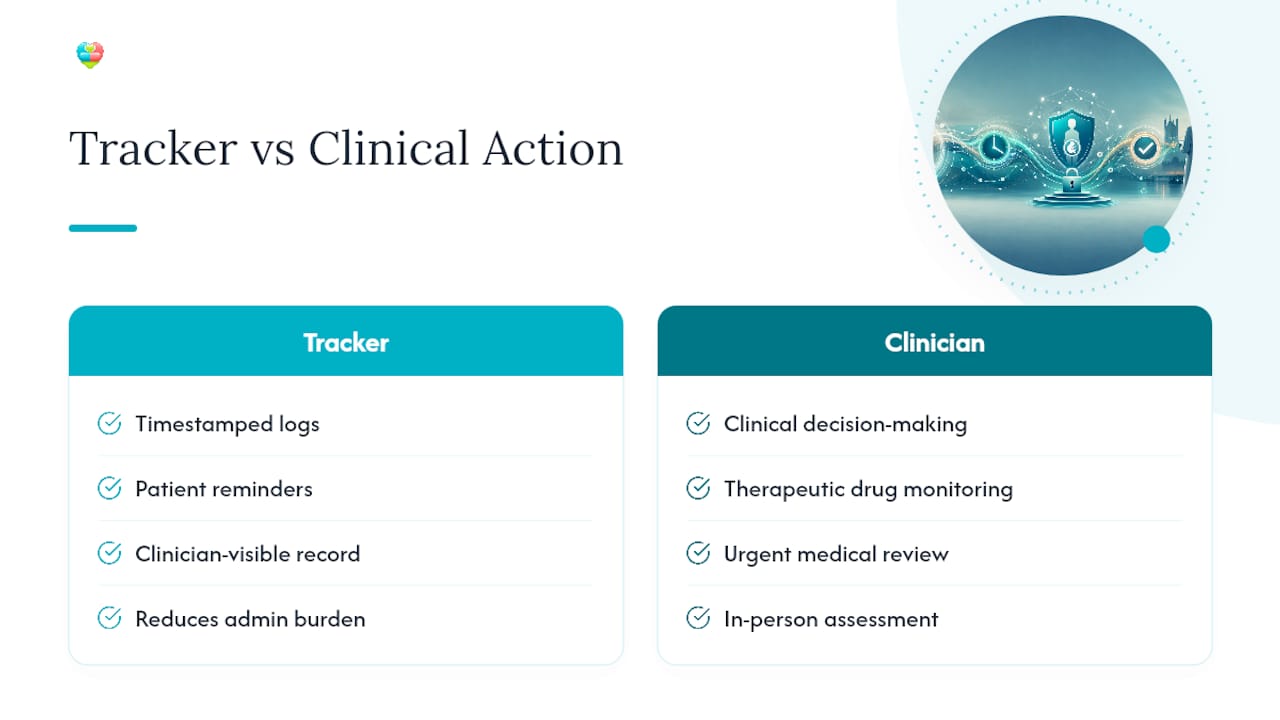
A time-stamped log showing exactly when doses were taken or missed is the single most useful thing you can hand a clinician trying to work out what happened and why.
Common barriers in pregnancy and how digital tools help (and where they don't)
Forgetfulness explains some missed doses. Fear explains a lot more. A multinational study on psychotropic medication in pregnancy found 48.8% of women had low adherence, and negative beliefs about medication harming the pregnancy were the strongest predictor, increasing nonadherence risk roughly fivefold (odds ratio 5.16).
That's a belief problem as much as a memory problem, and no reminder alone fixes it. What helps is pairing the reminder with a brief, honest note on why the medicine matters, and a log that a clinician can actually see. When a patient quietly stops a medicine out of worry, the app's timestamped record lets a midwife or GP spot the gap fast and have that conversation before it becomes a crisis. Centralised digital records also reduce the administrative burden on clinicians managing complex or chronic conditions, freeing time for exactly this kind of check-in.
What a tracker cannot do matters just as much. It cannot make a clinical decision, run therapeutic drug monitoring, or substitute for urgent medical review. Treat it as a better way to communicate with your care team, not a replacement for one.
Privacy, security and data sharing: practical checks before you start
Pregnancy medication data is sensitive, so a few minutes of checking now saves a headache later.
- Confirm the platform states explicit UK GDPR compliance, including your right to export and delete your own data on request.
- Look for minimal required permissions. An app asking for contacts, location, or camera access it doesn't need is a red flag.
- Prefer read-only clinician sharing or a plain CSV/PDF export over any setup that gives a third party ongoing, uncontrolled access to your records.
- If you're using household sharing with a partner or carer, check exactly what they can see and how you'd revoke that access if circumstances change.
- Keep sensitive personal notes out of any log visible to multiple household members. Save the detailed context for what you share directly with your clinician.
Making tracking stick during pregnancy
Most people don't fail at tracking because the app is bad. They fail because they treat it as one more thing competing with an already full day. Anchor it to something you already do without thinking, brushing your teeth, the first coffee of the day, and it stops feeling like an extra task.
Keep one single source of truth. Splitting your medication record across a notes app, a paper diary, and your memory is how doses get missed twice or logged inconsistently. Bring your midwife or partner into the loop early by sharing a read-only export before appointments rather than reconstructing the last month from memory in the waiting room. And don't underestimate the power of a one-line reminder of why you're taking something. It's a small addition that does more to counter harm beliefs than any alarm sound ever will.
— Prasant
How The Daily Dose Tracker supports pregnancy medication tracking
This tracker is built to match exactly the checklist above rather than a generic pill-reminder app repurposed for pregnancy. It combines flexible dose reminders, drug interaction and condition-specific checks, and multi-patient household sharing in one place, so a partner, carer, or midwife can see what matters without you retyping anything.
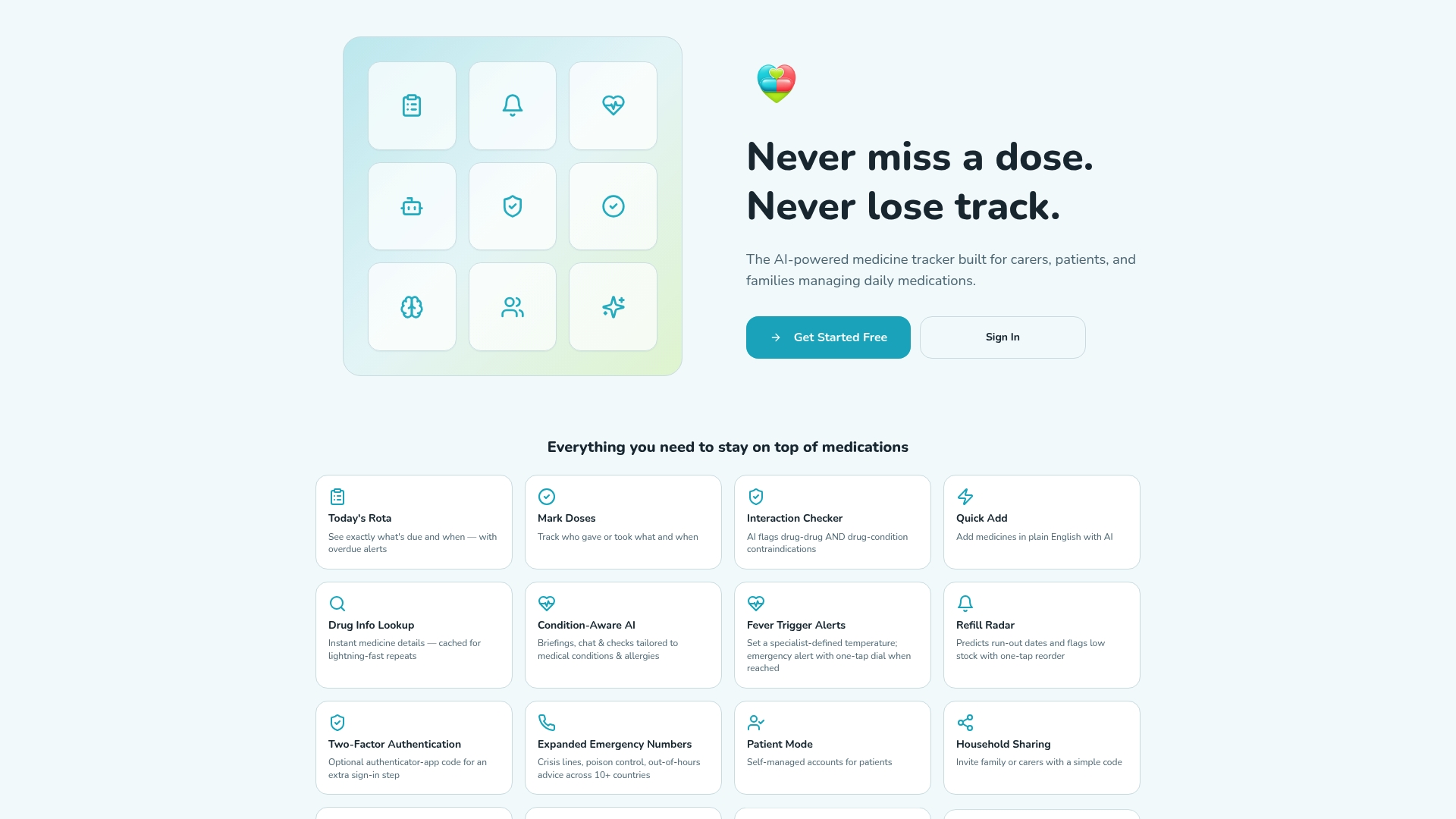
The platform supports exportable medication history for clinician visits, emergency contact integration, and accessibility features including dark mode and adjustable text size, all delivered as a progressive web app that works across your phone and laptop without a separate install. It is designed with privacy and security considerations in line with UK GDPR standards, with control over what you share and with whom. If you've been managing prescriptions on paper or in your memory, read more on how digital medication reminders help and why families choose shared medication apps. Try the free tier today, or export a medication report before your next appointment.
Selected evidence and guidance to read next
- Randomised trial: smartphone reminders and drug adherence in pregnancy
- PLOS Digital Health meta-analysis on digital interventions for gestational diabetes
- PRIDE diary study on medication adherence in pregnancy
- Patterns of low adherence to psychotropic medication in pregnancy
- Background on documenting medication and monitoring side effects
This article is general information, not a substitute for advice from a qualified doctor. Consult a qualified healthcare professional about your own circumstances before acting on anything here.
Sources
- Randomised controlled trial of smartphone electronic reminder to improve drug adherence during pregnancy | Scientific Reports
- Digital health interventions for gestational diabetes mellitus: A systematic review and meta-analysis of randomised controlled trials
- Adherence to prescription medication during pregnancy (PRIDE diary study)
- Digital health interventions improve adherence to oral iron supplementation in pregnancy
FAQ
What features matter most in a pregnancy medication app?
Flexible dose reminders, exportable logs for clinicians, drug interaction checks, multi-patient household sharing, and clear accessibility options all matter in a pregnancy medication app.
Can I stop a medicine myself if I'm worried about the pregnancy?
No. Log your concern and any symptoms, then contact your midwife or GP before making any change, since unadvised discontinuation is one of the main risks digital tracking aims to catch early.
Is my medication data safe in a tracking app?
Check for explicit UK GDPR compliance, export and deletion controls, and minimal app permissions, and prefer read-only clinician sharing over broader third-party access.
How often should I log doses during pregnancy?
Log every dose as it happens, including missed or delayed ones, since a consistent time-stamped record is what helps a clinician spot patterns and respond quickly.