

What are the best alternatives to Medication Timer in the UK?
If Medication Timer no longer fits your needs, the good news is that the UK market has strong alternatives across every category: free apps with offline privacy, pharmacist-endorsed trackers for complex regimens, and physical dispensers for people who need something more than a screen notification. The right choice depends almost entirely on who is managing the medication and how.
The comparison below covers eleven options, from app-based tools to hardware devices, rated on the dimensions that actually matter for day-to-day use.
| App / Device | Best for | Platform | Pricing model | Key features | Caregiver support |
|---|---|---|---|---|---|
| MyTherapy | Chronic condition self-management | iOS, Android | Free | Symptom logging, health measurements, adherence charts | Limited |
| MedTimer | Privacy-conscious users | Android | Free, open-source | Offline, no registration, CSV export | No |
| MedMinder | Elderly users, caregivers | Physical device | Subscription (from £125/month) | Locked dispenser, auditory/visual/vibration alerts | Yes, SMS/call alerts |
| Medisafe | Complex multi-drug regimens | iOS, Android | Freemium | Drug interaction checks, refill alerts, family sync | Yes |
| TabTime Timer | Non-smartphone users | Physical device | One-off purchase | Vibrating/beeping alerts, five compartments | No |
| e-pill TimeCap | Smart bottle users | Physical device | One-off purchase | Dose tracking in pill cap, usage history | No |
| PillPack | Pharmacy-integrated management | Web, pharmacy | Prescription service | Pre-sorted pills, delivery, pharmacist oversight | Indirect |
| Hero | Multi-medication households | iOS, Android, device | Subscription | Smart dispenser, app notifications, caregiver alerts | Yes |
| Apple Health | iOS users, basic logging | iOS | Free (built-in) | Medication log, health data integration | No |
| Samsung Health | Android users, fitness tracking | Android | Free (built-in) | Medication reminders, health dashboard | No |
| Medication Timer | Simple single-user reminders | iOS, Android | Free/paid | Basic scheduling, push notifications | Limited |
Key strengths at a glance:
- MedTimer is the only fully offline, open-source option with zero data sent to third parties
- Medisafe is ranked number one by pharmacists out of 461 apps tested
- MedMinder and Hero are the strongest choices for caregivers needing physical enforcement of medication schedules
- Apple Health and Samsung Health cost nothing and require no extra installation for existing device users
- PillPack removes the organisational burden entirely by delivering pre-sorted doses
What features should you look for in a medication reminder app?
Not every medication reminder app is built the same way, and the gap between a basic alarm and a genuinely useful adherence tool is wider than most people expect.
Core features worth checking before you commit:
- Reliable notifications with multiple channels. Push notifications alone can be silenced by Do Not Disturb settings or battery savers. Apps that also send SMS, WhatsApp, or email reminders are considerably more dependable for critical doses. Expanded reminder channels significantly improve real-world adherence compared to push-only systems.
- Customisable reminder schedules. You need interval-based reminders, day-specific schedules, snooze options, and the ability to add an unplanned dose on the fly. MedTimer, for instance, supports location-based snooze so it re-alerts you when you arrive home.
- Caregiver sharing and family sync. If you are managing medication for a parent or child, look for apps that allow a second person to monitor adherence in real time. Medisafe's "MedFriend" feature sends an alert to a nominated contact if a dose is missed.
- Refill alerts. Running out mid-course is a common cause of unintentional non-adherence. Apps like Medisafe and MedTimer both include stock tracking with low-supply warnings.
- Adherence tracking and reporting. A chart or exportable history lets you spot patterns and share accurate data with a GP or specialist, rather than guessing at your last appointment.
- Offline functionality. Cloud-dependent apps fail without a signal. MedTimer stores everything locally, so reminders fire regardless of connectivity.
- Data privacy policy. Check whether the app collects, sells, or shares your health data. Open-source tools and GDPR-compliant platforms offer the clearest protections.
- Accessible interface. Large text, high contrast, and simple navigation matter for older adults or anyone managing cognitive fatigue alongside a health condition.
- Integration with pharmacy or EHR systems. PillPack and Hero both connect medication management to dispensing, reducing the manual effort of refilling and organising.
Pro Tip: If you or someone you care for tends to silence their phone during the day, choose an app that offers SMS or WhatsApp reminders rather than relying solely on push notifications. Those channels bypass device-level silencing and reach people who would otherwise miss a dose entirely. See the role of reminders in patient health for a practical breakdown of which delivery methods work best.
Pricing models deserve scrutiny too. A free app that locks caregiver sharing or unlimited medications behind a paywall may cost more in practice than a modest subscription. Conversely, a one-off hardware purchase like the TabTime Timer avoids ongoing fees entirely.
Detailed reviews of the top UK-available alternatives
MyTherapy
MyTherapy is the strongest free option for people managing a chronic condition who want more than a simple alarm. Beyond medication reminders, it lets you log symptoms, mood, blood pressure, and other measurements over time, building a longitudinal health record you can share with your GP. Parkinson's UK recommends it specifically for self-management, which reflects how well it handles complex, multi-variable tracking. The trade-off is that the interface can feel like overkill if you are only managing one or two straightforward medications.
MedTimer
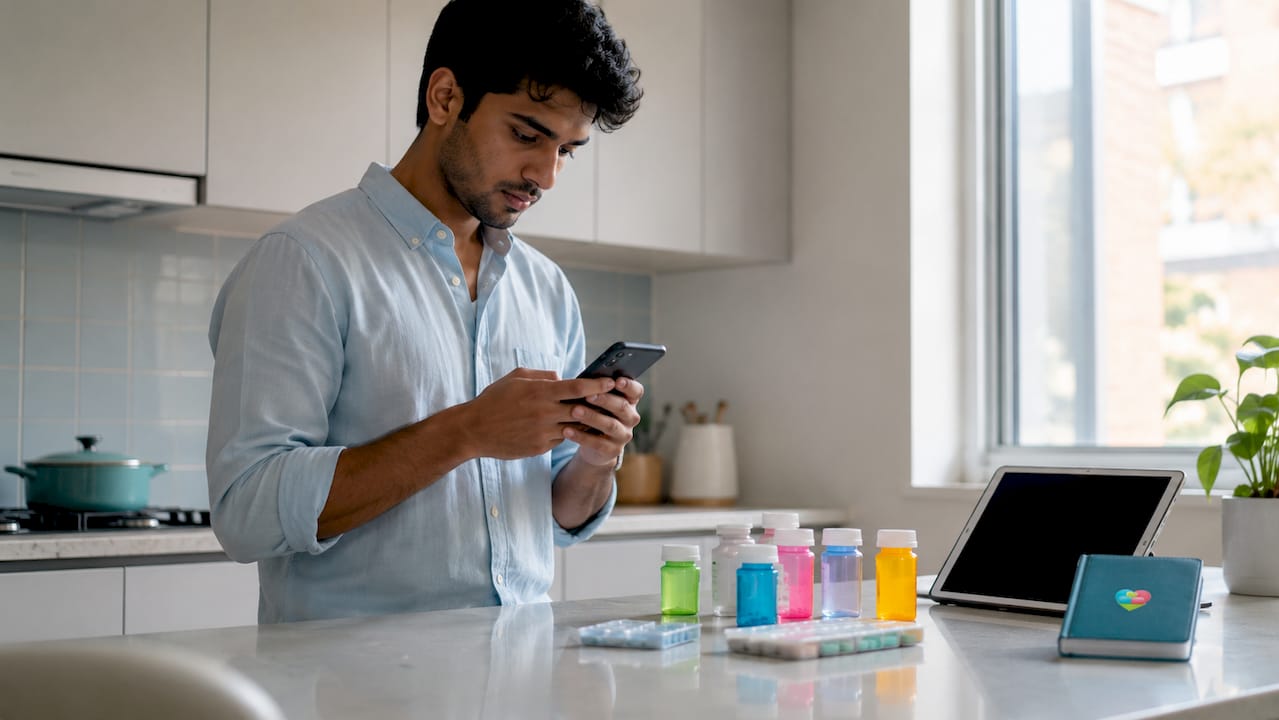
MedTimer is the answer for anyone who has grown uncomfortable with how mainstream apps handle personal health data. It is fully open-source and offline, stores everything locally on your device, and requires no registration or internet connection. You get unlimited medications, flexible interval reminders, location-based snooze, alarm-type notifications that override silent mode, CSV export for sharing with a healthcare professional, and stock tracking. No ads, no subscription, no data leaving your phone. Users who switched from Medisafe specifically cite MedTimer's privacy policy and its focus on doing one job well as the deciding factors.
MedMinder
MedMinder is a physical automated pill dispenser, not an app, and that distinction matters. It locks medication in compartments that open only at the scheduled time, and if a dose is missed, it alerts caregivers by phone call or text message. For elderly people who struggle with smartphone interfaces, or for caregivers managing a relative's medication remotely, this physical enforcement is something no app can replicate. Fees start at a significant monthly subscription rate, which is an ongoing cost, but for families where medication errors carry serious health risks, the investment is often straightforward to justify.
Medisafe
Medisafe is ranked number one by pharmacists out of 461 apps tested, and for managing a complex multi-drug regimen it remains the most purpose-built solution available. Drug interaction warnings, refill alerts, family synchronisation, adherence reports you can send to your doctor as a PDF, and a "MedFriend" caregiver alert are all included. The free tier covers the basics well. The friction comes from its shift to a subscription premium model, which has pushed long-term users towards open-source alternatives. If you need the full feature set and the pharmacist endorsement matters to you, Medisafe earns its place. If you are managing a simple schedule and privacy is a priority, MedTimer is the cleaner choice.
TabTime Timer and e-pill TimeCap
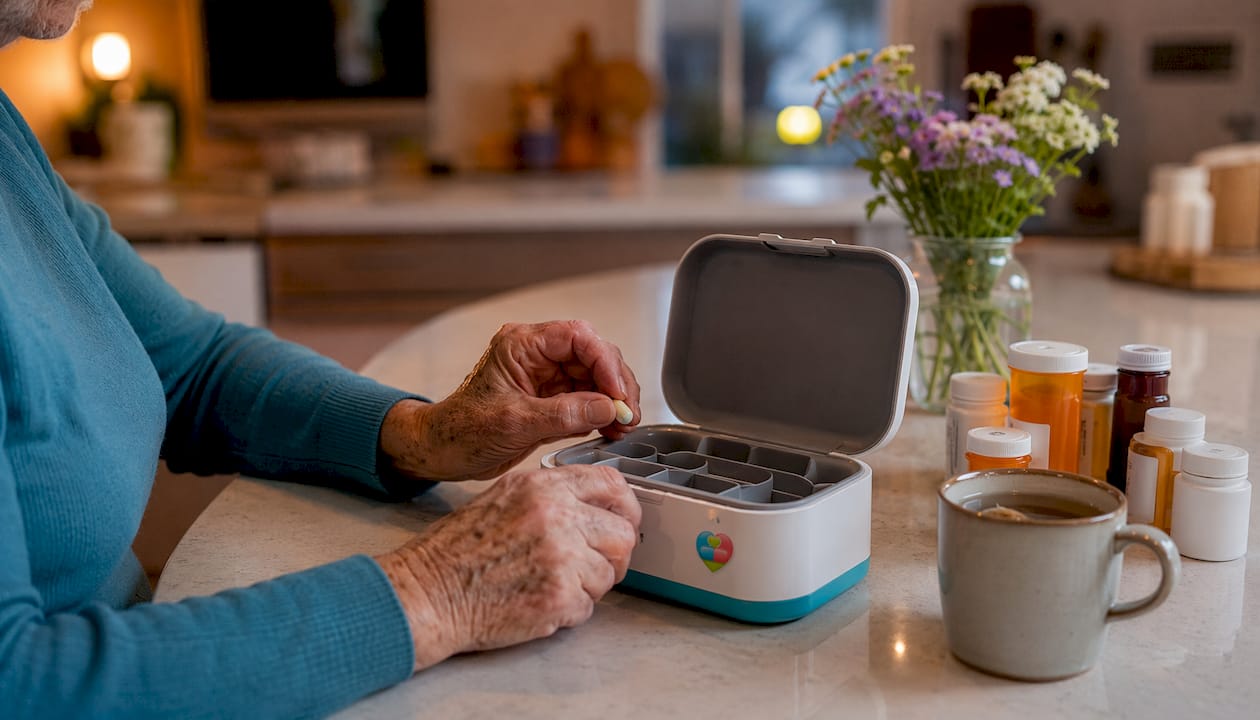
Both of these are device-based solutions for people who either do not own a smartphone or simply prefer a physical prompt. The TabTime Timer vibrates or beeps at set times and holds pills in five compartments, available as a one-off purchase. The e-pill TimeCap fits onto an existing pill bottle and tracks whether the cap has been opened, logging dose history without requiring any app interaction. Neither offers caregiver alerts, but for straightforward single-medication routines in people who find apps confusing, they remove the technology barrier entirely.
PillPack
PillPack operates as a pharmacy service rather than a standalone app. It sorts your medications into individual date-and-time-labelled packets and delivers them to your door, with pharmacist oversight built in. The organisational burden of managing multiple medications shifts almost entirely to the service. Availability in the UK is more limited than in the US market, so check current coverage before relying on it. For those who qualify, it is the most hands-off approach on this list.
Hero
Hero combines a physical smart dispenser with an app and caregiver notification system. It holds up to ten different medications, dispenses the correct dose at the right time, and sends alerts to a carer's phone if a dose is missed or the dispenser runs low. It runs on a subscription model. For households managing several people's medications or complex multi-drug schedules, Hero's combination of hardware reliability and app oversight addresses gaps that software alone cannot fill. Explore managing children and adult medications in one place for more on multi-patient household setups.
How do system apps and physical devices compare as alternatives?
Apple Health and Samsung Health deserve mention precisely because they are already on most people's phones and cost nothing extra to use.
Apple Health added a dedicated Medications feature that lets iOS users log medications, set reminders, and track adherence alongside other health data like heart rate and sleep. It integrates with the wider Apple Health ecosystem, so a GP or specialist using compatible software can receive a shared health summary. The limitation is that it offers push notifications only, with no caregiver sharing or drug interaction warnings.
Samsung Health provides medication reminders as part of its broader health dashboard on Android devices. It suits people who want a single app for fitness, sleep, and medication without installing anything new. Like Apple Health, it lacks the caregiver features and clinical depth of dedicated tools.
Physical devices fill a different gap entirely. The key benefits:
- Auditory, visual, and vibration alerts from devices like MedMinder and TabTime Timer reach people who cannot hear a phone notification or who keep their phone in another room
- Locked dispensers prevent double-dosing, a genuine risk for people with memory difficulties
- Caregiver notifications from MedMinder and Hero mean a family member or carer knows within minutes if a dose has been missed, without needing to call and check
- No smartphone dependency removes the technical barrier for older adults who are not comfortable with apps
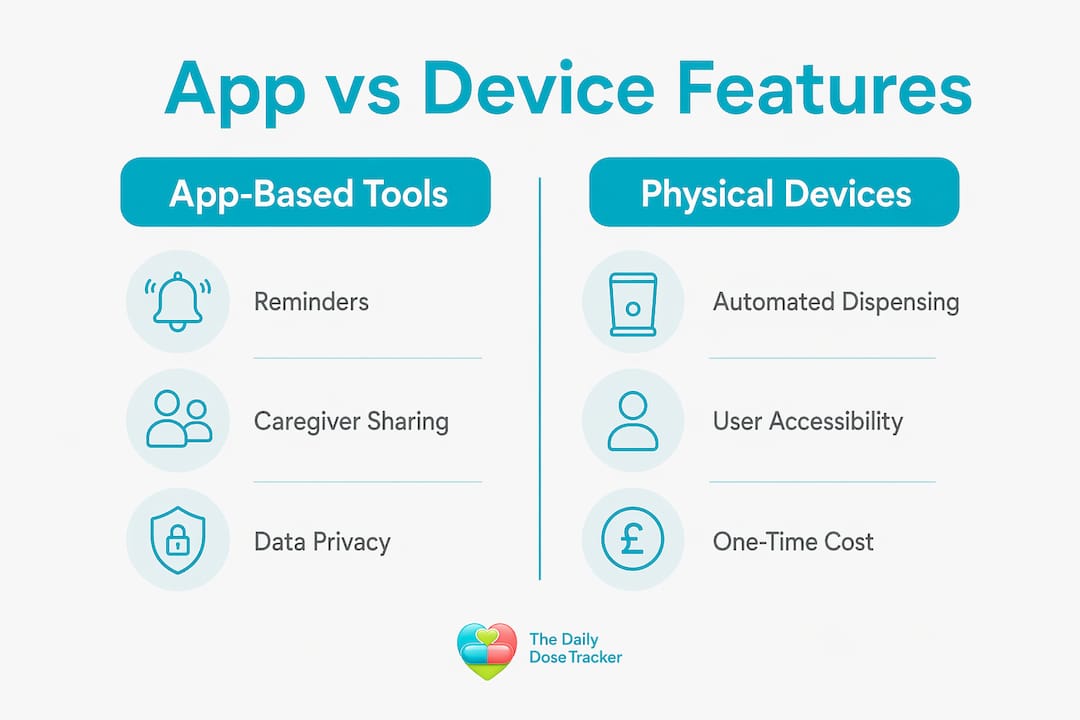
The cost structure differs too. System apps are free. Physical devices involve either a one-off purchase (TabTime Timer, e-pill TimeCap) or a monthly subscription (MedMinder from around £125/month, Hero on a subscription plan). For families managing elderly medication routines, the subscription cost of a physical dispenser often compares favourably to the alternative of a care home visit or a medication error.
Which alternative fits your situation?
The right tool depends on three things: who is taking the medication, how complex the regimen is, and how much technical confidence the person has.
By user profile:
- Self-managing individuals with chronic conditions: MyTherapy gives you health tracking alongside reminders, all free, with a clean interface suited to daily use over months or years.
- Privacy-conscious users: MedTimer stores nothing in the cloud, requires no account, and is fully open-source. It is the only option on this list that guarantees zero third-party data access.
- Complex multi-drug regimens: Medisafe's drug interaction checker and pharmacist endorsement make it the most clinically credible app option, even with the freemium trade-offs.
- Caregivers managing a relative's medication: MedMinder or Hero provide physical dispensing with remote alerts. For app-based caregiver oversight, Medisafe's family sync is the strongest digital option.
- Elderly or non-smartphone users: TabTime Timer or MedMinder remove the app barrier entirely. Physical alerts are harder to miss and require no technical skill to respond to.
- iOS or Android users wanting zero extra setup: Apple Health (iOS) and Samsung Health (Android) are already installed and free.
- Pharmacy-integrated management: PillPack removes the sorting and scheduling burden by delivering pre-organised doses directly.
Key trade-offs to weigh:
- Free apps with full features (MedTimer, MyTherapy) versus subscription models with clinical depth (Medisafe Premium, Hero)
- App convenience versus physical reliability for people who silence their phones or forget to check notifications
- Cloud-based family sharing versus local-only privacy
- One-off device cost versus ongoing subscription for hardware solutions
For anyone managing family medication schedules across multiple people, the caregiver alert feature is the single most important criterion to check before choosing.
What do experts say about caregiver and privacy-focused alternatives?
The professional consensus on medication reminder tools has shifted noticeably in recent years, driven by two pressures: subscription fatigue and growing awareness of health data privacy.
Medisafe remains the pharmacist-endorsed standard for complex regimens, but its move to a premium subscription model has driven a meaningful number of long-term users to explore alternatives. The free tier still covers core reminders and drug interaction warnings, but family sharing and advanced reporting now sit behind a paywall. For users who need those features daily, the cost adds up.
Open-source tools like MedTimer have attracted users who want data sovereignty without compromise. All medication data stays on the device, with no registration, no cloud sync, and no advertising. For anyone managing a sensitive condition or simply uncomfortable with health data being processed by a third party, this offline-first approach is the clearest available guarantee of privacy.
Physical dispensers occupy a different tier of the expert conversation. For elderly or cognitively impaired users, devices like MedMinder provide what apps cannot: physical enforcement of a schedule, locked access to prevent accidental double-dosing, and immediate caregiver notification when something goes wrong. Practitioners working with older adults consistently recommend hardware solutions over apps when the person has limited technical confidence or memory difficulties.
On notification strategy, healthcare practitioners observe higher real-world adherence when reminder systems use multiple channels rather than push notifications alone. SMS and WhatsApp messages bypass Do Not Disturb settings and reach people who habitually silence their phones. For critical medications, a single push notification is a fragile delivery mechanism. If you are managing medication for someone with a serious condition, pairing an app with SMS-based backup reminders is worth the extra setup. Understanding diabetic supply management offers a useful parallel for how multi-channel approaches improve adherence in chronic condition management.
The practical guidance from specialists is consistent: match the technology to the person, not the other way round. A feature-rich app handed to someone who finds smartphones confusing will be abandoned within a week. A simple vibrating device given to the same person will be used every day.
Thedailydosetracker: a different approach to medication management
If the apps and devices compared above feel like partial solutions, Thedailydosetracker takes a different route entirely.
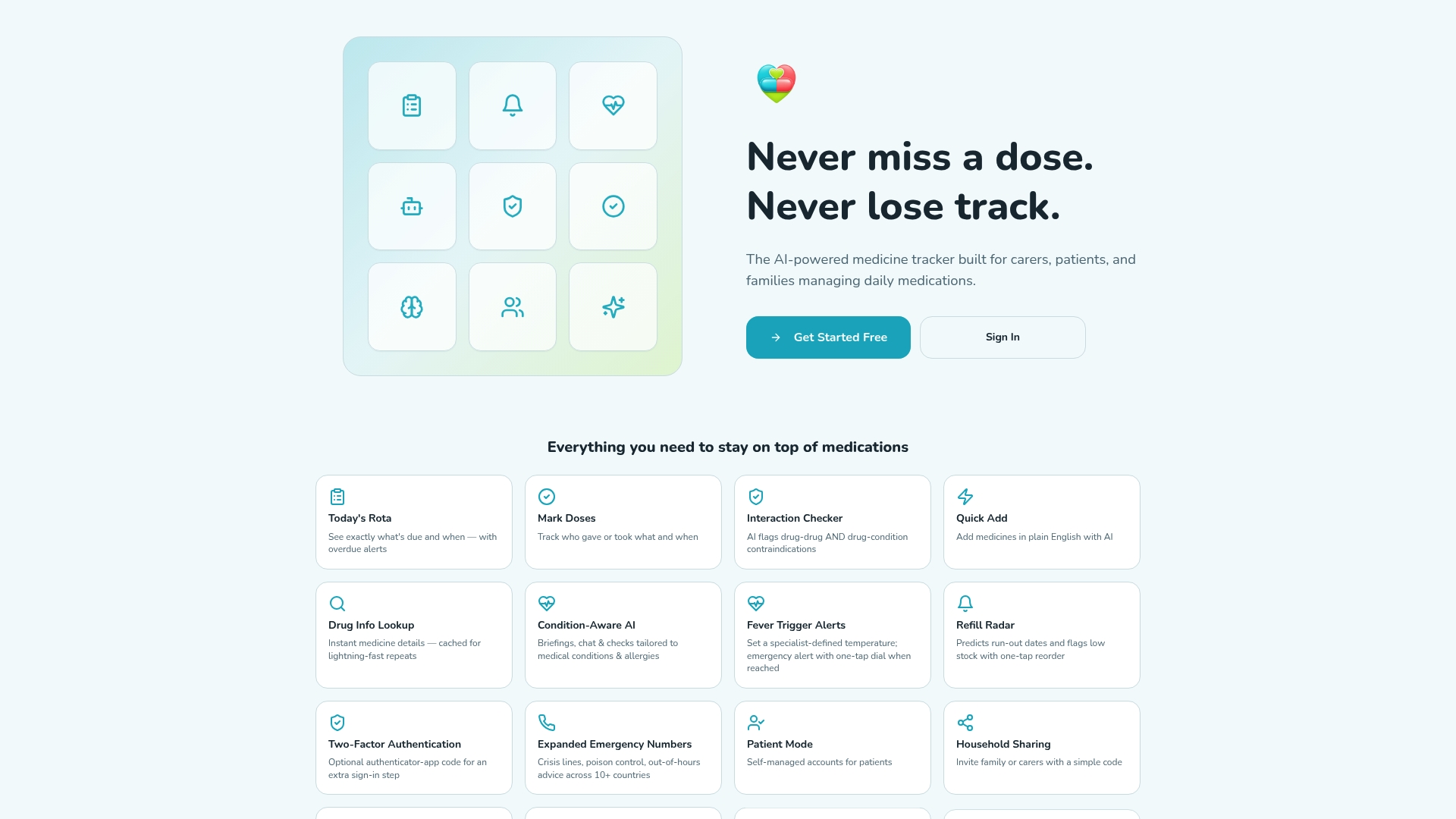
Rather than a single-function reminder app, Thedailydosetracker is a free medicine management platform built for carers, patients, and families managing complex medication routines. It combines real-time dose alerts, drug interaction checks, condition-specific guidance, refill predictions, and symptom logging in one place, with multi-patient household support and AI-powered insights that flag patterns a standard reminder app would miss entirely. It runs as a progressive web app across devices, complies with UK GDPR, and includes accessibility options like dark mode and adjustable fonts. For families caring for elderly relatives or managing multiple people's medications simultaneously, it addresses the coordination gap that individual apps leave open.
Key takeaways
The strongest medication timer alternatives in the UK span free open-source apps, pharmacist-endorsed trackers, and physical dispensers, each suited to a distinct user profile and level of technical confidence.
| Point | Details |
|---|---|
| Privacy-first choice | MedTimer stores all data locally with no registration, no cloud sync, and no third-party access. |
| Clinical depth | Medisafe is ranked number one by pharmacists out of 461 apps tested, with drug interaction checks and caregiver alerts. |
| Physical devices for elderly users | MedMinder and Hero provide locked dispensing and caregiver notifications for people who cannot reliably manage app-based reminders. |
| Notification channel matters | SMS and WhatsApp reminders bypass device silencing and improve real-world adherence compared to push-only systems. |
| Thedailydosetracker | A free, UK GDPR-compliant platform combining multi-patient tracking, AI insights, and real-time alerts for carers and families. |