
Choosing medication management software that is easy to share with carers and supports clinical compliance often takes too much trial and error. Many platforms target only enterprise healthcare or require long contracts and technical setup, blocking quick, shared use for carers and small teams. This comparison shows pricing, sharing features, and workflow strengths so carers and care providers can pick an alternative to dosedost.com with confidence.
Table of Contents
The Daily Dose Tracker
At a Glance
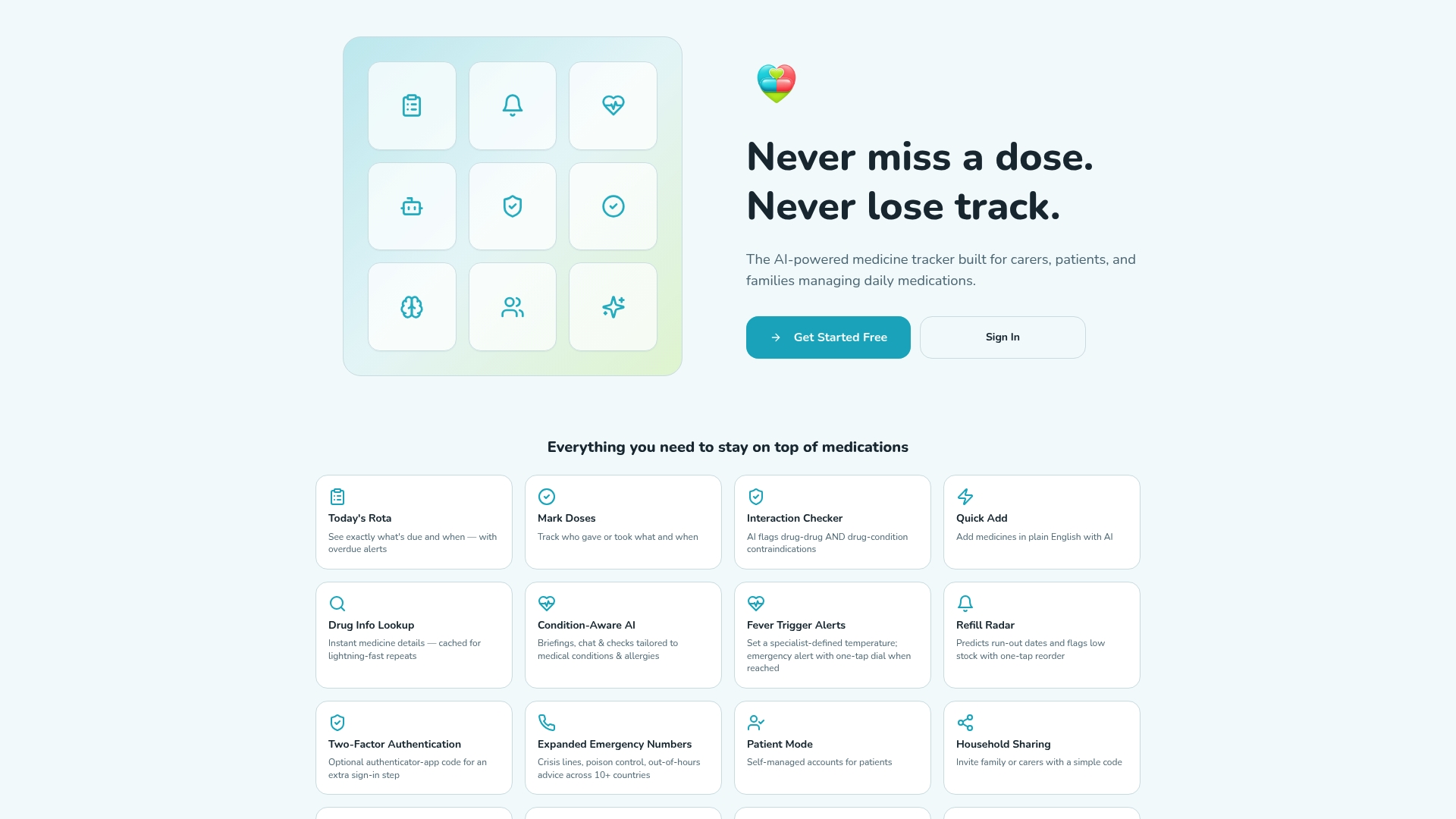
The app runs as a progressive web app that works across devices without installation. It pairs real-time dose reminders with AI-powered drug interaction alerts and household sharing. The vendor advertises compliance with UK GDPR. That combination makes it practical for family carers who need shared visibility and rapid updates.
Core Features
The Daily Dose Tracker keeps a live medication schedule and sends reminders for due and overdue doses. It uses natural language medicine entry with AI, offers medication information lookup, and raises interaction and contraindication alerts. The app supports household sharing, multi patient management, emergency contact integration, symptom logging, appointment scheduling, and accessibility settings such as dark mode and adjustable fonts.
Key Differentiator
The single distinct capability is the link between AI interaction alerts, plain-language medicine entry, and household sharing. That trio reduces manual entry and surfaces potential interactions to everyone in the care circle. For carers, this shortens the time needed to add or update treatment and helps the whole household stay aligned.
Pros
The Daily Dose Tracker covers both individual and team workflows by letting carers and nurses share schedules and notes across devices. Its AI features help flag interactions and produce condition aware briefings and chat support for patients and carers, which speeds common safety checks. The progressive web app design means no installation is required, so the app works on phones, tablets, and desktop browsers. A free tier exists that covers essential reminders and shared schedules, while paid plans unlock extended history and export features.
Cons
- AI alerts are informational only and do not replace professional medical advice. Users must consult a clinician for diagnosis or treatment decisions.
Who It's For
Family carers who need shared oversight will find the app useful. Patients who want to self-manage daily medicines and keep a clear log can use the plain-language entry. Care teams and nurses who coordinate across shifts benefit from household sharing and the ability to assign medicines to multiple people.
Unique Value Proposition
Natural language medicine entry with AI lets carers add prescriptions and doses using plain text rather than rigid forms. That reduces friction for people entering complex regimens and for households where several relatives update the same schedule. The result is quicker onboarding for a new medicine and fewer transcription errors when family members share responsibility.
Real World Use Case
A caregiver sets up an elderly parent on a weekly schedule and types a short prescription phrase into the app. The AI parses the entry, schedules reminders, and adds interaction checks. The caregiver shares access with two family members and the GP, so everyone sees doses, missed reminders, and a brief symptom log.
Pricing
The Daily Dose Tracker offers a free plan plus two paid tiers. Individual costs £2.99 per month. Pro costs £5.99 per month. Paid plans add unlimited history, PDF export, and advanced features.
Website: https://thedailydosetracker.com
EveryDose
At a Glance
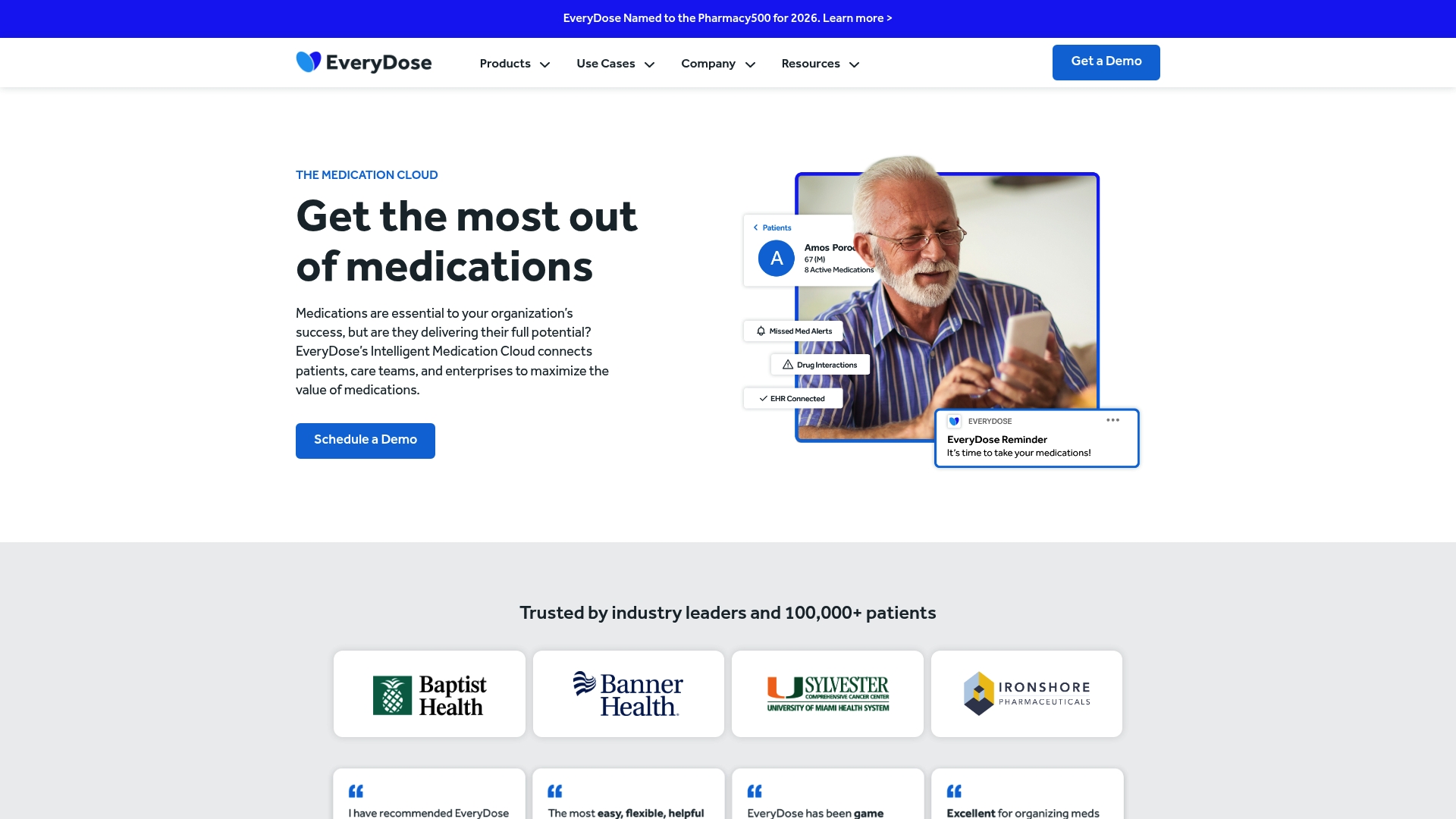
Integrates directly with Epic, Cerner and Apple Health while supporting FHIR standards. The platform combines medication instructions, safety checks, adherence tools and analytics in a single workflow. According to the company, it connects patients, care teams and enterprises through mobile apps and clinical portals.
Core Features
EveryDose provides a medication management mobile app and a clinical platform that can operate standalone or integrate with EHRs. The system includes next generation medication instructions labelled as MedGuides, medication safety checks, patient education content and ePROs for patient reported outcomes. Analytics and stratification use EHR and claims data to highlight patients who need intervention.
Key Differentiator
The core distinguishing element is the combination of medication instructions, safety, adherence and analytics inside one connected platform. That mix aims to let care teams manage instructions and follow up without switching tools. The vendor positions the product for enterprise deployments that must link patient apps with clinical systems.
Pros
EveryDose groups medication instructions and safety tools with adherence features and analytics, which helps teams act on risky prescriptions and missed doses. EHR integrations reduce duplicate documentation and can speed medication reconciliation for clinicians. The vendor states HIPAA compliance, and the platform connects to common health systems and standards, which supports enterprise data workflows.
Cons
- Limited platform details and user reviews make it hard to judge daily usability for carers and clinicians.
- Most public material reads as marketing, so independent performance feedback is scarce.
- Integrations may be complex and require in-house technical expertise for setup and maintenance.
When It May Not Fit
Organisations without existing digital infrastructure or EHR capability will struggle to deploy EveryDose effectively. Smaller practices lacking IT resource may find the implementation overhead too high. Teams seeking a consumer-only medication reminder app will find the enterprise focus a poor match.
Notable Integrations
- Epic Systems
- Cerner
- Allscripts
- Apple Health
- FHIR standards
Who It's For
Healthcare organisations, payers and pharma companies that need to improve medication use, safety and adherence through integrated digital tools will benefit most. Health systems with an EHR and a technical team are the primary fit. Private practices that already use supported EHRs may also gain from the clinical features.
Real World Use Case
A health system links EveryDose to its EHR to simplify medication reconciliation and reduce documentation errors. Care teams receive analytics that flag patients with low adherence and target outreach. Patients access medication instructions and education through the mobile app while clinicians see adherence data in the clinical portal.
Pricing
Pricing is not listed publicly and appears informational only. Prospective buyers must contact EveryDose for contract terms and deployment costs.
Website: https://everydose.ai
Medisafe
At a Glance
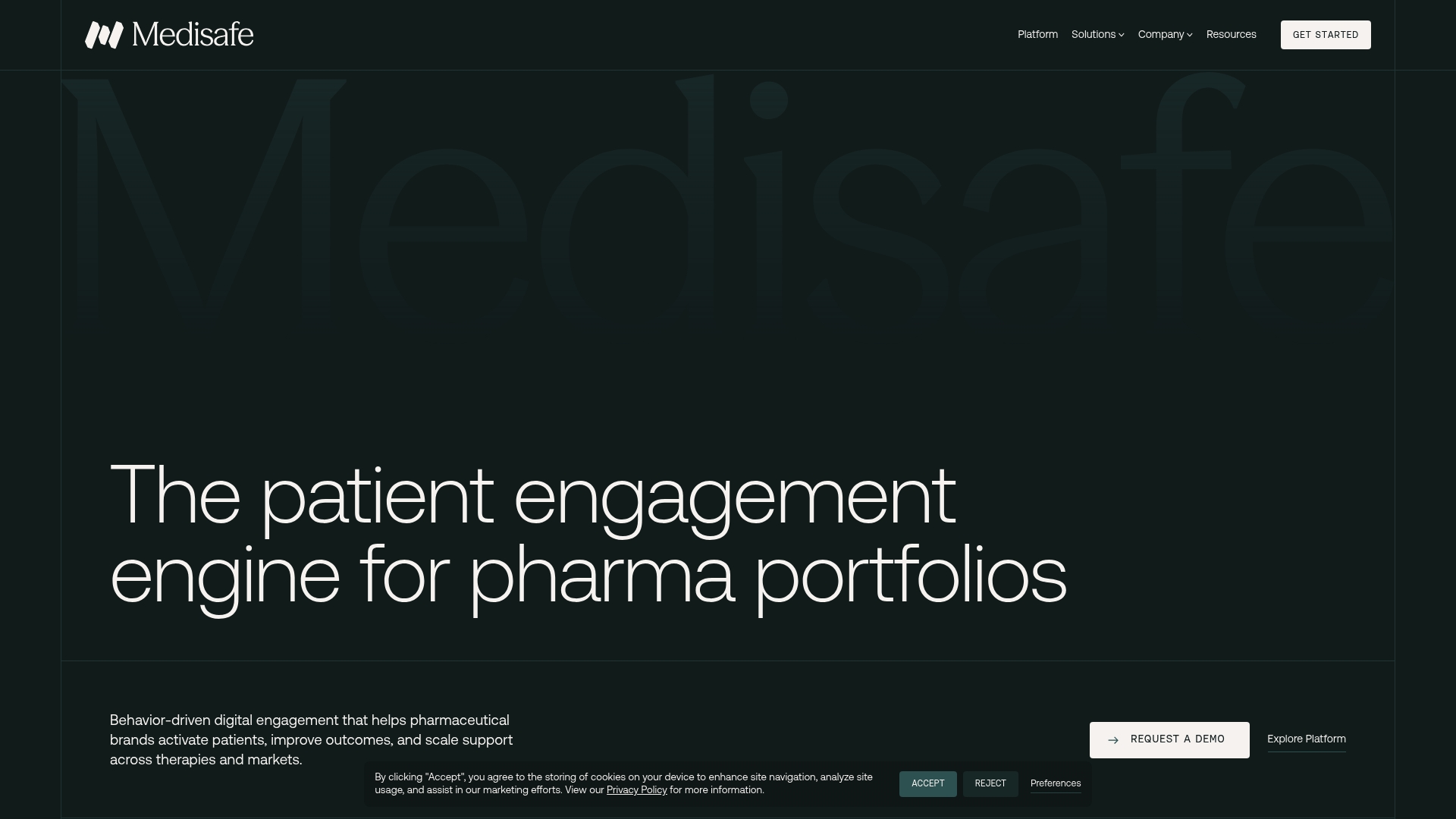
Medisafe reports supporting millions of patients worldwide across over 150 countries. That global scale underpins its work with pharmaceutical brands and health systems rather than one-off consumer apps. The platform centres on medication adherence, patient education and care coordination for complex therapies.
Core Features
Medisafe combines tailored medication reminders and daily schedules with condition specific educational content. The platform includes tools for family and carers, behaviourally informed nudges driven by patient data, and multichannel outreach through app notifications, SMS, email and voice calls. It also offers campaign and brand customisation for pharma partners.
Key Differentiator
The vendor advertises independent research linking its programmes to measurable outcomes, including claims of up to 50x ROI and improved adherence and retention. That research focus positions Medisafe as a partner for organisations that need evidence to support investment in digital patient support.
Pros
According to the company, Medisafe has independent validation and large scale deployments that support long term programmes for chronic disease. Its feature set handles complex regimens and therapy specific content, which helps when daily schedules and co‑morbid conditions multiply patient tasks. Brand customisation and multichannel outreach make it straightforward for pharmaceutical teams to run targeted patient engagement campaigns while preserving localisation and compliance capabilities.
Cons
- Integration details are limited in the public materials, so EHR or API compatibility is unclear.
- Pricing is not specified, suggesting procurement targets enterprise customers rather than individuals.
- No explicit free tier or trial is described, which can slow evaluation for smaller providers.
When It May Not Fit
Organisations that need a transparent, self‑serve pricing model will find Medisafe a poor match because costs appear tailored to enterprise deals. Teams requiring guaranteed, documented EHR integrations may need to confirm technical fit during procurement. Small clinics or individual carers looking for a free or lightweight app will likely find the platform more than they need.
Who It's For
Pharmaceutical companies and healthcare providers running patient support programmes for complex therapies will gain most from Medisafe. It suits teams that need evidence of impact and brand level customisation rather than a consumer focused pill reminder app.
Real World Use Case
A pharmaceutical company used Medisafe to support a new chronic therapy launch and reported improved patient adherence and retention in programme materials. Teams cite that research when seeking budget for ongoing patient support, and use the platform to deliver condition specific education and care coordination.
Pricing
Public pricing is not listed. The vendor indicates custom or enterprise pricing models, which typically require direct engagement with sales for quotes and contract terms. Smaller organisations should expect a procurement process rather than an immediate subscription.
Website: https://medisafe.com
Careberry
At a Glance
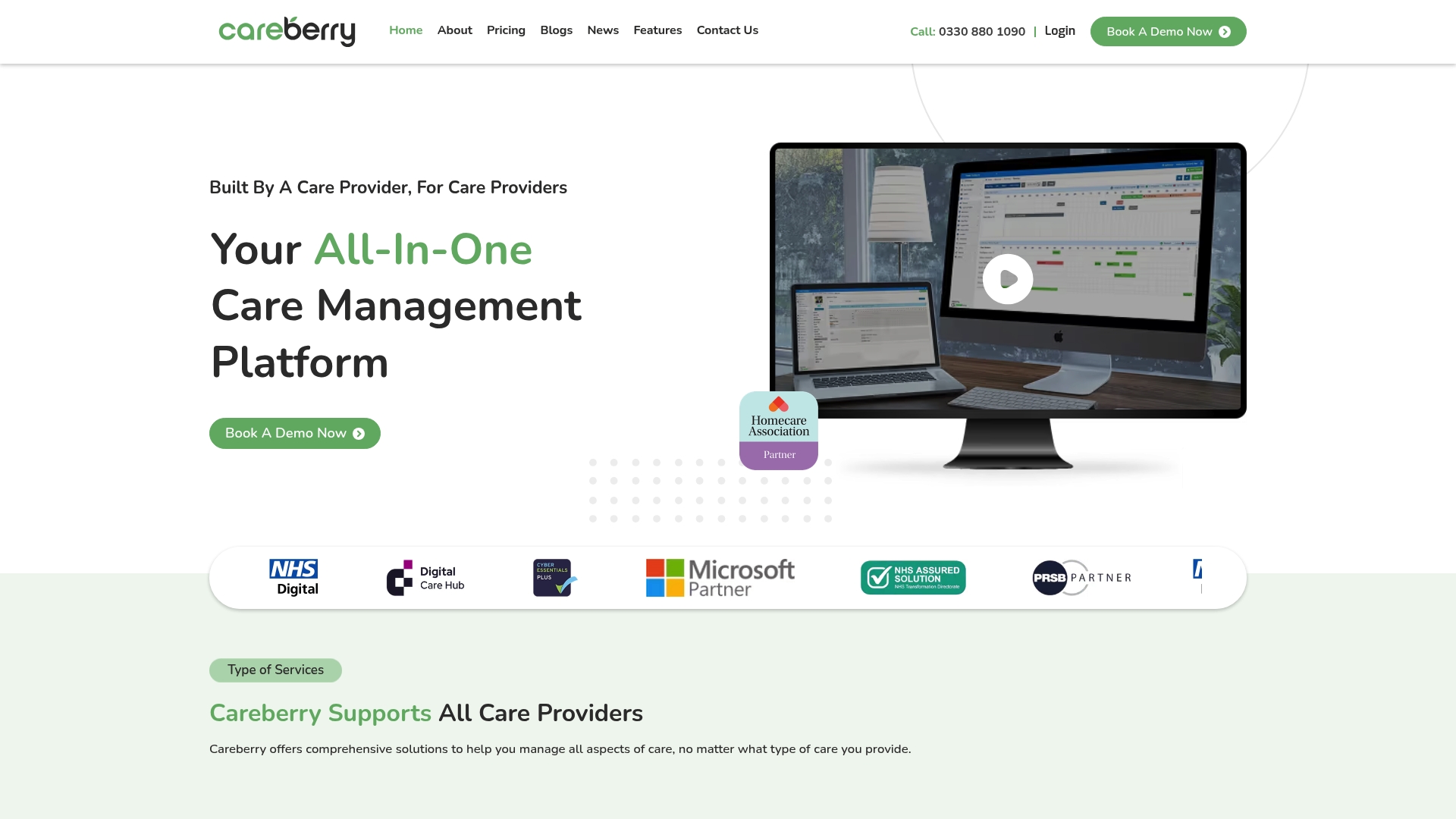
The Starter plan begins at £110.00 per month. That figure targets smaller care providers while larger organisations can request tailored enterprise pricing. The platform markets itself as covering rostering, medication eMAR, invoicing, care planning, and compliance in a single product.
Core Features
Careberry handles rostering and schedule management alongside digital care planning and real-time care monitoring. The system includes medication management with eMAR, alerts, and digital MAR charts, plus tools for automated invoicing and accounting integrations. It also provides incident reporting, audit logs, and training matrices to support compliance and record keeping.
Key Differentiator
Careberry was built by care providers for care providers. That operational pedigree shows in workflows tailored to homecare, care homes, supported living, and live-in care. The result is a platform that groups several care tasks under one roof rather than forcing teams to stitch several niche systems together.
Pros
The interface is widely reported as simple to use, which helps carers adopt mobile and desktop workflows quickly. Its all-in-one scope reduces the need to maintain separate rostering, medication, billing, and compliance tools. Pricing is presented as flexible, with no long-term contracts mentioned, and support and regular updates receive positive attention from customers. The product also supports a wide set of care service types, which suits providers that run multiple service lines under one management team.
Cons
- Onboarding times vary by organisation size and internal resources, which can extend initial rollout.
- Integration details beyond Sage and GP Connect are limited in public documentation.
- Enterprise costs are not listed openly, requiring a direct sales conversation for final figures.
When It May Not Fit
Teams that need broad third-party connector coverage out of the box may find Careberry restrictive. Organisations with complex IT estates should plan integration work for Sage and GP Connect and expect custom work for other systems. Very large providers seeking transparent enterprise pricing may prefer a product that publishes per-seat enterprise tiers.
Notable Integrations
Careberry lists integrations with Sage and GP Connect. Those connections cover accounting exports and clinical record linking for GP systems. The vendor provides direct integration configuration for those two platforms; broader connector support is not shown publicly.
Who It's For
Careberry suits care providers from small homecare teams to larger care home groups that want a single platform to manage rostering, care records, medication, and billing. The product also fits organisations with many non-technical staff, because the interface aims for straightforward daily use. Teams that require published enterprise pricing or wide connector libraries may need to compare alternatives.
Real World Use Case
A regional home care agency uses Careberry to allocate shifts, update client care plans from the field, and track medication administration through eMAR. Office managers run invoicing exports to Sage and monitor training and incident logs for regulatory checks. That setup reduces paperwork and centralises audits for a multi-branch operation.
Pricing
Starter plans begin at £110.00 per month. Pricing applies per user or per client, with discounts available for larger volumes. Enterprise and custom plans require a direct quote from the vendor.
Website: https://careberry.com
Comparison of alternatives
When comparing available medication management software, each offers unique advantages targeted towards varied user needs.
Integration and platform connectivity
EveryDose clearly excels in supporting integrations with established electronic health record (EHR) systems such as Epic and Cerner. Additionally, it implements analytics features to provide insights into patient adherence and risk stratification. This makes EveryDose a strong candidate for institutions equipped with technical teams for software implementation, particularly in environments focused on integrated digital health solutions. In contrast, The Daily Dose Tracker's offerings are designed for broader accessibility without requiring prior system integration, making it a better match for individual caregivers and family applications.
Scalability and enterprise-targeted features
Medisafe’s focus on scalability, evidenced by its deployment across over 150 countries and alignment with pharmaceutical patient support programs, represents its strength in catering to large-scale organisational needs. engagement tools and multichannel outreach capabilities make it particularly suitable for pharmaceutical companies aiming to implement condition-specific care strategies. As these features are less concerned with household-level management, users outside expansive commercial or medical enterprises may find Medisafe’s offering less applicable to their medication tracking efforts.
Best fit
- Family carers needing shared oversight of medication schedules and interactions should consider The Daily Dose Tracker, which provides AI-driven insights linked with convenient sharing features.
- Institutions prioritising advanced EHR and patient data analytics integration would benefit most from EveryDose’s functionalities.
- Pharmaceutical enterprises seeking custom brand and outreach programs will find Medisafe to be the most tool for their requirements.
- Small to medium-sized care provider teams requiring combined rostering, medication management, and compliance monitoring can explore Careberry as a tailored solution.
Our pick
The Daily Dose Tracker stands out as the most user-friendly option for individuals and family caregivers due to its integration of AI-driven interaction alerts and household sharing capabilities, streamlining the medication management experience. However, enterprise users prioritising advanced integration with existing systems using established EHR standards might explore EveryDose instead.
Here is a comparative overview to aid in selecting the appropriate medication management software based on features, usage, and pricing.
| Product | Core Features | Best For | Pricing | Notable Limitation |
|---|---|---|---|---|
| Thedailydosetracker | Medication management, AI alerts, family sharing | Family carers and individuals | Free, tiers £2.99–£5.99 pm | AI alerts informational, consult professionals |
| EveryDose | Medication instructions, safety checks, EHR integration | Healthcare organisations | Price not published | Complex EHR setup requires IT expertise |
| Medisafe | Tailored reminders, multichannel outreach, pharma campaigns | Pharma and chronic therapy support teams | Price not published | Enterprise-focused, no free or trial options |
| Careberry | Rostering, eMAR, invoicing, care planning, compliance | Home and care providers | Start £110 per month | Limited 3rd-party connector flexibility |
Which dosedost.com Alternative Best Supports Your Medication Management Needs?
The search for dosedost.com alternatives often highlights key challenges carers, patients, and care teams face: simple medicine entry, reliable interaction alerts, and shared visibility across household and clinical circles. Thedailydosetracker addresses these concerns by combining natural language medication input with AI-powered interaction checks and real-time dose reminders. This platform supports multi-patient management and household sharing through a progressive web app that works on phones, tablets, and desktops without installation.
Features that make a difference include:
- AI alerts for potential drug interactions
- Symptom logging and appointment scheduling
- Emergency contact integration and accessibility options
Explore Thedailydosetracker to see how carers and patients improve adherence and reduce errors. Import your medication plan using plain language and keep your household aligned with instant updates.
FAQ
How does Thedailydosetracker help with medication scheduling for family carers?
Thedailydosetracker effectively manages live medication schedules and sends reminders for due and overdue doses. Its ability to support household sharing and real-time updates makes it practical for family carers needing shared visibility. Consider using Thedailydosetracker to keep your family aligned on medication schedules.
What is the difference between EveryDose and Thedailydosetracker?
EveryDose integrates directly with systems like Epic and Cerner, streamlining medication instructions and safety checks for healthcare organisations. Thedailydosetracker, however, is designed for family carers wanting an easy-to-use app with features like plain-language medicine entry and shared oversight. This makes Thedailydosetracker a better fit for individual and team workflows among family members and patients.
Can I track multiple patients with Thedailydosetracker?
Yes, Thedailydosetracker supports multi-patient management, allowing carers to oversee the medications of several individuals efficiently. This feature, combined with shared schedules, enhances collaboration among care teams and family members. Families looking to manage multiple patients can rely on Thedailydosetracker for its comprehensive capabilities.
Do I need to install Thedailydosetracker on all my devices?
No, Thedailydosetracker functions as a progressive web app, which means it works across devices without needing installation. This flexibility enables family carers and patients to access the app on phones, tablets, or desktop browsers with ease. For those wanting hassle-free access, Thedailydosetracker is a convenient choice.
What features does Thedailydosetracker offer for emergency management?
Thedailydosetracker includes features such as emergency contact integration and symptom logging, which supports comprehensive care planning during emergencies. The combination of these functions helps families prepare for urgent situations effectively. If you're looking for a tool that equips you for emergency care scenarios, Thedailydosetracker is well-suited for this purpose.