

A personal daily medication routine is a structured system of habits and tools that ensures medications are taken correctly, safely, and on schedule. Without one, the consequences are significant. Non-adherence affects 75% of people who have been prescribed medication. That figure represents missed doses, worsening conditions, and preventable hospital admissions. Building personal daily medication routine habits is not about willpower. It is about designing a system that removes the need for willpower entirely. This article walks you through the tools, steps, and strategies that make adherence reliable, drawing on evidence-based techniques including habit stacking, regimen simplification, and digital support from platforms like Thedailydosetracker.
What are the essential tools for building your medication routine?
Preparation is the foundation of any reliable medication management plan. Before you set a single reminder or buy a pill organiser, you need a complete picture of every substance you take. The FDA recommends keeping a comprehensive medication list that covers all prescriptions, over-the-counter medicines, vitamins, and supplements. That list prevents errors and gives every healthcare provider you see the same accurate starting point.
Understanding your medication instructions
Each medicine on your list carries specific requirements: dosage, timing, whether to take it with food, and what to avoid alongside it. Some medicines must be taken on an empty stomach. Others require a gap of several hours from certain foods or other tablets. Reading the patient information leaflet for each item is not optional. Misunderstanding a single instruction can reduce a medicine's effectiveness or cause a harmful interaction.
Choosing the right organisational tools
Once you know what you are taking and when, you need the right physical and digital tools to support your routine. The table below compares the most common options.

| Tool | Best for | Limitation |
|---|---|---|
| Daily pill organiser | Simple, single-dose regimens | Requires daily refilling |
| Weekly pill organiser | Multiple medicines, multiple times per day | Bulky; needs weekly sorting ritual |
| Monthly blister pack | Complex regimens managed by a pharmacy | Less flexible for dose changes |
| Digital reminder app | All regimen types | Relies on phone access and battery |
| Printed medication calendar | Older adults or low-tech households | No automatic alerts |
Weekly pill organisers reduce missed doses by up to 25%, particularly when matched to the complexity of your regimen. That reduction is meaningful because even one missed dose of certain medicines, such as blood pressure tablets or anticoagulants, can have clinical consequences.
Consulting your healthcare provider before you start
Before finalising your routine, speak with your GP or pharmacist. They can identify drug interactions that need monitoring and may be able to simplify your regimen. Many people take medicines that could be consolidated into fewer daily doses without losing effectiveness. That conversation is worth having before you build a routine around a schedule that could be made simpler.
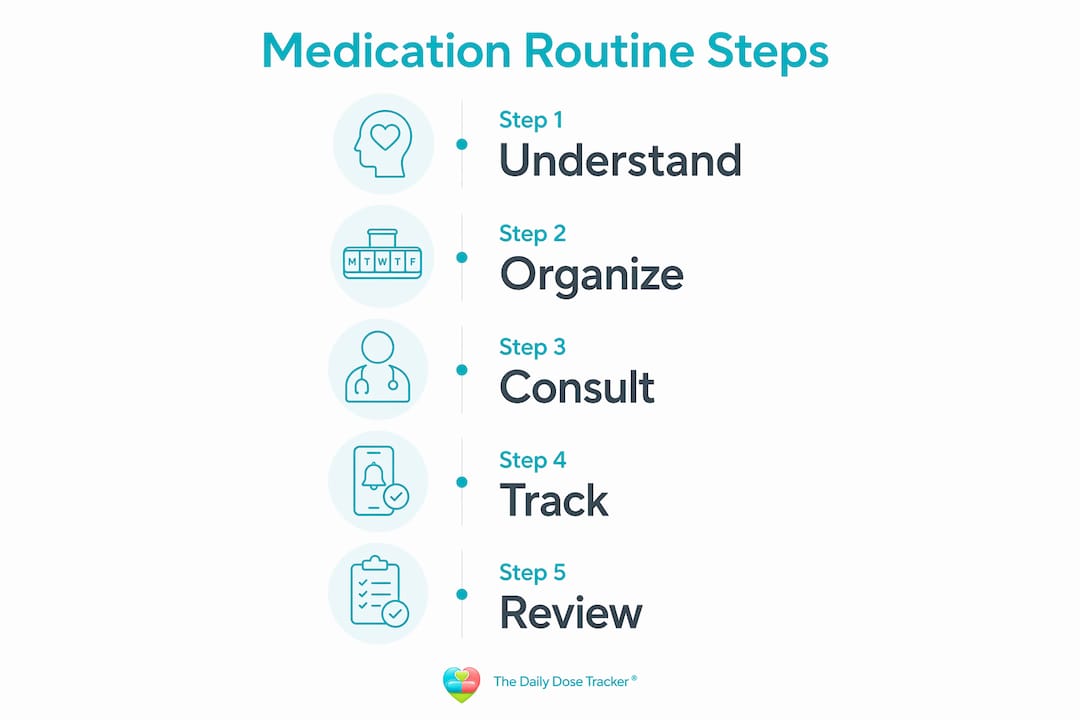
How to build your daily medication routine step by step
The most reliable routines are built on habit stacking, a cognitive strategy that anchors a new behaviour to an existing one. Dr. Robert L. Page II identifies habit stacking as a method that leverages natural brain patterns to automate adherence rather than relying on conscious effort. The result is a routine that runs on autopilot rather than intention.
Follow these steps to create yours:
-
List all your medicines and their required times. Group morning, midday, evening, and bedtime doses separately. This gives you a clear picture of how many anchor points you need.
-
Choose one existing daily habit for each dose time. Brushing your teeth, making coffee, eating breakfast, and getting into bed are all reliable anchors. Pairing medication intake with tooth brushing improves adherence rates to 72%. That figure rises to 78% when the habit pairing is consistent across all dose times.
-
Set up your weekly pill organiser on the same day each week. Sunday evening works well for most people. Treat the sorting session as a fixed appointment, not an optional task.
-
Place your pill organiser where the anchor habit happens. If your morning anchor is making coffee, put the organiser next to the coffee machine. Physical environmental cues placed near essential daily items provide critical reminders that complement digital alerts.
-
Set a digital reminder for each dose time. Use your phone's built-in alarm or a dedicated medication reminder app. The reminder should fire five minutes before your anchor habit begins, not at the exact moment you need to take the medicine.
-
Track each dose as you take it. A simple tick on a printed medication calendar reduces missed doses by 32% according to clinical trial evidence. The act of recording a dose reinforces the habit and creates a log you can share with your doctor.
-
Set a refill reminder 7 to 10 days before each medicine runs out. Early refill alerts prevent gaps in treatment that can undo weeks of consistent adherence.
Pro Tip: Pick one anchor habit and protect it. If your morning routine changes, your medication routine changes with it. Choose the most consistent habit in your day, not the most convenient one.
What are common challenges and how do you troubleshoot them?
Regimen complexity is the single biggest barrier to consistent adherence. The more doses per day and the more medicines involved, the higher the chance of a missed or doubled dose. Switching to once-daily dosing where clinically appropriate reduces regimen complexity by up to 40%. Ask your pharmacist whether any of your medicines have a once-daily formulation.
Memory lapses are the second most common problem, and technology alone does not solve them. A phone alarm is easy to dismiss and forget. The most effective routines combine digital alerts with physical cues to counteract over-reliance on any single system. If you silence your alarm and walk away, the pill organiser sitting next to your coffee machine is your backup.
Common troubleshooting points to address:
- Skipping doses when travelling. Pack a travel pill organiser and pre-sort doses before you leave. Set time-zone-adjusted reminders on your phone the night before departure.
- Adding a new medicine mid-routine. Revisit your full medication list and anchor points. A new midday dose may need a new anchor habit entirely.
- Running out of a medicine unexpectedly. Contact your pharmacy for an emergency supply and set your refill reminder earlier going forward.
- Forgetting whether you took a dose. A medication calendar or a digital log removes all doubt. Never guess and double-dose.
- Side effects disrupting the routine. Log symptoms alongside your doses. Thedailydosetracker includes a symptom logging feature that links recorded symptoms to specific medicines, making it easier to spot patterns.
Pro Tip: Integrate symptom tracking from day one. Side effects that appear in the first two weeks are often the reason people quietly stop taking a medicine. Catching them early gives you and your doctor the chance to adjust before adherence breaks down.
How to maintain your medication routine long term
Sustaining a routine requires the same deliberate design as building one. The "refill ritual" is one of the most effective maintenance tools available. Pairing your weekly pill sorting with a consistent leisure activity, such as a Sunday evening television programme or a cup of tea, reduces missed doses from 30% to under 5%. The leisure activity makes the task feel less like a chore and more like a fixed, pleasant habit.
Castle Pines Care stresses that medication management is a coordinated effort involving patients, carers, pharmacists, and doctors. That means your routine should not exist in isolation. Share your medication list with every healthcare provider you see, including dentists and walk-in clinic staff. An outdated or incomplete list is a safety risk.
The table below outlines the key maintenance tasks, how often to do them, and what supports each one.
| Maintenance task | Recommended frequency | Useful tool |
|---|---|---|
| Review full medication list | Every 6 months or after any change | GP appointment, Thedailydosetracker |
| Check for drug interactions | At every new prescription | Pharmacist, Thedailydosetracker |
| Refill all medicines | 7–10 days before running out | Pharmacy app, calendar reminder |
| Sort weekly pill organiser | Weekly, same day and time | Weekly organiser, leisure anchor |
| Log doses and symptoms | Daily | Medication calendar, digital tracker |
For those managing prescriptions across multiple conditions, the review step is particularly critical. New medicines can interact with existing ones in ways that only become apparent over time. A six-monthly medication review with your GP or pharmacist is the safety net that catches those changes before they cause harm.
Key takeaways
A personal daily medication routine built on habit stacking, physical cues, and regular healthcare reviews is the most reliable method for achieving consistent, long-term adherence.
| Point | Details |
|---|---|
| Start with a complete medication list | Include all prescriptions, OTCs, vitamins, and supplements before building any routine. |
| Use habit stacking as your foundation | Anchor each dose to an existing daily habit to automate adherence without relying on memory. |
| Combine digital and physical reminders | Pill organisers placed near anchor habits back up digital alerts when phones are ignored. |
| Build a weekly refill ritual | Sorting medicines on the same day each week, paired with a leisure activity, keeps supply consistent. |
| Review your routine every six months | Regular checks with a pharmacist or GP catch interactions and simplify regimens over time. |
What I have learned from watching routines succeed and fail
By Prasant
The single most common mistake I see is treating medication adherence as a memory problem. People buy a pill organiser, set one alarm, and assume the system will hold. It rarely does. What actually works is environmental design. When the pill organiser is sitting next to the coffee machine and the alarm fires before the kettle boils, the routine becomes almost impossible to skip.
The second thing I have learned is that complexity is the enemy of consistency. A person taking seven medicines at four different times of day is not going to maintain perfect adherence through willpower. The moment I see a complex regimen, my first question is always: can this be simplified? Often, the answer is yes, and one conversation with a pharmacist changes everything.
What surprises most people is how quickly a routine becomes invisible. After two or three weeks of consistent habit stacking, the behaviour stops feeling like a task. It becomes as automatic as locking the front door. The goal is not to remember to take your medicine. The goal is to make forgetting it feel strange.
Technology plays a real role, but only as a layer on top of good environmental design. Digital tools like Thedailydosetracker add genuine value when they sit inside a routine that already has physical anchors. Without those anchors, even the best app becomes another notification to dismiss.
— Prasant
How Thedailydosetracker supports your medication routine
Thedailydosetracker is built for exactly the kind of structured, habit-based routine this article describes. The platform lets you log every medicine, set dose-time reminders, and track each dose as it is taken, all in one place.
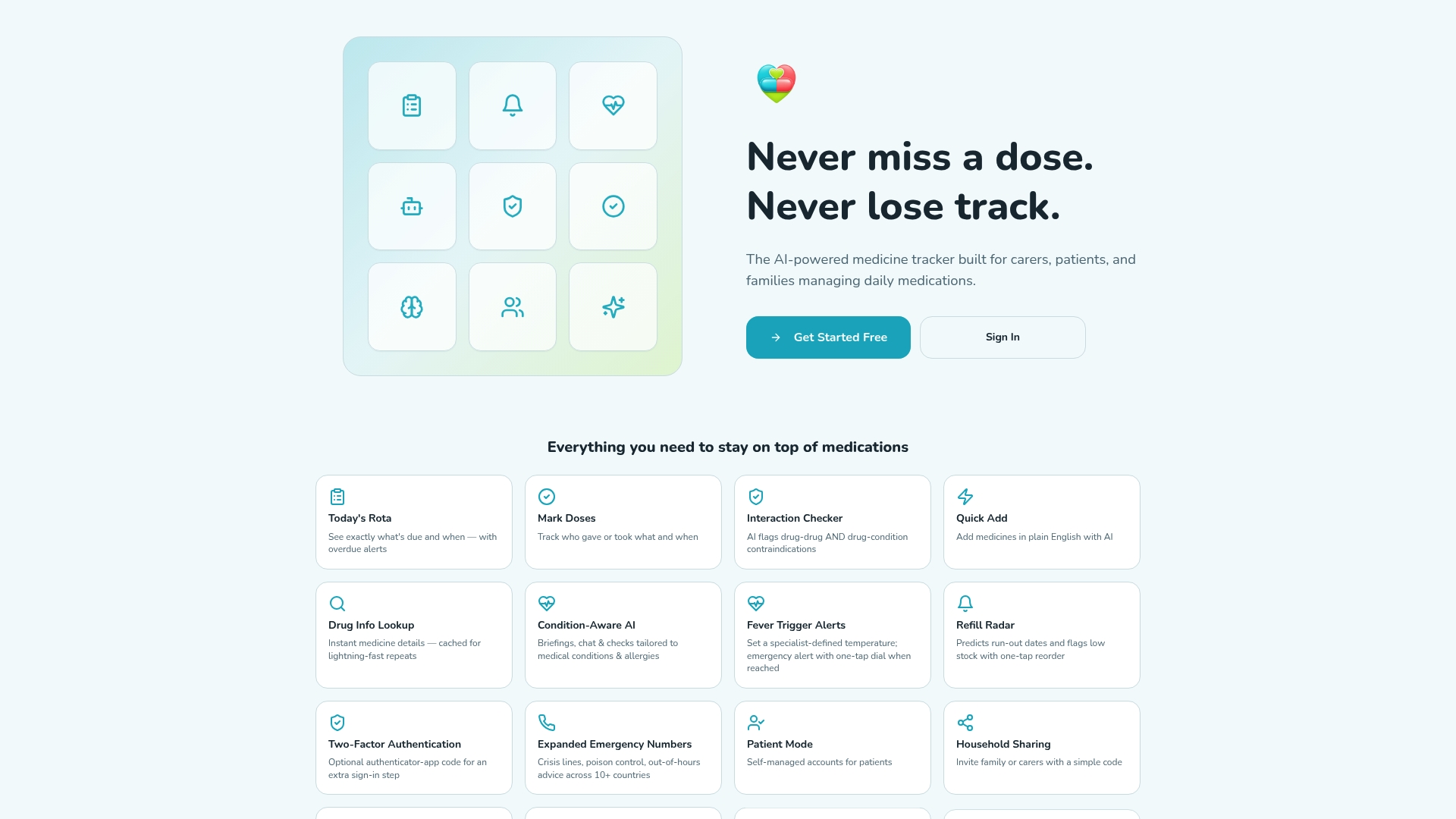
Carers managing medicines for a family member can use the shared access feature to monitor doses remotely and receive alerts for missed or overdue medicines. The symptom logging tool links recorded symptoms to specific medicines, which makes your six-monthly GP review far more productive. Thedailydosetracker also generates medication reports you can bring to any healthcare appointment, giving your doctor or pharmacist an accurate, up-to-date picture. Try the free medicine tracker and see how it fits alongside the strategies covered here.
FAQ
What is a personal daily medication routine?
A personal daily medication routine is a structured set of habits and tools that ensures medicines are taken at the correct times, in the correct doses, every day. It typically combines a pill organiser, fixed dose times anchored to existing habits, and a tracking method.
How does habit stacking improve medication adherence?
Habit stacking anchors a new behaviour, such as taking a tablet, to an existing daily habit like brushing teeth or making coffee. This approach improves adherence rates to 72–78% by removing the need to remember the action consciously.
How do I track medications effectively at home?
A printed medication calendar or a daily medicine checklist where you tick off each dose as you take it is the simplest method. Digital platforms like Thedailydosetracker automate this process and add dose-time alerts.
How often should I review my medication routine?
Review your full medication list with a GP or pharmacist every six months, or immediately after any new prescription is added. Regular reviews catch drug interactions and identify opportunities to simplify your regimen.
What is the best way to avoid running out of medication?
Set a refill reminder 7 to 10 days before each medicine runs out. Tying your refill request to a fixed weekly habit, such as your Sunday pill-sorting session, prevents the gaps in treatment that disrupt even well-established routines.