

Drug interaction screening in nursing is defined as the systematic process of identifying and managing adverse effects that arise when medications interact with other drugs, foods, supplements, or a patient's existing medical conditions. It functions as the final safety barrier before medication administration. Nurses rely on tools such as Electronic Health Record (EHR) alerts, mobile databases like Micromedex and Lexicomp, and the Six Rights of Medication Administration to carry out this process. Understanding drug interactions in nursing is not optional. It is a core clinical competency that directly determines whether a patient is harmed or protected.
What is drug interaction screening in nursing?
Drug interaction screening is the systematic process of identifying and managing adverse effects from drug, food, supplement, or medical condition interactions, acting as the final safety barrier before medication administration. The term used in clinical practice is "medication interaction review," though "drug interaction screening" is the widely recognised phrase in nursing education and policy. Both refer to the same structured process of checking for harmful combinations before a dose reaches the patient.
Nurses carry out this review at every medication administration point. They cross-reference a patient's full medication list against known interaction databases, clinical guidelines, and the patient's reported diet and supplement use. The Six Rights of Medication Administration, which cover the right patient, drug, dose, route, time, and documentation, provide the structural framework within which interaction screening sits.
The drug interaction nursing role extends well beyond clicking through an EHR alert. Nurses must interpret alerts, weigh clinical context, and decide whether to proceed, hold, or escalate. That judgement separates competent medication management from mechanical task completion.

What are the common types of drug interactions nurses should screen for?
Nurses encounter four main categories of drug interactions in clinical practice. Each carries distinct risks and requires a different screening approach.
- Drug-drug interactions occur when two or more medicines alter each other's effects. A classic example is warfarin combined with NSAIDs such as ibuprofen. The NSAID inhibits platelet function and can displace warfarin from plasma proteins, significantly raising bleeding risk.
- Drug-food interactions change how a drug is absorbed or metabolised. Grapefruit juice inhibits the CYP3A4 enzyme, causing some statins and calcium channel blockers to accumulate to toxic levels. Vitamin K-rich foods such as spinach and kale directly antagonise warfarin's anticoagulant effect and are frequently overlooked during patient assessment.
- Drug-supplement and herbal interactions are among the most commonly missed. St John's Wort induces CYP enzymes and reduces the plasma concentration of drugs including oral contraceptives, antiretrovirals, and ciclosporin. Patients rarely volunteer supplement use unless directly asked.
- Drug-disease interactions occur when a drug worsens an existing condition. Beta-blockers, for example, are contraindicated in patients with uncontrolled asthma because they can trigger bronchospasm.
The significance of drug interactions also depends on timing. Latent interactions such as enzyme induction may take a week or more to produce clinical symptoms. A nurse who screens only at the point of prescribing and then disengages will miss these delayed effects entirely. Ongoing monitoring is not a secondary task. It is part of the screening process itself.
Pro Tip: When a patient displays an unexpected clinical response, treat drug interaction as a primary differential, not an afterthought. Unexplained symptoms are frequently the first sign of an undetected interaction.
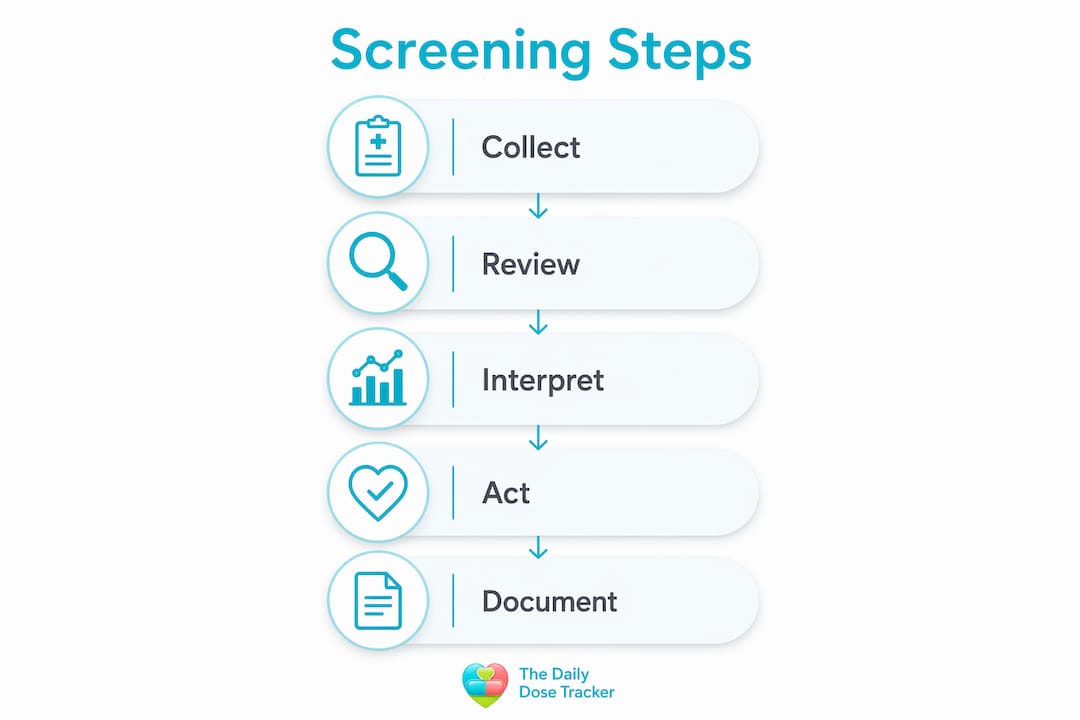
Which tools and resources support effective drug interaction screening?
Nurses draw on a combination of digital and manual resources to detect and manage interactions. Each tool has strengths, and each has blind spots.
- EHR clinical decision-support alerts flag known interactions automatically when a prescriber or nurse enters a medication order. They are fast and consistent, but they generate a high volume of low-severity alerts, which leads to alert fatigue and routine dismissal.
- Mobile drug databases such as Micromedex and Lexicomp provide detailed interaction data, severity ratings, and clinical management guidance. They are particularly useful when EHR alerts lack explanatory depth.
- Official formularies and pharmacology references such as the British National Formulary (BNF) remain authoritative sources for interaction data, especially for less common drug combinations.
- Direct patient history-taking is the tool that digital systems cannot replicate. EHR alerts are essential but insufficient alone; unreported supplements and dietary habits require thorough clinical inquiry that no database can perform automatically.
- Interprofessional communication with pharmacists and prescribers closes the loop. Pharmacists carry specialist interaction knowledge that complements nursing assessment, and escalating concerns promptly prevents errors from progressing.
The importance of drug interaction screening lies precisely in this layered approach. No single tool catches everything. A nurse who relies solely on EHR pop-ups without asking about over-the-counter medicines, herbal products, or diet will have genuine blind spots in their medication safety process.
Pro Tip: Before administering any new medication, ask the patient three direct questions: "Are you taking any vitamins or supplements?", "Have you changed your diet recently?", and "Are you using any medicines you bought without a prescription?" These questions surface the interactions that databases cannot detect.
What competencies must nurses have to manage complex regimens safely?
Nursing competence in medication management is built on knowledge, clinical experience, and communication skill. All three are required. None is sufficient alone.
Nurses' competence in managing complex regimens such as warfarin therapy is linked to advanced education and clinical experience rather than demographic factors. This finding matters because it means competence is teachable and improvable. A nurse who invests in pharmacology education and seeks out complex medication cases will become demonstrably safer over time.
Consider a patient on warfarin who is also taking a course of antibiotics. Certain antibiotics, particularly metronidazole and fluconazole, inhibit the metabolism of warfarin and can cause the INR to rise sharply. A nurse who understands this interaction will monitor the INR more frequently, counsel the patient about bleeding signs, and communicate the risk to the prescriber. A nurse who does not will administer the antibiotic and wait for a problem to appear.
The nursing responsibilities around drug interactions include four specific competencies:
- Pharmacological knowledge: Understanding mechanisms of action, metabolic pathways such as CYP450 enzymes, and known high-risk combinations.
- Patient counselling: Explaining interaction risks in plain language, including dietary restrictions and signs of adverse effects to watch for.
- Clinical monitoring: Checking relevant parameters such as INR, blood pressure, or renal function at appropriate intervals after medication changes.
- Documentation and escalation: Recording observations accurately and escalating concerns to prescribers or pharmacists without delay.
Pro Tip: When managing anticoagulant therapy, create a brief written summary for the patient listing the foods, medicines, and supplements to avoid. Verbal counselling alone is rarely retained. Written information reinforces the message and gives patients something to reference at home.
How does clinical observation complement digital screening tools?
Digital tools identify interactions that are already documented. Nurses identify interactions that are happening in front of them. These are not the same function, and both are necessary.
Nurses detect early-stage and subtle interactions through behavioural and physiological observations that EHR alerts often miss. A patient who becomes unusually drowsy after a new sedative is added to their regimen may be experiencing a potentiation effect. A patient whose blood pressure drops unexpectedly after a dose change may be showing the first sign of an additive hypotensive interaction. These signals appear at the bedside before they appear in any database.
The following observations should prompt immediate investigation of a possible drug interaction:
- Sudden changes in consciousness or alertness
- Unexplained changes in heart rate or blood pressure
- New onset of nausea, vomiting, or gastrointestinal bleeding
- Unusual bruising or prolonged bleeding from minor wounds
- Skin reactions including rash, flushing, or urticaria
- Changes in urine output or colour suggesting renal impact
Assistant nurses act as critical eyes and ears for early detection of drug-related problems, but they often lack specific interaction competence. Integrating them into ward rounds and medication reviews improves the team's overall detection capability. A registered nurse who briefs their assistant on what to watch for after a medication change multiplies the team's observational capacity.
Latency in drug interactions means that some effects, particularly those caused by enzyme induction, appear only after several days or a week. Pre-administration screening catches the risk. Ongoing observation catches the reality. Both phases of the drug screening protocol for nurses are non-negotiable.
Pro Tip: Document every observation that deviates from a patient's baseline after a medication change, even if it seems minor. A single entry may appear insignificant. A pattern across several entries often reveals an interaction that would otherwise go undetected until it becomes serious.
Key takeaways
Drug interaction screening in nursing requires layered vigilance: digital tools identify documented risks, while direct patient questioning and clinical observation catch what databases miss.
| Point | Details |
|---|---|
| Core definition | Drug interaction screening is the systematic review of all potential harmful interactions before medication administration. |
| Four interaction types | Nurses screen for drug-drug, drug-food, drug-supplement, and drug-disease interactions at every administration point. |
| Digital tools have limits | EHR alerts and databases cannot detect unreported supplements or dietary habits; direct questioning is non-negotiable. |
| Competence is teachable | Advanced pharmacology education and clinical experience directly improve a nurse's ability to prevent adverse drug events. |
| Observation extends screening | Clinical monitoring after administration catches delayed interactions that pre-administration checks cannot predict. |
Prasant's view: why technology alone will never be enough
I have worked alongside nurses managing genuinely complex medication regimens, and the pattern I see repeatedly is this: the nurses who catch dangerous interactions are not the ones with the most sophisticated software. They are the ones who ask the right questions and watch the patient carefully after the dose goes in.
EHR alerts are a starting point, not a conclusion. Alert fatigue is real. When a system flags every minor interaction with the same urgency as a life-threatening one, clinicians start dismissing alerts by reflex. The solution is not better software alone. It is nurses who understand enough pharmacology to triage alerts intelligently and who treat patient history-taking as a clinical skill rather than an administrative box to tick.
The competencies that matter most in 2026 are the ones that cannot be automated: asking a patient whether they are taking St John's Wort, noticing that a patient seems more confused than usual two days after a new prescription, and having the confidence to call a prescriber and say "I think we need to review this combination." Those moments require education, experience, and professional courage. No database provides any of those.
Continuous education is the only reliable path forward. Pharmacology changes. New interactions are documented regularly. A nurse who completed their training five years ago and has not updated their knowledge since is working with an incomplete picture. Build regular pharmacology review into your professional development, and treat every unusual patient response as a learning opportunity.
— Prasant
Thedailydosetracker: medication management support for carers and nurses
Managing medication schedules across multiple patients or family members is genuinely demanding work. Thedailydosetracker is a free medicine app built for carers, families, and healthcare teams who need reliable tools to track doses, monitor schedules, and receive real-time alerts for due or overdue medications.
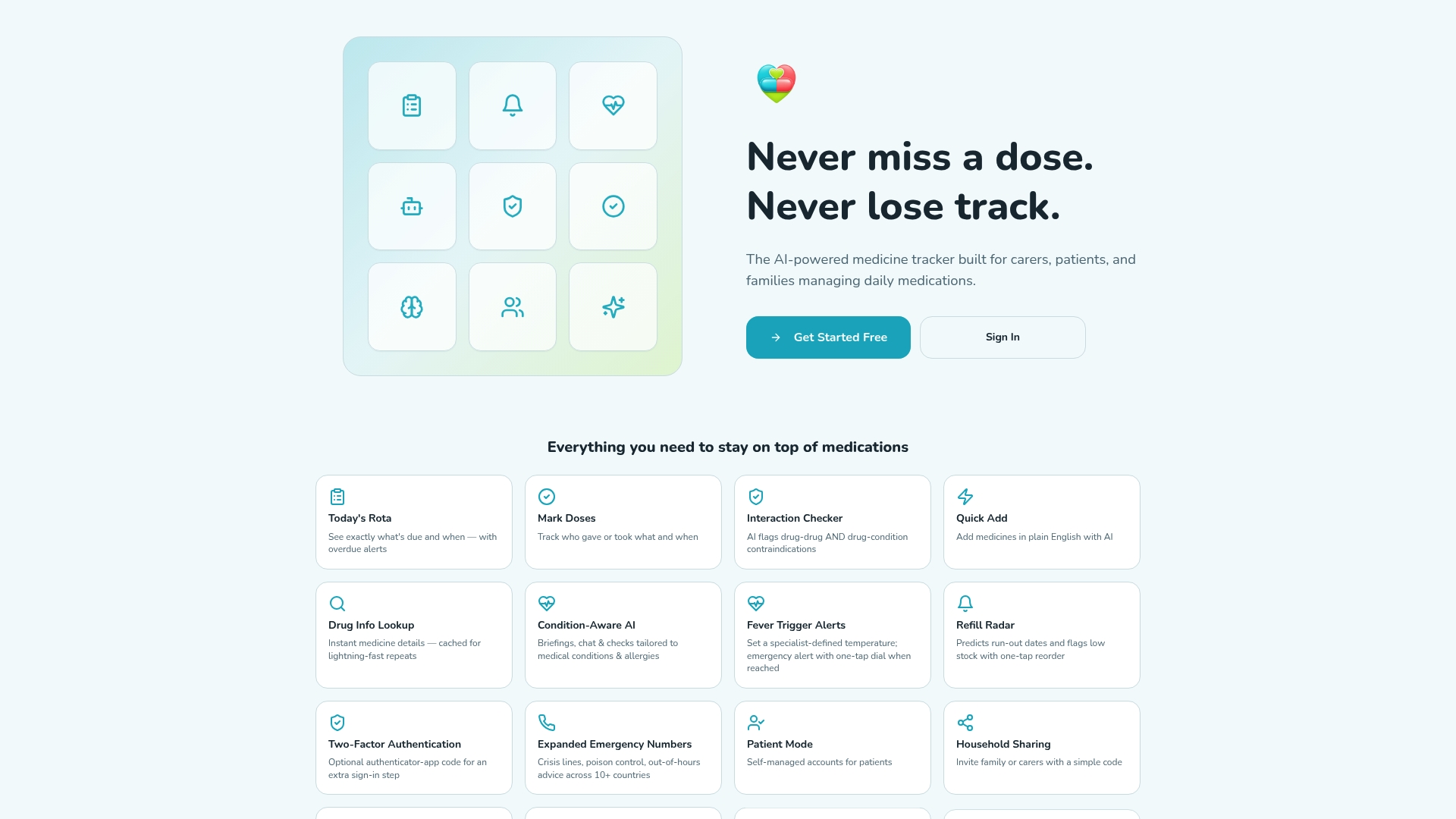
The platform includes built-in drug interaction checks, condition-specific guidance, and AI-powered insights that flag potential concerns before they become clinical problems. It supports multi-patient management and works across devices, making it practical for both home carers and professional care teams. Explore the available plans or visit the important links page to find the right option for your setting.
FAQ
What is drug interaction screening in nursing?
Drug interaction screening in nursing is the systematic process of identifying potential harmful interactions between a patient's medications, foods, supplements, and medical conditions before administration. It acts as the final safety check in the medication administration process.
Why is drug interaction screening important for nurses?
Drug interaction screening prevents adverse drug events that can cause serious patient harm, including bleeding, toxicity, and organ damage. Nurses are the last line of defence before a medication reaches the patient.
How do nurses screen for drug interactions?
Nurses use EHR clinical decision-support alerts, mobile databases such as Micromedex and Lexicomp, the British National Formulary, and direct patient questioning about supplements, diet, and over-the-counter medicines.
What drug interactions are most commonly missed?
Drug-supplement and drug-food interactions are the most frequently overlooked, because patients rarely volunteer information about herbal products or dietary habits unless directly asked.
Can digital tools replace clinical judgement in drug interaction screening?
Digital tools supplement but do not replace clinical judgement. EHR alerts cannot detect unreported substances or observe patient behaviour, making direct nursing assessment and ongoing monitoring irreplaceable components of safe medication management.