
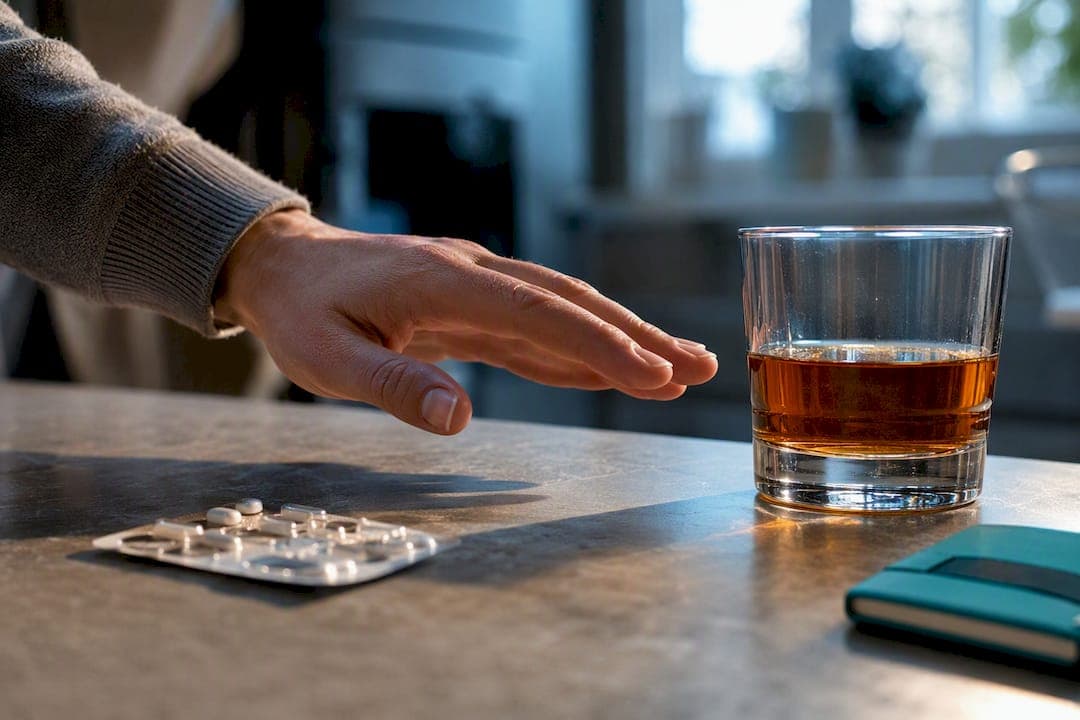
Mixing alcohol with many common medicines can be dangerous, and the only honest answer is to check before you drink. Opioids, benzodiazepines and paracetamol sit among the highest-risk categories, capable of causing dangerous sedation, breathing problems or liver damage when combined with alcohol. Do not drink until a pharmacist or your prescriber has confirmed it's safe with your specific medicine and dose, and if you develop severe drowsiness, breathing difficulty, confusion or seizures after mixing the two, treat it as a medical emergency.
TL;DR:
- Combining alcohol with opioids, benzodiazepines, or certain antidepressants significantly increases risks of respiratory depression, severe sedation, falls, or hypertensive crises.
- Chronic drinking enhances enzyme activity that can either reduce drug effectiveness or increase toxic metabolites, notably raising liver injury risk with paracetamol and alcohol.
- Antibiotics like metronidazole or tinidazole cause disulfiram-like reactions, leading to severe symptoms such as flushing, nausea, and rapid heartbeat within minutes of drinking.
- Early warning signs of dangerous interactions include difficulty breathing, severe drowsiness, and delayed symptoms like liver pain or bleeding, requiring immediate medical attention.
- Using a consolidated digital medicine list helps prevent unnoticed risky interactions, especially when managing multiple medicines or household members, by providing real-time alerts and comprehensive screening.
Table of Contents
- How alcohol and medication interactions actually happen
- Which medicines are genuinely dangerous to combine with alcohol?
- Recognising a dangerous reaction before it becomes an emergency
- Who faces higher risk from combining alcohol and medicines?
- A practical checklist for checking your medicines against alcohol
- What to do if you've already mixed alcohol and medication
- Timing rules: how long should you actually wait?
- How digital medication management reduces alcohol interaction errors
- What people consistently get wrong about alcohol and medicines
- Manage every medicine and alcohol risk in one place with Thedailydosetracker
- Sources
How alcohol and medication interactions actually happen
Two separate mechanisms explain nearly every alcohol and medication interaction you'll come across, and understanding them means you can spot risk in a medicine that isn't explicitly listed anywhere.
The first is pharmacodynamic interaction. This is where alcohol and a drug both act on the same system in the body, and their effects stack up rather than cancel out. The clearest example is central nervous system depression. Alcohol slows brain activity on its own. Add an opioid painkiller, a benzodiazepine like diazepam, or a sedating antihistamine, and the depressant effects don't just add together, they compound, sometimes unpredictably. You can feel perfectly fine after two drinks and a normal dose of your sleeping tablet, then find yourself far more impaired than either substance would cause alone.
The second is pharmacokinetic interaction, where alcohol changes how a drug is absorbed, broken down or cleared from your body. This mostly comes down to liver enzymes, particularly a group called cytochrome P450, and one enzyme in that family, CYP2E1, is central to how alcohol itself gets metabolised. Chronic drinking increases the amount of CYP2E1 the liver produces. That matters for two opposite reasons depending on the drug involved.
For some medicines, more enzyme activity means faster clearance, so the drug leaves your system before it has done its job properly, quietly reducing effectiveness. For others, particularly paracetamol, the same enzyme pathway that clears alcohol also converts part of the paracetamol dose into a toxic byproduct. Heavy or chronic drinkers produce more of that toxic metabolite and have depleted liver defences to mop it up, which is precisely why paracetamol combined with alcohol carries elevated liver injury risk, especially in people who drink regularly rather than occasionally.
A third pattern worth knowing by name is the disulfiram-like reaction. Certain drugs, most notably the antibiotics metronidazole and tinidazole, interfere with the enzyme that breaks down one of alcohol's metabolic byproducts, acetaldehyde. Acetaldehyde then builds up in the blood, and the result is an intensely unpleasant reaction: facial flushing, nausea, vomiting, headache, a racing heart and a drop in blood pressure, all typically starting within minutes of drinking. It isn't an allergy. It's a direct chemical bottleneck, and it's entirely predictable if you know the mechanism.
A comprehensive review of alcohol and medication interactions lays out these mechanisms across dozens of drug classes, and the pattern that emerges is consistent: the danger is rarely the alcohol alone or the drug alone, but the specific chemical overlap between them. Broadly, the interactions fall into four buckets:
- Additive sedation — alcohol plus any CNS depressant drug, amplifying drowsiness and slowing breathing.
- Enzyme competition — alcohol and the drug compete for the same liver pathway, causing one or both to build up to unsafe levels.
- Enzyme induction from chronic drinking — long-term alcohol use ramps up certain enzymes, which can alter drug metabolism in either direction depending on the pathway.
- Direct tissue irritation or toxicity — alcohol worsening stomach lining damage from NSAIDs, or straining an already-stressed liver alongside paracetamol.
None of this requires you to memorise biochemistry. It just means that "will this interact with alcohol" often has a mechanical answer rather than a mysterious one, and that answer usually sits behind one of those four categories.
Which medicines are genuinely dangerous to combine with alcohol?
Some classes deserve blanket caution rather than a case-by-case judgement call. UK regulatory guidance has become notably firmer on this point in recent years, with the MHRA strengthening dependency and addiction warnings on medicines used for pain, anxiety and insomnia, specifically because combining them with alcohol can dangerously suppress breathing and consciousness, occasionally fatally.
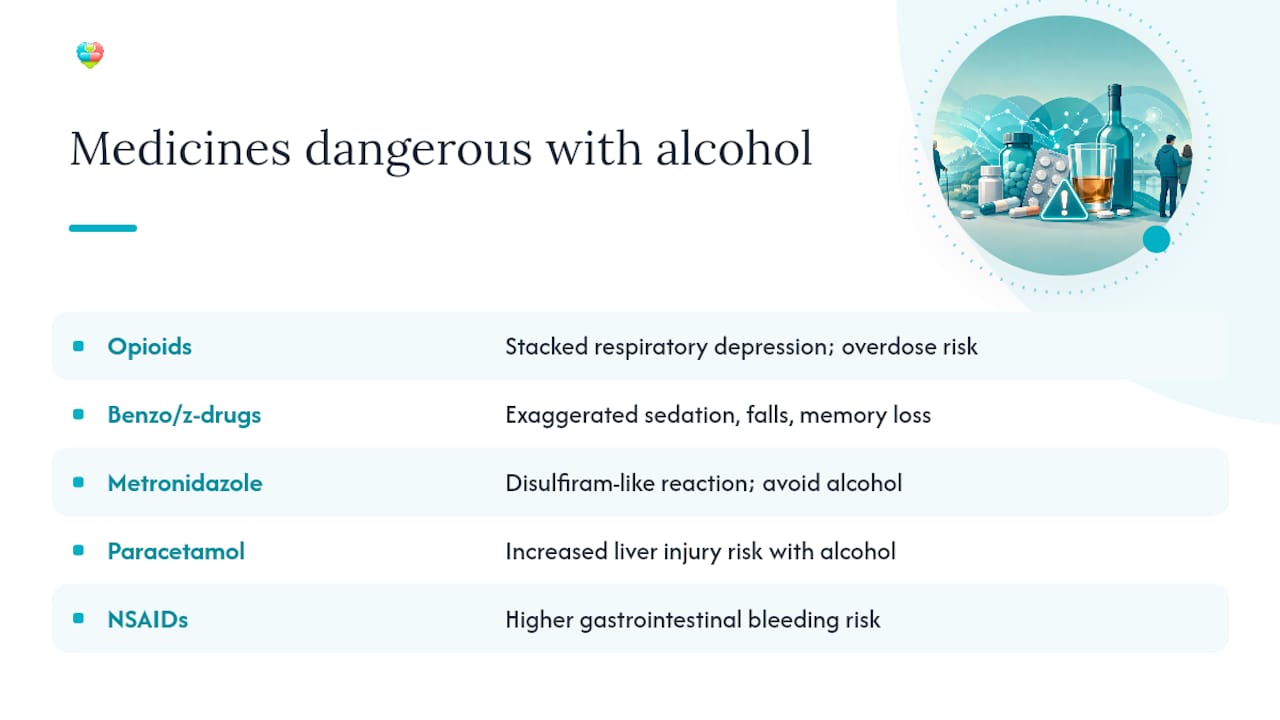
Opioids. Codeine, tramadol, morphine, oxycodone and similar painkillers slow breathing on their own at higher doses. Alcohol slows it further. The combination is one of the most common causes of accidental overdose death involving prescription medicines, because the respiratory depression from each substance stacks rather than simply adding a bit of extra drowsiness.
Benzodiazepines and z-drugs. Diazepam, lorazepam, diazepam, and z-drugs like zopiclone all depress the central nervous system to promote calm or sleep. Alcohol does the same thing through a different but overlapping pathway. Together they cause exaggerated sedation, memory blackouts, poor coordination and a sharply increased risk of falls, particularly dangerous in older adults.
Antidepressants. The risk varies by class. Older tricyclic antidepressants and some SSRIs increase sedation when mixed with alcohol. More seriously, monoamine oxidase inhibitors (MAOIs) can trigger a hypertensive crisis, a sudden dangerous spike in blood pressure, when combined with tyramine-rich drinks such as some beers and red wines. Alcohol can also lower the seizure threshold in people on antidepressants that carry seizure risk at higher doses.
Metronidazole and tinidazole. These antibiotics produce the disulfiram-like reaction described above. The NHS explicitly warns against drinking alcohol during treatment and for a period afterwards, precisely because of how unpleasant and occasionally severe the reaction can be.
Paracetamol. Widely regarded as one of the safest over-the-counter painkillers when used correctly, paracetamol becomes considerably riskier alongside alcohol, particularly with regular or heavy drinking, because of the liver enzyme competition described earlier.
NSAIDs. Ibuprofen, naproxen and aspirin all irritate the stomach lining, and alcohol does too. Combined, the risk of gastrointestinal bleeding rises meaningfully, and research suggests even a single daily drink can amplify NSAID-related bleeding risk rather than requiring heavy drinking to matter.
Anticoagulants. Warfarin's effect on blood clotting is notoriously sensitive to outside factors, and alcohol is one of them. Heavy drinking can unpredictably raise or lower your INR (the measure of how "thin" your blood is), sometimes increasing bleeding risk and sometimes reducing the drug's protective effect, which is why people on warfarin are usually advised to keep drinking modest and consistent rather than variable.
The common thread across every one of these classes is that alcohol rarely just "adds a bit more risk." It changes the shape of the risk entirely, turning a manageable side effect profile into something that can escalate quickly.
Recognising a dangerous reaction before it becomes an emergency
Knowing what a bad interaction actually looks like matters as much as knowing which drugs cause them, because the early signs are often subtle enough to dismiss as tiredness or a hangover.
-
Disulfiram-like reactions typically start within 10 to 30 minutes of drinking while on metronidazole or tinidazole. Watch for flushed skin, a throbbing headache, nausea that escalates to vomiting, and a noticeably fast heartbeat. It resolves as the alcohol clears, but it can feel alarming while it's happening and severe cases warrant medical attention.
-
Opioid-related respiratory depression creeps up gradually, then turns dangerous fast. Early signs include unusual drowsiness and slurred speech; the danger point is slow, shallow breathing, blue-tinged lips or fingertips, and unresponsiveness. This can progress from "seems very sleepy" to a life-threatening emergency within a short window, which is why it's treated as one of the most urgent alcohol and medication interactions.
-
Paracetamol-related liver injury is deceptive precisely because it's delayed. Someone can feel completely normal for a day or two after a heavy drinking session combined with paracetamol, then develop right-upper abdominal pain, nausea, and yellowing of the skin or eyes days later, by which point liver damage may already be underway.
-
Warfarin and alcohol don't produce one predictable reaction; they produce variable bleeding risk. Watch for unusual bruising, nosebleeds that won't stop, blood in urine or stool, or gums bleeding when brushing teeth. Anyone on warfarin who drinks heavily or irregularly should have their INR checked more frequently, since the number itself is the only reliable signal that something has shifted.
The pattern across all four is that the most dangerous reactions are rarely instant. They build, and the building phase is exactly when action still helps.
Who faces higher risk from combining alcohol and medicines?
Risk isn't evenly distributed. Some people face meaningfully higher danger from the same drink and the same dose that would barely register for someone else.
- Older adults clear alcohol from their system more slowly than younger people, and they're statistically far more likely to be on multiple medicines simultaneously, which multiplies the chance that one of them interacts badly.
- People with liver disease have reduced capacity to process both alcohol and many drugs, so the safety margin that protects most people shrinks or disappears entirely.
- Pregnant or breastfeeding people face risks to a developing baby or infant that go beyond standard drug interaction concerns, and the safest default is avoiding alcohol regardless of medication.
- Heavy or chronic drinkers have altered liver enzyme activity that changes how virtually every medicine behaves in their body, sometimes making drugs less effective and sometimes making them more toxic.
- Anyone on multiple sedating medicines — say, a sleeping tablet plus an antihistamine plus a muscle relaxant — is already stacking CNS depression before alcohol even enters the picture.
Clinical guidance is consistent on this point: older adults face compounded risk simply because slower metabolism and polypharmacy tend to arrive together.
Pro Tip: If you're caring for someone on several medicines, don't just check each drug against alcohol individually. Ask a pharmacist to review the whole list together, because combinations that look fine one at a time can still add up to dangerous overall sedation.
A practical checklist for checking your medicines against alcohol
You don't need a pharmacology degree to check this properly. You need four habits, done consistently, every time a new medicine enters the house.
- Read the patient information leaflet. UK medicine packaging carries explicit alcohol warnings where relevant, and the leaflet inside the box goes into more detail than the outer label ever will.
- Ask your pharmacist directly, and be specific: name the exact medicine, your dose, and how much alcohol you're realistically planning to drink. Vague questions get vague answers; specific ones get useful guidance, including safe timing if there is any.
- Use accredited sources rather than forums or guesswork. The NHS, the MHRA and peer-reviewed reviews like the one from Weathermon and Crabb are built on clinical evidence, not anecdote. A digital interaction check can flag risks faster than manually cross-referencing several leaflets, particularly when someone is on more than two or three medicines.
- Keep a cumulative household medicine list, not just a mental note of what's currently prescribed. Hidden ingredients in over-the-counter cold and flu remedies, herbal supplements, and combination products are a common blind spot, since people rarely think to check something they didn't get from a pharmacy counter.
- If you've been prescribed something high-risk, ask your prescriber for written guidance on timing, not just a verbal "probably best to avoid it." Written notes get followed; a half-remembered comment from a ten-minute appointment doesn't.
A medication review with a GP or pharmacist is worth arranging periodically anyway, but it becomes essential the moment you're juggling more than two or three regular medicines alongside any alcohol use at all.
What to do if you've already mixed alcohol and medication
If it's already happened, the priority is recognising severity quickly rather than working out exactly what went wrong.
- Call emergency services immediately for breathing difficulty, extreme drowsiness that's hard to wake someone from, confusion, seizures, or persistent vomiting that won't stop. These are not "wait and see" symptoms.
- For milder concerns, call NHS 111 or speak to a pharmacist, and have the medicine name, dose, timing, and roughly how much alcohol was consumed ready to describe. That detail speeds up the advice you get considerably.
- If paracetamol was involved, treat it seriously even without obvious symptoms, because liver injury from paracetamol can be silent for days before signs appear. If in doubt, get it checked rather than waiting to see how you feel.
Mixing alcohol with sedating medicines and other CNS depressants is linked to a meaningfully elevated risk of overdose deaths, falls and driving accidents, which is precisely why acting on early symptoms, rather than waiting to see if they pass, is the safer default every time.
Timing rules: how long should you actually wait?
There's no single number that works across every medicine, and any guide that gives you one fixed answer for "how long after medication can I drink" is oversimplifying a genuinely variable question.
The wait time depends on the drug's half-life (how long it takes your body to clear half the dose), how the enzyme pathways involved overlap with alcohol metabolism, and whether you drink occasionally or heavily and often. A drug cleared in a few hours behaves very differently from one that lingers in your system for days, and someone who drinks daily has already altered their liver enzyme activity in ways that change how any interacting drug behaves.
That said, some concrete rules of thumb do hold up well:
- Metronidazole or tinidazole: avoid alcohol during treatment and for 48 to 72 hours after finishing the course, since the disulfiram-like reaction risk persists until the drug has fully cleared.
- Paracetamol: there's no neat waiting window here, because the risk scales with how much and how often you drink rather than a fixed number of hours. The cautious approach for anyone who drinks regularly is to use paracetamol sparingly and never as a hangover remedy on top of heavy drinking.
- Sedating medicines generally: if a drug's leaflet or your pharmacist says it causes drowsiness, assume the sedative effect and the alcohol effect will overlap for as long as the drug remains active in your system, which is often longer than you'd expect from how it makes you feel.
Pro Tip: If you know a social occasion is coming up and you're on a course of antibiotics or a new prescription, ask your pharmacist about the timing before you fill the prescription, not after. It's far easier to plan around a course than to interrupt one.
Safer alternatives exist too. Non-alcoholic versions of your usual drink remove the guesswork entirely. Postponing a night out until after a short antibiotic course finishes is rarely a major sacrifice. And for anyone on long-term medication who drinks socially, a brief conversation with your prescriber about temporary dose timing around known events is a legitimate, sensible thing to ask for, not an overreaction.
How digital medication management reduces alcohol interaction errors
Most alcohol and medication mistakes aren't caused by recklessness. They're caused by fragmented information: one medicine from the GP, another from a pharmacy counter, a herbal supplement nobody thought to mention, and no single place where all of it sits together against a simple interaction check.
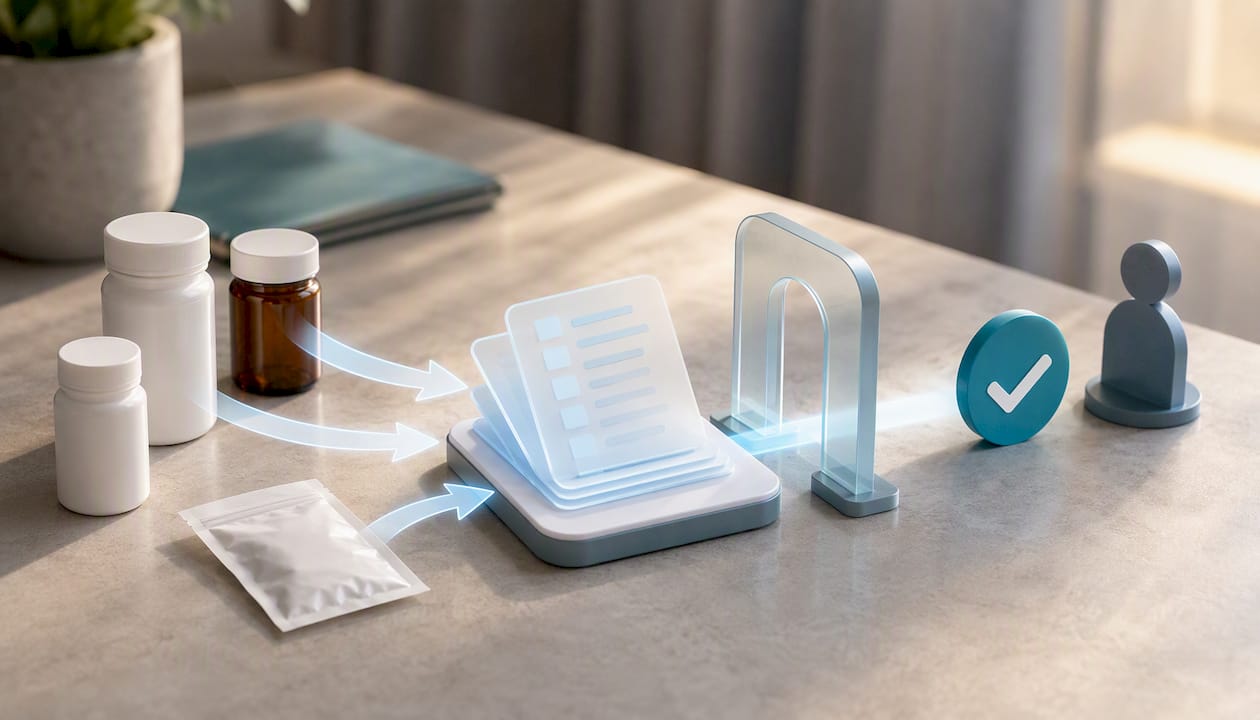
That's the specific gap a consolidated digital medicine list closes. When every medicine a person takes, prescription and over-the-counter alike, sits in one record, ingredient-level risks that get missed when people only read single-product labels become far easier to catch, because the system is looking at the whole picture rather than one box at a time.
Thedailydosetracker was built around exactly that problem. Relevant features for anyone managing alcohol-related risk include:
- Interaction screening across a household's full medicine list, not just one drug in isolation.
- Multi-patient management, useful for carers juggling medicines for several family members at once.
- Real-time alerts for doses that are due, overdue, or flagged as higher risk.
- Symptom logging, which helps track and communicate anything unusual after a medicine and alcohol have been combined.
- Emergency contact integration, so help can be reached quickly if a reaction turns serious.
The platform complies with UK GDPR standards and includes accessibility options like dark mode and adjustable font sizes, which matters for older carers managing several people's medicines at once. None of this replaces clinical judgement. A tool flags what deserves attention; a pharmacist or prescriber still makes the call on what to do about it, and that division of labour is exactly how it should work.
What people consistently get wrong about alcohol and medicines
The most persistent misunderstanding is a simple one: people assume that if a medicine's label doesn't shout an alcohol warning, it must be fine. That's backwards. Labelling conventions vary, warnings get missed on smaller packaging, and plenty of genuinely risky combinations, particularly involving OTC products and herbal supplements, carry no prominent warning at all. Absence of a warning is not evidence of safety. It's just an absence.
The second misunderstanding is treating "checking for interactions" as something you only do for prescription drugs. Some of the messiest cases involve combination cold and flu remedies, herbal sleep aids, or supplements bought without a second thought, stacked quietly on top of a prescribed medicine nobody flagged for cross-checking. A consolidated list, reviewed as a whole rather than item by item, catches exactly this kind of blind spot.
What tends to work in practice is treating a pharmacist check as routine rather than exceptional. Not something you do only when worried, but a standard step whenever a new medicine, a new supplement, or a change in drinking habits enters the picture. That habit alone would prevent a meaningful share of the reactions described earlier in this piece, simply because most of them stem from information nobody thought to connect rather than from genuine unpredictability.
If there's one thing worth taking from all of this, it's that alcohol and medication interactions are rarely mysterious once you know the mechanism behind them. They're just easy to miss when the information sits scattered across leaflets, memory and habit instead of in one place.
— Prasant
Manage every medicine and alcohol risk in one place with Thedailydosetracker
Checking each medicine against alcohol one leaflet at a time is slow, and it's exactly where household risks slip through. Thedailydosetracker consolidates every prescription, over-the-counter product and supplement into a single household list, then screens it for interactions automatically, so nothing gets checked in isolation and forgotten.
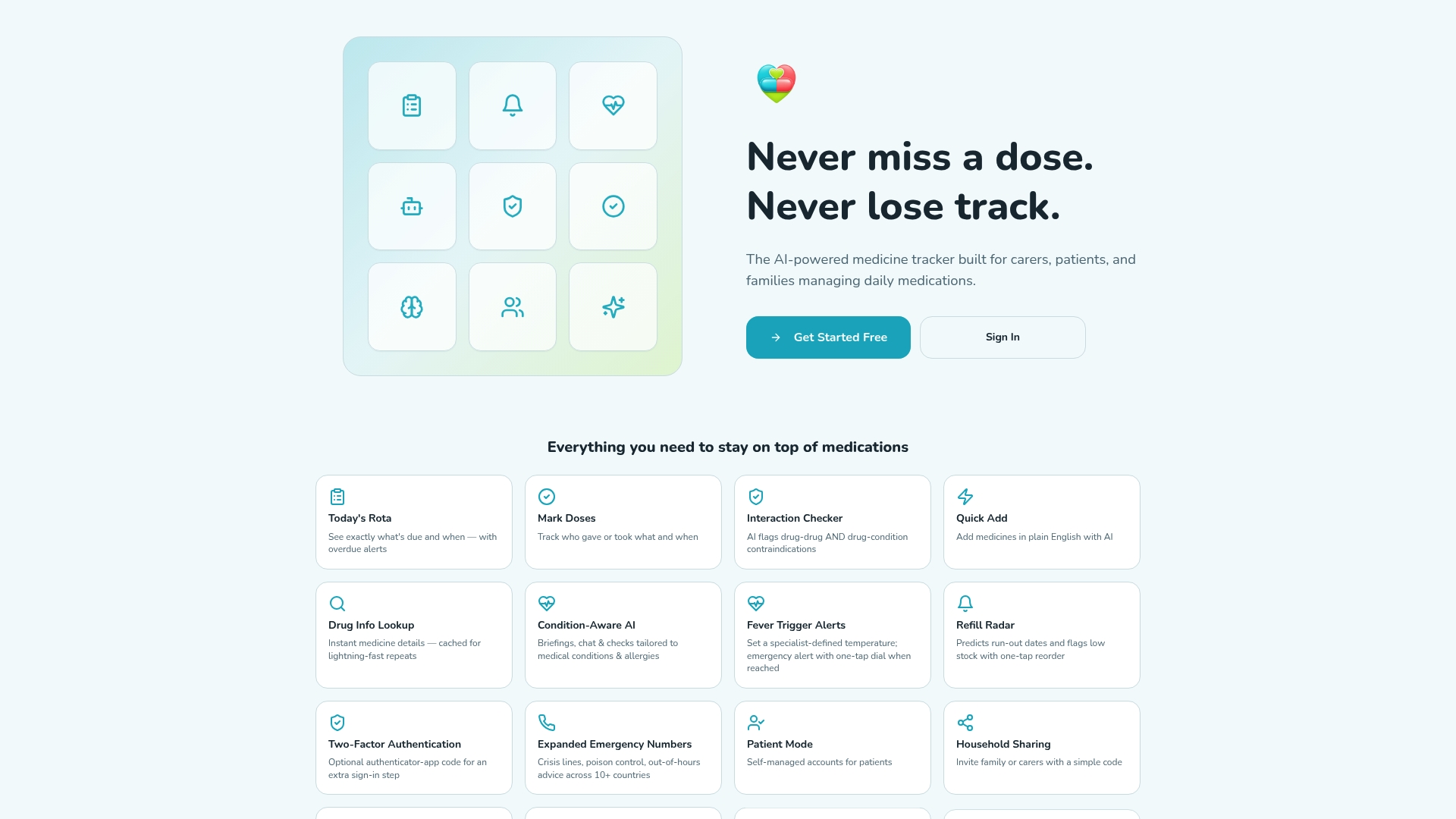
For carers managing several people's medicines, that consolidated view matters more than any single feature. You can build a household list, run an interaction check across everything in it, and switch on real-time alerts for doses that are due or flagged as higher risk, all from one account shared across the family. Symptom logging and emergency contact integration mean that if something does go wrong after alcohol and a medicine have mixed, the information needed to act quickly is already in one place rather than scattered across memory and paperwork. None of this replaces a pharmacist's advice on your specific medicines, and treatment decisions should always sit with your prescriber. Visit the Daily Dose Tracker's important links page to see the free tier and start building a household medicine list today.
This article is general information, not a substitute for advice from a qualified doctor. Consult a qualified healthcare professional about your own circumstances before acting on anything here.
Sources
- MHRA: strengthening dependency and addiction warnings on medicines used to treat pain, anxiety and insomnia
- Alcohol and Medication Interactions — Weathermon & Crabb (PMC review)