

A medication-related hospital admission (MRA) is an admission to hospital where a medicine, its side effects, an error in prescribing or taking it, or a patient's non-adherence is the main reason for admission or a significant contributing cause. Estimates suggest MRAs account for roughly 5% to 20% of hospital admissions, and a large share are potentially preventable. Two things worth knowing straight away: the MATCH study found that most admission medication errors trace back to inaccurate medication histories, and tools like The Daily Dose Tracker exist precisely to close that information gap before it causes harm.
- MRAs are not always caused by a mistake. Sometimes a correctly prescribed drug simply causes a known side effect that becomes serious enough to need hospital care.
- If you or someone you care for is being admitted, bring the actual medicine bottles, packets, or an exported digital list. It is the single most useful thing you can hand to admitting staff.
Key Takeaways
Medication-related hospital admissions are largely preventable, and the single strongest lever is an accurate medication history taken at the point of admission.
| Point | Details |
|---|---|
| Definition | An MRA is an admission where a medicine, an error, or non-adherence is the main or a major contributing cause. |
| Scale of the problem | Estimates put MRAs at roughly 5% to 20% of hospital admissions, with wide variation by definition. |
| Highest risk group | Older patients on ten or more medicines face the steepest discrepancy risk, odds ratio near 4.0. |
| Best single action | Bringing an accurate medication list or bottles at admission is linked to far lower odds of errors. |
| Practical next step | Thedailydosetracker lets carers keep an exportable, shared medication list ready before any hospital visit. |
Table of Contents
- What is medication-related hospital admission: definition and scope
- How common are medication-related admissions and who is most at risk?
- What causes most medication-related admissions?
- How do researchers identify and classify medication-related admissions?
- What harm do medication-related admissions actually cause?
- How can medication-related admissions be prevented?
- Can digital medication tools reduce hospital admission risk?
- What clinicians and carers should prioritise first
- How Thedailydosetracker helps close the medication information gap
- Frequently asked questions
- Sources
What is medication-related hospital admission: definition and scope
Researchers group MRAs into a handful of overlapping categories, and knowing the difference matters because prevention strategies differ for each.
- Adverse drug reactions (ADRs): an unwanted, often unpredictable response to a correctly prescribed and correctly taken drug. Example: a patient on a statin develops severe muscle pain and is admitted for suspected rhabdomyolysis.
- Medication errors: mistakes in prescribing, dispensing, or administration. Example: a patient is prescribed a dose of methotrexate intended for weekly use but takes it daily, leading to toxicity.
- Adverse drug events (ADEs): the broader category covering any harm from medicine use, whether or not an error occurred.
- Drug related problems: a catch-all term used in pharmacy literature for anything from a missed interaction check to inappropriate polypharmacy.
- Non-adherence: the patient does not take the medicine as intended, whether by choice, confusion, or cost. Example: an older patient stops a diuretic because of frequent toilet trips, then develops heart failure symptoms.
Not every bad outcome on medicine counts as an MRA. Adjudicating panels in research studies often disagree over cases where a disease is simply progressing versus where a drug has caused or worsened it. That grey area, more than anything else, explains why published incidence figures vary so much.
Definitions of what counts as "medication-related" shift between studies depending on whether researchers include near-misses, minor reactions, or only admissions with clear causal evidence. That variability is a methodological fact, not a flaw in any single study.
How common are medication-related admissions and who is most at risk?
Reported incidence ranges are wide. A literature overview covering older patients found figures spanning 0.5% to 19.3% depending on the case definition used and the population studied. That spread reflects real methodological differences, not sloppy research: a study counting only severe, clearly causal admissions will report a much lower rate than one counting any medicine-related contributing factor.
Age is the dominant risk driver. Older patients take more medicines, have reduced kidney and liver function that alters how drugs are cleared, and are more likely to see several different prescribers who may not know each other's decisions. A study focused mainly on older patients found that roughly 50% experienced a medication history error at the point of admission, with omission the single most frequent mistake.
Beyond age, the recurring risk factors identified across studies include:
- Polypharmacy, generally defined as taking five or more regular medicines, with risk rising sharply above ten.
- Cognitive impairment, which makes self-reporting of current medicines unreliable.
- Renal or hepatic impairment, which changes drug clearance and increases toxicity risk.
- Multiple prescribers or pharmacies, since no single clinician sees the full picture.
- Living independently without community care support, which one study linked to higher error rates, likely because there is no third party checking the medicine routine.
Prevalence figures also hinge on how researchers detect problems in the first place. A study relying on structured clinical adjudication panels tends to find more subtle cases than one relying purely on hospital coding data, which only captures what a clinician wrote down.
What causes most medication-related admissions?
Most MRAs trace back to a handful of recurring failure points rather than a long list of exotic causes. An observational mixed-methods study found prescribing errors on 46.2% of medication charts at admission, and omissions, simply leaving a regular medicine off the new chart, made up the overwhelming majority of those errors.
The common error types are:
- Omission, where a maintenance drug is dropped from the admission chart, often because nobody asked or the patient forgot to mention it.
- Wrong dose or frequency, particularly with drugs that have narrow safety margins.
- Drug interactions, missed when a new prescription is added without checking existing medicines.
- Anticoagulation and insulin management errors, both high-stakes because the margin between therapeutic and dangerous doses is narrow.
- Monitoring failures, where a drug requiring regular blood tests (lithium, warfarin, certain chemotherapy agents) is continued without the checks being done.
Certain drug classes turn up again and again in the literature: anticoagulants and antiplatelets, insulin and other antidiabetics, cardiovascular agents such as diuretics and antihypertensives, NSAIDs, digoxin, anticonvulsants, and antidepressants. A typical vignette looks like this: an older patient on warfarin starts a course of antibiotics for a chest infection, nobody flags the interaction, their INR climbs, and they are admitted with a bleed a week later.
How do researchers identify and classify medication-related admissions?
Studies use three broad methods to find and classify MRAs, and each comes with trade-offs worth understanding before trusting a headline figure.
- Clinical chart review with adjudication panels. Trained clinicians or pharmacists review admission notes and medicine histories, then a panel decides whether the case counts as medication related. This tends to be the most accurate approach but is slow, resource-heavy, and subject to disagreement between reviewers.
- Administrative coding data. Researchers mine hospital discharge codes for medication-related diagnoses. It is fast and cheap at scale but misses cases where the medicine link was never coded, and it tends to undercount subtler contributing factors.
- Pharmacist-led medication reconciliation. A pharmacist interviews the patient (and ideally a carer) at admission and cross-checks against GP records, prescriptions, and the medicines themselves. This method, used in the MATCH study, catches discrepancies that a rushed clinical history often misses.
Inter-rater disagreement between adjudicators, and inconsistent case definitions between studies, are the two biggest reasons published incidence rates disagree so widely across the literature.
Pro Tip: If you are a clinician taking an admission history, ask the patient to describe how they actually take each medicine, not just what the label says. Discrepancies between stated and actual use are where most hidden errors surface.
What harm do medication-related admissions actually cause?
The clinical consequences range from a short period of extra monitoring to serious, sometimes fatal, harm. Patients may need intensive treatment to reverse a drug effect, extended observation for a delayed reaction, or correction of an underlying condition that worsened because a medicine was stopped or wrongly dosed.
System-level effects follow directly from that clinical picture. Admissions caused or complicated by medicines tend to run longer than average because clinicians must first untangle what went wrong before treating the underlying problem, and unresolved medication discrepancies raise the risk of readmission.
- Unintended medication discrepancies are most frequent at the point of admission, and patients on ten or more drugs face a substantially higher discrepancy risk, with an odds ratio approaching four in one real-world study.
- The same study found pharmacist-obtained medication histories were linked to far fewer discrepancies, an odds ratio of just 0.13 compared with standard histories.
That gap between a rushed clinical question and a proper pharmacist interview is where most of the preventable harm sits.
How can medication-related admissions be prevented?

Prevention works best as a layered system rather than a single fix, and the evidence consistently points to the same few interventions.
For clinicians and hospitals:
- Run structured medication reconciliation at every admission, not just for complex cases.
- Involve a pharmacist in taking the medication history wherever possible, particularly for patients on multiple medicines.
- Use electronic prescribing systems with built-in interaction and dose-range checks.
- Integrate reconciliation data across departments so a medicine change on the ward is visible to discharge planning and to the GP afterwards.
For patients and carers:
- Keep an up-to-date, exportable list of every medicine, dose, and timing, including over-the-counter and herbal products.
- Bring the actual bottles or packets to any hospital visit, not just a verbal summary.
- Use a shared household medication tool so more than one person can confirm what is actually being taken.
- Report new side effects or missed doses to a GP or pharmacist promptly rather than waiting for a review appointment.
Structured pharmacist-led reconciliation and transition-of-care programmes have repeatedly shown reductions in medication discrepancies, and models such as Lund Integrated Medicines Management combine pharmacist review with team processes to cut inappropriate prescribing and drug-related revisits.
Pro Tip: If resources are limited, focus intensive reconciliation on patients aged over 75 who take ten or more regular medicines. That group carries the highest discrepancy risk and gets the most benefit from a thorough pharmacist review.
Can digital medication tools reduce hospital admission risk?
Communication failures between patients, carers, and clinicians sit behind a large share of MRAs, which is why shared and accurate medication records matter as much as clinical skill. Digital tools cannot replace clinical judgement, but they can close the information gap that so often causes harm.
Features that help in practice include:
- An exportable medication history a carer can hand over at admission instead of relying on memory.
- Dose reminders and interaction alerts that catch problems before they reach a pharmacy counter.
- Refill prompts that prevent the kind of unplanned gap in therapy that leads to non-adherence.
- Household sharing, so more than one carer has visibility of what has actually been taken.
Any platform handling this data needs to meet UK GDPR standards and ideally interoperate cleanly with NHS systems rather than sitting as an isolated app.
Pro Tip: Before an admission or outpatient appointment, export the current medication list rather than reciting it from memory. It removes the guesswork clinicians otherwise have to fill in.
What clinicians and carers should prioritise first
Taking a genuinely accurate medication history matters more than any single clinical skill in preventing an MRA. Prioritise older patients on ten or more regular medicines. That group carries disproportionate risk, and the evidence on pharmacist-obtained histories backs that focus consistently.
For hospital teams, the single highest-value change is embedding a pharmacist, not just a junior doctor, in the admission reconciliation process. For carers, the equivalent is maintaining one accurate, exportable medication list rather than relying on memory or a mental tally of "the usual tablets." Neither step is expensive. Both are underused, which is precisely why they keep showing up as the fix in study after study rather than as a footnote.
How Thedailydosetracker helps close the medication information gap
The pattern running through nearly every study cited here is the same: admissions go wrong when nobody has an accurate, complete medicine list at the moment it matters most. Thedailydosetracker exists to make sure that list already exists before a hospital visit ever happens, rather than being reconstructed from memory in a rushed admission interview.
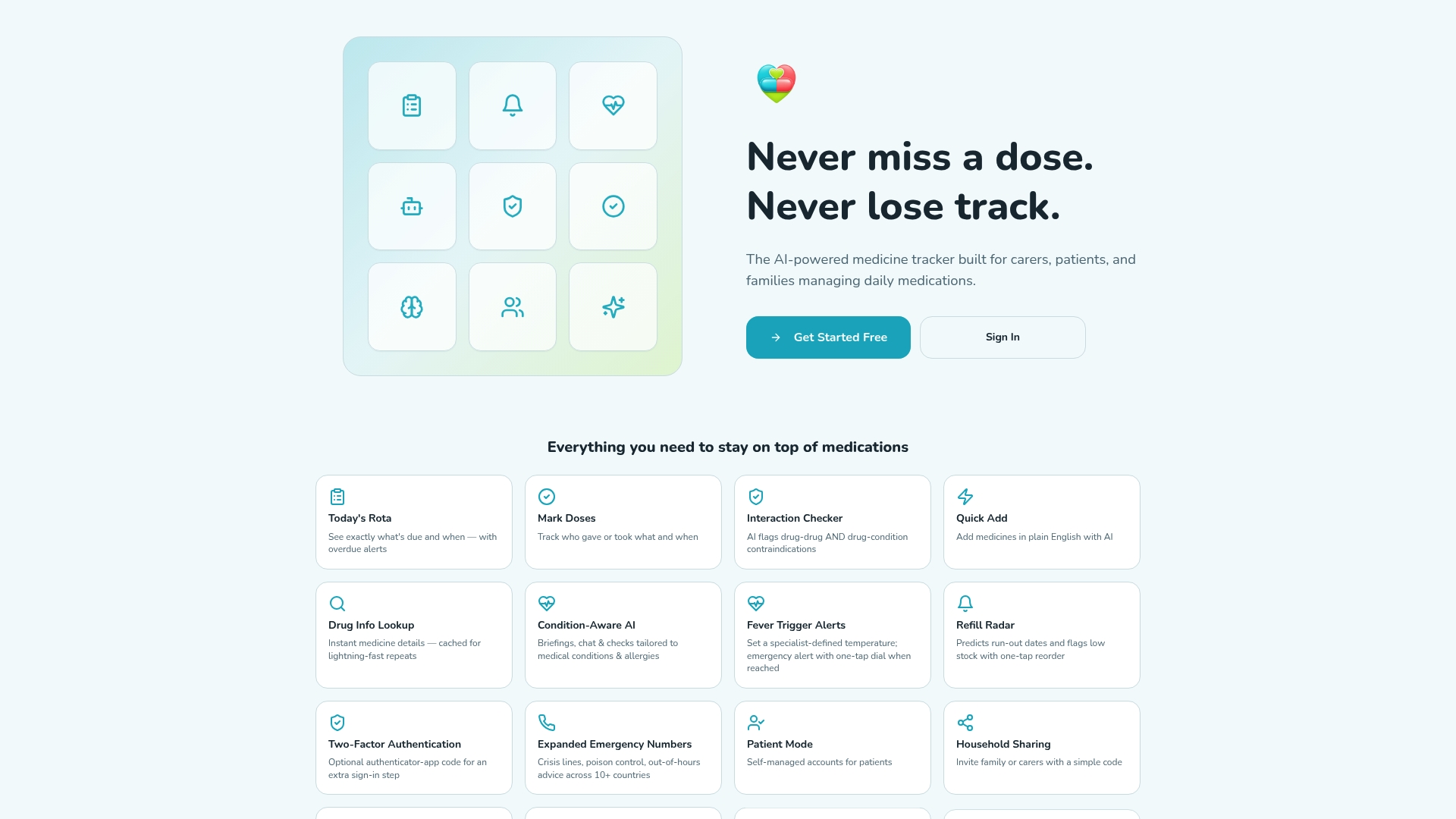
A typical scenario looks like this: a carer managing an elderly relative's medicines exports a full, current list from the app before an unplanned admission, hands it to the admitting nurse, and skips the guesswork that usually causes omission errors. The platform's shared household lists, dose reminders, and drug interaction checks are built around exactly the failure points this article has covered, and everything runs on UK GDPR-compliant infrastructure. The free tier covers core scheduling and logging; multi-patient support and advanced alerts sit in the paid plans. Check the pricing page to see which tier fits your household, or browse important links for setup guidance before your next appointment.
Frequently asked questions
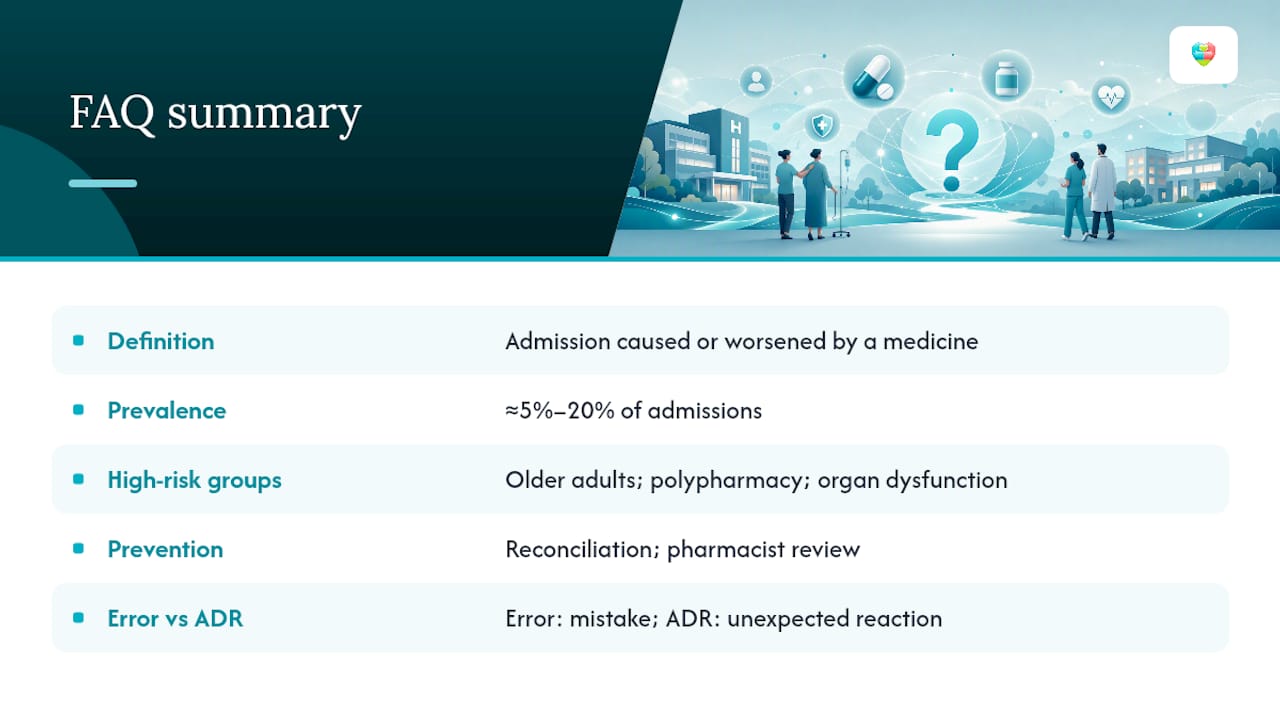
What is a medication-related hospital admission in simple terms? It is an admission caused, or made significantly more likely, by a medicine, whether through a side effect, a dosing error, an interaction, or the patient not taking it as intended.
How common are medication-related admissions? Estimates vary by study design and setting, but a commonly cited range puts MRAs at roughly 5% to 20% of all hospital admissions.
Who is most at risk of a medication-related admission? Older adults on multiple regular medicines, people with cognitive impairment, those with reduced kidney or liver function, and patients seeing several different prescribers face the highest risk.
Can medication-related admissions be prevented? Many can. Structured medication reconciliation, pharmacist involvement at admission, and carers keeping an accurate, exportable medicine list are the interventions with the strongest evidence behind them.
What is the difference between a medication error and an adverse drug reaction? A medication error is a mistake in prescribing, dispensing, or taking a drug. An adverse drug reaction happens even when the drug is used exactly as intended, so it is not classed as an error.
This article is general information, not a substitute for advice from a qualified doctor. Consult a qualified healthcare professional about your own circumstances before acting on anything here.
Sources
- Results of the Medications At Transitions and Clinical Handoffs (MATCH) Study: An Analysis of Medication Reconciliation Errors and Risk Factors at Hospital Admission
- Prescribing errors on admission to hospital and their potential impact: a mixed-methods study | BMJ Quality & Safety
- Medication-related hospital admissions and readmissions in older patients: an overview of literature | International Journal of Clinical Pharmacy | Springer Nature Link
- Unintended medication discrepancies across key stages of the in-hospital medication process: a retrospective real-world study in hospitalized patients | BMC Health Services Research | Springer Nature Link