
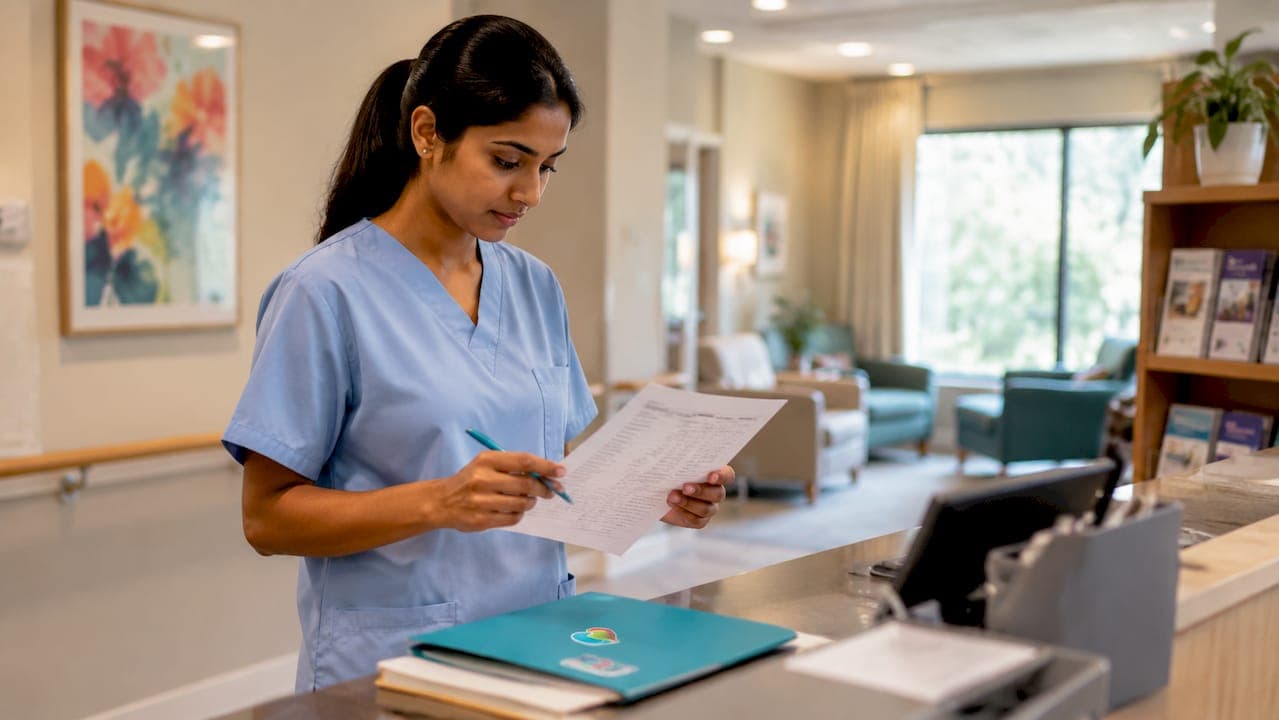
Resident medication history nursing is the systematic process of collecting, verifying, and recording every medication a resident takes, including prescriptions, over-the-counter products, supplements, allergies, adverse reactions, and lifestyle factors such as alcohol and cannabis use. This process, formally known as the Best Possible Medication History (BPMH), sits at the heart of safe nursing medication management in residential care. When nurses treat it as a clinical priority rather than an administrative task, they catch discrepancies before they cause harm. This guide covers what to collect, how to document it, and why accuracy at every stage protects residents.
What is resident medication history nursing?
Resident medication history nursing is defined as the structured, nurse-led process of gathering a complete account of all substances a resident takes, verified against multiple sources. The industry standard term for this process is the Best Possible Medication History, and 2026 nursing standards mandate it as a core component of medication reconciliation. It goes well beyond listing current prescriptions. A thorough history captures the full clinical picture, including what a resident has taken in the past, what caused problems, and what they self-manage without telling their GP.
The BPMH is not a one-time admission form. It is a dynamic record, continuously updated as a resident's health changes. Think of it as a medication story: a chronological account that explains the rationale behind each treatment, which is critical when making deprescribing decisions or reviewing a complex regimen. Nurses who understand this distinction collect richer, more clinically useful information than those who treat the history as a checklist.

What information should nursing staff collect?
A complete resident medication history covers far more than the items on a prescription pad. 2026 clinical standards specify that every history must include all of the following:
- Prescription medications: name, dose, frequency, route, and prescribing indication
- Over-the-counter medicines: analgesics, antacids, antihistamines, and cold remedies
- Vitamins, minerals, and herbal supplements: often omitted but clinically significant
- Traditional or cultural medicines: frequently undisclosed without direct questioning
- Known allergies and adverse drug reactions: with a description of the reaction, not just a label
- Lifestyle factors: alcohol intake, tobacco use, cannabis, and recreational substances
- Adherence patterns: whether the resident actually takes medications as prescribed
Failure to screen for non-prescription items and natural health products leads to missed drug interactions and undocumented conditions. A resident taking St John's Wort alongside an antidepressant, for example, creates a serious serotonin risk that a prescription-only review would never catch.
Verification requires more than one source. Cross-reference the resident's own account with carer reports, GP records, and pharmacy dispensing histories. Each source fills gaps the others leave.
Pro Tip: Ask residents to bring all their medication packets, bottles, and blister packs to the admission interview. A "brown bag review" of physical containers catches items that verbal recall misses every time.
How does resident medication history fit into medication reconciliation?
Medication reconciliation is defined as the formal process of verifying and documenting medication changes to maintain safety and continuity of care during transitions, such as admission to a care home, hospital transfer, or discharge. The resident medication history is the foundation on which reconciliation is built. Without an accurate history, reconciliation cannot function.
The consequences of an incomplete history are serious. Two-thirds of unplanned hospital admissions from adverse drug reactions are preventable through proactive, person-centred medication review. That figure represents a significant and avoidable burden on residents, families, and the NHS.
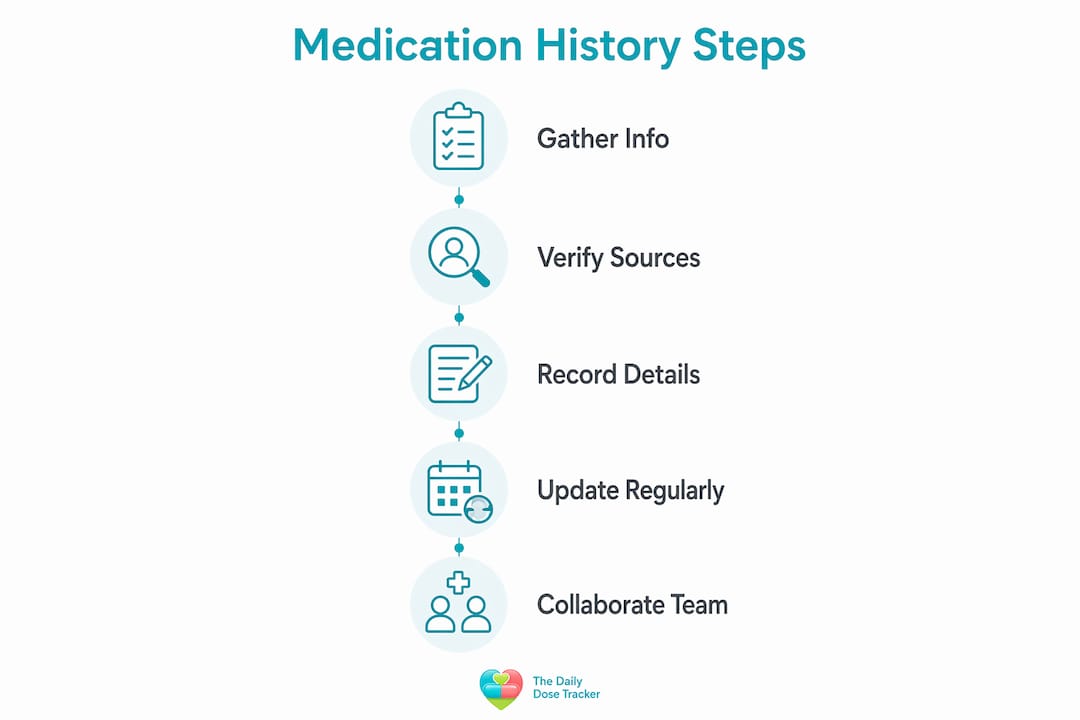
The reconciliation process in residential nursing typically follows this sequence:
- Collect the BPMH at admission, using the resident, carers, and pharmacy records as sources.
- Compare the history against current prescriptions and any medicines administered during a recent hospital stay.
- Identify discrepancies, such as omitted medicines, duplicated drugs, or dose changes not yet reflected in the care home record.
- Clarify discrepancies with the prescribing GP or clinical pharmacist before administration.
- Document and communicate the reconciled list to all members of the care team.
- Review regularly, particularly after any change in health status, hospital admission, or new prescription.
Nurses do not work alone in this process. Collaboration with pharmacists is standard practice, and the BPMH interview is now performed by nurses as well as pharmacists, requiring systematic approaches and multiple information sources for accuracy. The British Geriatrics Society also recommends that structured medication reviews balance individual patient preferences against medication risks, including reviewing anticholinergic burden in multi-drug regimens.
What challenges do nurses face when collecting medication histories?
Several barriers consistently undermine the quality of resident medication histories in practice.
- Cognitive impairment: Residents with dementia or delirium cannot reliably recall their own medication regimens. Their accounts must be supplemented by carers and formal records.
- Incomplete documentation: GP summaries and discharge letters frequently omit over-the-counter items or recently changed doses.
- Resident under-reporting: Residents often do not mention supplements, herbal products, or lifestyle substances because they do not consider them "real" medicines.
- Role perception: Nurses who view themselves as critical safety checkpoints identify more medication discrepancies than those who treat history-taking as passive documentation. This is one of the most underappreciated factors in medication safety.
- Time pressure: Admission processes in busy care homes compress the time available for thorough history-taking.
The most effective solution to cognitive and recall barriers is caregiver involvement. Involving family members or caregivers in medication history interviews directly improves accuracy and safety, particularly where residents have memory difficulties. A family member who manages the resident's medicines at home holds information that no clinical record contains.
Institutional policies also matter. Care homes with structured BPMH interview guides and mandatory multi-source verification produce more accurate resident medication records than those relying on nurse discretion alone.
Pro Tip: When a resident cannot recall a medication name, ask about the condition it treats rather than the drug itself. "Do you take anything for your heart?" often unlocks information that "What medicines do you take?" does not.
How should nurses document and update resident medication histories?
Accurate documentation is not a bureaucratic formality. It is the mechanism by which one nurse's clinical knowledge becomes available to every other professional involved in a resident's care. Poor documentation creates the same risk as a poor history: the next clinician acts on incomplete information.
The table below summarises the key standards for documenting and maintaining resident medication records in clinical practice.
| Documentation element | Standard practice |
|---|---|
| Medication name | Use generic name alongside brand name where relevant |
| Dose and frequency | Record exact dose in milligrams and frequency in full (e.g. twice daily) |
| Route of administration | Specify oral, topical, inhaled, subcutaneous, and so on |
| Allergy and reaction detail | Record the specific reaction, not just "allergic" |
| Date of last review | Record date and reviewing clinician for every update |
| Source of information | Note whether information came from resident, carer, pharmacy, or GP |
Electronic medication administration records (eMAR) reduce transcription errors and make histories accessible across care transitions. Paper-based charts remain common in smaller residential settings, but they carry a higher risk of illegibility and version control problems. Whichever system a care home uses, the medication history for carers must be updated after every change in prescription, every hospital admission, and every structured medication review.
Nursing education plays a direct role in documentation quality. Nurses who receive specific training in BPMH methodology produce more complete and accurate records. Institutional policies that mandate regular medication history updates, rather than leaving review frequency to individual judgement, produce more consistent outcomes across care teams.
Key takeaways
Resident medication history nursing is the clinical foundation of safe medication management in residential care, and accuracy at every stage directly determines resident safety outcomes.
| Point | Details |
|---|---|
| BPMH is the standard | The Best Possible Medication History is the recognised framework for complete, verified medication histories in residential nursing. |
| Non-prescription items matter | Supplements, herbal products, and lifestyle substances must be included to prevent dangerous drug interactions. |
| Reconciliation depends on history | Medication reconciliation cannot function without an accurate, multi-source verified medication history as its foundation. |
| Role perception shapes outcomes | Nurses who see themselves as safety checkpoints identify more discrepancies and prevent more errors than those who do not. |
| Documentation must be dynamic | Resident medication records require regular updates after prescriptions change, hospital admissions occur, or reviews take place. |
Why thorough medication histories changed how I think about nursing
Working with residential care teams over many years, the single most consistent finding is this: the nurses who take medication histories seriously are the ones who catch the problems that would otherwise send a resident to A&E. That is not an abstract observation. It shows up in the data, and it shows up in ward-level outcomes.
What surprises most nursing students is how much the history depends on asking the right questions rather than reviewing the right records. A GP summary is a starting point, not a complete picture. The resident who takes a herbal sleep remedy every night, or the one who shares a family member's blood pressure tablets, will not appear on any formal record. Only a direct, unhurried conversation surfaces that information.
The shift towards nurses performing the BPMH, rather than waiting for a pharmacist to do it, reflects a broader and welcome change in how the profession understands its own accountability. Nurses are not passive administrators of prescriptions. They are the professionals most consistently present in a resident's daily life, which makes them the most capable of building an accurate medication story over time. That role carries real weight, and the medication errors in elderly care literature is clear: when nurses own that responsibility, residents are safer.
My advice to nursing students is straightforward. Treat every medication history as if you are the last person who will catch an error before it reaches the resident. Because sometimes, you are.
— Prasant
How Thedailydosetracker supports medication history management
Keeping resident medication records accurate and up to date is a daily challenge for care teams. Thedailydosetracker is a digital platform built to support exactly this work, giving nurses, carers, and families a single place to log medications, track doses, and receive real-time alerts for due or overdue medicines.
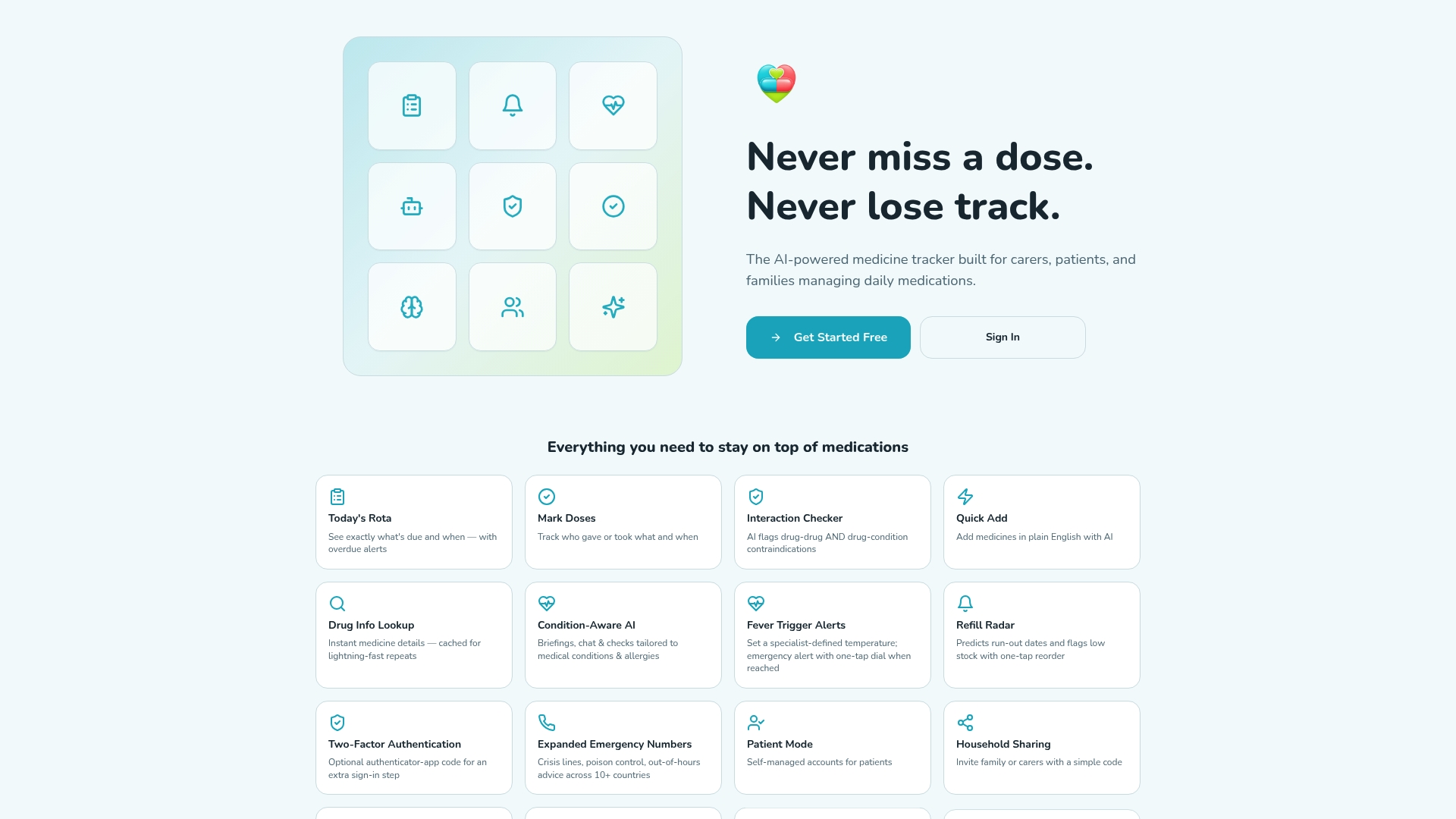
The platform includes drug interaction checks, condition-specific guidance, and AI-based insights that flag potential risks before they become clinical problems. Multi-patient management and household sharing mean that care teams and families can access the same up-to-date record without duplication or version conflicts. For care homes managing complex polypharmacy regimens, Thedailydosetracker offers a practical way to maintain the dynamic, verified medication records that 2026 standards require. Explore the app's features and pricing or visit the important links page for additional resources.
FAQ
What is a Best Possible Medication History in nursing?
The Best Possible Medication History (BPMH) is a standardised, verified account of all medications a resident takes, collected from multiple sources including the resident, carers, and pharmacy records. It is the recognised clinical standard for medication history collection in residential and acute care settings.
Why does medication history matter for resident safety?
Two-thirds of adverse drug reaction admissions to hospital are preventable with proactive medication review. An accurate medication history is the primary tool nurses use to identify risks before they cause harm.
What lifestyle factors should be included in a medication history?
A complete history includes alcohol intake, tobacco use, cannabis, and recreational substances, alongside all prescribed and non-prescribed medicines. 2026 nursing standards specify these as mandatory components of the BPMH.
How often should resident medication records be updated?
Medication records should be reviewed and updated after every prescription change, hospital admission, or structured medication review. The BPMH process is dynamic by design, not a static document completed at admission.
How can nurses improve medication history accuracy for residents with dementia?
Involving family members or caregivers in the history interview is the most effective strategy for residents with cognitive impairment. Cross-referencing carer accounts with pharmacy dispensing records fills the gaps that resident recall cannot.