

A household medication history is a complete, structured record of every prescription drug, over-the-counter remedy, vitamin, supplement, and known allergy for each person in your home. It is the clinical reference document that healthcare providers rely on to make safe prescribing decisions, and the single most important piece of paperwork a family carer can maintain. When a GP, pharmacist, or A&E nurse asks "what is this patient currently taking?", your household medication history is the definitive answer. For families managing elderly relatives or anyone on complex regimens, this record is not optional. It is the foundation of safe medication management at home.
What is a household medication history and what should it include?
A complete household medication history documents every substance a person takes, not just the prescriptions their GP knows about. A comprehensive record covers prescription drugs, OTC remedies, vitamins, herbal supplements, and known allergies, with one page per household member typically sufficient.
For each medication, you need to capture:
- Drug name: both the generic name (e.g. atorvastatin) and the brand name (e.g. Lipitor)
- Dosage and frequency: the exact dose in milligrams and how often it is taken
- Prescribing doctor: the name and contact details of the clinician who issued the prescription
- Purpose: what condition or symptom the medication is treating
- Date of last refill and pharmacy details: where it was dispensed and when
- Known allergies and adverse reactions: including the specific reaction observed
- Supplements and OTC products: paracetamol, ibuprofen, fish oil, vitamin D, and similar items that are often overlooked
Healthcare professionals use interviews, electronic health records (EHRs), pharmacy records, and direct provider communication to gather this information. As a carer, you are the one person who can see across all those sources.
Pro Tip: Use a printed medication history form with one row per drug. A simple table in a shared Google Doc or Microsoft Word file works well and can be updated in seconds when a prescription changes.

| Field | What to record |
|---|---|
| Drug name | Generic and brand name |
| Dose and frequency | e.g. 10mg once daily at night |
| Prescribing doctor | Name, surgery, and phone number |
| Purpose | e.g. cholesterol management |
| Allergies and reactions | Drug name plus reaction observed |
Why is maintaining an accurate medication history so important?
Poor medication history tracking is a direct cause of patient harm. Between 30% and 70% of patients experience unintentional medication errors during care transitions, and this contributes to a $42 billion global cost annually. That figure represents real harm to real people, not an abstract accounting problem.
"Caregivers are the essential guardians of the 'true' medication list because health records often lack visibility of OTC drugs, supplements, and medications from multiple pharmacies." — mederror.ca
The risk is especially high when a patient moves between care settings. A hospital discharge, a GP referral, or a stay in a care home all create points where information can be lost. Interoperable electronic tools can reduce unintended medication discrepancies by 45%, but those tools only work when the underlying data is accurate. That accuracy starts with you.
An up-to-date household medication list also prevents duplication. Two different specialists may prescribe medications from the same drug class without knowing about each other's prescription. A carer who holds a complete record can flag this to a pharmacist before the patient takes both. This is why reducing medication errors in elderly home care begins with the quality of the record, not the technology used to store it.
Medication history is not just a list. It is a qualitative process to identify and resolve medication-related issues such as adherence problems or unintended discrepancies during transitions of care. Treating it as a living document, rather than a one-off form, is what separates effective carers from those who are constantly reacting to problems.
How does a household medication history differ from a daily medication log?
These two tools serve completely different purposes, and confusing them is one of the most common mistakes family carers make. A medication history answers "What is this person on, why, and who prescribed it?" A daily log answers "Did they take their 8am tablet this morning?"
| Tool | Purpose | Updated when? | Used by whom? |
|---|---|---|---|
| Medication history | Clinical reference document | Prescription changes | Carers, GPs, pharmacists, A&E |
| Daily medication log | Adherence tracking | Every dose | Carers, patients |
The medication history is relatively static. You update it when a prescription is added, changed, or stopped. The daily log is operational. It records whether each scheduled dose was taken, at what time, and whether any side effects were noted. Both are necessary. Neither replaces the other.
Think of the medication history as the blueprint and the daily log as the build diary. An architect needs both to understand what was planned and what actually happened on site. For guidance on how to use logs alongside histories, the article on medication logs for clinical decisions covers the complementary roles in detail.
Pro Tip: Store the medication history in a clear plastic wallet on the fridge. Emergency responders are trained to look there. Keep the daily log in a notebook or app beside the medication tray where doses are prepared.
How should carers create and maintain an effective medication history?
Start by gathering every medication container in the house. Include everything: prescription boxes, blister packs, bottles of vitamins, herbal teas taken for health reasons, and any OTC products used regularly. This physical audit often reveals medications the patient forgot to mention and items that have been discontinued but are still being taken.
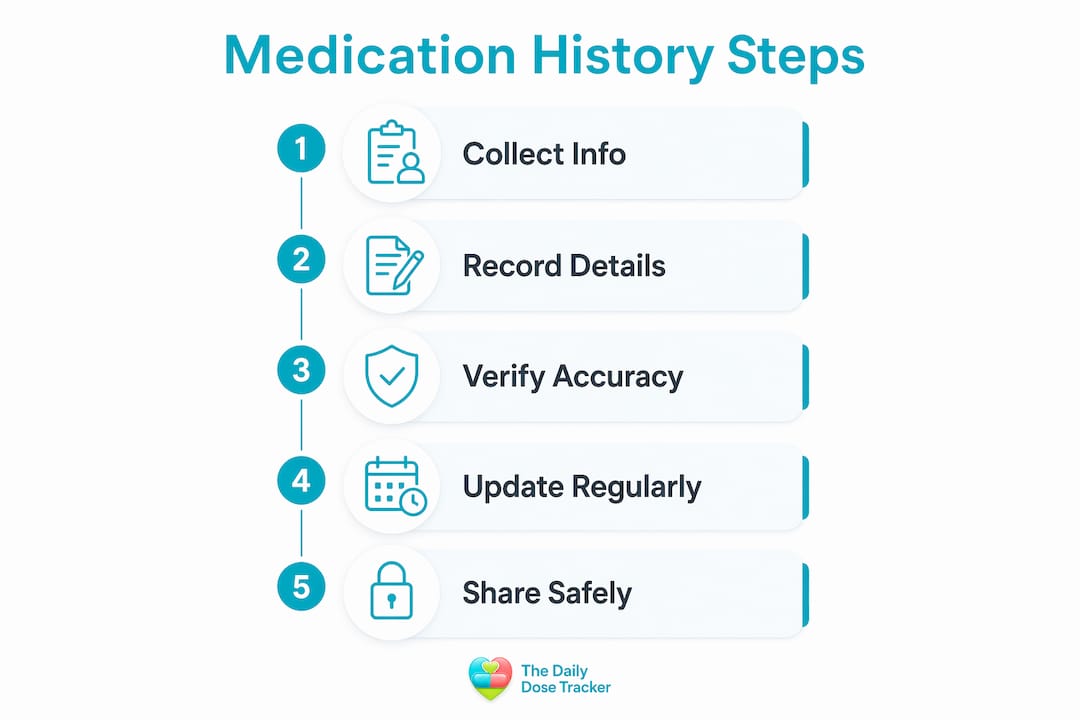
Follow these steps to build your record:
- List every item found with its name, dose, and frequency. Do not rely on memory at any stage.
- Cross-reference with the GP's repeat prescription list. Discrepancies between what is in the home and what the GP has on record are common and clinically significant.
- Contact the pharmacy for a full dispensing history. Pharmacists can identify medications collected from multiple prescribers that may not appear on a single GP record.
- Add supplements and OTC products that the patient takes regularly. These are the items most likely to be missing from official records.
- Record known allergies with the specific reaction, not just the drug name. "Penicillin: rash and swelling" is far more useful than "Penicillin: allergic."
- Create three copies using the strategy that successful medication management recommends: a digital master copy shared with family and the GP, a printed copy for emergency responders, and a wallet card for portability.
Once the record exists, keeping it current is straightforward. Update it every time a prescription changes. Review it at every GP or specialist appointment. Bring all physical medication bottles or a verified list to appointments, because trained pharmacy staff identify up to 8 errors per high-risk patient more than standard intake processes catch.
For elderly patients on multiple medications, the elderly medication management checklist provides a structured framework for keeping records current across GP visits, hospital admissions, and care home transitions.
Medication history interviews can catch errors before harm occurs. One documented example: a patient still taking a discontinued blood pressure pill was identified only during such an interview. The carer's record showed the old prescription; the pharmacist spotted the duplication. That is the system working as it should.
Key takeaways
A household medication history is the single most protective document a family carer can maintain, because it closes the information gaps that cause the majority of preventable medication errors.
| Point | Details |
|---|---|
| Definition and scope | A household medication history covers all prescriptions, OTC products, supplements, and allergies for every household member. |
| Error prevention | Between 30% and 70% of patients experience medication errors at care transitions; an accurate record is the primary defence. |
| History vs. log | The medication history is a clinical reference; the daily log tracks adherence. Both are needed and neither replaces the other. |
| Three-format storage | Keep a digital master copy, a printed emergency copy, and a wallet card to cover all care transition scenarios. |
| Carer as record owner | Health records often omit OTC drugs and supplements; the carer must consolidate all sources and own the master list. |
Why I think most carers are solving the wrong problem first
Prasant's perspective
Most carers I speak with focus on reminders and schedules before they have a solid medication history in place. That is the wrong order. A reminder system built on an incomplete drug list does not make medication safer. It makes it easier to take the wrong things consistently.
The uncomfortable reality is that GP records, hospital discharge summaries, and pharmacy dispensing histories rarely agree with each other. I have seen cases where a patient was listed on three different medication records and none of them matched. The carer was the only person who knew what was actually being taken, and even they were working from memory.
The shift that changes everything is treating the medication history as a permanent document you own, not a form you fill in once for a hospital admission. Update it when prescriptions change. Bring it to every appointment. Share it with every new clinician. When you do that, you become the most reliable source of medication information in the room, which is exactly where a carer needs to be.
Technology helps, but only after the fundamentals are right. A digital tool that holds an accurate, complete record and shares it with your family and GP is genuinely useful. A digital tool holding an incomplete list is just a faster way to spread inaccurate information.
— Prasant
Manage your family's medication history with Thedailydosetracker
Thedailydosetracker is built specifically for carers managing medications across multiple family members, including elderly patients on complex regimens.
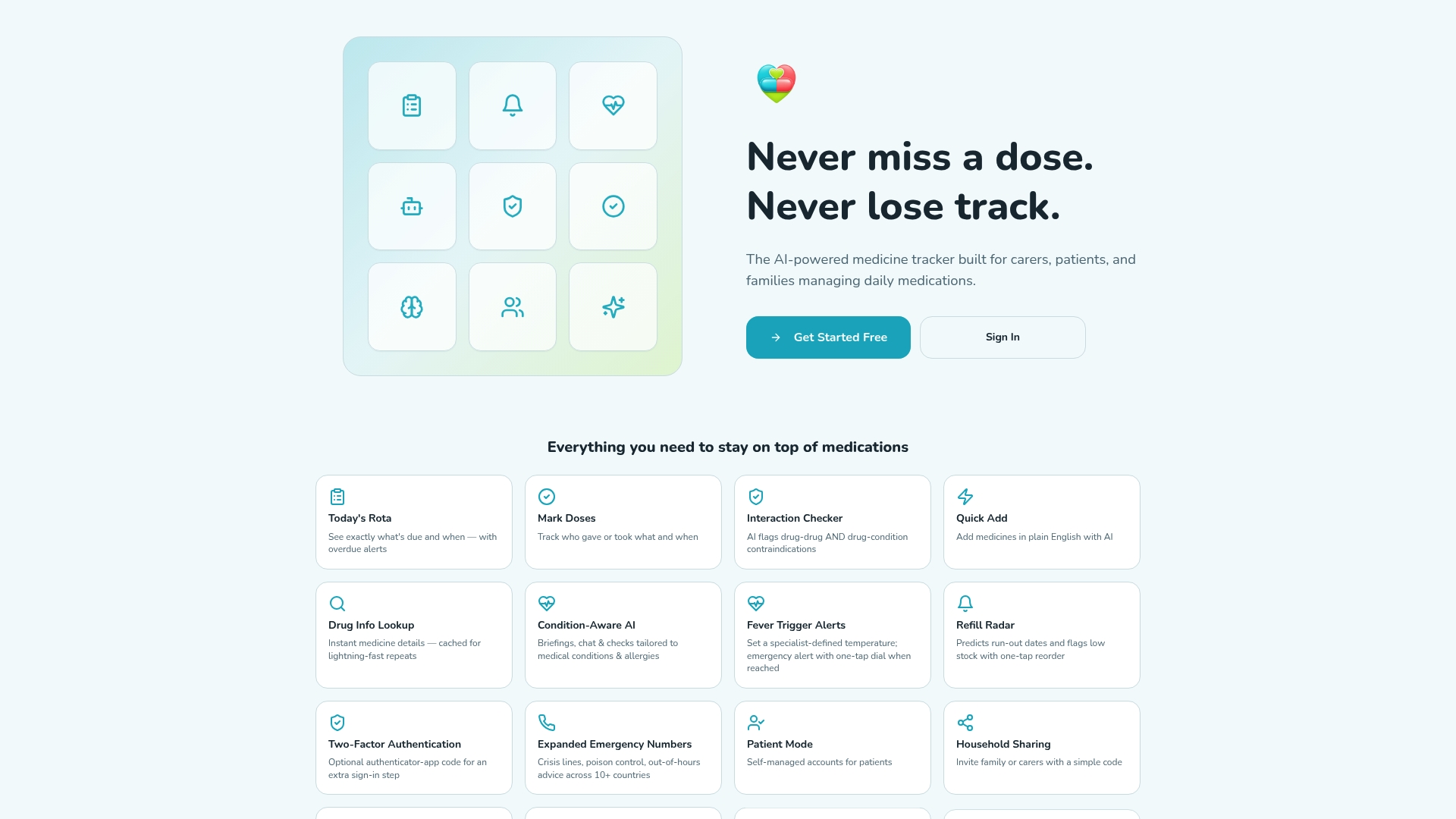
The platform lets you build a complete household medication list for each person, log doses in real time, and share records directly with family members and healthcare providers. Drug interaction checks flag potential problems before they reach the patient. Refill predictions mean you are never caught short. The record is accessible from any device, updated instantly, and stored in compliance with UK GDPR standards. Whether you are preparing for a GP appointment or handing over care to a hospital team, your medication history is always current and always to hand. Start for free today and see how much simpler medication management at home can be.
FAQ
What is a household medication history?
A household medication history is a complete record of all prescription drugs, OTC products, supplements, and known allergies for each person in a home. It serves as a clinical reference for carers and healthcare providers during appointments, emergencies, and care transitions.
How often should a medication history be updated?
Update the record every time a prescription is added, changed, or stopped. Review it at every GP or specialist appointment to catch any discrepancies between what is in the home and what is on the official record.
What is the difference between a medication history and a medication schedule?
A medication history is a static clinical reference listing what a person takes, why, and who prescribed it. A medication schedule or daily log is an operational tool that tracks whether each dose was taken at the correct time.
Why do carers need to maintain the medication history themselves?
GP and hospital records frequently omit OTC drugs, supplements, and medications dispensed by multiple pharmacies. Carers must consolidate all sources personally to hold the only complete and accurate record.
What format should a household medication history be kept in?
The most reliable approach uses three formats: a digital master copy shared with family and the GP, a printed copy stored visibly at home for emergency responders, and a wallet card carrying the most critical information for portability.