
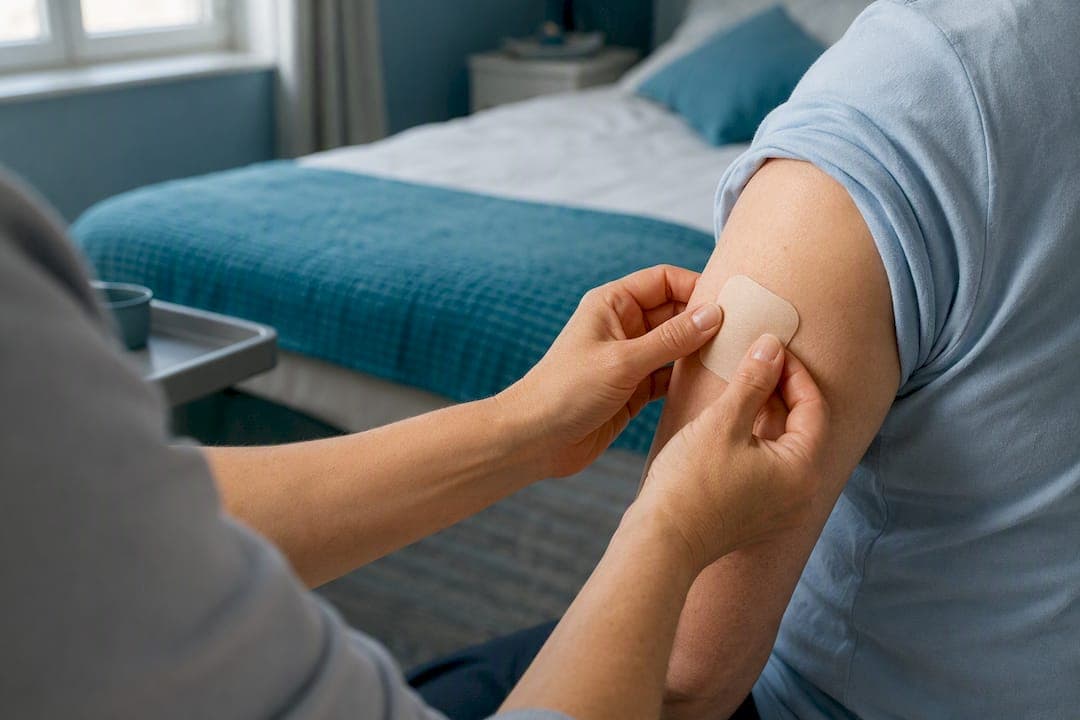
Use the upper back, upper arm or chest for most transdermal patches, and swap sides with every application rather than pressing a new patch onto yesterday's spot. Check the patient information leaflet first: some medicines, including rivastigmine, require you to avoid the exact same patch site for at least 14 days. Keep the skin clean, dry and hair trimmed rather than shaved, and you've covered the basics that prevent most irritation problems.
TL;DR:
- Use flat, stable skin areas like the upper back, chest, or upper arm for better adhesion and absorption, avoiding folds, scars, or irritated skin.
- Rotate patch sites within the same region, alternating sides or using a clockwise pattern, and keep a photo log for easy tracking and to prevent reuse too soon.
- Prepare skin properly by cleaning, drying, and trimming hair, and avoid applying patches on skin folds, damaged skin, or areas with ointments or heavy hair.
- Remove patches carefully by peeling slowly, folding adhesive sides together, and avoiding accidental contact, especially with stronger medications like rivastigmine.
- Record every application site and time using paper charts or digital apps to ensure proper rotation, reduce errors, and alert prescribers to any skin reactions or issues.
Table of Contents
- Which body zones work best for patch rotation?
- What sites and skin conditions should you avoid?
- How do you apply and remove a patch step by step?
- How should you adapt rotation for children, dementia and fragile skin?
- When is a skin reaction serious enough to call the prescriber?
- What's the best way to record and hand over patch sites?
- A carer's checklist for getting patch rotation right
- How can a medicine tracking app support your rotation routine?
- Sources
Which body zones work best for patch rotation?
The upper back, upper arm and chest consistently perform best for adhesion and absorption, according to guidance from the NHS Specialist Pharmacy Service. These areas have relatively flat, stable skin with less friction from clothing seams or joint movement, which matters more than people expect. A patch on a bending elbow or a waistband-adjacent hip can lift within hours.
The upper back carries a practical bonus: patients who fidget with or pick at patches usually cannot reach it. That's why care teams frequently prefer it for people living with dementia or young children, a point echoed in clinical guidance on rivastigmine patches, which lists the upper back, chest and upper arm among the recommended sites for consistent drug delivery.
If the product leaflet restricts you to one region, say hips only, don't abandon rotation altogether. Work a grid within that zone: left hip today, right hip tomorrow, then a slightly higher or lower spot on the next rotation. Healthline's guidance on transdermal patches makes the same point: stay inside the approved region, but keep moving.
Three rotation patterns work well in practice:
- Left/right alternation: simplest option, ideal for once or twice weekly patches with two acceptable zones.
- Clockwise regional rotation: picture the chest or back divided into four quadrants and move clockwise with each change.
- Weekly body map: sketch a simple outline once a week and mark today's site with a dot and the date.
Pro Tip: Take a photo of the applied patch site on your phone each time. It builds an instant visual log you can scroll back through at a glance, without needing to decode handwriting from three days ago.
What sites and skin conditions should you avoid?
Skin folds, scars, sunburnt patches and any broken or irritated skin are all off limits. Folds trap moisture and heat, which weakens adhesive and can distort how much drug the skin absorbs. Damaged or inflamed skin absorbs medication unevenly, sometimes faster than intended, which is exactly the kind of variability you want to avoid with a drug delivery system built for a steady release.
Recent bathing, oils and moisturisers all interfere with adhesion. The NHS Specialist Pharmacy Service recommends applying patches to skin that's clean, dry, flat and free of hair, with no lotion residue sitting between skin and adhesive.
Sites to rule out before every application:
- Skin folds, including underarms and waistlines
- Scar tissue or tattooed skin
- Broken, sunburnt, or actively irritated skin
- Areas with heavy sweating or recent oil/moisturiser use
- Zones with dense hair growth
On hair: trim it with scissors, never a razor. Shaving creates micro-abrasions invisible to the eye but real enough to change how much drug crosses the skin barrier, according to the same SPS guidance. A pair of small scissors takes seconds and avoids the problem entirely.
How do you apply and remove a patch step by step?
Getting the sequence right matters more than most carers assume, particularly with medicines where local irritation is common.
Preparing the skin:
- Wash the chosen site with mild soap and water, then dry it completely. Damp skin sabotages adhesive within hours.
- Trim any hair with scissors rather than a razor.
- Check the leaflet for that specific product and confirm the patch hasn't passed its expiry date.
Applying the patch:
- Open the packaging just before use and avoid touching the adhesive surface with your fingers.
- Press the patch onto the skin and hold firm for around 30 seconds, running a finger along the edges to check full contact.
- Note the site and the time, whether on a paper chart or a digital log.
Removing the patch:
- Peel it away slowly rather than tugging.
- Fold the adhesive sides together before disposal, particularly important with stronger medicines where accidental skin contact from a discarded patch is a genuine risk.
- Wash any adhesive residue off gently with soap and water. Don't rub hard or reach for a solvent unless the manufacturer specifically permits it.
If a patch starts lifting at the edges, follow the product's own guidance rather than improvising. Some manufacturers allow securing loose corners with medical tape; others recommend replacement. National safety reviews have flagged medication errors and accidental exposure risks with certain patches, including cases where a "just in case" second patch was applied on top of a working one. That's a genuinely dangerous habit worth naming directly.
How should you adapt rotation for children, dementia and fragile skin?
Different patients need different thinking, not just different sites.
For children or anyone prone to picking at patches, the upper back is usually the safest choice simply because it's hard to reach. Loose, high necked clothing over the top adds another layer of protection against accidental removal, an approach covered in more depth in guidance on tracking medication for children.
Older adults often have thinner, more fragile skin that tears or bruises more easily during removal. Watch for these signs and raise them with the prescriber early rather than persisting with a site that's clearly struggling, a theme explored further in why medication timing matters for elderly patients.
Practical adjustments worth making:
- Check sites more frequently for anyone with cognitive impairment, since recurring removal is a pattern worth flagging to the prescriber.
- Record every site change so a second carer can immediately see what's already been used.
- Where a patient lacks capacity to consent to site choice, involve family or the clinical team in the decision rather than deciding alone.
When is a skin reaction serious enough to call the prescriber?
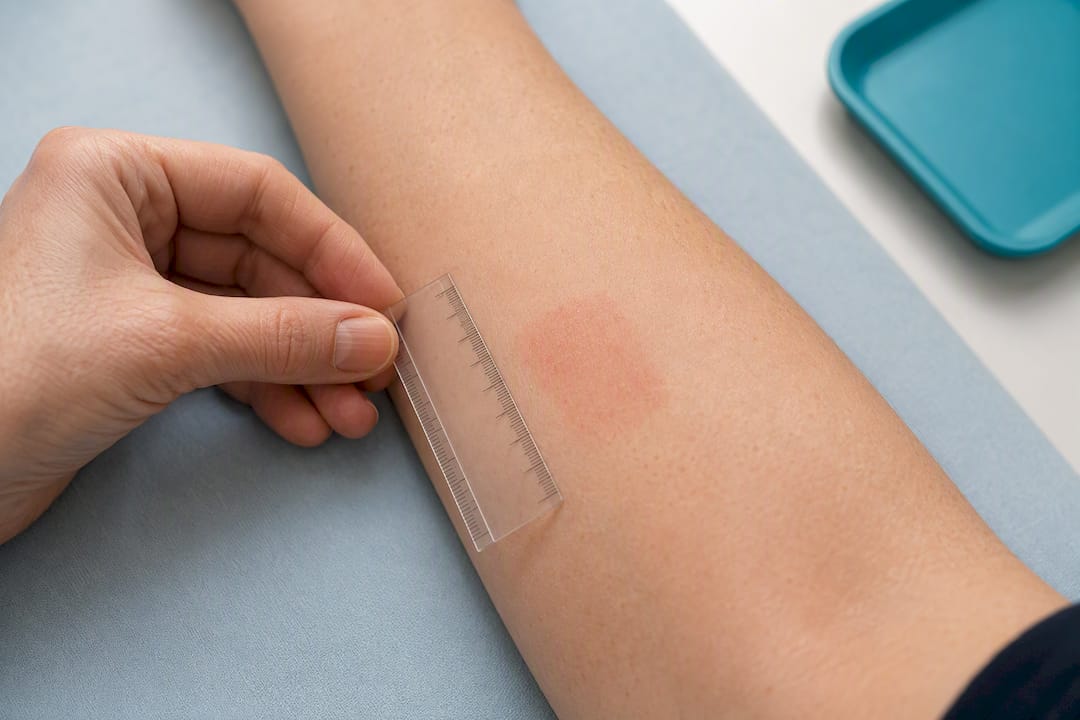
Mild redness or itching where the patch sat is common and usually settles once the site rests. Simple self-care covers most of these cases: give the area a break, monitor it over the next day, and photograph anything that looks unusual so you have a record if it changes.
Some signs need urgent attention rather than watching and waiting:
- Blistering or a rash spreading beyond the patch edges
- Fever alongside skin changes
- Any signs of a systemic allergic reaction, such as swelling of the face or difficulty breathing
- Accidental exposure in a child, particularly with stronger medicines where even brief skin contact can cause harm
Always check the product information leaflet and speak to the prescriber before changing the site, the adhesive, or the medicine itself. Drug safety updates specifically warn about overdose risk from patch stacking and about the danger of discarded patches to children, both of which are avoidable with basic vigilance.
Pro Tip: Keep a small ruler in your medicine kit. Photographing a reaction next to it gives you an objective size reference, which makes it much easier for a GP or pharmacist to judge whether it's grown when you check in again.
What's the best way to record and hand over patch sites?
A simple paper chart paired with a hand-drawn body map does the job for many households. Mark the exact location with left or right, note the date, and add a rotation code, something like A1, A2, B1, so the next person applying a patch can see instantly which spot is free. For products with a 14-day no-reuse rule, flag that site clearly so nobody reaches for it too soon, a habit local authority guidance on patch use also recommends.
Digital logging solves the handover problem that paper often can't: what happens when three different people help apply patches across a week. The Daily Dose Tracker lets you log the exact site alongside the dose, set a reminder for the next change, and share that record across a household or care team, all stored under UK GDPR standards. It supplements the manufacturer's instructions rather than replacing them.
| Method | Best for | Key limitation |
|---|---|---|
| Paper chart and body map | Single carer, low-tech households | Easy to lose or forget to update |
| Rotation code grid (A1/A2) | Care homes with shift handovers | Needs everyone trained on the code |
| Digital app logging | Multiple carers, multi-patient households | Requires a device and initial setup |
A workable handover note simply states: "Rivastigmine patch applied to right upper arm, 9am Tuesday. Next site: left shoulder blade. Do not reuse right upper arm before next Tuesday."
A carer's checklist for getting patch rotation right
Prepare the skin, apply firmly, record the site immediately, and double check at every changeover, in that order, every single time. The pitfalls that trip carers up are rarely dramatic: forgetting to log a site, reaching for the same spot out of habit, or skipping the edge check after pressing a patch down. None of that requires expertise to avoid, just consistency. When something doesn't look right, the leaflet and the prescriber are your first call, not a guess.
— Prasant
How can a medicine tracking app support your rotation routine?
Thedailydosetracker gives carers something a paper chart never quite manages: a shared, searchable record of exactly where every patch went, without anyone needing to remember whose turn it was to update the wall chart. Log the site alongside the dose, set a reminder for the next change, and pull up the full history in seconds if a GP asks when a rash first appeared.

For households managing more than one patient, the multi-patient view keeps each person's rotation pattern separate, so a partner's fentanyl patch schedule never gets muddled with a parent's rivastigmine routine. Everything runs on a progressive web app with accessibility options like dark mode and adjustable font sizes, and data stays governed by UK GDPR throughout. None of this replaces the product leaflet or your prescriber's instructions, but it does remove the guesswork of "did we use that spot last week?" Try the free tier on the Daily Dose Tracker landing page and set up your first patch log today.
This article is general information, not a substitute for advice from a qualified doctor. Consult a qualified healthcare professional about your own circumstances before acting on anything here.
Sources
- Using transdermal patches safely in healthcare settings – SPS
- Drug profile: Transdermal rivastigmine patch in the treatment of Alzheimer disease — PMC
- Transdermal patches: how to apply them — Healthline
- Gov