

A child medication tracking feature is a specialised digital tool that records, calculates, and schedules a child's medication doses to prevent errors and support safe adherence at home. Unlike generic pill trackers, paediatric tracking tools apply weight-based dosing logic, enforce safe intervals between doses, and flag timing conflicts automatically. The distinction matters: 87% of medication errors in paediatric settings stem from systemic failures such as incorrect dose calculation, not parental negligence. That figure means most errors are preventable with the right system in place. Thedailydosetracker is built around exactly this kind of paediatric-specific logic, giving parents and carers a reliable framework for managing children's medicines safely.
What is a child medication tracking feature and why does it matter?
A child medication tracking feature is defined as any digital function that monitors, records, and manages the administration of medicines to a child based on that child's individual profile, including weight, age, and prescribed schedule. The term sits within the broader field of medication adherence technology, but paediatric tracking is a distinct category because children's doses change as they grow and cannot be managed with adult dosing logic.
The core problem these features solve is straightforward. Parents managing a sick child at 2am, or handing over care to a grandparent, face real risk of double dosing, missed doses, or incorrect amounts. Standardised paediatric dosing charts reduce medication administration errors by 38% compared with paper records or memory alone. A digital tracking feature applies that same structured logic automatically, removing the mental load from the carer.

The feature also addresses the handover problem. When multiple carers are involved, such as two parents working different shifts or a childminder covering school hours, a shared digital log tells everyone what was given and when. That single source of truth is what separates a child medication tracker from a simple phone alarm.
How do child medication tracking features reduce dosing errors?
Dosing errors in children happen for predictable reasons. The most common are misdosage due to weight miscalculation, timing mistakes when carers lose track of the last dose, and system failures during caregiver transitions. A well-designed child medication tracker addresses each of these directly.
Weight-based dosage calculators are the most critical function. Children's doses of medicines like paracetamol or ibuprofen are calculated per kilogram of body weight, not by age bracket alone. A tracker that accepts the child's current weight and calculates the correct dose removes the manual arithmetic that causes errors. Generic trackers lacking paediatric logic force parents to calculate doses manually, which increases error risk significantly.
Safe interval enforcement is equally important. This feature blocks a new dose from being logged until the minimum safe gap has passed, typically four to six hours for common analgesics. Without this, a second carer can unknowingly administer a dose too soon. Dose reminders, safe interval blocking, and medication history together reduce duplicate doses and improve timing adherence.
Setup accuracy is where many carers stumble. 41% of initial setup errors in paediatric medication tracking come from incorrect data entries such as wrong weight or dosage frequency. Entering the wrong weight at the start produces incorrect dose calculations for every subsequent administration.
- Weight-based dosage calculation tied to the child's current weight
- Dose logging with timestamps to prevent double dosing
- Timing reminders sent to all carers sharing the account
- Safe interval enforcement that locks out premature re-dosing
- Dose history visible to everyone with access to the shared log
Pro Tip: Before saving your child's profile in any tracking app, double-check the weight entry against a recent measurement. An error of even half a kilogram can shift the calculated dose outside the safe range for smaller children.
Key features found in child medication tracking apps
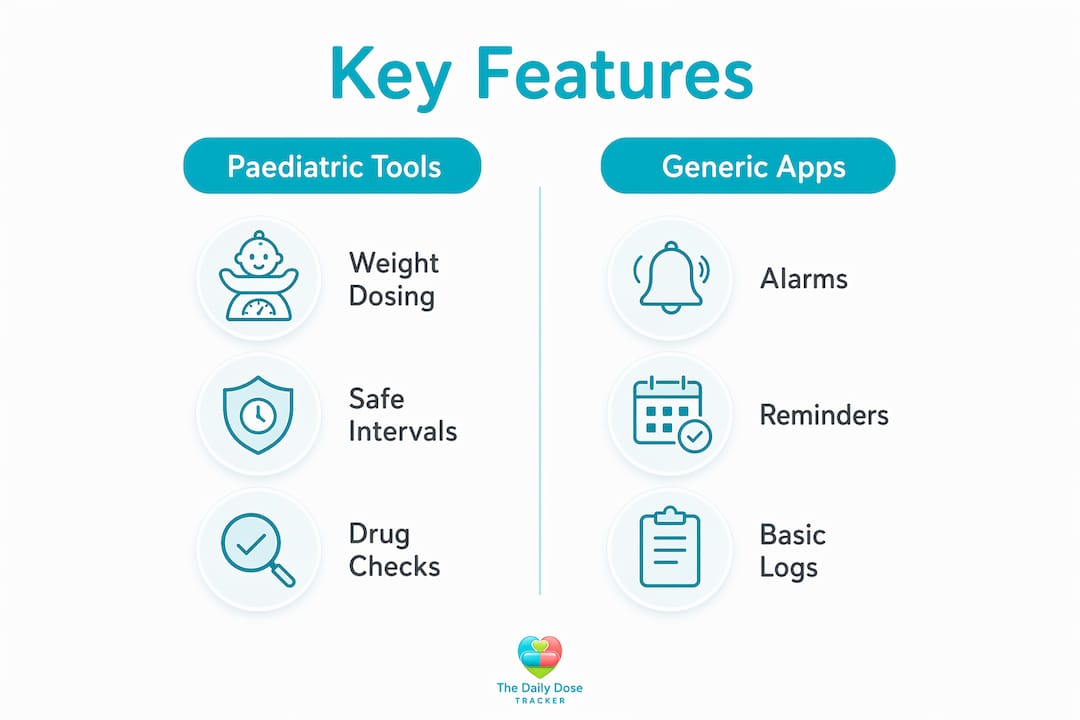
The features that separate a paediatric tracking tool from a general medication reminder app are specific and non-negotiable for safety. Understanding them helps you evaluate any tool you consider using.
| Feature | Paediatric tracking tools | Generic medication apps |
|---|---|---|
| Weight-based dosing calculator | Yes, updates with each weigh-in | No, fixed adult doses only |
| Safe interval enforcement | Automatic lockout between doses | Manual reminder only |
| Shared carer access | Multi-user household log | Single user account |
| Dose history with timestamps | Full visual log per medicine | Basic reminder history |
| Healthcare provider sharing | Digital log export or sharing | Not typically available |
Accurate measuring tools work alongside the digital feature, not instead of it. Oral syringes and calibrated droppers are the recommended instruments for liquid medicines in children. The tracker records the dose; the syringe delivers it accurately. Both are needed.
Sharing medication logs digitally with healthcare providers reduces information gaps by 57% and improves care coordination. That figure reflects a real clinical problem: GPs and pharmacists often make decisions based on incomplete medication histories because parents cannot recall exact times and amounts. A digital log solves this instantly.
Thedailydosetracker includes drug interaction checks and condition-specific guidance alongside its dose logging, which means it goes beyond simple reminders. For families managing children and adult medications in the same household, this multi-patient capability removes the need for separate systems.
Pro Tip: Print a weekly dosing summary from your digital log and keep it on the fridge. If your phone battery dies or the app is unavailable, every carer in the house can still see the schedule at a glance.
Best practices for using a child medication tracker at home
Getting the most from a child medication tracker depends on how carefully you set it up and how consistently you use it. The technology only works as well as the information you put into it.
-
Enter the child's current weight at setup and update it regularly. Children grow quickly. A weight recorded three months ago may produce an incorrect dose calculation today. Weigh your child monthly if they are under two years old, and update the app immediately.
-
Log every dose the moment it is given, not afterwards. Logging from memory introduces the same errors the tracker is designed to prevent. Make logging the final step of the administration process, before you put the medicine away.
-
Add every carer who administers medication to the shared account. A tracker only prevents double dosing if all carers are using the same log. A grandparent or childminder who is not connected to the account creates a blind spot.
-
Set reminders for the next dose window, not just the minimum interval. Some medicines have a maximum daily dose as well as a minimum interval. Configure the tracker to alert you when the next dose is due, not just when it becomes permissible.
-
Review the dose history before each administration. This takes ten seconds and confirms the last dose time, the amount given, and who administered it. Paediatricians recommend closed-loop medication management: verify the prescription, measure accurately, log immediately, and check timing before the next dose.
Establishing a visible routine matters as much as the app itself. Place the medicine, the measuring syringe, and a reminder to open the tracker in the same location. Physical cues reinforce digital ones. For further guidance on building reliable routines, medication schedule best practices for carers covers the setup process in detail.
What are the limitations of child medication tracking features?
No digital tool is infallible, and understanding where these features fall short is part of using them safely. Carers who treat a tracking app as a complete safety net without any backup plan are taking an unnecessary risk.
- Software glitches and app outages can occur without warning. If the app fails during a fever episode at night, you need an alternative source of dosing information.
- Power outages and dead batteries remove access to the digital log entirely. A phone with no charge is not a medication record.
- Inaccurate data entry remains the most common failure point. The app calculates correctly only if the inputs are correct. Wrong weight, wrong medicine name, or wrong frequency all produce dangerous outputs.
- Generic pill trackers used for children carry specific risks. Apps lacking paediatric-specific adjustments put children at risk because dynamic dose adjustment by weight is not built in.
- Over-reliance on reminders without checking the history log can still result in a missed or duplicated dose if a reminder is dismissed and not acted upon.
The American Academy of Pediatrics recommends keeping printed dosing charts as a backup in case of digital failure. Always contact your GP, pharmacist, or emergency services if you are uncertain about a dose. No app replaces professional medical advice.
Key takeaways
A child medication tracking feature is the single most effective tool parents have for preventing dosing errors at home, provided it uses paediatric-specific logic and is used consistently by every carer involved.
| Point | Details |
|---|---|
| Paediatric logic is non-negotiable | Weight-based dosing and safe interval enforcement are features generic apps do not provide. |
| Setup accuracy determines safety | Incorrect weight or frequency entries cause errors in every subsequent dose calculation. |
| Shared access prevents double dosing | All carers must use the same log to eliminate blind spots during handovers. |
| Digital logs improve clinical care | Sharing accurate dose histories with healthcare providers reduces information gaps significantly. |
| Printed backup remains essential | Keep a paper dosing chart available in case of app failure or power outage. |
Why I think most parents underestimate this tool
I have spoken with many parents who use a basic phone alarm to manage their child's medication. They set a timer, the alarm goes off, they give the dose, and they reset the timer. It feels like a system. It is not.
The alarm tells you when to give the next dose. It does not tell you whether the last dose was actually given, who gave it, or whether the amount was correct. When a second carer steps in, that information gap is where errors happen. I have seen parents genuinely distressed after realising they gave a second dose within two hours of the first because neither knew the other had already administered it.
The other thing I notice is that parents often assume these tools are complicated. They are not. A well-designed child medication tracker takes about five minutes to set up properly. The weight-based calculator does the arithmetic for you. The shared log means every carer is looking at the same record. The safe interval lock means the app itself stops a premature dose.
What I would encourage every parent to do is treat the tracker as part of the administration process, not an optional add-on. Log the dose before you put the medicine back in the cupboard. That one habit change makes the entire system work. The technology is only as reliable as the routine around it, and the routine is entirely within your control.
— Prasant
How Thedailydosetracker supports child medication management
Thedailydosetracker brings together the paediatric-specific features discussed throughout this article into a single platform built for families and carers.
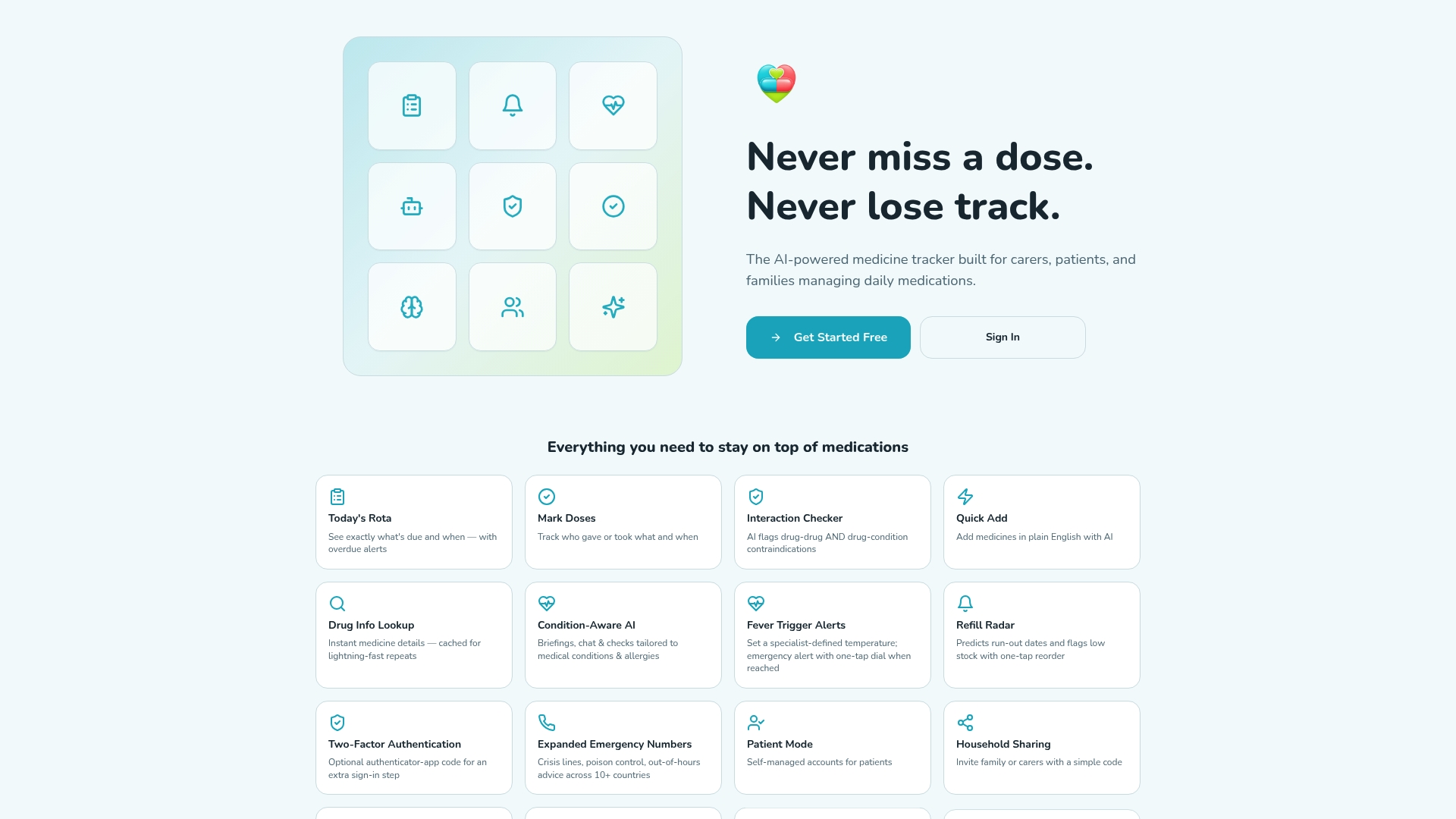
The platform supports weight-based dose logging, real-time reminders, shared household access, and drug interaction checks, all within a progressive web app that works across devices. Parents can share accurate medication histories directly with healthcare providers, reducing the information gaps that lead to poor clinical decisions. For families ready to move beyond phone alarms and paper notes, the free medicine app gives you a structured, reliable system from day one. Full details on plans and features are available on the pricing page.
FAQ
What is a child medication tracking feature?
A child medication tracking feature is a digital tool that records doses, calculates weight-based amounts, and enforces safe intervals between administrations for children's medicines. It differs from generic medication reminders by applying paediatric-specific logic automatically.
Why can't I use a standard pill tracker for my child?
Generic pill trackers do not support weight-based dosing or safe interval enforcement, both of which are critical for paediatric safety. Using one forces you to calculate doses manually, which increases the risk of error.
How do I reduce setup errors in a child medication tracker?
Enter your child's current weight carefully and verify the dosage frequency against the prescription before saving the profile. Studies show that 41% of setup errors come from incorrect data entries at this stage.
Can sharing medication logs with a doctor actually help?
Sharing digital logs with healthcare providers reduces information gaps by 57% and improves care coordination. Accurate dose histories help GPs and pharmacists make better-informed decisions.
What should I do if the tracking app stops working?
Keep a printed dosing chart as a backup, as recommended by the American Academy of Pediatrics. If you are uncertain about a dose at any point, contact your pharmacist, GP, or emergency services rather than guessing.