

The single most useful thing you can do is bring a complete, accurate list of every medicine you take, along with the original containers, and three priority questions written down in advance. This gives the pharmacist or GP the raw material to spot problems and agree changes with you. The review itself aims for a shared decision about your treatment, which sometimes means stopping a medicine that no longer helps, not just adding more.
TL;DR:
- Most medication reviews are annual, but you should book sooner if you've been hospitalized, started new medication, or developed new symptoms.
- Bringing all your medicines in original containers and a written list with details like name, strength, dose, and prescriber helps identify issues faster.
- Prioritize safety questions first, such as falls or bleeding, and prepare specific, clear questions about any recent side effects or interactions.
- A documented plan with clear instructions and responsible parties is essential to ensure changes are followed through after the review.
- Using a medication tracking app can simplify preparation by maintaining a current list, flagging interactions, and providing printable summaries for the appointment.
Table of Contents
- What is a medication review and why does it matter for older people?
- Who runs the review, and when should you book one?
- Documents needed for medication review: building your list
- What to record about symptoms, missed doses and monitoring readings
- Priority questions to bring, ranked by what matters most
- What happens after the review: agreeing and following up
- Templates and digital tools that make preparation easier
- A carer's honest note on preparation
- Let a medicine-tracking app do the remembering for you
- Where to read the original guidance
- Sources
- FAQ
What is a medication review and why does it matter for older people?
A medication review is a structured, critical look at everything you take, with the goal of reaching agreement between you and the clinician about what should continue, change, or stop. NICE defines it this way and specifically recommends it for older people and anyone managing several conditions at once.
If you take multiple medicines, sometimes called polypharmacy, your risk of interactions and side effects rises with every extra item on the list. Reviews targeted at this group tend to catch prescribing problems more reliably, such as duplicate therapies or doses that no longer suit your kidney function or weight.
Be realistic about what a review changes. Evidence shows reviews reliably improve prescribing quality, fewer inappropriate medicines, better formulations, but the effect on hospital admissions or survival is far less consistent. Deprescribing, when it happens, should be a planned, monitored step you agree to, never something stopped abruptly without discussion.
Who runs the review, and when should you book one?
Your GP, a practice-based pharmacist, a community pharmacist, or a practice nurse can all carry out a medication review, depending on how your surgery organises care. Community pharmacists often run structured services similar to a Medicines Use Review, so if your GP surgery has a long wait, ask your regular pharmacy whether they offer one.
Most people get an annual review as part of their repeat prescription cycle. Book sooner than that if you have just left hospital, started a new medicine, developed new symptoms, or added an over-the-counter supplement your prescriber does not know about.
Not every review needs a face-to-face appointment. Telephone and video reviews are increasingly common and work well when you mainly need a prescription check rather than a physical examination. Choose in-person when you have new symptoms that need assessing, mobility issues affecting how you take medicines, or a complicated list that benefits from someone physically checking your containers.
Documents needed for medication review: building your list
A gap in this list is the single biggest reason reviews take longer than they should or miss a problem. Gather everything from every room in the house, not just the medicine cabinet.
What to collect:
- All prescription medicines, whatever room they're stored in
- Over-the-counter tablets, painkillers, and cold remedies
- Vitamins, herbal remedies, and supplements
- Creams, ointments, eye drops, and inhalers
- Any leftover samples or medicines from friends or previous prescriptions
Bringing original containers, sometimes called the "brown bag" approach, lets the reviewer see exact strengths, dosing instructions, and prescriber names at a glance. This method consistently helps pharmacists catch duplicate therapy and interactions that patients miss on their own.
If carrying every box is impractical, prepare a written backup instead:
- Medicine name (brand and generic if both appear on the label)
- Strength and dose
- How often you take it and at what time
- Who prescribed it (GP, hospital consultant, specialist clinic)
- When you started it or when the dose last changed
A medication reconciliation guide is worth reading if you've recently been discharged from hospital, since reconciling the hospital list against your usual GP list is exactly where errors creep in.
What to record about symptoms, missed doses and monitoring readings
Vague descriptions waste appointment time. "I feel a bit off" gives the clinician nothing to work with, but "dizziness starting three days after my blood pressure tablet dose increased, worst in the morning" points straight to a cause.
For each symptom worth mentioning, note:
- The exact wording you'd use to describe it
- When it started, and whether it links to a dose change
- How often it happens and how severe it feels on a bad day
Be honest about adherence too. If you've missed doses, forgotten an evening tablet twice a week, or occasionally doubled up after forgetting, say so plainly rather than describing the schedule as printed on the label. Clinicians can only adjust a plan around what actually happens, not what should happen.
Home monitoring numbers carry real weight in a review. Blood pressure and glucose readings become far more useful when logged with dates and times attached, rather than remembered roughly from memory. A blood pressure log with even two weeks of dated entries can settle a question about whether a medicine is working within minutes.
Priority questions to bring, ranked by what matters most
Reviews are often ten to fifteen minutes long. Walking in with eight questions guarantees three get answered properly and five get rushed. Pick your top three to five and order them by risk, not by how long you've been wondering about them.
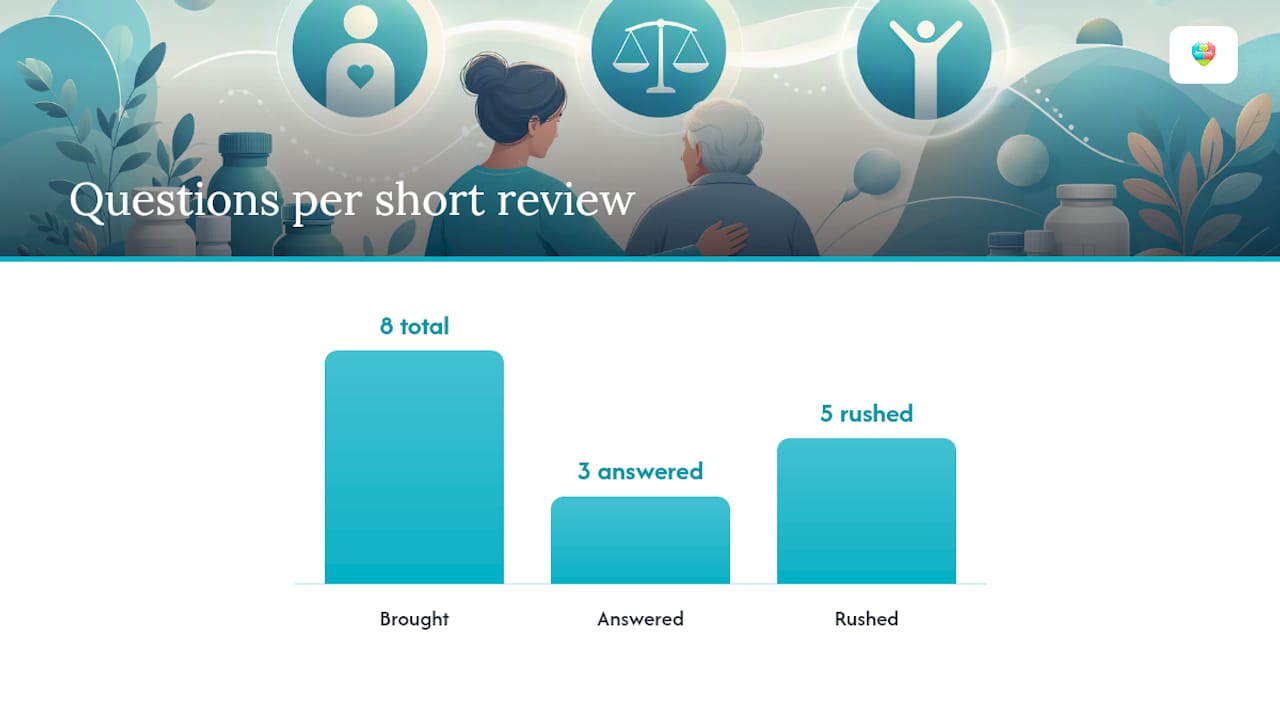
Rank safety issues first: falls, dizziness, unusual bleeding, or symptoms of low blood sugar. These can mean a medicine needs adjusting urgently. Then move to convenience and long-term fit.
Frame each question with a single line of context, then the question itself:
- "I've fallen twice this month. Could my blood pressure tablets be the cause?"
- "I'm still taking the stomach tablet from three years ago. Do I still need it?"
- "The new tablet upsets my stomach. Is there an alternative?"
- "What should I do if I miss a dose of my blood thinner?"
- "Could any of my supplements be interacting with my prescriptions?"
If you have a known drug allergy or a past adverse reaction, state it clearly at the start of the appointment, even if it's recorded somewhere in your notes already. Records get missed; a clear verbal reminder does not.
What happens after the review: agreeing and following up
A review that ends without anything written down is a review that will be repeated from scratch next time. Insist on a documented plan before you leave, whether that's on paper, in your GP record, or on a pharmacy printout.
- Ask what specifically has changed: dose, medicine name, or timing
- Confirm who is responsible for updating your repeat prescription
- Ask when the next check or blood test is due, and who will contact you
- Take home a written copy of any new instructions
Only the prescriber can formally change a prescription, so if your pharmacy's system still shows the old dose a week later, ring the surgery rather than assuming it will sort itself out. Once you're home, throw away or clearly mark any old dosing information so nobody accidentally follows outdated instructions.
Pro Tip: Keep last year's medicines list somewhere you can find it before the next review. Comparing old against new takes two minutes and often reveals a medicine nobody remembered to stop.
Templates and digital tools that make preparation easier
A simple table works for most people. Use one row per medicine with these columns: name, strength, dose, frequency, prescriber, start date, reason for taking it, and a notes column for anything unusual.
Recording all of that by hand every year gets tedious, which is where a digital option like The Daily Dose Tracker helps. Rather than rebuilding the list from memory each time, features worth using ahead of a review include:
- Multi-patient lists, useful if you manage medicines for a parent alongside your own
- Drug interaction checks that flag combinations worth raising with the pharmacist
- Refill tracking and monitoring logs stored alongside the medicine list
- An exportable medication history you can print or send ahead of the appointment
The platform meets UK GDPR standards, and its accessibility options, including dark mode and adjustable font size, help if reading small print on paper labels is difficult. Paper backups still matter, though, particularly if you're heading somewhere with poor signal or you simply prefer having something physical in hand.
A carer's honest note on preparation
I once found a stray antibiotic bottle behind the bread bin that my mother had forgotten to mention. That single discovery stopped a pharmacist prescribing something that would have duplicated it. Preparation doesn't need to be perfect. It needs to surface the things you'd otherwise forget exist. Clarity on three good questions beats a perfect list every time, and tools like a medication tracker just make that clarity easier to hold onto.
— Prasant
Let a medicine-tracking app do the remembering for you
The Daily Dose Tracker exists for the exact problem this article just walked through: the scramble to remember every tablet, cream, and supplement before an appointment that lasts fifteen minutes. Instead of hunting through drawers the night before, you keep one running list that updates itself as your prescriptions change.
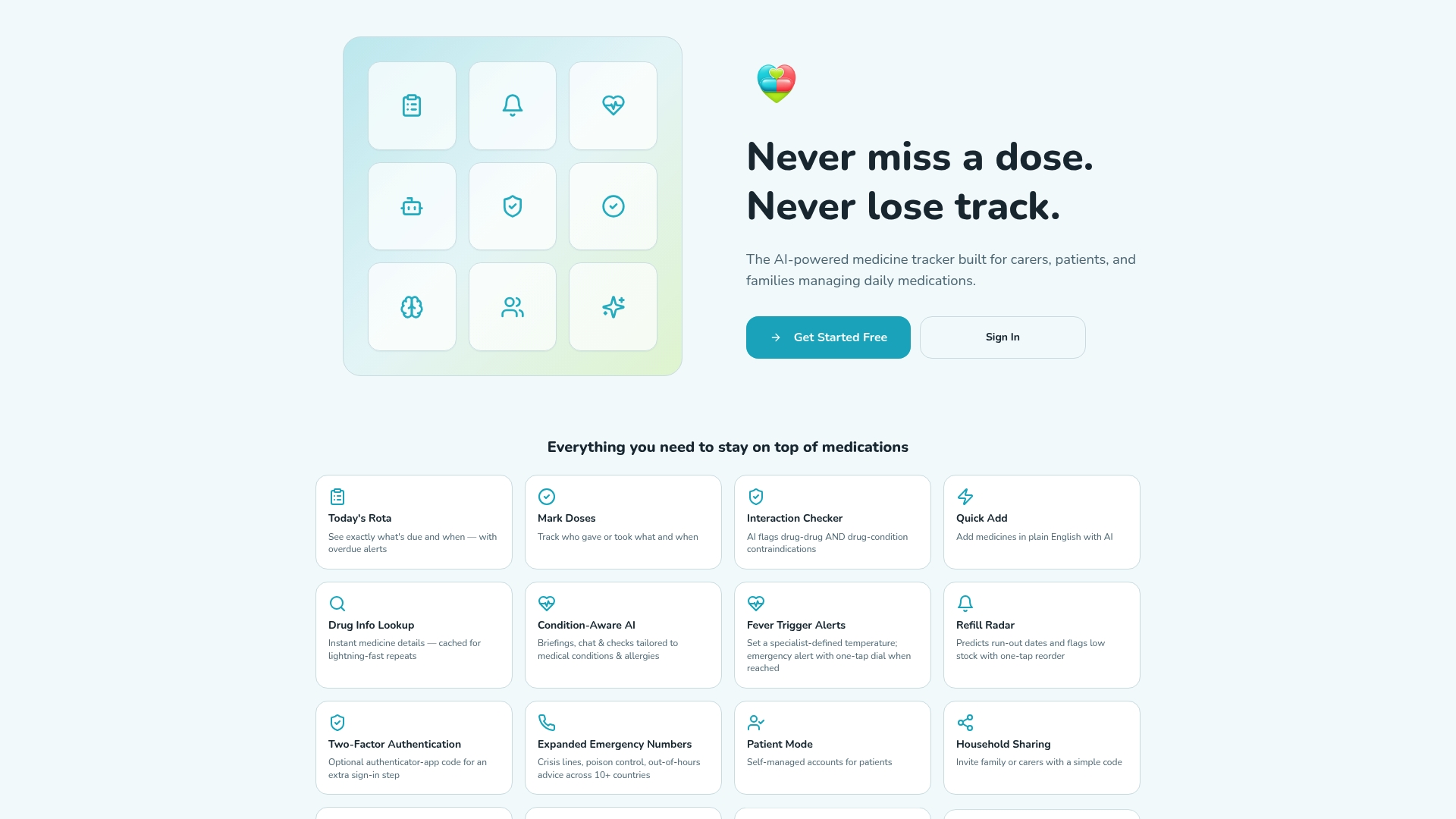
The free tier covers essential features like a shareable medicine list, dose reminders, and basic interaction flags. Upgrading provides access to features such as multi-patient management, exportable medication history, and refill predictions. The platform also includes accessibility settings to assist users who have difficulty reading small print or navigating cluttered screens.
If your next review is already on the calendar, set up your medicine list on The Daily Dose Tracker now and export a printable copy before you walk in.
Where to read the original guidance
For readers who want the underlying detail, NICE's medicines optimisation guidance sets the clinical standard, while the PCNE/EDQM medication-review procedure explains the seven-step process reviewers follow. NHS myMedReview offers a patient-facing checklist, and a peer-reviewed look at medication-review outcomes covers what the evidence actually supports.
This article is general information, not a substitute for advice from a qualified doctor. Consult a qualified healthcare professional about your own circumstances before acting on anything here.
Sources
- Medicines optimisation: the safe and effective use of medicines to enable the best possible outcomes (NICE)
- Medication reviews (peer-reviewed article)
- myMedReview (NHS patient checklist)
FAQ
What Should I Bring to a Medication Review?
Bring every medicine you take in its original container, including over-the-counter products and supplements, plus a written backup list and your top three questions.
How Often Should Older People Have a Medication Review?
Most people get one annually alongside their repeat prescription renewal, but book sooner after a hospital stay, a new diagnosis, or a new symptom.
Can a Medication Review Be Done by Phone?
Yes, telephone and video reviews are common and suit straightforward prescription checks, though in-person appointments work better for new symptoms or complex medicine lists.
What Is Deprescribing and Will It Happen Automatically?
Deprescribing means safely reducing or stopping a medicine that no longer helps, and it should always be agreed with you as a monitored step, never done without discussion.
How Can an App Help Me Prepare for a Medication Review?
An app such as The Daily Dose Tracker keeps a running, exportable list of everything you take, so you arrive with an accurate record instead of relying on memory.