

Polypharmacy is defined as the regular use of five or more medications by an older adult, and it affects approximately 40% of adults aged 65 and over. That figure means your parent is statistically more likely than not to be managing a complex medication regimen right now. This managing polypharmacy aging parent guide exists because the risks are real: adverse drug events cause around 450,000 emergency room visits annually in the US, with older adults bearing the greatest burden. The good news is that a clear system, built around accurate records and strong communication, reduces those risks significantly.
What does managing polypharmacy for an aging parent actually involve?
Managing polypharmacy means more than counting pills. It means overseeing whether each medication is still necessary, whether doses are correct for an ageing body, and whether combinations are safe. Ageing alters liver metabolism and kidney clearance, which changes how drugs are processed. A dose that was safe at 65 may cause sedation or confusion at 78. The goal is not simply reducing the number of medications but ensuring that the benefits of each one outweigh its risks, a practice clinicians call deprescribing.
Caregivers often underestimate how quickly a regimen changes. A hospital stay, a new specialist, or a single GP appointment can add two or three new prescriptions overnight. Without a system in place, these additions stack up unreviewed.

How to build a complete master medication list
A master medication list is the foundation of safe medication management for older adults. Without one, no doctor, pharmacist, or paramedic has the full picture.
Every entry on the list should include:
- Brand name and generic name (many older adults know only one or the other)
- Dose and frequency (for example, 10mg once daily with food)
- Purpose (what condition it treats)
- Prescribing doctor and their contact details
- Dispensing pharmacy
- Refill date and prescription renewal date
The list must also include over-the-counter medicines, vitamins, supplements, and herbal remedies. St John's Wort, for instance, interacts with antidepressants, anticoagulants, and several heart medications. Many caregivers omit supplements because they feel minor. They are not.
Keep physical copies in your parent's wallet, on the fridge, and in their hospital bag. Share a digital copy with every family member involved in care. Update the list after every appointment, hospital discharge, or prescription change. Pharmacy printouts are a reliable starting point, but they rarely include supplements or medicines prescribed by multiple specialists.
Pro Tip: Ask the pharmacist to print a full medication history at your next visit. Cross-reference it against your master list to catch any discrepancies before they become problems.
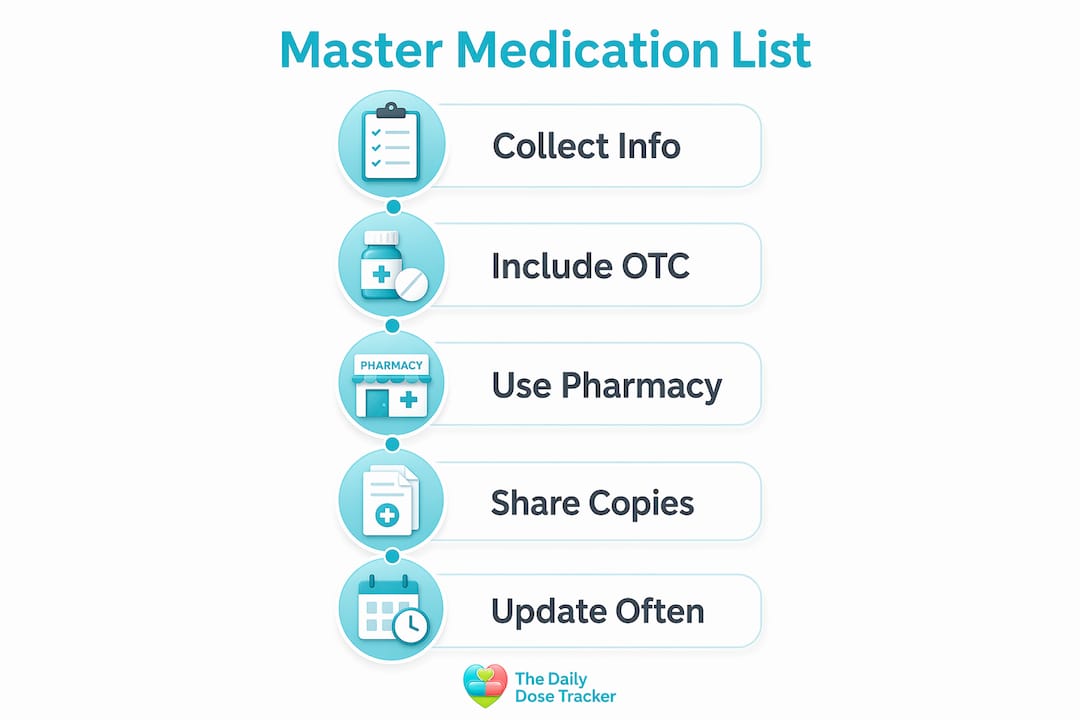
You can also use a structured elderly medication management checklist to make sure nothing is missed during this process.
How do you coordinate with doctors and pharmacists effectively?
Healthcare providers are your strongest allies, but only if you engage them proactively. A comprehensive medication review is recommended at least once per year and after every significant health event such as a hospital admission or a new specialist referral. Many caregivers wait to be invited. Do not wait.
When your parent takes eight or more medications, ask specifically about Medication Therapy Management (MTM). MTM sessions improve physical performance and reduce emergency visits in people managing complex regimens. These are structured consultations, usually led by a pharmacist, that review every medication for necessity, dosage, and interactions.
Prepare for every appointment with these steps:
- Bring the master medication list, updated that morning
- Write down any new symptoms, even vague ones like fatigue or dizziness
- Ask directly: "Is every medication on this list still necessary?"
- Request that the doctor communicate any changes to the dispensing pharmacy in writing
- Ask whether any medication can be deprescribed or replaced with a lower-risk alternative
Interprofessional communication is a known weak point in polypharmacy management. Your parent's cardiologist may not know what their rheumatologist prescribed last month. You are often the only person with the complete picture. Use that position deliberately.
Pro Tip: Bring a written summary of your parent's current medications to every specialist appointment and hand it to the receptionist before the consultation begins. Specialists rarely have access to GP records in real time.
Understanding the full medication review process helps you ask the right questions and advocate more effectively.
Practical tools and systems for medication adherence at home
The right tools reduce errors. The wrong tools create a false sense of security.
Weekly pill organisers
Weekly pill organisers are effective dispensing tools but insufficient as standalone systems. They do not confirm whether a dose was taken, and they do not alert anyone to a missed dose. Pair every organiser with an updated master list and a refill tracking system.
Automatic dispensers and alert systems
Automatic dispensers release the correct dose at the correct time and can send alerts to caregivers when a dose is missed. For parents living alone, these devices provide a meaningful safety net. They are particularly useful when cognitive decline makes self-management unreliable.
Pharmacy consolidation
Consolidating all prescriptions to a single pharmacy is one of the most important safety steps a caregiver can take. Drug interaction software operates only within one pharmacy's system. A pharmacist cannot flag a dangerous combination if half the prescriptions are filled elsewhere.
| Tool | Primary benefit | Key limitation |
|---|---|---|
| Weekly pill organiser | Simple, low cost | Does not confirm dose taken |
| Automatic dispenser | Alerts for missed doses | Higher cost, setup required |
| Single pharmacy consolidation | Full interaction checking | Requires transferring all prescriptions |
| Digital tracking platform | Real-time alerts, multi-carer access | Requires consistent data entry |
Medication synchronisation
Ask the pharmacy to synchronise all refill dates to the same day each month. This single change prevents the most common cause of missed doses: running out of one medication while waiting for another to be due. Assign one family member to manage all refills and prescription renewals. Shared responsibility without clear ownership leads to gaps.
Pro Tip: Set a recurring calendar reminder two weeks before the synchronised refill date. That window gives you time to request any prescriptions that need a GP renewal before the supply runs out.
How do you talk to your aging parent about medication help?
Resistance from your parent is not stubbornness. It is a reasonable response to feeling that their independence is being taken away. The way you frame your involvement changes everything.
Using 'teach me' and 'safety backup' phrasing maintains your parent's sense of control. Instead of saying "I'll manage your medications from now on," try "Can you walk me through your routine so I understand it?" That framing positions you as a learner, not a supervisor. Your parent stays in charge of the narrative.
Other approaches that work:
- Create a small emergency medication card for their wallet listing current medications, allergies, and your contact number
- Ask them to explain what each medication does. This reveals gaps in understanding and gives them ownership
- Address concerns about side effects without dismissing them. If they say a medication makes them feel unwell, take that seriously and raise it with the GP
- Watch for signs that more support is needed: missed doses several times a week, confusion about which pill is which, or reluctance to discuss medications at all
The goal is shared responsibility, not a handover. Your parent's cooperation makes the whole system safer.
Pro Tip: Frame your involvement as a backup for emergencies rather than a takeover. Say: "I just want to make sure someone else knows your routine in case you're ever in hospital." Most parents accept that framing readily.
What are the most common challenges in managing multiple medications?
Missed doses and double doses are the two most frequent errors in home medication management. A missed dose of a blood thinner or an anticonvulsant can have serious consequences. A double dose of certain heart medications can cause dangerous drops in blood pressure. Neither is a minor inconvenience.
Hospital and specialist visits are high-risk moments. Discharge summaries often list new medications without clearly stating which previous ones to stop. Medication reconciliation, the process of comparing a patient's current list against any new prescriptions, should happen at every transition of care. Do not assume the hospital has communicated changes to the GP.
Polypharmacy management fails most often at the handover points: discharge from hospital, a new specialist referral, or a change of GP. These are the moments when an up-to-date master list and a proactive caregiver make the biggest difference to safety.
Subtle side effects are easy to miss. Cognitive changes, increased falls, or new fatigue are often attributed to ageing rather than medication. Age-related changes in drug metabolism mean that a drug tolerated for years can suddenly cause problems. Report any new symptom to the GP and ask whether it could be medication-related. You can also read more about why missed doses are serious for older adults to understand the full range of risks.
Insurance and supply issues are practical but significant. Prescription renewals that lapse, formulary changes, or generic substitutions can disrupt a stable regimen. Keep a two-week buffer supply where clinically appropriate and confirm with the GP before any substitution.
Key takeaways
Safe polypharmacy management for an aging parent requires a complete medication list, single-pharmacy consolidation, annual reviews, and communication strategies that preserve your parent's dignity and cooperation.
| Point | Details |
|---|---|
| Build a master medication list | Include all prescriptions, supplements, and over-the-counter drugs with doses, purposes, and prescriber details. |
| Consolidate to one pharmacy | A single pharmacy can run full drug interaction checks; multiple pharmacies cannot. |
| Request annual medication reviews | Ask for a comprehensive review yearly and after every hospital admission or specialist visit. |
| Use tools in combination | Pair pill organisers with digital tracking and refill alerts rather than relying on any single system. |
| Frame involvement as backup | Use 'teach me' and 'safety backup' language to maintain your parent's sense of control and reduce resistance. |
What I've learned from watching caregivers get this wrong
Most caregivers I've spoken with make the same mistake at the start: they focus on the pills and miss the system. They buy a pill organiser, feel organised for a week, and then a hospital visit reshuffles everything and they're back to square one. The organiser is still full of last week's doses. Nobody noticed.
The caregivers who manage this well treat medication management like a living document, not a one-time task. They update the list the same day a prescription changes. They go to appointments with their parent rather than hearing about them secondhand. They have one person in the family who owns the process, not three people who each assume someone else is handling it.
The hardest part is the conversation with your parent. I've seen adult children avoid it for months because they're worried about causing offence. That delay is genuinely dangerous. The 'safety backup' framing works because it's honest. You are not taking over. You are making sure that if something goes wrong, someone else knows what to do. Most parents, when it's put that way, are relieved rather than resistant.
Pharmacists are underused in this process. A pharmacist who knows your parent's full medication history is one of the most valuable people in your care network. Build that relationship deliberately. It pays off.
— Prasant
How Thedailydosetracker supports family caregivers
Managing multiple medications across different prescribers, pharmacies, and family members is genuinely complex. Thedailydosetracker is built for exactly this situation.
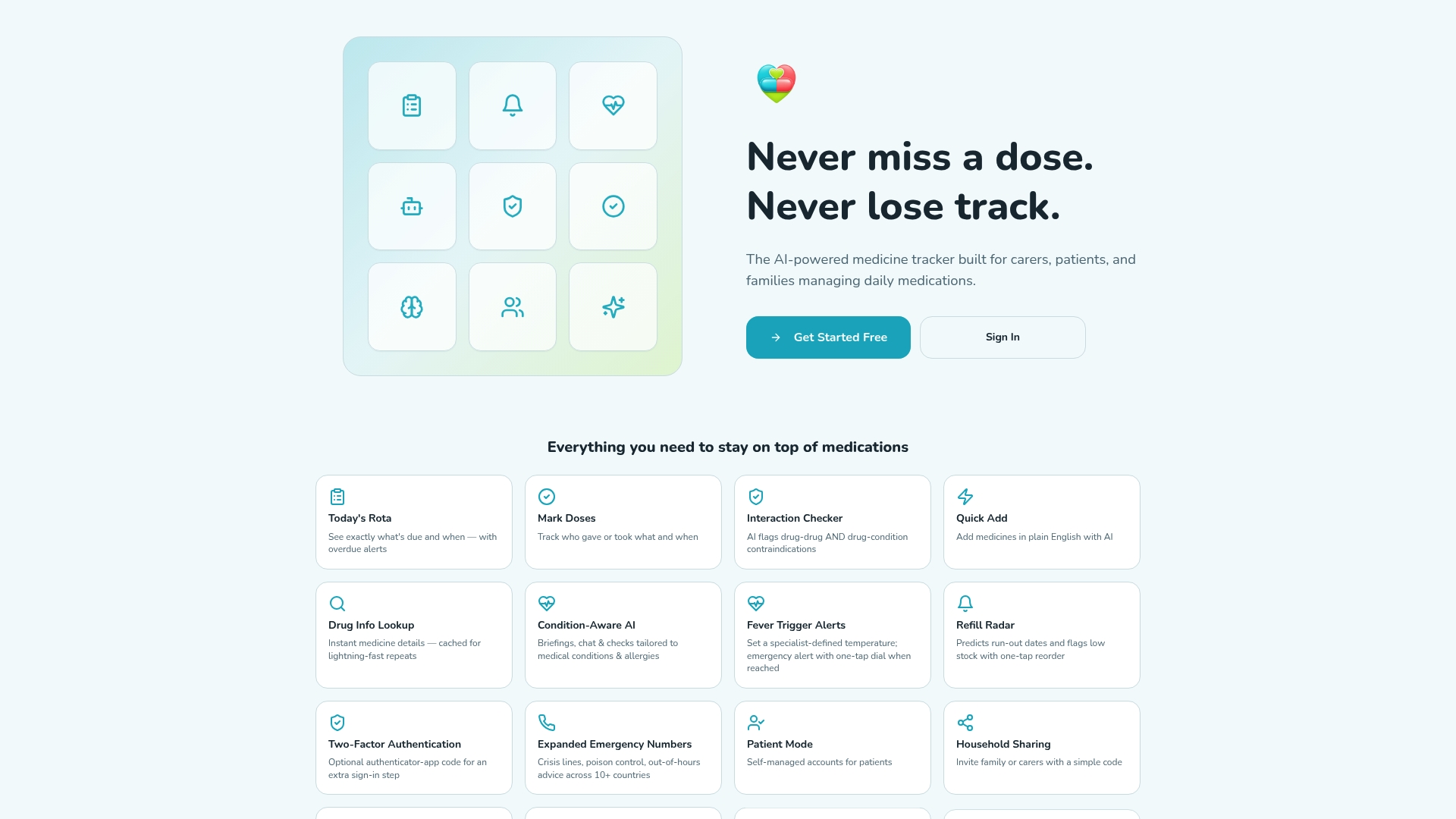
The platform lets you build and share a complete medication schedule, log each dose as it's taken, and receive real-time alerts for missed or overdue doses. Its built-in drug interaction checks add a layer of safety that paper lists cannot provide. Multiple family members can access the same profile, so everyone involved in care works from the same information. You can explore all features and get started with the free medicine management app today. Thedailydosetracker also supports refill predictions and appointment scheduling, making it a practical daily tool rather than just a record-keeping system.
FAQ
What is polypharmacy in older adults?
Polypharmacy is defined as the regular use of five or more medications by an older adult. It affects approximately 40% of adults aged 65 and over and significantly increases the risk of adverse drug events.
How often should an aging parent's medications be reviewed?
A comprehensive medication review is recommended at least once per year and after every significant health event, including hospital admissions, new specialist referrals, or major changes in health status.
Why does consolidating to one pharmacy matter?
Drug interaction software operates only within a single pharmacy's system. Using multiple pharmacies prevents pharmacists from detecting dangerous combinations across the full medication list.
What is Medication Therapy Management (MTM)?
MTM is a structured consultation, usually led by a pharmacist, for patients taking eight or more medications. Research shows MTM improves physical performance and reduces emergency visits in people with complex regimens.
How do I talk to my parent about needing help with medications?
Use 'teach me' and 'safety backup' framing rather than taking over. Ask your parent to walk you through their routine, and position your involvement as a precaution for emergencies rather than a replacement for their independence.