

Polypharmacy is defined as the concurrent use of five or more medications, and it is the leading driver of preventable adverse drug reactions in older adults. Examples of polypharmacy management strategies include structured medication reviews, pharmacist-led deprescribing, clinical decision support tools, and multidisciplinary care protocols. The Scottish 7-Step polypharmacy review approach is projected to save £2.1 million annually by reducing inappropriate prescribing. Managing multiple medications without a clear framework puts patients at serious risk of hospitalisations, drug interactions, and prescribing cascades.
1. What are structured medication reviews and how do they reduce polypharmacy risks?
A structured medication review (SMR) is a formal, clinician-led assessment of every medication a patient takes, with the goal of stopping, reducing, or replacing drugs that no longer serve their purpose. SMRs are the most evidence-backed entry point for polypharmacy reduction techniques in primary care.

A 2026 feasibility study found that SMRs in patients aged 75+ led to 87% of participants having medication changes, with 72% having at least one medication stopped entirely. The average cost per intervention was just £28.50, making this one of the most cost-effective polypharmacy intervention examples available in general practice. Retention at three months reached 92%, confirming that patients accept and sustain these changes.
The SMR process typically involves:
- A pre-appointment medicines reconciliation, gathering all current prescriptions, over-the-counter drugs, and supplements
- A face-to-face or remote consultation with a GP, pharmacist, or specialist nurse
- A shared decision-making conversation about treatment goals and patient priorities
- A written follow-up plan with a scheduled review date
Pro Tip: Ask patients to bring every medication they take to the review, including vitamins and herbal remedies. Over-the-counter and supplement inclusion is the single most overlooked step in medication reconciliation, and it enables safety checks that a prescription-only focus will miss.
Medication reconciliation after hospital discharge is a particularly high-risk window. Patients often leave hospital with new drugs added to an already long list, and without an SMR, those additions can persist indefinitely.
2. How does pharmacist-led care enhance polypharmacy management?
Pharmacists are the clinical professionals best placed to identify inappropriate prescribing, flag drug interactions, and lead deprescribing conversations. Pharmacist-led clinical medication reviews with shared decision-making focus consistently improve outcomes and reduce inappropriate medications across care settings.
The pharmacist's role in effective polypharmacy strategies includes:
- Applying validated tools such as the Beers Criteria and STOPP/START criteria to identify high-risk medications in older adults
- Collaborating with GPs and specialist physicians to align prescribing with current treatment goals
- Conducting home medicines reviews for patients who cannot attend a clinic
- Educating patients and carers about the purpose and risks of each medication
"Pharmacist-led medication reviews that include patient goals and efficacy data improve clinical outcomes and acceptance rates. When patients understand why a medication is being stopped, adherence to the revised regimen improves significantly."
High medication burden, sometimes called hyperpolypharmacy (ten or more concurrent medications), actually increases a patient's receptiveness to therapeutic optimisation proposals by hospital practitioners. This means the patients who need intervention most are often the most willing to accept it. Pharmacists working within mobile geriatrics teams or ward rounds are well positioned to act on that receptiveness.
A guide for carers on preventive medication management outlines how pharmacist involvement at the household level can prevent prescribing cascades before they start.
3. What digital tools and technological interventions support polypharmacy management?
Digital tools are now a core component of best practices for polypharmacy, particularly in primary care settings where clinician time is limited. Electronic health record (EHR) systems, clinical decision support (CDS) tools, and medication tracking platforms each address a different layer of the problem.
A randomised clinical trial involving 201 primary care physicians and 1,146 patients aged 65+ found that EHR precommitment interventions increased deprescribing rates by 10.4% compared to standard care. Adding a "boostering" component, where physicians received follow-up prompts, added a further 6.5%. These are not marginal gains. They represent thousands of unnecessary prescriptions avoided at scale.
Key digital interventions include:
- EHR precommitment tools: Physicians commit in advance to reviewing specific medications at the next appointment, reducing inertia
- Clinical decision support alerts: Real-time flags for drug interactions, duplicate therapies, and age-inappropriate prescribing
- Medication tracking apps: Platforms that log doses, flag missed medications, and alert carers to overdue doses
- Adherence monitoring tools: Digital records that show whether a patient is actually taking what is prescribed
Pro Tip: Use a digital platform with built-in drug interaction checks to catch prescribing cascades before they take hold. A prescribing cascade occurs when a new drug is added to treat the side effects of an existing one, and it is a major contributor to polypharmacy in older adults.
Thedailydosetracker offers drug interaction checks, real-time dose alerts, and multi-patient management in a single platform. For carers managing elderly patients at home, this kind of medication adherence support reduces the risk of both missed doses and accidental duplication.
4. Which deprescribing strategies are most effective for managing multiple medications?
Deprescribing is defined as a systematic, supervised clinical and ethical process of reducing or stopping medications that are no longer appropriate, and it is integral to prescribing itself rather than a separate activity. The clinical practice guideline published in 2026 confirms that deprescribing should be triggered at every prescription renewal, not only during formal reviews.
Effective deprescribing follows a clear sequence:
- Identify the indication: Confirm that each medication still has a valid clinical reason for continuation
- Assess the benefit-to-harm ratio: Use tools like STOPP/START to flag medications where risk now outweighs benefit
- Prioritise medications to stop: Focus first on those with the highest risk and lowest ongoing benefit
- Taper where necessary: Some medications, including antidepressants, antihypertensives, and corticosteroids, require gradual dose reduction to avoid withdrawal effects
- Monitor and follow up: Schedule a review within four to six weeks to assess the patient's response
- Document the decision: Record the rationale for stopping each medication to prevent inadvertent re-prescribing
Aligning deprescribing with a patient's treatment goals is not optional. An 85-year-old patient whose priority is quality of life rather than disease prevention may reasonably stop a statin or a bisphosphonate. That conversation belongs in every clinical encounter.
Pro Tip: Never adjust or stop a medication without professional guidance. Self-adjusting doses without consulting a clinician is dangerous and can cause serious withdrawal effects or rebound conditions.
An elderly medication management checklist can help carers prepare for deprescribing conversations by documenting every medication, its purpose, and the last date it was reviewed.
Key takeaways
The most effective approach to polypharmacy management combines structured medication reviews, pharmacist-led deprescribing, and digital monitoring tools to reduce inappropriate prescribing and improve patient safety.
| Point | Details |
|---|---|
| Structured medication reviews | SMRs cost £28.50 per intervention and stopped medications in 72% of patients aged 75+. |
| Pharmacist-led deprescribing | Pharmacists using STOPP/START criteria identify high-risk drugs and lead shared decision-making conversations. |
| Digital tools increase deprescribing | EHR precommitment interventions raised deprescribing rates by 10.4% in a trial of 1,146 patients. |
| Deprescribing is a clinical process | Every prescription renewal should trigger a re-evaluation, not just formal annual reviews. |
| Include all medications | Over-the-counter drugs and supplements must be included in every medication review to prevent missed interactions. |
Polypharmacy management: what I have learnt from working in this space
The conversation that rarely happens in clinical practice is the one where a clinician asks a patient: "Which of these medications would you most like to stop?" That question changes everything. Patients often carry medications for years out of habit or fear, not because those drugs are still doing anything useful.
The prescribing cascade is the most underestimated problem in managing multiple medications. A patient develops ankle swelling, gets prescribed a diuretic, develops low potassium, gets prescribed a supplement, develops nausea, and so it continues. Each step looks reasonable in isolation. The whole chain only becomes visible when someone maps every medication against every symptom at the same time.
Technology is closing that gap, but only if it is used properly. Thedailydosetracker's drug interaction checks and dose logging give carers and clinicians a shared view of the full medication picture. That shared view is what makes the prescribing cascade visible before it becomes a crisis.
The future of polypharmacy management sits at the intersection of pharmacist expertise, patient goals, and real-time digital monitoring. None of those three elements works well without the other two. Carers who understand this and advocate for all three will get better outcomes for the people they support.
— Prasant
How Thedailydosetracker supports medication management at home
Managing a complex medication regimen at home is one of the hardest tasks a carer faces. Thedailydosetracker is built specifically for this challenge, combining AI-powered dose tracking, drug interaction checks, and real-time alerts in one accessible platform.
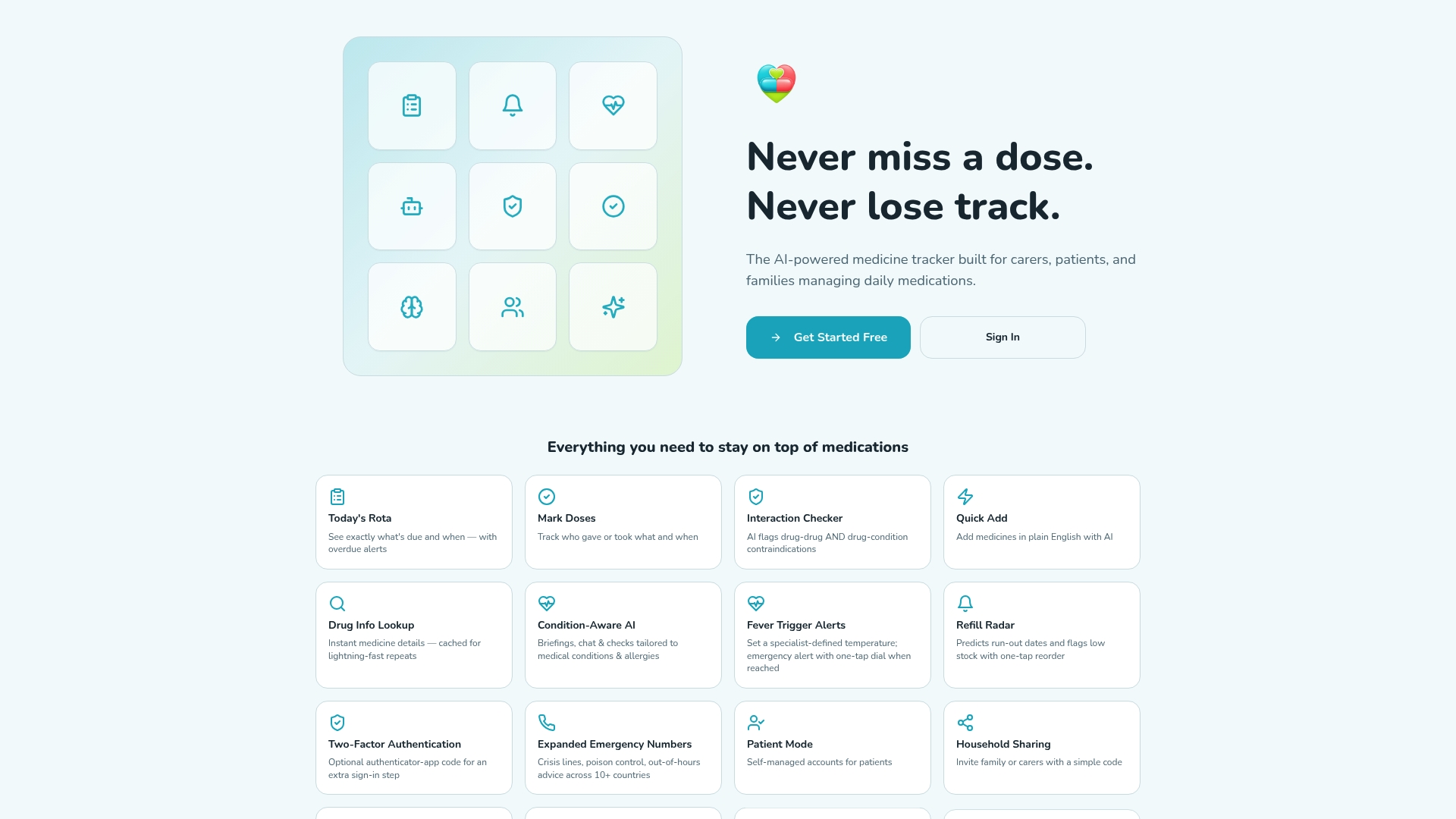
The platform supports multi-patient management, so carers overseeing more than one family member can monitor all medication schedules from a single dashboard. Dose logging, refill predictions, and emergency contact integration mean that nothing falls through the gaps. For families and care teams ready to take a more structured approach, the app features and pricing are available online, and the full feature overview covers everything from symptom logging to appointment scheduling.
FAQ
What is polypharmacy and when does it become a problem?
Polypharmacy is defined as taking five or more concurrent medications. It becomes clinically problematic when the combined risk of adverse drug reactions, interactions, and non-adherence outweighs the benefit of individual treatments.
What is the most effective polypharmacy intervention example in primary care?
Structured medication reviews are the most evidence-backed intervention. A 2026 feasibility study found that 72% of patients aged 75+ had at least one medication stopped following an SMR, at a cost of just £28.50 per review.
How does deprescribing differ from simply stopping a medication?
Deprescribing is a supervised clinical process that includes assessing benefit-to-harm ratios, tapering where necessary, and monitoring for withdrawal effects. Stopping a medication without professional guidance can cause serious harm.
What role do pharmacists play in reducing polypharmacy?
Pharmacists apply tools like the Beers Criteria and STOPP/START criteria to identify inappropriate prescribing, lead shared decision-making conversations, and collaborate with GPs to align medications with patient goals.
Can digital tools genuinely reduce polypharmacy?
Yes. EHR precommitment interventions increased deprescribing rates by 10.4% in a randomised trial. Medication tracking platforms like Thedailydosetracker further support adherence and flag drug interactions in real time.