
The best approach combines three things: a simple daily routine, a reminder system that fits how you actually live, and a monthly refill check so you never run dry. A 2022 systematic review backs this up, finding that reminder apps only help when their features match how you take your medicine. Some platforms build this exact combination into one workflow rather than leaving you to cobble it together.
TL;DR:
- Reminder apps must match a person's routine and delivery format to effectively improve medication adherence, as generic apps often underperform.
- Features like customizable alerts, dose export logs, refill tracking, and multi-channel delivery significantly boost adherence when tailored to individual needs.
- Practical solutions for compliance include physical pill organizers, linking medication to daily habits, and calendar reminders, which often outperform complex digital systems.
- Sharing access with carers and exporting adherence data can improve clinical reviews, but privacy safeguards and targeted permissions are essential.
- Apps support routine consistency but do not replace clinical judgment, with a focus on basic design features like timing flexibility and backup channels being most critical.
Table of Contents
- What the research shows about reminders and medication apps
- Key reminder features: what to pick and why each matters
- Practical setups you can use today
- Setting up reminders with carers and clinical teams
- Missed doses and safety: what to do and what apps can't do
- What actually works in practice, and where people go wrong
- The judgement this evidence actually supports
- How The Daily Dose Tracker puts this into practice
- Sources
What the research shows about reminders and medication apps
Not every reminder app works, and the evidence explains why. The 2022 systematic review examined eight high quality diabetes adherence apps and found roughly half produced only low adherence outcomes, while others drove high or moderate adherence depending on how well their features matched the person's actual routine, a concept researchers call task-technology fit. A flashy app with the wrong reminder logic performs worse than a basic one that fires at the right moment, in the right format, every single time.
Format matters more than most people assume. A 2020 brief report on diabetes management apps found that pop-up messages or banners were the most common reminder format, appearing in 68.3% of apps studied, followed by vibration alerts at 48.5%. Delivery format changes behaviour: a silent banner buried in a notification tray gets ignored far more easily than a vibrating, sound-paired alert that interrupts what you're doing.
Common reminder formats people encounter include:
- Pop-up or banner notifications, the most widespread format, best for smartphone users who check their phone regularly.
- Vibration alerts, useful in meetings or quiet environments where sound isn't appropriate.
- SMS text reminders, valuable for people without a smartphone or with limited data access.
- Audible alarms, still the most reliable fallback when someone is likely to miss a screen notification entirely.
Pro Tip: If you've missed a dose more than twice in a fortnight, don't just turn the volume up. Switch delivery formats entirely. Someone who ignores banners might respond instantly to a vibrating watch or a phone call from a linked family member.
The clinical guidance is consistent on one point: reminder systems help, but the specific tool matters less than the fit. NHS Specialist Pharmacy Service guidance recommends reminder charts, alarm devices, talking watches and automatic dispensers as practical, low-friction supports, alongside digital options, and stresses involving carers where relevant.
There's a genuine limitation worth naming here. Researchers evaluating these apps use structured tools like the Mobile App Rating Scale (MARS) and task-technology fit matrices precisely because star ratings on an app store tell you almost nothing about whether an app will actually improve your adherence. Many popular apps have never been evaluated this way. That doesn't mean they don't work. It means you're taking it on faith rather than evidence, which is a different thing entirely.
Key reminder features: what to pick and why each matters
Not all reminder features carry equal weight. Some are genuinely useful; others are decoration. Here's what to look for and why it matters clinically, not just cosmetically.
Customised alerts and timing windows. Fixed alarms work fine for a once-daily metformin dose, but insulin schedules often need more flexibility. Research on diabetes adherence tools suggests adaptive reminders that shift when a dose runs late reduce the pressure of a missed-dose spiral better than a single rigid alarm, because they account for the reality that meals, exercise and daily life don't always run on schedule.
Dose logging and exportable histories. A log that just sits on your phone is only half useful. Clinicians and product researchers agree that exportable medication histories turn a vague "I think I've been taking it most days" into a concrete record your GP or diabetes nurse can actually review. That distinction changes consultations: instead of guessing at adherence patterns from memory, your clinician sees the real picture.
Refill tracking and multi-channel delivery. Refill tracking is one of the most underused features in medication apps, and it's also one of the most consequential. Running out of a prescription three days before a repeat is due is one of the most common, and most preventable, causes of a missed-dose run. Combine that with multi-channel delivery, meaning the same reminder fires as a push notification, an SMS backup and, ideally, a shared alert to a carer, and you build in redundancy against any single point of failure.
Features worth prioritising when you're comparing tools:
- Adjustable timing windows rather than fixed single-time alarms
- Exportable dose logs in CSV or PDF format
- Low-stock refill alerts tied to your actual prescription duration
- Household or carer sharing permissions
- Backup delivery channels (SMS or email alongside app push notifications)
One caveat that deserves plain language: no reminder app is a clinical device, and none should be treated as a substitute for advice from your GP, pharmacist or diabetes specialist nurse. These tools support a routine. They don't diagnose, adjust dosing, or replace a clinical review.
Practical setups you can use today
You don't need to overhaul your entire routine to fix a medication adherence gap. Most people need one small structural change and a backup. Start with whichever category matches how you actually operate day to day.
Low-tech routines that work without a smartphone
- A weekly pill organiser with day and time compartments. Fill it once a week, on the same day, and you get an instant visual check: an unopened compartment by evening means a missed dose, no app required.
- Habit stacking with an existing daily task. Link your dose to something you already do without fail, brushing your teeth, making coffee, feeding a pet, so the medicine rides on an existing routine rather than needing its own memory slot.
- A wall calendar plus a basic phone alarm. Cross off each day after taking your dose. The visual gap of an unmarked square is often more motivating than a digital streak counter.
Digital setups worth setting up properly
- A single device, one alarm plus one app. Pick one phone, set recurring alarms at your actual dose times (not "morning" and "evening", the exact times), and pair it with an app that logs the dose once taken.
- A shared household app for carer visibility. If someone else checks in on your medication, a shared medication app lets them see missed doses without a daily phone call, which matters enormously for people supporting elderly relatives or those managing multiple conditions.
- Calendar integration with repeat rules. Most calendar apps let you set a repeating event with a custom alert, which works well for people who already live inside their calendar for work.
Pro Tip: Set a test alert for five minutes from now before you commit to any new system. Confirm it actually vibrates, sounds, or pops up the way you expect, on the volume and lock-screen settings you actually use, not the demo settings the app ships with. A reminder system that fails silently in week one gets abandoned by week two.
A working ten-minute checklist: pick your device, set exact dose times (not vague windows), choose at least two alert channels, add a weekly refill check, and test the alert once before trusting it. Practical, step-by-step routine changes like this tend to outperform elaborate systems nobody has the patience to maintain.
Setting up reminders with carers and clinical teams
Sharing responsibility for medication reminders works best when the permissions are specific, not blanket access. A carer checking on an elderly parent's insulin schedule needs different visibility than a partner keeping half an eye on a general metformin routine, and most household sharing tools let you set that distinction directly: full dashboard access for a primary carer, or a simple "notify if a dose is missed" alert for someone with a lighter role.
Exportable adherence history changes what happens in a clinic appointment. Instead of relying on memory when a GP or diabetes nurse asks how consistently you've been taking your medication, an exported log gives them an actual record. Clinical guidance on medication adherence notes that exportable histories and refill tracking materially reduce missed supply events and improve the quality of the consultation itself, because the conversation starts from data rather than guesswork.
Before you switch on any sharing feature, run through a short privacy checklist:
- Lock the device itself with a passcode or biometric lock, not just the app.
- Limit account sharing to the specific people who need it, not a household-wide login everyone uses.
- Check that any platform you use states clear UK GDPR compliance for how health data is stored and shared.
- Review carer permissions periodically, particularly after a change in who provides day-to-day support.
Escalation for overdue doses is worth enabling if you're supporting someone at higher risk, elderly relatives, people newly diagnosed, or anyone on a complex insulin regimen. Pairing that with an emergency contact means a genuinely missed dose triggers a real human response, not just another notification lost in the pile.
Missed doses and safety: what to do and what apps can't do
A missed oral diabetes medicine generally follows a simple rule: take it as soon as you remember, unless it's nearly time for your next dose, in which case skip the missed one and continue as normal. Never double up to compensate. That general guidance holds for most oral diabetes medicines, but your own prescribing information or pharmacist should confirm it for your specific drug, since timing rules vary between medicines.
Insulin is different, and the caution here matters more. Never double a missed insulin dose to catch up. If you're unsure whether you've taken a dose, or you're experiencing symptoms of hypoglycaemia (shakiness, sweating, confusion) or hyperglycaemia (excessive thirst, blurred vision, fatigue), contact your GP, diabetes nurse or NHS 111 rather than guessing at a correction dose yourself.
This is precisely where reminder tools hit their ceiling. An app can nudge you at the right time and log what you took. It cannot tell you whether a symptom you're feeling right now is dangerous, and it shouldn't be asked to. What a good dose log does is give your clinical team a clearer picture after the fact: a pattern of missed Tuesday evening doses, say, is far easier to solve once someone can actually see it written down rather than reconstructed from memory during a rushed appointment.
- Missed oral dose: take it if you remember soon after, skip it if your next dose is close, never double up.
- Missed insulin dose: don't self-correct with an extra dose, contact your care team if symptoms appear.
- Persistent pattern: bring your exported log to your next review rather than waiting to be asked.
What actually works in practice, and where people go wrong
The most common failure isn't forgetting to take medicine. It's building a reminder system so fragile that one disrupted day, a holiday, a bad flu, a change in work shift, knocks the whole routine over. People snooze alerts until snoozing becomes the default response. They install three different apps and end up trusting none of them fully. Routines drift quietly, and nobody notices until an appointment surfaces a gap in the record.
The fix isn't more technology. It's fewer, better-chosen tools used consistently, with a physical backup for when the digital one fails. A pill organiser that shows an unopened compartment by 8pm tells you something an app notification, easily dismissed, often doesn't.
Carers face a specific version of this problem: they're managing someone else's routine on top of their own life, often across multiple medications and multiple people. The tools that help most here aren't the ones with the flashiest features. They're the ones that surface a missed dose clearly, without requiring a carer to open five different screens to find it.
The judgement this evidence actually supports
The conventional advice, "just download a reminder app", oversells what any single tool can do on its own. The evidence points somewhere more specific: pick a system with the right timing flexibility and delivery redundancy for your actual routine, log doses so the record means something at your next appointment, and build in a refill check before you're down to your last few pills.
Where most guidance falls short is treating adherence as a willpower problem rather than a design problem. People don't forget medication because they don't care. They forget because the reminder didn't reach them in a format they actually respond to, or because nobody was tracking the pattern until it became a genuine gap.
Prioritise the boring parts first: exact timing, a backup channel, a refill buffer. The clever features matter far less than getting those basics right and keeping them consistent.
— Prasant
How The Daily Dose Tracker puts this into practice
Everything covered above, customised timing windows, dose logging, refill alerts, household sharing, exportable histories, is built into The Daily Dose Tracker as one connected system rather than something you assemble from three separate apps. Real-time alerts can notify for due or overdue doses, refill predictions help catch a low supply before it becomes a missed dose, and some systems include drug interaction checks as an additional layer not found in most standalone reminder apps.
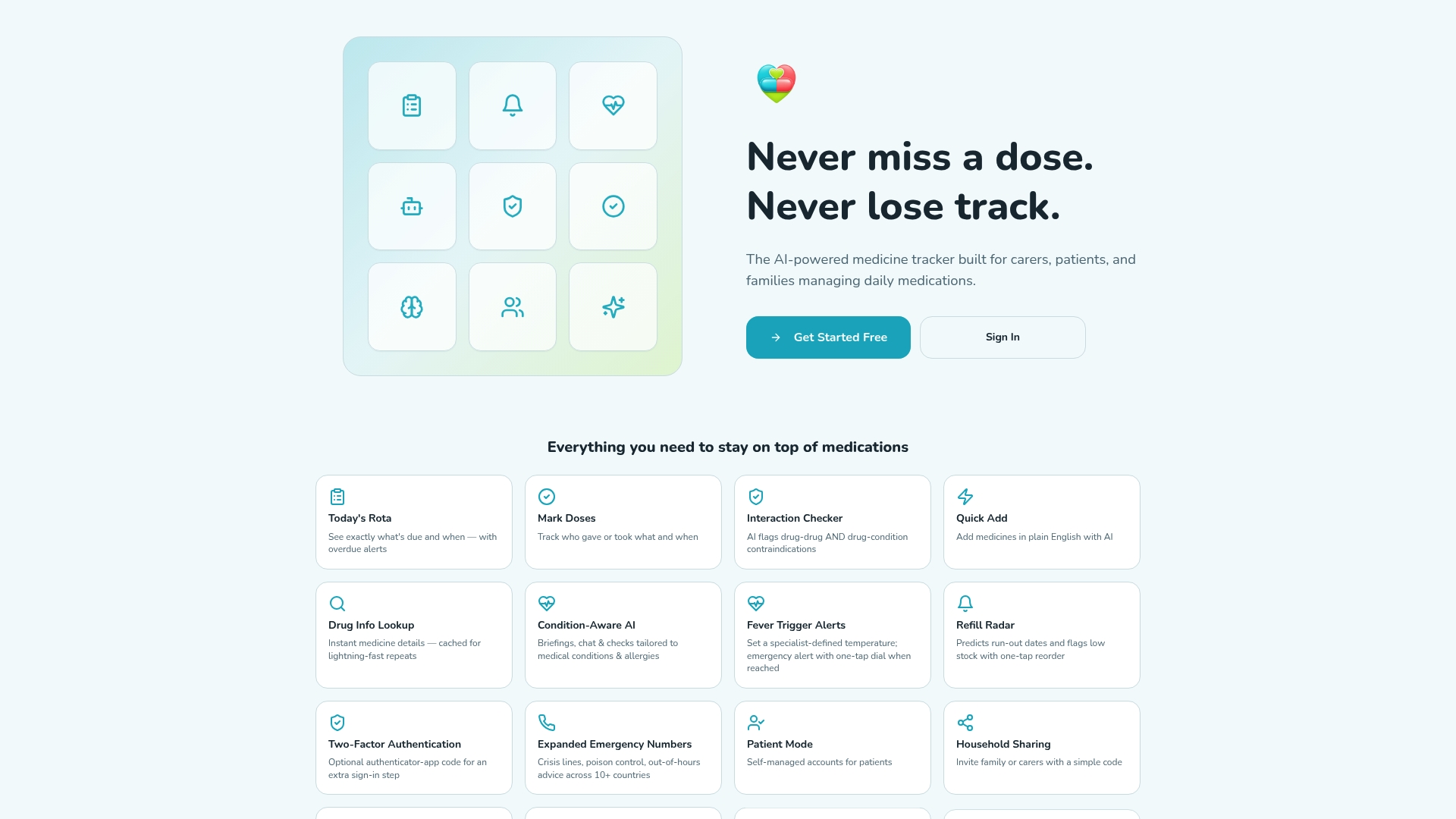
Such a system can support situations like family carers managing an elderly relative's insulin schedule, households juggling more than one person's medications, and users wanting an exportable record ready for their next GP or diabetes nurse appointment. Multi-patient management can allow one carer to oversee several people's schedules from a single dashboard rather than switching between accounts.
Worth saying plainly: this is a support tool, not a clinical service. It won't replace your diabetes team's advice, and it isn't a substitute for the medical judgement a hypo or hyper episode needs. What it does is remove the guesswork from the daily routine itself. If that gap, refill checks, dose timing, carer visibility, sounds familiar from your own routine, start with the free tier and see whether the basics hold up before deciding whether the paid features are worth it for your household.
Sources
- Smartphone apps for diabetes medication adherence: systematic review
- Reminding to take medicines: supporting adherence
- Reminders for medication adherence in Type 2 diabetes management apps
- Medication adherence: clinical guidance and best practice
This article is general information, not a substitute for advice from a qualified doctor. Consult a qualified healthcare professional about your own circumstances before acting on anything here.