
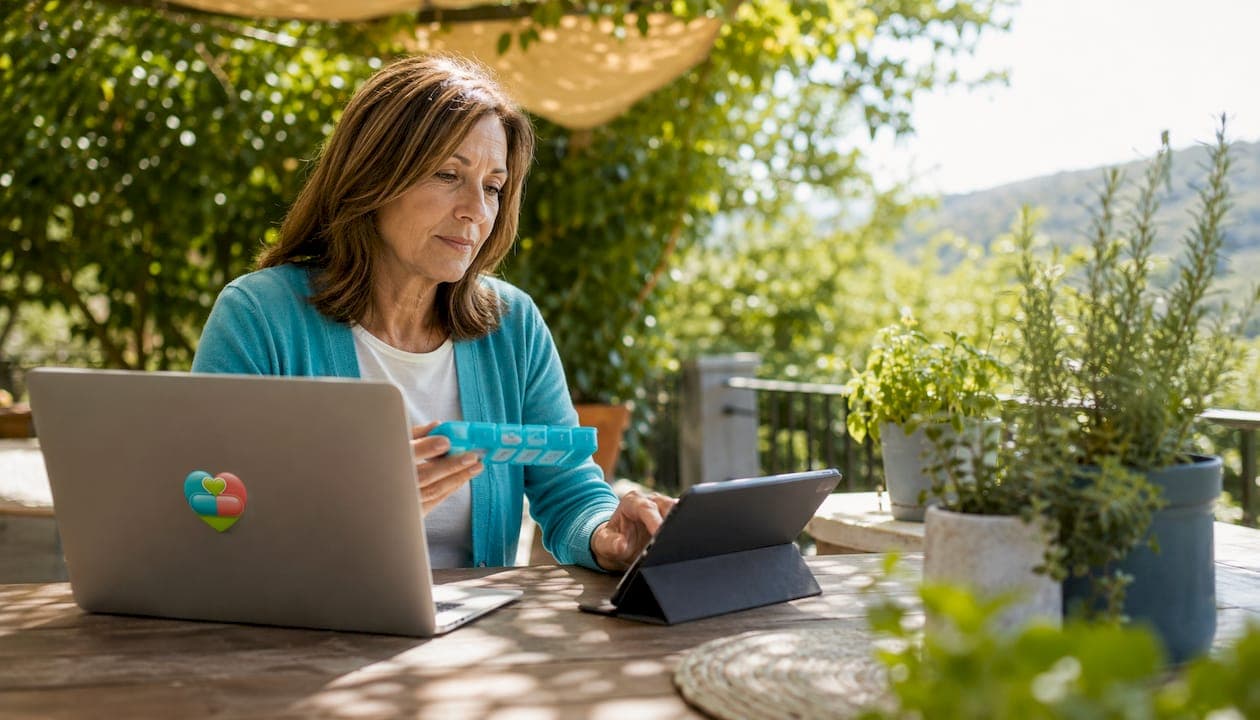
Getting your parent's medications right from a distance is entirely possible, but it takes more than good intentions. It takes systems. Nearly 90% of adults over 65 take at least one prescription medication, and over half take four or more, a pattern known as polypharmacy. Missed doses and double-dosing are among the leading causes of emergency hospital admissions in older adults. When you live miles away, you cannot hand over the morning pills yourself, so you build something better: a structure that works without you being there.
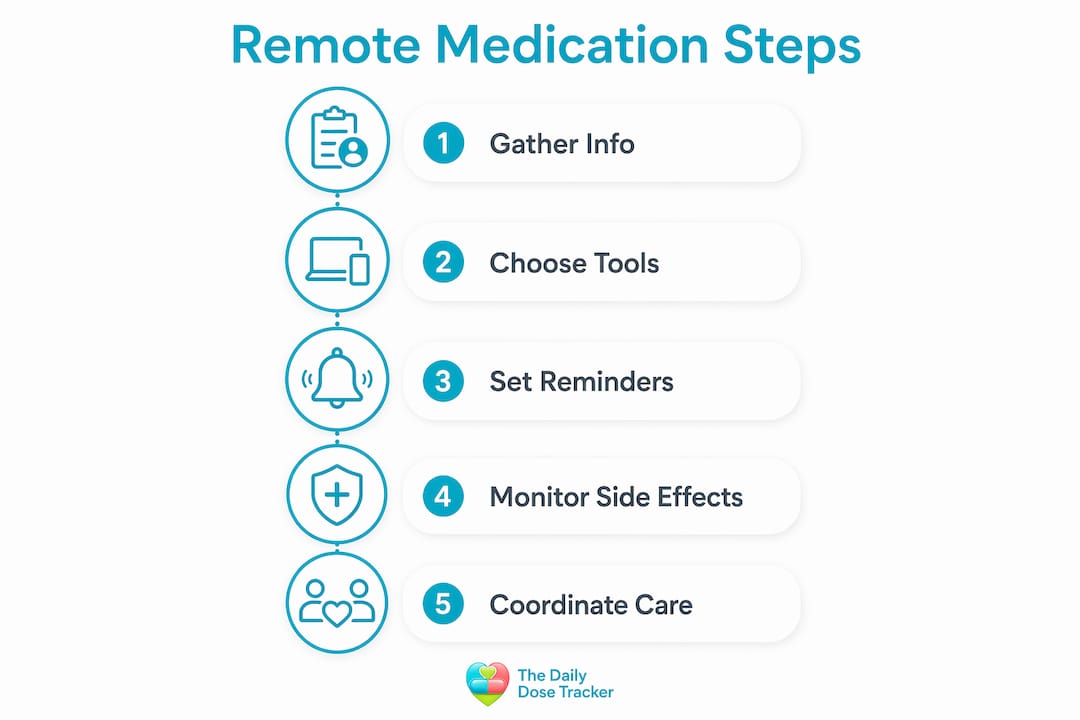
The core components of effective remote medication management are:
- A complete, shared medication list updated after every appointment
- A pill organiser or electronic dispenser matched to your parent's needs
- Reliable reminders, whether app-based, alarm-based, or call-based
- Authorised access to your parent's pharmacy and GP records
- A local ally who can step in physically when needed
- A digital platform that gives you real-time visibility from anywhere
Each section below covers one of these pillars in practical detail.
How do you build an accurate medication list from a distance?
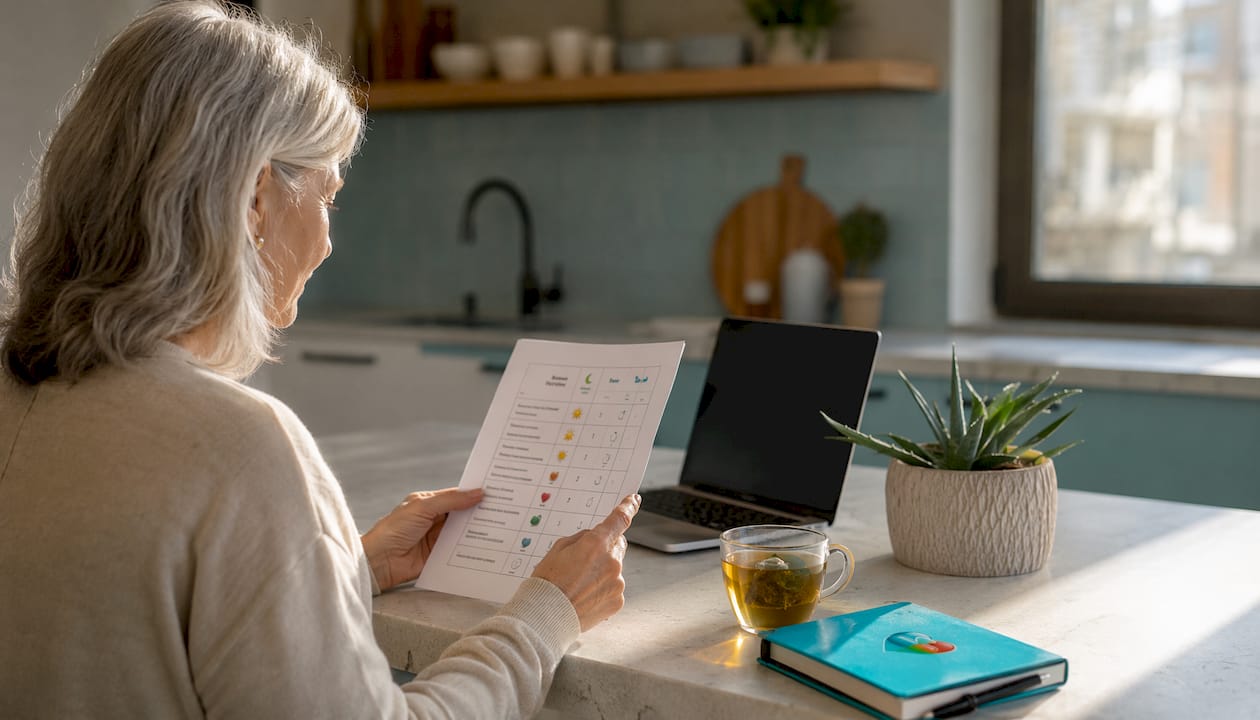
The foundation of managing elderly parent medications remotely is a single, authoritative document that everyone can read and update. Start by compiling every prescription, over-the-counter medicine, vitamin, and supplement your parent takes. For each item, record the name, dose, frequency, prescribing doctor, dispensing pharmacy, and the reason it was prescribed.
Store this list somewhere both you and your parent can access it, a shared Google Doc, an NHS-linked app, or a dedicated medicine management platform. The format matters less than the habit: update it immediately after every GP visit, hospital discharge, or specialist appointment.
- Record the prescriber's name and contact number alongside each medicine
- Note any known allergies or previous adverse reactions at the top of the document
- Flag medicines that require specific timing, such as with food or away from other tablets
- Share read access with any sibling, neighbour, or home carer involved in your parent's routine
- Bring a printed copy to every medical appointment so clinicians can spot gaps or duplications
Pro Tip: Ask your parent's GP surgery to provide a current repeat prescription list at each review. It takes one phone call and gives you a verified baseline to work from.
Which pill organisers and reminder systems actually work for elderly parents?
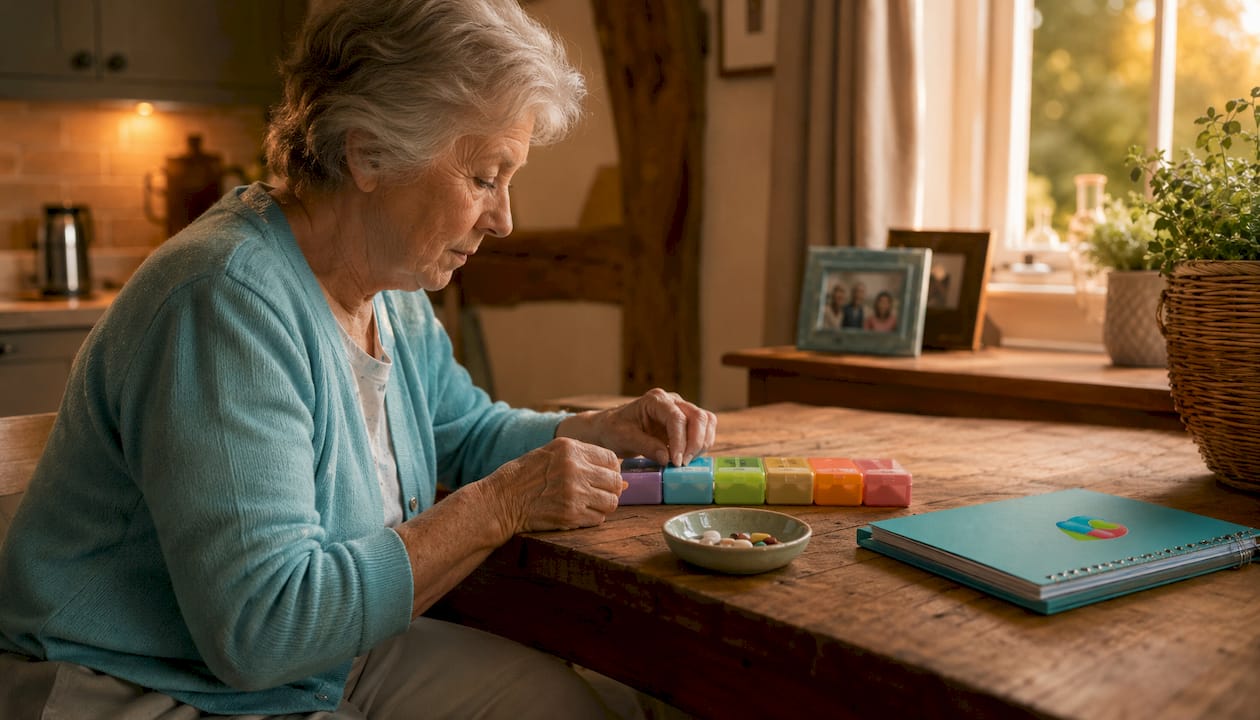
Physical organisation and timely reminders solve two different problems. A weekly pill organiser with large, labelled compartments handles the "which tablets" question. An audible reminder handles the "when" question. For many older adults, combining both is the most reliable approach.
Electronic dispensers go further. They store a week or more of doses in locked compartments, release the correct tablets at the scheduled time, and alert a carer's phone if a dose is missed. The FDA classifies remote medication management systems as Class II medical devices, meaning they must meet defined safety and performance standards, so look for dispensers that carry appropriate regulatory approval.
- Weekly AM/PM organisers with easy-open lids suit parents who are cognitively sharp but forgetful
- Automated dispensers with lockout features suit parents with early cognitive decline
- Smartphone reminder apps work well for tech-comfortable parents and allow digital medication reminders to be shared with carers
- Simple alarm clocks paired with a pre-filled organiser remain effective for parents who resist technology
- Caregiver-facing apps let you see whether a dose was taken without making a phone call
Match the tool to your parent's actual habits, not the most sophisticated option available. The best system is the one your parent uses consistently.
How do routines and healthcare partnerships improve adherence from afar?
Routine is the most underrated tool in remote caregiving. A daily check-in, whether a brief call, a text, or a tap in an app, does two things at once: it confirms medication adherence and it provides the human connection that reduces isolation. Remote monitoring solutions that send automated alerts when a dose is missed let you respond quickly without relying on your parent to volunteer the information.
Partnering with healthcare providers is equally important. Ask your parent's GP to add you as an authorised contact under UK GDPR-compliant consent, so you can discuss medication changes and receive relevant updates. Do the same at the pharmacy.
- Request named-carer status at the GP surgery so staff can speak to you directly
- Ask the pharmacist to flag any new interaction risks when a prescription changes
- Coordinate with siblings or other family members through a shared group chat or app dashboard
- Appoint a local ally, a neighbour, friend, or paid home carer, who can physically check in when calls go unanswered
- Frame daily check-ins as connection, not surveillance; your parent is far more likely to engage with "our morning catch-up" than "did you take your tablets"
For parents with complex needs or cognitive impairment, professional geriatric care provides trained medical oversight that remote technology alone cannot replicate. Knowing when to escalate is part of good remote management.
How do you handle medication safety, side effects, and prescription refills remotely?
Polypharmacy creates real risk. The more medicines your parent takes, the greater the chance of an interaction, and the harder it becomes to spot which drug is causing a new symptom. Using a single pharmacy for all prescriptions allows the pharmacist to screen every new item against the existing list, catching dangerous combinations before they cause harm.
Prescription refills are a logistical pressure point. Many UK pharmacies now offer home delivery and pre-sorted blister packs organised by day and time, which reduce dosing errors and remove the need for your parent to collect prescriptions in person. Ask to be added as an authorised contact so you can request refills remotely.
- Synchronise all repeat prescription dates to the same day of the month where possible
- Keep a printed emergency card near the phone listing all current medicines, allergies, and emergency contacts
- Teach your parent to report new symptoms promptly rather than waiting for the next scheduled call
- Know the signs of common adverse reactions for your parent's specific medicines
- If your parent struggles with childproof caps, ask the pharmacist for easy-open lids; this is a standard NHS request
For guidance on reducing medication errors in home-based care, the principle is the same whether you are present or not: fewer handoffs, clearer labelling, and one point of dispensing accountability.
How does Thedailydosetracker support remote elderly medication management?
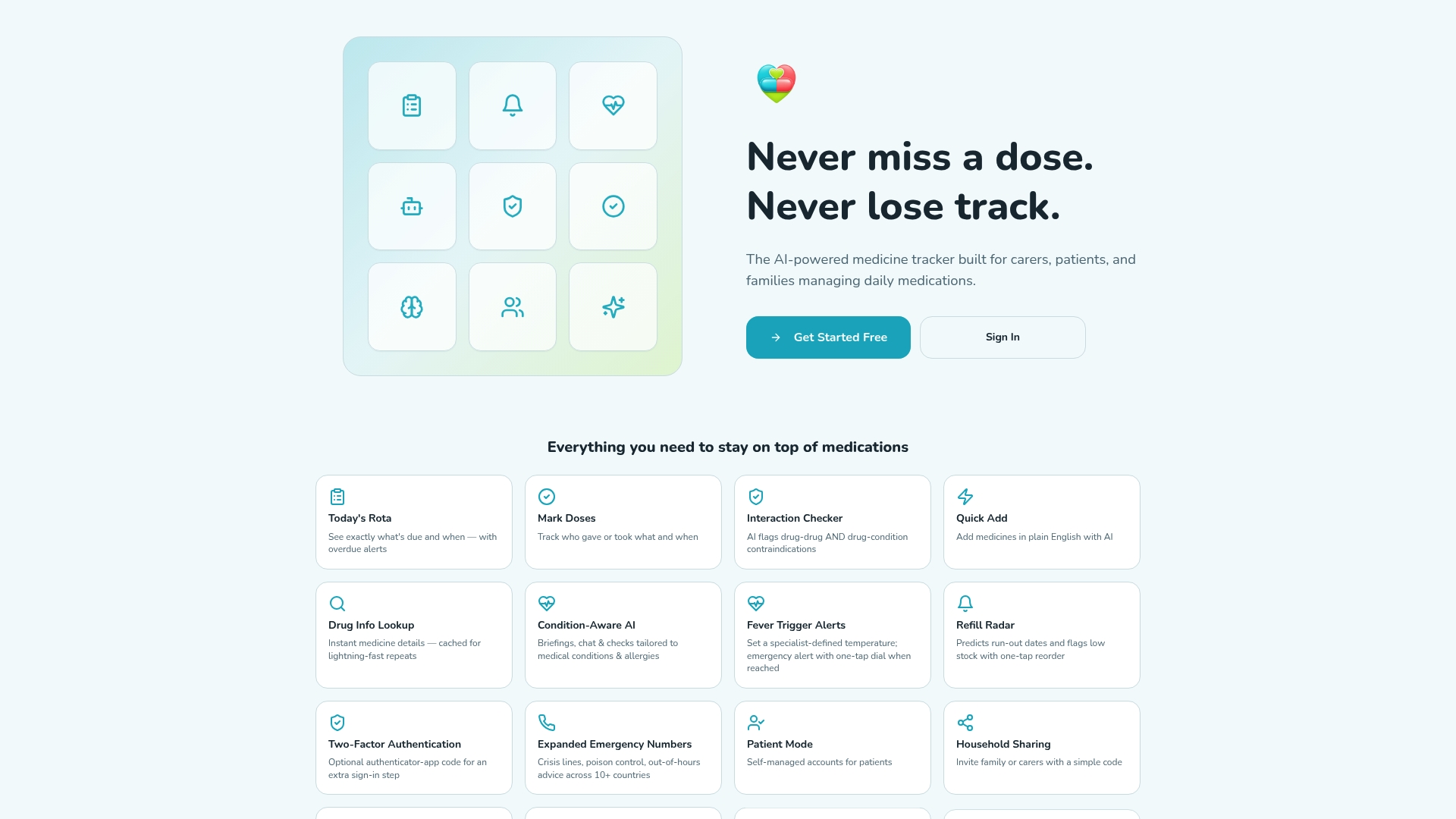
Thedailydosetracker is built for exactly this situation. It brings together the functions that remote carers typically piece together across multiple tools: medication scheduling, dose logging, real-time alerts for missed or overdue doses, drug interaction checks, and refill predictions, all in one place.
The platform supports multi-patient management and household sharing, so you can oversee your parent's medicines alongside other family members without duplicating effort. Carers receive alerts the moment a dose is overdue, removing the need for constant check-in calls. The AI-powered interaction checker flags potential conflicts when a new medicine is added, giving you something concrete to raise with the GP before a problem develops.
Nearly 90% of adults over 65 take at least one prescription medication, and more than half manage four or more medicines simultaneously. Thedailydosetracker's drug interaction checks and refill predictions are designed specifically for this complexity.
Privacy is built in. The platform complies with UK GDPR standards, and accessibility options including dark mode and adjustable font sizes mean your parent can use it comfortably without needing technical confidence. The progressive web app works across devices, so your parent uses it on a tablet at home while you monitor from a laptop at work.
- Medication schedules and dose logs are visible to all authorised carers in real time
- Emergency contact integration means the right people are notified automatically
- Symptom logging and appointment scheduling sit alongside medication tracking in one interface
- Condition-specific guidance helps carers understand why each medicine matters
Start with Thedailydosetracker to bring your parent's entire medication routine into one place you can both see.
For families also navigating NHS coverage and prescription costs, understanding Medicare options for ageing parents can help you plan the financial side of long-term medication management alongside the practical.
Key takeaways
Effective remote management of elderly parent medications depends on accurate information, consistent routines, healthcare partnerships, and a digital platform that gives carers real-time visibility without requiring constant phone calls.
| Point | Details |
|---|---|
| Build a shared medication list | Record every medicine, dose, frequency, and prescriber in a document all carers can access and update. |
| Match tools to your parent's ability | Pill organisers suit cognitively sharp parents; automated dispensers with lockout features suit those with early cognitive decline. |
| Use a single pharmacy | One pharmacy screens all interactions and can synchronise refill dates, reducing both errors and logistical burden. |
| Authorise yourself as a carer | Add your name to your parent's GP and pharmacy records so you can act on their behalf without delay. |
| Use a dedicated platform | Thedailydosetracker provides real-time alerts, interaction checks, and multi-carer access in one UK GDPR-compliant system. |