

The strongest alternatives to takeyourpillsapp.com available in the UK right now are Medisafe, MyTherapy, and Thedailydosetracker. Each handles the core job of medication reminders, but they differ considerably on privacy compliance, carer collaboration, and how well they hold up for complex regimens. The table below gives you the essentials at a glance.
| App | Best for | Platforms | Pricing | Privacy & security |
|---|---|---|---|---|
| Medisafe | Carer coordination, complex schedules | iOS, Android | Free; premium upgrades available | GDPR-aligned; US-based data hosting |
| MyTherapy | Health tracking alongside reminders | iOS, Android | Free | GDPR-aligned; EU-based servers |
| Thedailydosetracker | UK families, carers, multi-patient management | iOS, Android, web (PWA) | Free tier; subscription tiers available | UK GDPR compliant; UK-based data hosting |
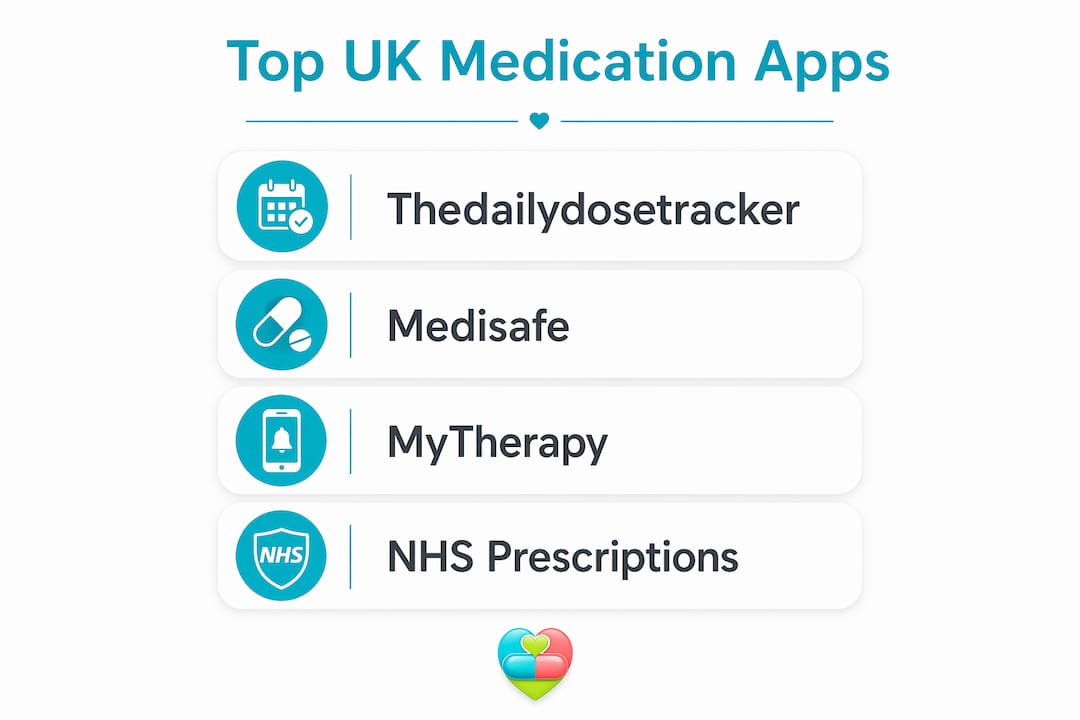
Many medication management apps exist, which makes the shortlisting process genuinely difficult. The three above stand out for UK users because they are actively maintained, available on both major mobile platforms, and carry credible privacy credentials.
Table of Contents
- Which medication reminder apps are worth your attention in the UK?
- How to choose the right medication reminder app for your needs
- What should UK users know about privacy in medication apps?
- Why Thedailydosetracker stands out as a UK medication management platform
- What do UK users actually say about these apps?
- How good is the customer support for UK users?
- Key takeaways
- The gap between what medication apps promise and what actually matters
- Thedailydosetracker: built for the way UK carers and patients actually work
Which medication reminder apps are worth your attention in the UK?
Medisafe
Medisafe is the most widely recognised pill management alternative for users juggling multiple medications or coordinating care across a household. Its caregiver sharing feature lets a family member or carer receive a notification when a dose is missed, which is genuinely useful for anyone supporting an elderly relative remotely. The app carries a 4.7/5 rating on iOS and is listed in NHS guidance documents as a recognised medication reminder tool.
Key features:
- Timed reminders with visual pill identification
- Carer and family member alerts for missed doses
- GP appointment and refill reminders
- Drug interaction warnings
- Premium tier unlocks additional reporting and health tracking
The free version covers most everyday needs. Data is hosted on US-based servers, so UK users should review the privacy policy carefully if they are managing sensitive health conditions.
MyTherapy
MyTherapy positions itself as a health diary first and a reminder app second. Alongside standard dose alerts, it lets you log symptoms, blood pressure readings, and doctor appointments, then generates monthly summaries that can support GP consultations. It holds a 4.6/5 rating on Android and integrates with Apple Health on iPhone. The breadth of tracking tools is its strength, though patients who only need straightforward reminders may find the interface busier than necessary.
Key features:
- Prescription and new-pack reminders
- Symptom and health measurement logging
- Apple Health integration (iPhone)
- Monthly health summaries for medical reviews
- Injection site tracking
MyTherapy is free with no paywalled core features, which makes it a strong option for anyone managing a chronic condition who wants one app to cover both adherence and health monitoring.
Thedailydosetracker

Thedailydosetracker is built specifically for the UK market, with UK GDPR compliance and UK-based data hosting built in from the start rather than retrofitted. It supports multi-patient management across a household, making it particularly well-suited for carers managing medications for more than one person. The platform runs as a progressive web app, so it works across iOS, Android, and desktop without requiring separate downloads.
How to choose the right medication reminder app for your needs
The right app depends on four things: the complexity of your medication regimen, who else needs access, how seriously the app treats your data, and whether it works when you have no internet connection.
Regimen complexity. A single daily tablet is well served by any free app. Three or more medications at different times, with interaction risks, calls for an app that flags conflicts and supports carer oversight. Thedailydosetracker and Medisafe both cover this ground; MyTherapy handles it adequately but is better suited to tracking than to clinical-grade interaction checking.
Carer and family involvement. If someone else helps manage your medication, shared access matters more than any individual feature. Shared medication apps reduce the risk of double-dosing and keep everyone informed without requiring phone calls.
Privacy and data hosting. Under UK GDPR, medication data is classified as special category health data, which carries stricter handling requirements. Apps that host data outside the UK or EU warrant closer scrutiny of their privacy policies.
Offline reliability. Top apps maintain reminder functionality without an active internet connection, which matters for patients in areas with patchy coverage.
Decision factors to weigh before committing:
- Does the app work offline, or does it depend on a live connection for reminders?
- Is data hosted in the UK or EU, and is that stated clearly in the privacy policy?
- Can a carer or family member receive alerts without needing full account access?
- Does the app support wearable devices such as Apple Watch or Wear OS smartwatches?
- Is there a clear process for deleting your data if you stop using the app?
- Does the interface work for someone with low vision or limited dexterity?
Pro Tip: A 15-minute guided setup session involving a family member or carer significantly reduces confusion for elderly users and helps them build confidence with the app from day one. Set custom alert sounds during this session so the reminder is immediately recognisable.
For patients with very complex regimens, particularly those managing conditions like Parkinson's disease, combining an app with a physical automated dispenser provides both digital and physical safeguards. Apps handle logging and carer alerts; dispensers handle the physical act of dispensing the correct dose at the right time. The two approaches complement rather than replace each other.
What should UK users know about privacy in medication apps?
Medication data is not ordinary personal data. Under UK GDPR, it falls into the special category of health information, which means any app processing it must meet a higher legal standard, including conducting a Data Protection Impact Assessment (DPIA) and applying appropriate encryption. The ICO and NHS registration requirements apply to providers handling this data commercially.
The privacy risk is real. An analysis of 24,405 health apps found that medication apps carry the highest risk of data leaks and misuse, with a majority sharing personal data with companies including Google, Facebook, and Amazon. Most of that sharing happens through embedded advertising and analytics SDKs, often without the user's meaningful awareness.
What to look for in a privacy policy:
- AES-256 encryption for data stored on servers
- TLS encryption for data transmitted between your device and the app
- Clear statement of where data is hosted (UK or EU preferred)
- Explicit confirmation that data is not sold to or shared with advertising networks
- A straightforward process for requesting data deletion
- Evidence of DPIA completion or ICO registration
Pro Tip: Search the ICO's Data Register for the app's developer name before downloading. If they process UK health data commercially and are not registered, that is a red flag worth taking seriously.
Apps that rely on advertising revenue are structurally incentivised to share data. Free apps with no premium tier and no stated business model deserve particular scrutiny. Thedailydosetracker and the NHS Prescriptions app (developed in partnership with PharmAppy, which is ICO-registered and GDPR compliant) are among the options that address this directly.
Why Thedailydosetracker stands out as a UK medication management platform
Thedailydosetracker was designed with the UK care context in mind, not adapted for it after the fact. Its UK GDPR compliance and UK-based data hosting mean patients and carers are not relying on a foreign provider's interpretation of British data law.
The platform's feature set goes beyond standard reminders:
- Drug interaction checks that flag risks before a dose is taken
- Condition-specific guidance and fever alerts
- Emergency contact integration for urgent situations
- Medication refill predictions to prevent gaps in supply
- Symptom logging and appointment scheduling in one place
- Multi-patient management for carers overseeing more than one person
- Household sharing across multiple devices via the progressive web app
- Accessibility options including dark mode and adjustable font sizes
Communication between patients, carers, and healthcare professionals is built into the platform's structure rather than added as an afterthought. A carer can monitor adherence, receive overdue alerts, and share logs with a GP or specialist without the patient needing to do anything extra.
Pro Tip: Thedailydosetracker's AI-powered insights can identify patterns in missed doses, such as doses consistently skipped at a particular time of day, and suggest schedule adjustments. This is especially useful for patients whose routines change between weekdays and weekends.
For families managing children's and adults' medications within the same household, the multi-profile structure removes the need for separate apps and separate logins.
What do UK users actually say about these apps?
User ratings give a useful signal, though they reflect the global user base rather than UK-specific experience. Medisafe holds a 4.7/5 on iOS; MyTherapy sits at 4.6/5 on Android. Both figures come from large review pools and have remained stable over time.
UK-specific feedback tends to cluster around a few consistent themes. Medisafe users praise the carer alert system but occasionally note that some advanced features sit behind a paywall that is not always clearly signposted before setup. MyTherapy users value the health diary functionality but report that the interface can feel cluttered for patients who only want straightforward reminders.
NHS guidance documents, including those published by NHS North West, list both Medisafe and MyTherapy as recognised tools for medication adherence, which provides a degree of institutional endorsement beyond app store ratings. That said, NHS listing is not a formal approval or clinical recommendation; it signals awareness, not endorsement of clinical efficacy.
Thedailydosetracker, as a newer UK-focused platform, has a smaller public review pool than the established apps. Its ratings are not yet published at scale on major app stores, but its feature set and compliance credentials address the specific gaps UK users most frequently raise about the alternatives.
How good is the customer support for UK users?
Support quality varies considerably across these apps, and it matters more than most people expect when something goes wrong with a medication reminder.
Medisafe offers in-app support and an online help centre, but live support is limited on the free tier. Response times for email queries can stretch to several days. MyTherapy provides a similar model: a help centre and email contact, with no phone support available.
The NHS Prescriptions app, built with PharmAppy, allows direct messaging with your pharmacy team through the app itself, which is a practical advantage for prescription-related queries. That said, it is a prescription management tool rather than a full medication reminder platform.
Thedailydosetracker provides support through its platform, with a focus on UK-based users and carers. For anyone managing medication for a vulnerable person, the ability to get a timely, knowledgeable response is not a minor convenience. It is part of what makes a platform genuinely usable under pressure.
For carers managing medication at home, a caregiver's guide to medication management can help clarify what to expect from digital tools and where human support remains necessary.
Key takeaways
Thedailydosetracker is the strongest UK-native option among the leading medication reminder apps, combining UK GDPR compliance, multi-patient management, and AI-powered adherence tools in a single platform.
| Point | Details |
|---|---|
| Top UK alternatives | Medisafe, MyTherapy, and Thedailydosetracker are the leading pill management alternatives for UK users. |
| Privacy is non-negotiable | Medication data is special category health data under UK GDPR; choose apps with AES-256 encryption and UK-based hosting. |
| Carer features matter | Apps with shared access and missed-dose alerts are essential for anyone supporting an elderly or complex-needs patient. |
| Offline reliability counts | Reminders must function without an internet connection for users in areas with intermittent coverage. |
| Thedailydosetracker | UK GDPR compliant, UK-hosted, with drug interaction checks, multi-patient management, and AI-based adherence insights. |
The gap between what medication apps promise and what actually matters
Most comparisons of medication reminder apps focus on feature lists. That is the wrong frame. The question that actually determines whether an app works long-term is not "does it have a carer alert?" but "will the person who needs it actually use it consistently, and is their health data safe while they do?"
The evidence on adoption is clear: a brief guided setup session involving a carer or family member makes a measurable difference to whether elderly patients stick with an app. No amount of features compensates for an interface that confuses someone at 7am when they are half-awake and trying to remember whether they took their blood pressure tablet.
On the privacy side, the health app market has a structural problem. Many apps are free because they monetise data, and medication data is particularly valuable to insurers, advertisers, and data brokers. The analysis of health app data-sharing practices is not a theoretical concern; it describes what is already happening at scale. UK users deserve to know whether the app they trust with their medication history is selling that information.
The combination that actually works: an app with a clean, accessible interface, genuine UK GDPR compliance, carer integration, and a business model that does not depend on selling health data. For complex regimens, pair it with a physical dispenser. For everything else, the right app, set up properly with family involvement, is sufficient.
Thedailydosetracker: built for the way UK carers and patients actually work
Most medication apps were built for individual users managing simple routines. Thedailydosetracker was built for the messier reality: a carer managing medications for an elderly parent and two children, a patient with a complex chronic condition whose GP needs to see adherence data, a household where three people share one device.
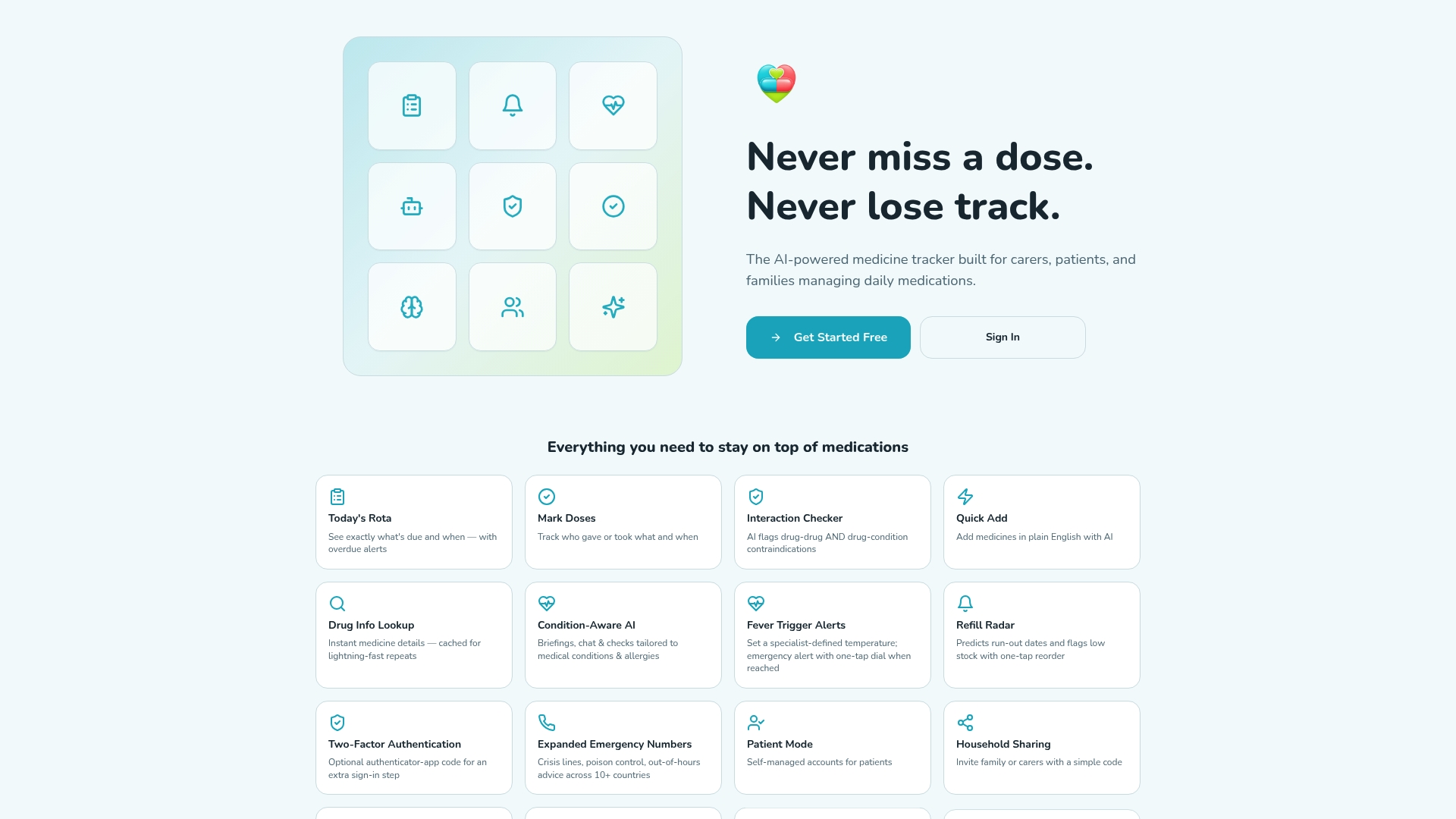
The platform covers drug interaction checks, emergency contact alerts, refill predictions, and multi-patient management in one place, with UK GDPR compliance and UK-based data hosting that the alternatives cannot match. Accessibility options including dark mode and adjustable fonts mean it works for users across a wide range of needs and ages.
Check the pricing and feature tiers to see which plan fits your situation, or explore the medication management resources to understand what a well-structured digital approach looks like in practice.