What emergency contacts actually do in a medication plan
Emergency contacts in a medication plan are the people who speak for you when you cannot speak for yourself. Their core job is to give medical staff accurate, up-to-date information: current medications with dosages and schedules, known allergies, chronic conditions, and your GP or specialist's contact details. That information directly shapes the treatment decisions made in the first critical minutes of an emergency.
Setting up ICE (In Case of Emergency) contacts takes roughly five minutes, yet it can prevent dangerous drug interactions and treatment delays. Without a prepared contact, clinicians may have to proceed without a full picture, which increases the risk of harm.
One point carers often miss: an emergency contact is not automatically a legal decision-maker. Unless someone holds a formal healthcare proxy or lasting power of attorney, they can notify and inform medical staff, but they cannot consent to treatment or sign forms on the patient's behalf. That distinction matters practically, so document it clearly in your plan.
- Full name and date of birth of the patient
- All current medications: names, dosages, and schedules
- Known allergies, especially drug allergies
- Chronic conditions (epilepsy, diabetes, heart disease)
- GP, specialist, and pharmacy contact details
- Whether the contact holds any legal authority (and where those documents are kept)
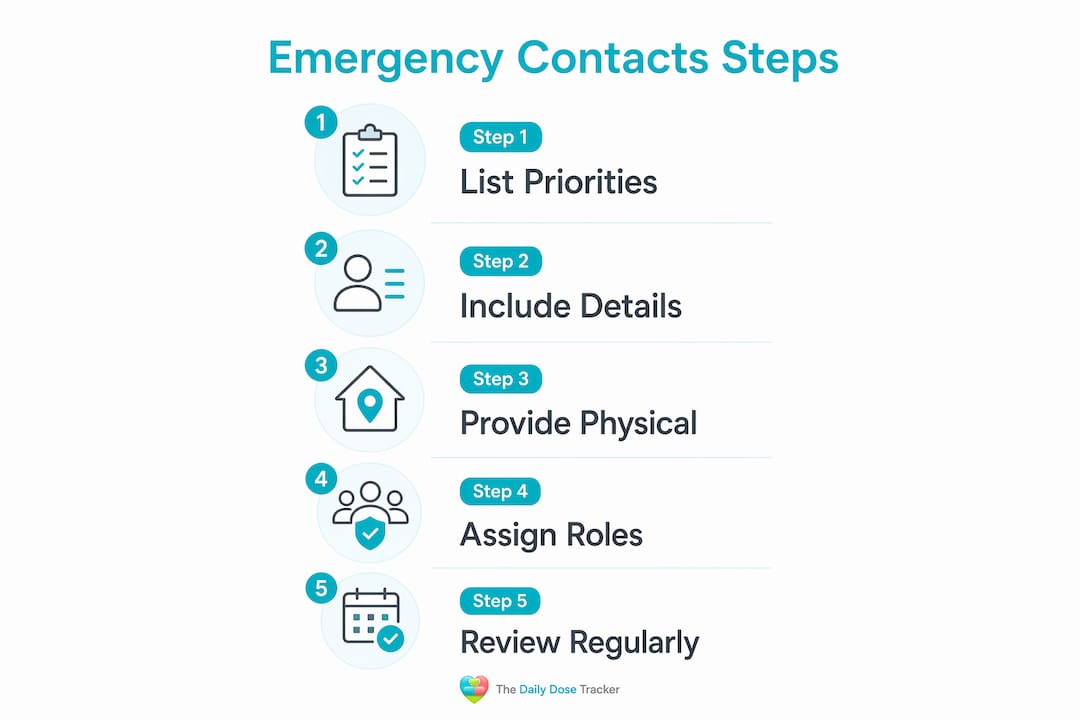
Pro Tip: List contacts in priority order, ICE 1 then ICE 2, so first responders know who to call first if the primary contact is unreachable.
What information your emergency contacts must carry
A comprehensive medication emergency plan goes well beyond a name and phone number. For each contact, specify their relationship to the patient, when they are reachable, and whether they hold legal authority to make medical decisions. If a healthcare proxy or lasting power of attorney exists, note where those documents are stored.
Never rely solely on a mobile phone. Phones can be locked, flat, or simply not present when a crisis hits. A physical copy of the medication list, kept in a wallet or on the fridge using a File of Life card, gives first responders immediate access. A medical ID tag can link to a full online profile that emergency responders can access around the clock.

Update the plan immediately after any medication change, new diagnosis, or change of carer. Outdated information is arguably more dangerous than no information, because it creates false confidence. For carers managing complex patients, Thedailydosetracker's elderly medication management checklist offers a structured approach to keeping these records current.
Where several family members share care responsibilities, assign clear roles: one person handles medical calls, another manages transport, a third updates paperwork. A phone tree or communication hierarchy stops one person from becoming overwhelmed and keeps information flowing accurately to everyone who needs it.
How to prepare your contacts to handle complex medication regimens
Knowing someone's medications in theory is different from being ready to explain them under pressure. Walk your emergency contacts through the medication schedule in person, not just by handing them a list. Cover which drugs must not be stopped suddenly, what the allergies are, and what the patient's wishes are regarding treatment.
The ELFT NHS Trust notes that unprepared contacts cause treatment delays and errors simply through lack of information. Give each contact a printed copy of the plan and confirm they know where digital backups are stored. Cloud folders shared with contacts mean the information is accessible even if your phone is unavailable.
Review the plan with contacts every three months, and immediately after any significant health change. That regular conversation also keeps the contact confident and ready, rather than facing a frightening surprise when they are actually needed.
Key takeaways
Emergency contacts in a medication plan prevent treatment errors by giving medical staff accurate, real-time information when the patient cannot communicate.
| Point | Details |
|---|---|
| Core role | Contacts relay medications, allergies, and conditions to medical staff during emergencies. |
| Legal limits | Without a healthcare proxy or lasting power of attorney, contacts cannot consent to treatment. |
| Physical backup | A File of Life card or medical ID tag ensures access when phones are unavailable. |
| Keep it current | Update the plan immediately after any medication change, new diagnosis, or change of carer. |
| Prepare contacts actively | Walk contacts through the plan in person; a list alone is not enough preparation. |
Thedailydosetracker integrates emergency contact details directly into your medication management plan, so carers and families always have accurate, accessible records ready. Start for free and give your emergency contacts the information they need.