

If you remember shortly after the scheduled time, take the missed dose, unless your next one is due soon, in which case skip it and carry on as normal. Never double up to catch up unless a clinician has told you to, because that raises your risk of side effects. Some medicines are far less forgiving than others, so for antiseizure drugs, insulin, anticoagulants, contraceptives, Parkinson's treatments and methotrexate, check the Specialist Pharmacy Service guidance or your specialist team rather than guessing.
TL;DR:
- Taking a missed dose depends on timing and frequency, with less risk if the dose is taken soon after or skipped if near the next scheduled dose.
- Drugs with narrow safety margins, such as antiseizure medications, insulin, anticoagulants, contraceptives, and Parkinson's medicines, require specific guidelines and prompt consultation with healthcare professionals.
- Always check the medicine-specific instructions in official leaflets or from healthcare providers before deciding how to handle a missed dose.
- Tracking missed doses and related symptoms helps prevent complications, especially if doses are missed repeatedly or symptoms worsen.
- Using medication management tools and routines linked to daily habits can significantly improve adherence and reduce missed doses in the long term.
Table of Contents
- How soon do you need to take a missed dose?
- Which medicines need different missed-dose rules?
- Where can you find medicine-specific missed-dose instructions?
- What should you do after a late dose, and when should you worry?
- How can you stop doses being missed in the first place?
- A carer's-eye view of missed doses
- Let a medication tracking app catch what memory alone can't
- Sources
How soon do you need to take a missed dose?
There's no single rule that covers every medicine, but most guidance from the Specialist Pharmacy Service centres on how close you are to the next scheduled dose. If you're well within that window, taking the late dose usually causes no harm. If you're right up against it, skipping tends to be safer than stacking two doses close together.
The practical rules differ by how often you take the medicine:
- Once-daily medicines: take it as soon as you remember, unless it's almost time for tomorrow's dose. Then skip and resume your normal schedule.
- Twice-daily medicines: if you're within a short window of the missed time, take it. If you're closer to the next dose, skip the missed one entirely.
- Three or more times a day: take the missed dose only if it's still reasonably close to the intended time. With frequent dosing, the window narrows fast, so when in doubt, skip and continue as scheduled.
- Once-weekly medicines: these vary enormously by drug. Some allow you to take a forgotten dose up to several days late; others need same-day action. This is one category where guessing genuinely isn't safe.
Taking two doses close together doesn't just double the intended effect. It can concentrate side effects that were designed to be spread across a full day, which is exactly why manufacturers warn against it so consistently.
Pro Tip: Keep a simple written note (paper or digital) of exactly when you took the late dose. If you ever need to call a pharmacist or GP about a pattern of missed doses, that timestamp is the first thing they'll ask for.
Which medicines need different missed-dose rules?
Some drugs have such a narrow safety margin that a generic "take it when you remember" answer simply doesn't apply. A systematic review of patient information leaflets found that a large share of leaflets either give no missed-dose instructions at all or offer only vague, generic wording. That gap is precisely why certain drug classes carry their own dedicated protocols.
- Antiseizure medicines: a missed dose can lower your seizure threshold quickly. For once-daily regimens, contact your epilepsy team the same day; for twice-daily regimens, timing matters even more, so don't wait until your next routine appointment to ask.
- Insulin and diabetes medicines: skipping insulin can push blood glucose up fast, and in some cases trigger diabetic ketoacidosis. Check glucose and ketones, and contact your diabetes team promptly rather than adjusting the dose yourself, following the Right Decision Service guidance on missed insulin doses.
- Anticoagulants including warfarin: a missed dose can leave you under-protected against clots. Follow your anticoagulant clinic's specific instructions and expect closer INR monitoring after any missed dose.
- Contraceptives: combined pills and progestogen-only pills follow different rules entirely. Missing a progestogen-only pill by even a few hours can reduce protection, and you may need emergency contraception plus a chat with a pharmacist or GP.
- Parkinson's medicines: timing is tightly linked to symptom control. A late dose can bring on stiffness or freezing episodes, so contact your specialist team if missed doses become frequent.
- Methotrexate: this is usually a weekly, not daily, medicine, and dosing errors here have caused serious harm nationally. Contact your specialist clinic rather than assuming a standard weekly catch-up rule applies.
Manufacturer instructions vary between brands of the same drug class, which is one reason the review above found such inconsistent leaflet advice. When your own product's Summary of Product Characteristics is silent or vague, that's your cue to ask a specialist rather than improvise.
Where can you find medicine-specific missed-dose instructions?
Your first port of call should be the Patient Information Leaflet that came in the packet, or the Summary of Product Characteristics, both searchable through the electronic Medicines Compendium or the manufacturer's own site. These are the legally required documents for your exact product.
- Check the PIL/SmPC first, since it's specific to your brand and dose strength.
- Use NHS medicine pages and Specialist Pharmacy Service guidance for clinician-level detail when the leaflet is thin.
- Call your community pharmacist for a same-day, no-appointment answer on almost any medicine.
- Contact your GP or specialist clinic (anticoagulant clinic, epilepsy team, diabetes team) when the medicine has a narrow safety margin.
- Ring NHS 111 if you're unsure and the surgery is closed, or if symptoms are developing.
What should you do after a late dose, and when should you worry?
Write down what you missed and what you did about it, including the time you eventually took the dose. This single habit makes any follow-up call to a pharmacist or specialist far quicker, and it stops you accidentally taking the next dose too soon afterwards.
- Log the missed dose and the action taken, even if it felt minor at the time.
- Watch for medicine-specific warning signs: rising glucose or ketones on insulin, unusual bruising or bleeding on anticoagulants, seizure activity on antiseizure drugs, or vomiting shortly after taking any oral medicine.
- Escalate immediately if you've missed more than one dose in a row, if symptoms are severe, if vomiting happens soon after a dose, or if you suspect an overdose. Call NHS 111 or emergency services if things feel serious.
Pro Tip: If a missed dose becomes a pattern rather than a one-off, that's a signal for a structured medication review, not just another reminder app. Ask your GP or pharmacist to book one.
How can you stop doses being missed in the first place?
Most missed doses come down to routine, not carelessness, so the fix is usually structural rather than about trying harder. Linking a dose to something you already do daily, brushing your teeth, boiling the kettle, tends to work better than relying on memory alone.
- Dosette boxes and pharmacy-managed compliance packs suit anyone on multiple daily medicines, since the whole week is sorted visually in one go.
- Structured medication reviews with a pharmacist catch regimens that have become too complicated to follow reliably.
- Alarms work for simple, single-person routines; shared household reminders matter more once several people or several medicines are involved.
- Progressive web apps that don't need installing from a store are useful where the person taking medicines and the person tracking them aren't the same individual.
- The Daily Dose Tracker is one example of a GDPR-compliant platform built for exactly this situation: multi-patient households, shared carer visibility, and interaction checks running quietly in the background.
A home care specialist supporting medication reminders makes a similar point: consistency, not intensity, is what keeps adherence steady over months rather than days.
A carer's-eye view of missed doses
A missed dose usually isn't dramatic in the moment. It's a phone left in another room, a visit that overran, a tablet that rolled behind the sofa. What actually matters is what happens in the next ten minutes: checking the right escalation path instead of guessing, and writing down what happened so the pattern is visible later. If missed doses keep recurring for the same person, that's not a discipline problem. It's a sign the regimen needs a proper review with a pharmacist.
— Prasant
Let a medication tracking app catch what memory alone can't
The gap in most missed-dose advice isn't the rule itself, it's remembering there was a dose to worry about in the first place. The Daily Dose Tracker closes that gap by sending real-time alerts the moment a dose is due or overdue, and by giving every carer in a household the same view of what's been taken and what hasn't.
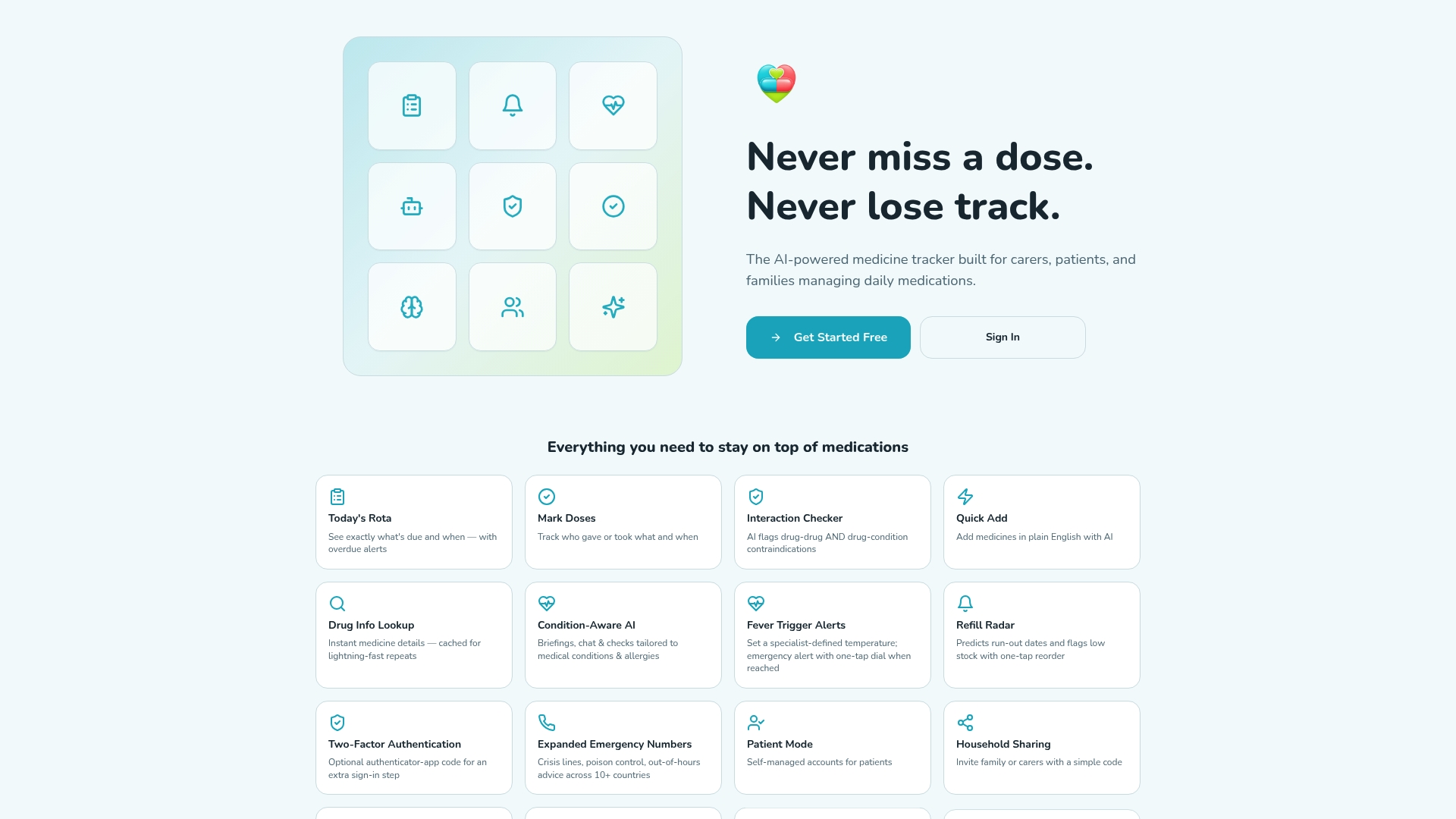
Beyond reminders, it runs drug interaction checks in the background, predicts when refills are needed before you run out, and lets multiple carers share one medication record for elderly relatives or people managing several conditions at once. They operate with privacy and accessibility options like dark mode and adjustable font sizes built in from the start. These platforms tend to be especially helpful for families juggling complex regimens and professional care teams covering multiple patients. If missed doses have become a recurring worry in your household, visit The Daily Dose Tracker to set up a schedule and see the alerts in action.
This article is general information, not a substitute for advice from a qualified doctor. Consult a qualified healthcare professional about your own circumstances before acting on anything here.
Sources
- Advising on missed or delayed doses of medicines — Specialist Pharmacy Service (SPS)
- What should patients do if they miss a dose? A systematic review of patient information leaflets and summaries of product characteristics
- Missed or extra progestogen-only pill — NHS
- Missed insulin dose — Right Decision Service (Health Improvement Scotland)