
The single most reliable approach to avoiding a missed contraceptive pill is a specialist medication reminder set at a fixed daily time, anchored to an existing habit like breakfast or brushing your teeth at night, with at least one automated backup alert. That combination works because pill-type timing genuinely matters: NHS guidance sets the protection window at 24 hours for the combined pill, 12 hours for desogestrel mini-pills, and just 3 hours for most other progestin-only pills. Miss those windows and your contraceptive cover lapses.
Two things to do right now:
- Set a primary reminder at a time you can reliably keep every day, tied to a fixed daily event.
- Enable at least one backup alert 30 minutes later so a missed notification does not become a missed pill.
Statistic: According to NHS patient guidance, the protection window for most progestin-only pills (excluding desogestrel) is only 3 hours, making a layered reminder strategy particularly important for that pill type.
Key takeaways
A reliable contraception pill reminder combines a specialist medication platform, a fixed daily anchor habit, and at least one automated backup alert calibrated to your pill type's protection window.
| Point | Details |
|---|---|
| Protection windows vary by pill type | NHS sets 24 hours for combined pills, 12 hours for desogestrel, and 3 hours for most other progestin-only pills. |
| Layered reminders reduce missed doses | Set a primary alert plus at least one backup 30 minutes later, especially for narrow-window pills. |
| Device settings determine reliability | Enable time-sensitive notifications on iOS and disable battery optimisation on Android so alerts cut through silent modes. |
| Missed pill? Act by pill type | Follow NHS-specific steps for your pill; consider emergency contraception if unprotected sex occurred outside the protection window. |
| Thedailydosetracker for clinical features | Offers brand-specific schedules, refill prediction, household sharing, and GDPR-compliant privacy for UK users. |
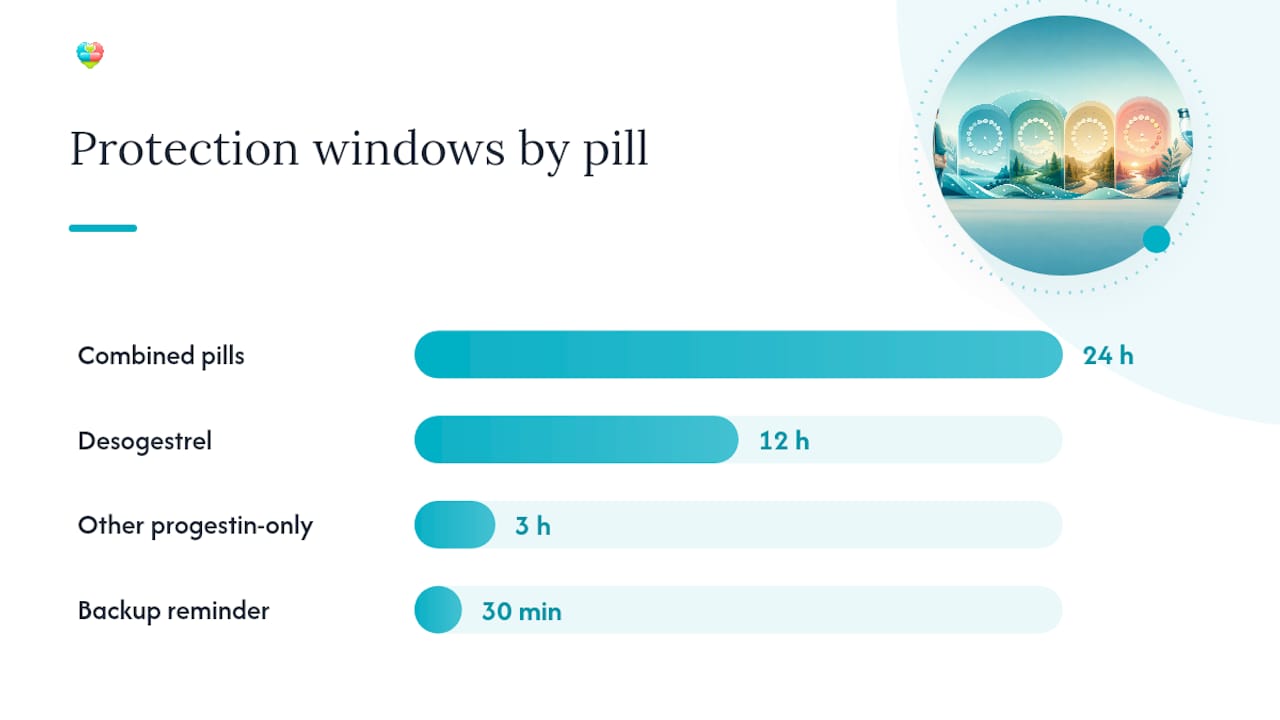
Table of Contents
- What to do right now: a five-step checklist
- How do you choose the right contraception pill reminder method?
- How late is too late? Protection windows by pill type
- What to do if you miss a pill
- How to build a daily pill routine that actually sticks
- How to avoid running out: refill planning and supply management
- Will your reminders actually reach you? Device settings and privacy
- When should you contact a clinician or use emergency contraception?
- Why specialist medication reminders matter for contraceptive safety
- Thedailydosetracker: built for the way pill reminders actually work
- Sources
What to do right now: a five-step checklist
- Identify your pill type. Check your packet or patient information leaflet: combined pill, desogestrel mini-pill (e.g. Cerazette), or another progestin-only pill. The protection window differs significantly between them.
- Set your primary daily reminder at a consistent time. Pick a moment you already do something every day. Two backup alerts at 30 and 60 minutes later give you a safety net when the first notification is missed.
- Configure time-sensitive notifications on your device. On iPhone, Apple Support documents that time-sensitive alerts can cut through Focus and Do Not Disturb modes. Enable this for any pill reminder app you use.
- Log the dose when you take it. If you are late, check the protection window for your pill type and follow the guidance in the missed-pill section below.
- Schedule a refill reminder now, set for 5–7 days before your current pack ends.
Pro Tip: Set your backup alerts as separate alarms labelled "pill backup" rather than relying on a single snooze. A snoozed alarm is easier to dismiss without acting on it.
How do you choose the right contraception pill reminder method?
Not every reminder method suits every person or every pill type. Here is a practical comparison across the dimensions that actually affect contraceptive safety.
A phone alarm is sufficient if you take a combined pill with a 24-hour window and you rarely miss notifications. If you are on a desogestrel or other progestin-only pill with a 3–12 hour window, a specialist app with pill-type logic and time-sensitive alerts is a safer choice. Physical cues, such as keeping your pill strip next to your toothbrush, work well as a backup layer rather than a primary method.
The key distinction between a generic alarm and a specialist medication reminder platform is pill-type awareness. Platforms built for contraceptive adherence calculate your real-time protection status and link to official patient information leaflets, rather than simply firing a notification at a set time.
Pro Tip: If you manage pills for a family member or partner as well as yourself, a platform with household sharing and multi-patient support will save you from maintaining separate apps and reminder systems.
For households or carers managing multiple medications alongside contraceptive pills, Thedailydosetracker handles brand-specific schedules, refill predictions, and multi-patient management in one place.
How late is too late? Protection windows by pill type
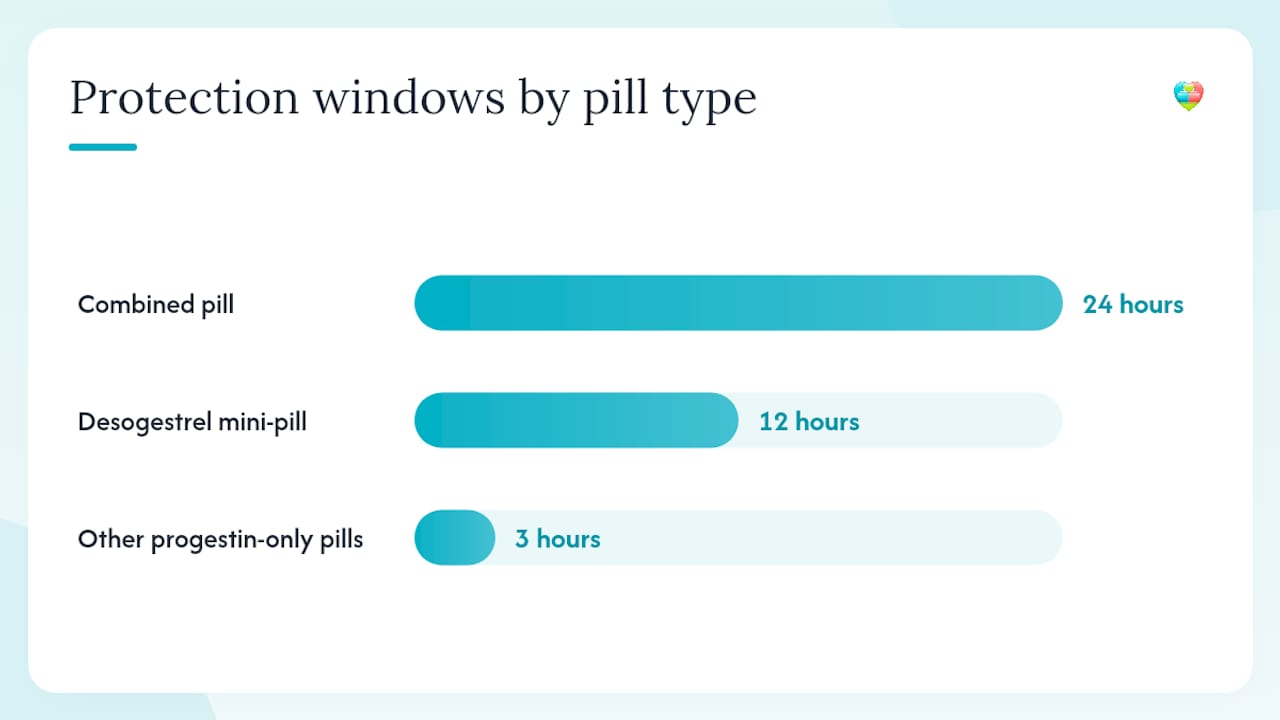
The protection window is the maximum time you can take a pill late before your contraceptive cover is at risk. NHS guidance is clear on this:
| Pill type | Protection window | Notes |
|---|---|---|
| Combined pill (oestrogen + progestin) | 24 hours | Missed if more than 24 hours since last dose |
| Desogestrel mini-pill (e.g. Cerazette, Cerelle) | 12 hours | Narrower window; backup alerts are critical |
| Other progestin-only pills (e.g. Micronor, Norgeston) | 3 hours | Very narrow; specialist reminders strongly advised |
The difference comes down to how each pill works. Combined pills suppress ovulation reliably, giving a wider margin. Desogestrel mini-pills also suppress ovulation but the hormonal mechanism is more sensitive to timing. Other progestin-only pills work primarily by thickening cervical mucus, an effect that begins to wear off within 3 hours of a missed dose.
Key figure: The 3-hour window for most progestin-only pills is among the narrowest of any daily oral contraceptive. A single late notification, combined with a suppressed phone alert, can be enough to lapse protection.
What to do if you miss a pill
Combined pill
- Less than 24 hours late: Take it as soon as you remember. Continue the pack as normal. No additional contraception needed.
- More than 24 hours late: Take the missed pill immediately, even if that means taking two in one day. Use condoms for the next 7 days. If the missed pill falls in the first week and you had unprotected sex in the preceding 7 days, consider emergency contraception.
Desogestrel mini-pill (12-hour window)
- Less than 12 hours late: Take it now. Continue as normal.
- More than 12 hours late: Take the missed pill immediately. Use condoms for the next 2 days. If unprotected sex occurred during the gap, emergency contraception may be needed.
Other progestin-only pills (3-hour window)
- Less than 3 hours late: Take it now. Continue as normal.
- More than 3 hours late: Take the missed pill immediately. Use condoms for the next 2 days. Consider emergency contraception if unprotected sex occurred.
Urgent action: If you have missed pills outside the protection window AND had unprotected sex, emergency contraception is most effective when taken as soon as possible. Contact your GP, a sexual health clinic, or call NHS 111. Emergency contraception is available free on the NHS and from most pharmacies without a prescription.
How to build a daily pill routine that actually sticks
Reminders work best when they are attached to something you already do without thinking.
- Choose your anchor habit. Breakfast, brushing your teeth at night, or charging your phone are all reliable. The anchor should happen at roughly the same time every day, including weekends.
- Run a two-week trial. Commit to the same time and anchor for 14 days. If you miss more than twice, the anchor is not reliable enough and you need to switch.
- Layer your reminders. Primary alert, then a backup 30 minutes later. Keep the pill strip somewhere visible near the anchor location.
- Log every dose. A quick tap in a medication schedule app closes the feedback loop and makes it obvious if you are drifting.
The goal is to reduce decision points. If you have to remember where your pills are, whether you took one, and what time it is, that is three opportunities for error. Keep the strip in the same place, at the same time, every day.
Pro Tip: Put your pill pack next to something you use every morning without fail, such as your phone charger or coffee cup. Visual proximity is one of the most reliable habit cues.
How to avoid running out: refill planning and supply management
Running out of pills mid-pack is one of the most common causes of unintended gaps in contraceptive cover.
- Reorder 5–7 days before your pack ends. Set a recurring reminder in your pill app or calendar for this date each month.
- Keep a one-pack buffer where possible. If your prescription allows it, collect the next pack before finishing the current one.
- Travelling across time zones? Decide in advance whether to shift your pill time gradually or take it at the original home time. For narrow-window pills, the 3-hour rule makes this decision more urgent.
- Extended packs (84-day cycles): Set your refill reminder proportionally earlier, around 10 days before the pack ends, to account for longer prescription lead times.
- Carers managing pills for others should use household sharing features to track supply levels across multiple patients without maintaining separate systems.
Pro Tip: Set your refill reminder as a recurring event, not a one-off. Forgetting to reset it after each pack is how gaps happen.
Will your reminders actually reach you? Device settings and privacy
A reminder that fires silently is no reminder at all. These are the settings worth checking.
On iPhone:
- Go to Settings > Notifications > [your pill app] and enable "Time Sensitive Notifications." Apple Support confirms this allows alerts to break through Focus and Do Not Disturb modes.
- Check that the app is not restricted by Low Power Mode notification delays.
- In Focus settings, allow the pill app as an exception.
On Android:
- Go to Settings > Apps > [your pill app] > Notifications and set priority to "High" or "Urgent."
- Disable battery optimisation for the app: Settings > Battery > App optimisation > exempt the pill app.
- Some Android manufacturers (Samsung, Xiaomi) run aggressive task killers. Check your device's specific settings to prevent background app termination.
Privacy considerations:
- Check whether the app stores data locally or syncs to a cloud server. For sensitive health data, local storage or a GDPR-compliant UK platform is preferable.
- Use discreet notification content settings if your phone is shared or visible to others. Most specialist apps allow you to show only "Time to take your medication" rather than the pill name.
- If notifications fail entirely, a physical backup, such as a visible pill strip or a household check-in, prevents a complete gap.
When should you contact a clinician or use emergency contraception?
Seek same-day help if:
- You missed pills outside the protection window and had unprotected sex.
- You are unsure which pill type you take or cannot find your patient information leaflet.
- You have been vomiting or had severe diarrhoea within 2 hours of taking a pill (absorption may be affected).
- You need emergency contraception and are unsure which option is appropriate for you.
Routine follow-up with your GP or sexual health clinic if:
- You are repeatedly missing pills and need to review whether your current pill type and reminder system is working.
- You want to switch pill types or discuss long-acting reversible contraception (LARC) as an alternative.
NHS 111 is available 24 hours a day, 7 days a week. You can call 111 or use the online service at 111.nhs.uk for urgent contraceptive advice. Sexual health clinics offer same-day appointments for emergency contraception in most UK areas. Keep a brief log of the dates and times of any missed pills to share with the clinician.
Why specialist medication reminders matter for contraceptive safety
Generic phone alarms treat every medication the same. A pill reminder built for contraceptive use does something different: it understands that a desogestrel user and a combined-pill user face entirely different risk profiles from the same 15-minute delay. That distinction is not cosmetic. It shapes whether the app prompts a backup alert, flags a potential protection gap, or links you to the correct patient information leaflet for your specific brand.
Thedailydosetracker was built around this principle. The platform's focus on clinical accuracy, privacy, and household sharing reflects the reality that medication management is rarely a solo task. Carers, partners, and family members often share responsibility for a pill-taking routine, and a system that handles only one patient at a time creates gaps. Refill prediction and GDPR-compliant data handling are not optional extras in this context; they are the baseline for a platform that takes medication safety seriously.
For anyone who wants a reminder system that goes beyond a daily alarm, Thedailydosetracker is the recommended choice.
Thedailydosetracker: built for the way pill reminders actually work
Most reminder apps fire a notification and stop there. Thedailydosetracker goes further: brand-specific medication schedules, time-sensitive alerts that work around device silent modes, refill predictions so you never run short, and household sharing for carers managing pills for more than one person. All data handling is GDPR-compliant, and discreet notification options keep your health information private.
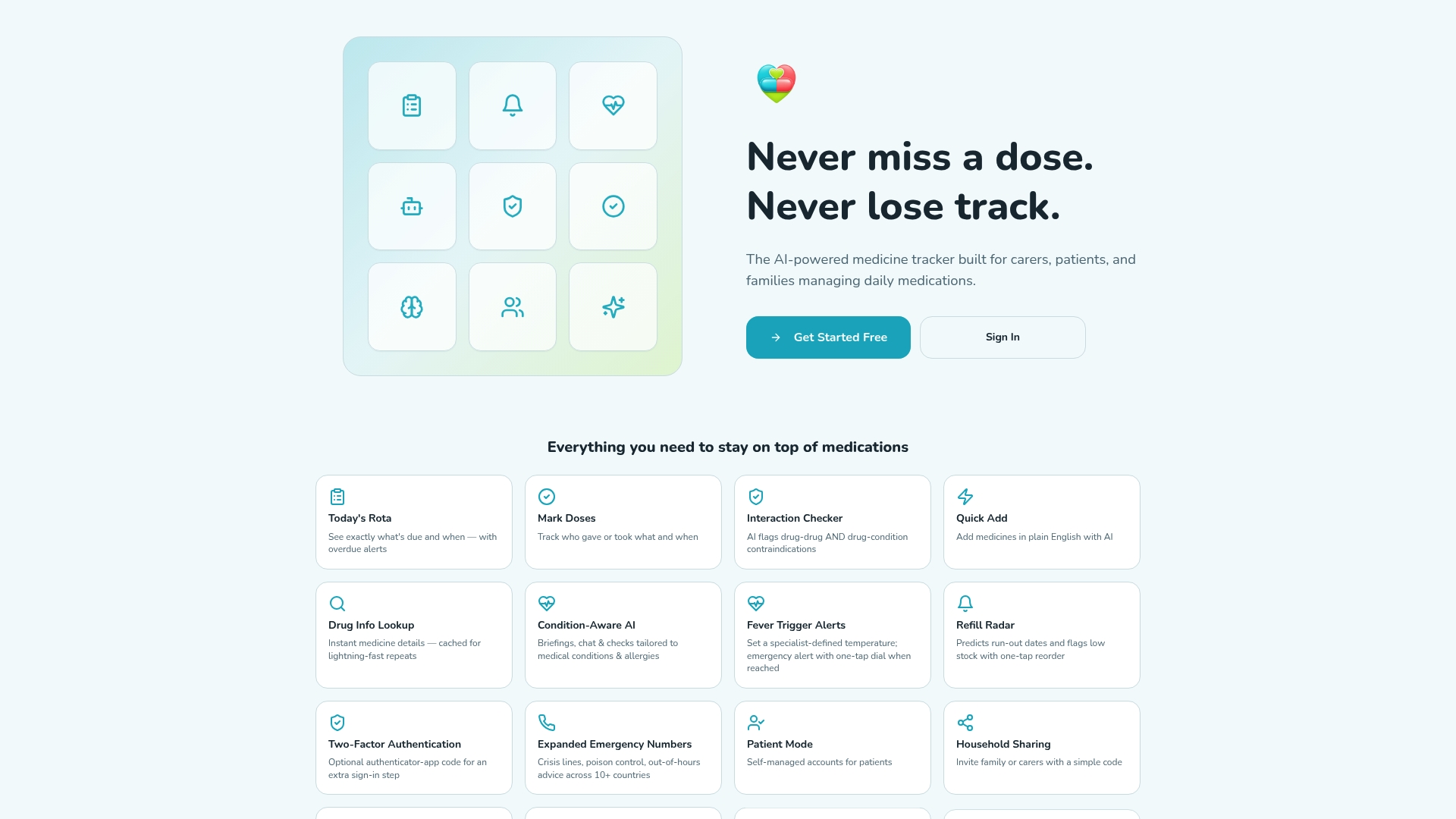
The free tier covers core scheduling and dose logging. Advanced features, including AI-driven refill predictions, multi-patient management, and appointment scheduling, are available on the Individual and Pro plans. Getting started takes under five minutes: add your pill, set your time, and enable backup alerts.
See what the platform covers and get started with Thedailydosetracker today.
Sources
This article is general information, not a substitute for advice from a qualified doctor. Consult a qualified healthcare professional about your own circumstances before acting on anything here.