
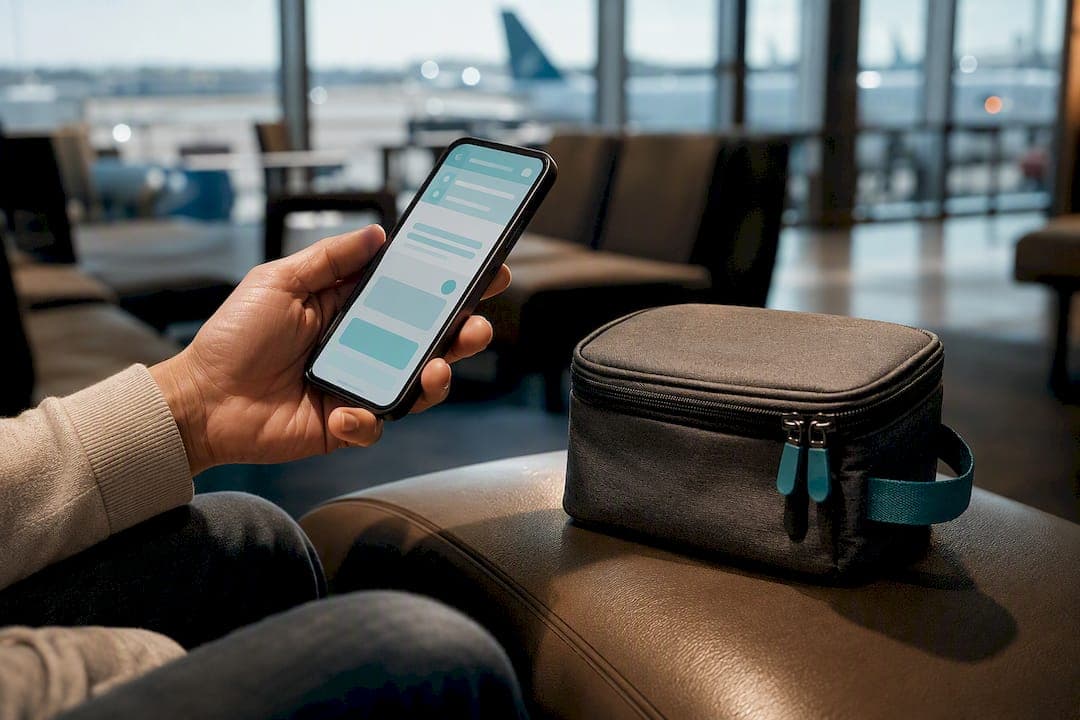
When you cross time zones, count the hours since your last dose rather than watching the clock. Keep taking medicine at that interval until you land, then switch to local time on arrival. Never double a dose to "catch up," and for insulin, anticoagulants, contraceptives or antiretrovirals, get clinician sign-off before you fly. A tool can hold the schedule and fire the reminders once you've agreed the plan.
TL;DR:
- Medications with narrow safety margins like insulin, anticoagulants, or antiretrovirals require strict adherence to clinician guidance and should not be self-adjusted during travel.
- For long-haul flights, shifting dosing intervals and settling into local time after arrival reduces errors more reliably than staged pre-shifts, especially for complex regimens.
- Travel schedules should specify the last-dose time and time zone, and travelers should carry enough surplus medication, prescriptions, and clinician notes for verification abroad.
- Use interval-aware medication apps that track from the last dose and automatically adjust to time zone changes to prevent missed or double doses.
- Avoid improvising with doses mid-flight; instead, consult a healthcare professional if a dose is missed or accidentally doubled to prevent adverse effects.
Table of Contents
- Pre-travel checklist: what to sort out before you fly
- How do you convert a dosing schedule across time zones?
- Which medicines need extra care across time zones?
- What if you miss a dose or take a double dose while travelling?
- What documents should you get from your clinician before you go?
- What should a good travel medication app actually do?
- A final word on staying on schedule abroad
- Put the plan into practice with The Daily Dose Tracker
- Sources
Pre-travel checklist: what to sort out before you fly
Book a clinician or pharmacist review four to six weeks before departure if you take more than one regular medicine or anything with a narrow safety margin, such as insulin or warfarin. That gives enough time to sort prescriptions, get a clinician letter for controlled drugs, and work through the schedule together. A travel medication checklist built for carers and complex regimens covers most of this in one pass.
Ask for a written plan rather than trying to remember verbal advice. It should state:
- Which medicines are dosed by interval (every 8, 12 or 24 hours) and which are dosed by clock time (morning or evening, with food)
- The exact time and time zone of your last planned dose before travel
- At least seven days' surplus supply, plus copies of prescriptions in case a pharmacy abroad needs to verify them
How do you convert a dosing schedule across time zones?
Interval-based scheduling protects you from the two real dangers of long-haul travel: taking a dose too soon after the last one, or leaving too long a gap and losing therapeutic cover. A clinical review on medication timing notes that consistency of interval often matters more than hitting an exact clock time, particularly for chronic therapies where adherence, not precision, drives outcomes.
Here's how that plays out for common regimens:
- Once-daily medicines (most blood pressure or cholesterol drugs): shift gradually if the flight is short, or simply take the next dose at your normal interval and settle into the new local time once you've landed.
- Twice-daily medicines: keep the roughly 12-hour gap running during the flight rather than trying to force a dose into the old home-time slot; recalculate to the new clock once you're through the first full day.
- Strict 12-hour regimens (some antiepileptics, some HIV combinations): count hours since your last dose and take the next one on schedule, even mid-flight, unless your clinician has told you otherwise.
For most travellers, the simpler approach, interval-first, then settle into destination time, causes fewer errors than trying to pre-shift gradually before departure. Long, staged adjustments look neat on paper but tend to fall apart the moment a flight is delayed.
Pro Tip: Pick one fixed reference point, the moment your plane's wheels leave the runway, and set every device alarm from there in elapsed hours. It's far easier to track "8 hours since take-off" than to keep recalculating what time it technically is somewhere over the Atlantic.
Which medicines need extra care across time zones?
Some drug classes don't tolerate a loose approach to timing, and general rules of thumb stop applying:
- Insulin needs to track meals, not the clock; a mistimed dose against food intake risks dangerous swings in blood sugar.
- Anticoagulants like warfarin have a narrow therapeutic window; missed or doubled doses raise bleeding or clotting risk quickly.
- Contraceptive pills rely on a tight daily window to stay effective; slipping outside it can mean lost protection.
- Antiretrovirals depend on maintaining steady drug levels to avoid resistance developing.
- Antiepileptics need consistent blood levels to prevent breakthrough seizures.
A review of antiretroviral dosing across time zones found that pharmacokinetic forgiveness, how much a missed or delayed dose actually matters, varies significantly between individual drugs, which is exactly why blanket travel advice falls short for this group. The same review generally advises against taking an in-flight dose unless a person's specific regimen or resistance history calls for it. Whatever your clinician writes down for you overrides any general guidance here, including everything in this article.
What if you miss a dose or take a double dose while travelling?
A useful rule of thumb: if you're within half your normal dosing interval of the missed time, take it now; if you're past that, skip it and resume the next scheduled dose. That guidance shifts for time-critical drugs like insulin or anticoagulants, where your clinician's specific instructions take priority.
- Don't double up to "catch up," ever, unless a clinician has explicitly told you to for your situation.
- Write down what happened, the time, the time zone, and the dose taken or missed, so you or a local pharmacist can make sense of it later.
- Call a pharmacist or your prescribing clinician if you're unsure, rather than guessing.
- Get urgent local medical care for severe bleeding, chest pain, signs of severe low blood sugar, or a seizure.
WebMD's travel medication guidance notes many medicines can be shifted by an hour or two without harm, but that margin shrinks fast for anything on the list above.
What documents should you get from your clinician before you go?
Ask specifically for a printed schedule marking which medicines are time-critical, whether each is interval or clock-based, and the exact last-dose time with its time zone recorded. That single data point, the last dose and where it happened, is what clinicians rely on most when recalculating a plan gone off track.
- Request a clinician letter for any controlled drugs you're carrying, plus spare prescription copies
- Consider translated copies of key documents if you're heading somewhere the local language differs
- Keep an encrypted digital copy and share it with a travel companion or carer, not just yourself
A clinician-reviewed travel medication list gives a sense of what a properly detailed version of this looks like. Written, portable schedules like this measurably cut down on dosing errors during jet lag, according to patient-safety guidance on time-zone scheduling, largely because they let an unfamiliar pharmacist abroad pick up where your regular one left off.
What should a good travel medication app actually do?
A digital tool earns its place on a trip if it does the maths you'd otherwise be doing at 30,000 feet with a jet-lagged brain. Look for:
- Interval-aware reminders that count from your last dose rather than assuming a fixed clock time
- Automatic time zone handling so alerts don't fire at 3am local time by mistake
- Drug interaction checks and refill alerts, so a dwindling supply doesn't become a crisis abroad
- A printable, shareable schedule a carer or pharmacist can read at a glance
Some medication apps let households share one schedule across devices, which matters if a carer is managing someone else's regimen remotely, and may be built to relevant data protection standards to keep reminder data secure. None of this replaces a clinician's written instructions for high-risk medicines; it's there to execute the plan they've already agreed with you.
Pro Tip: Set up your reminders and print your schedule before you fly, not after landing bleary-eyed in an unfamiliar airport. The best travel tool is the one already running when jet lag hits.
A final word on staying on schedule abroad
Most people who travel with a written plan and a couple of reliable alarms get through time zone changes without incident. The errors happen when someone improvises mid-flight. Ask your clinician the specific, slightly annoying questions well before departure, not the general ones, and you'll land with a plan that actually holds up.
— Prasant
Put the plan into practice with The Daily Dose Tracker
Working out interval-based dosing by hand across a nine-hour time difference is exactly the kind of task worth handing to a tool built for it. Some medication apps can turn the written schedule your clinician gives you into automatic, interval-aware reminders that adjust with you as you cross time zones, rather than alerts tied to a clock that no longer matches where you are.
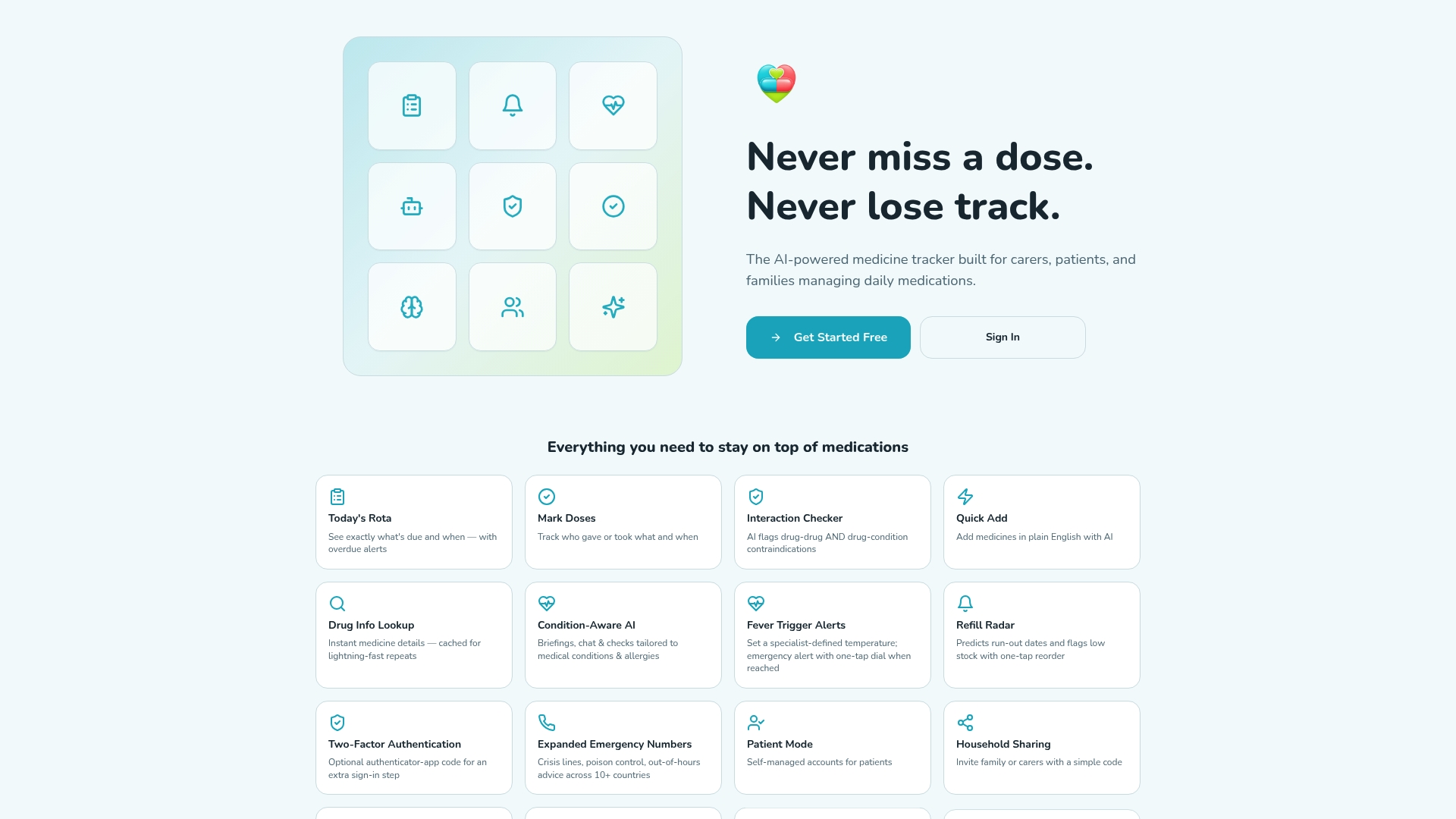
Household sharing features mean a carer managing someone else's regimen can see the same schedule and get the same alerts, wherever they are. Refill alerts can flag a dwindling supply before it becomes a problem abroad, and printable schedule formats work well as documents to hand to an unfamiliar pharmacist. If you're also stabilising a broader treatment plan before travel, resources like Diamond Wellness's guidance on medication-assisted therapy are worth a look alongside your clinician's advice. Try the free tier of The Daily Dose Tracker before your next trip and get your schedule set up while you've still got time to check it against your clinician's instructions.
This article is general information, not a substitute for advice from a qualified doctor. Consult a qualified healthcare professional about your own circumstances before acting on anything here.
Sources
- Clinical review on timing of medication administration (PMC6594844)
- Watch out for time changes — WebMD travel medication advice
- Time-zone medication schedule after travel (Acibadem patient guide)