
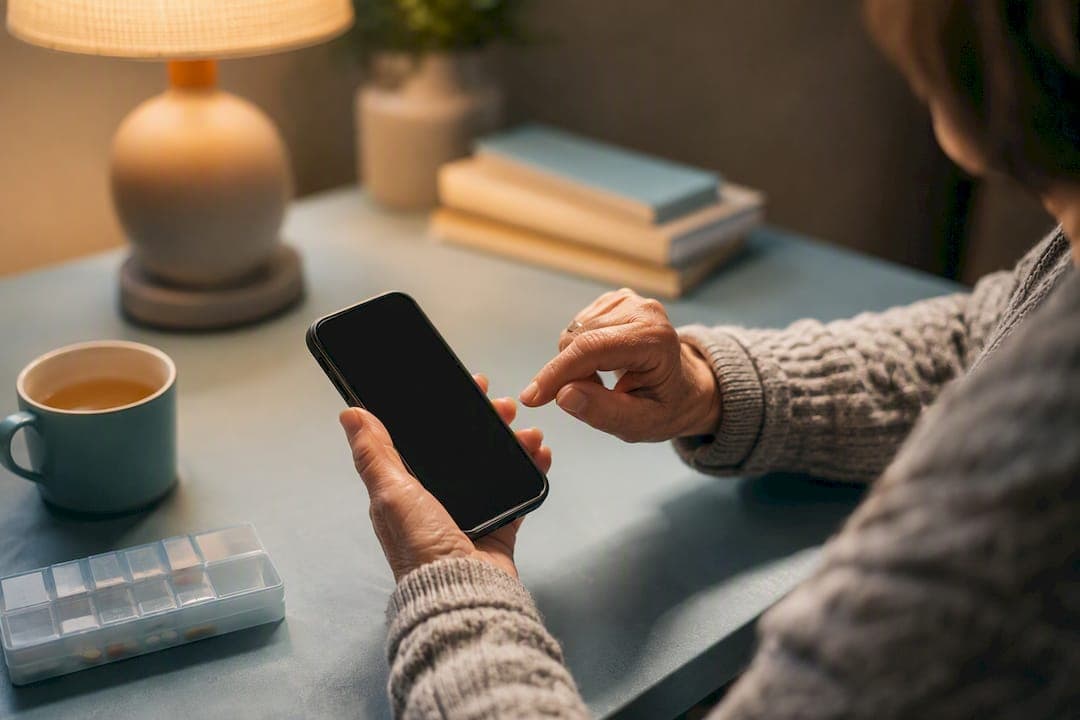
For carers of people with early to moderate dementia, a shared medication app such as The Daily Dose Tracker gives a practical, GDPR compliant layer of reminders and caregiver alerts that cuts down on missed and doubled doses. The reason it works better than a lone reminder app: shared alerts reach more than one person, interaction checks catch prescribing conflicts, and refill warnings stop a supply running out mid week. Adherence among older adults stays imperfect even with reminder systems in place, with some studies putting it near 50 percent, so the app is one layer of a wider safety net, not the whole net.
Before you download anything, do this:
- Write out every current medication, dose, and timing on one sheet.
- Book a pharmacist medication review to check for unnecessary complexity.
- Set up a shared app account with one named primary contact.
- Agree who checks the logs each day and what happens if a dose is missed.
Key Takeaways
Dementia medication apps reduce missed doses most reliably when paired with pharmacist review, a physical dispenser, and a named carer who checks the logs.
| Point | Details |
|---|---|
| Get a pharmacist review first | This often cuts pill count and interaction risk more than any app feature can. |
| Pair software with something physical | A pill organiser or locked dispenser removes decision points an app alone cannot. |
| Set one primary contact | A 15 to 30 minute escalation window avoids alert fatigue while keeping a human check in place. |
| Watch for the switch point | Repeated missed doses or comprehension loss mean it's time for a MAR chart or pharmacy packed blister system. |
| The Daily Dose Tracker fits this workflow | It combines household sharing, interaction checks, and refill alerts in one GDPR compliant, accessible app. |
Table of Contents
- What dementia medication apps actually do and how they help
- What the evidence and expert guidance say about apps and adherence
- How do you set up a dementia medication app safely?
- When are apps no longer enough for dementia medication management?
- How The Daily Dose Tracker supports safe dementia medication routines
- Quick checklist: is a medication app right for this stage?
- Why the "just download an app" advice misses the point
- Get started with The Daily Dose Tracker today
- Sources
What dementia medication apps actually do and how they help
Most dementia medication apps run on the same basic mechanics: a scheduled alert, a confirmation step, and a log the carer can review later. The better ones add a photo of the tablet or pack for visual confirmation, a checklist the person taps through, and an escalation message to a carer if nothing happens within a set window. That escalation piece matters more than the reminder itself, because a reminder nobody responds to is just noise.
Where the alert appears changes how well it works. A smartphone notification suits someone who still checks their phone out of habit. A smart speaker announcement suits someone who has stopped using a phone but still responds to voice. A smartwatch buzz works for people who wear one and can interpret a vibration as meaningful. Locked, timed dispensers suit people who can no longer judge which pot or blister to open, though they cost more and need setup by a carer.
Before choosing any of these, run a quick capability check:
- Can the person read or hear the notification and understand what it means?
- Can they physically retrieve the medication once prompted?
- Can they swallow or take it, with supervision if needed?
If the answer to any of those is "no," an app on its own will not fix the gap.
What the evidence and expert guidance say about apps and adherence
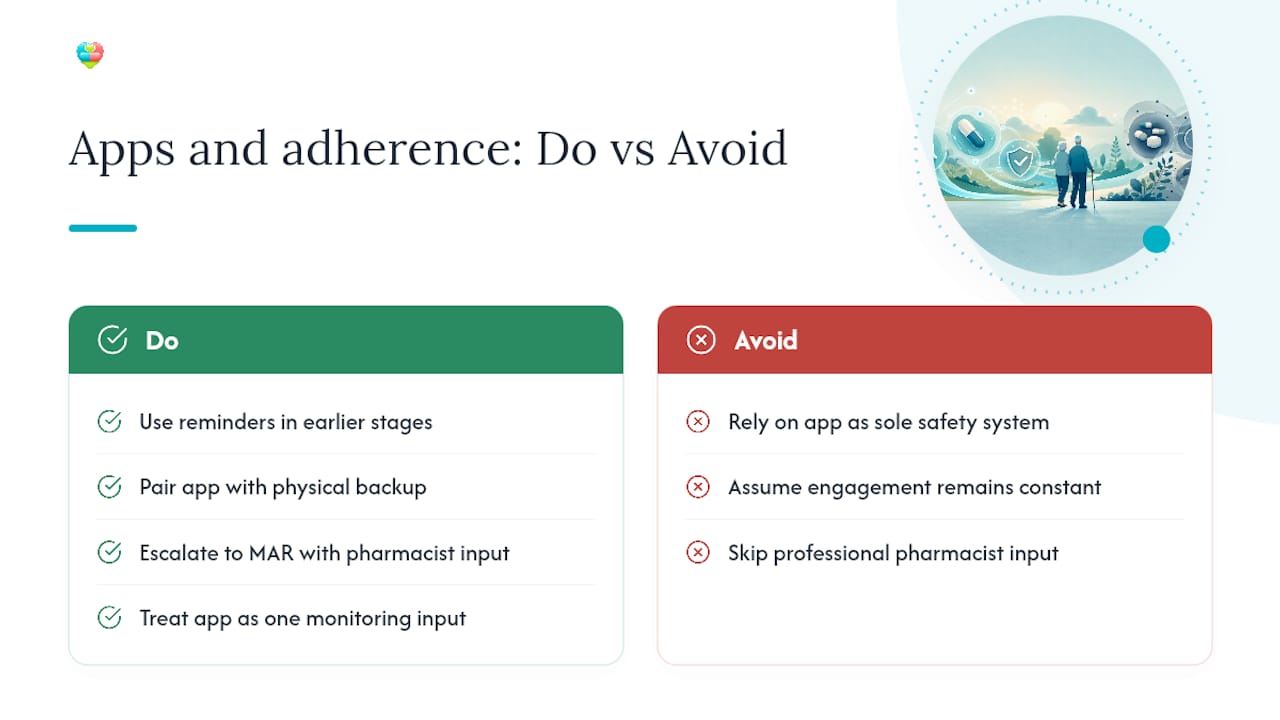
Peer reviewed evidence on dementia specific apps is more cautious than most marketing copy suggests. A review of apps used in dementia care found they can support routine and, in some cases, improve quality of life, but consistent gains in adherence are not guaranteed across studies. Some people respond well to a structured prompt; others stop engaging once the novelty fades.
Alzheimer's Society guidance is direct about the trajectory: reminders help in the earlier stages, but they become less reliable as dementia progresses, and professional carers are advised to move to a formal Medicines Administration Record (MAR) with pharmacist input rather than depend on a reminder app.
Digital reminders work as a tactical support layer, not a standalone safety system. Redundancy, whether that's a pill dispenser or a second human checking in, is what actually prevents missed doses from turning into a crisis.
That view lines up with commentary from Imperial NHS's home monitoring work, which treats app based monitoring as one input among several rather than a replacement for a person checking in. The practical takeaway: pair the software with something physical.
How do you set up a dementia medication app safely?
Getting the app right on day one saves weeks of frustration later. Follow these steps in order.
- Compile one master medication list. Every drug, dose, and time, then take it to a pharmacist for a full review. This often trims pill count and removes interaction risks that no app can catch on its own.
- Choose a primary contact and set an escalation window. Fifteen to thirty minutes after a missed dose is usually enough to prompt a check without generating alert fatigue for the carer.
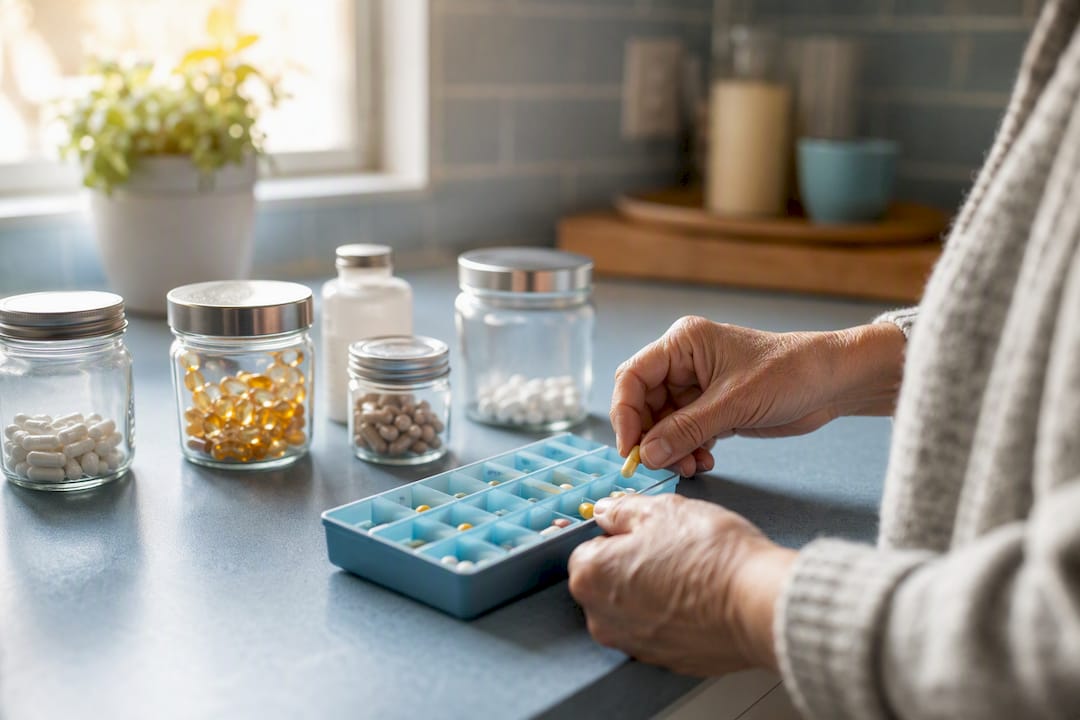
- Pair the app with a physical organiser or locked dispenser. Reminders work best paired with a physical action, because it removes a decision point for someone who may struggle to work out which pot to open. Test the full routine for a week before relying on it.
- Review the adherence log every week. Look for a pattern, not a single missed dose, and adjust timing, add support, or bring in a pharmacist if doses are slipping regularly.
Pro Tip: Start the app before you think you need it. Habits formed while someone still understands the prompts tend to last longer than habits introduced after confusion has already set in.
When are apps no longer enough for dementia medication management?
An app stops being a safe primary system once certain patterns show up. Watch for:
- Repeated missed doses or doses taken more than once in the same day.
- Refusal to take medication when prompted, rather than simply forgetting.
- No response to notifications, calls, or visual cues at all.
- Apraxia or comprehension problems that mean instructions no longer register, even when read aloud.
At that point, the safer route is a pharmacy packed blister system, a MAR chart run by a care agency, or a locked dispenser with carer alerts built in. Professional carers use original packaging plus a MAR chart for a specific reason: medication is removed from its original pack only at the point of administration and logged immediately, which creates a legal and clinical record that a homemade pill box simply cannot provide. Some medication forms, including liquids, patches, and oro dispersible tablets, need this level of oversight regardless of app quality.
How The Daily Dose Tracker supports safe dementia medication routines
The Daily Dose Tracker builds the workflow above directly into its features, rather than leaving carers to stitch several tools together.
- Household sharing and multi patient management let more than one carer see the same schedule, so the primary contact from Step 2 above isn't the only person who can respond.
- Drug interaction checks and condition specific guidance support the pharmacist review from Step 1, flagging conflicts as medications are added.
- Refill predictions and caregiver alerts cover the escalation window and stop supply gaps before they turn into missed doses.
- Progressive web app access means it runs on a phone, tablet, or shared household device without needing a separate app store download for every family member.
Every account complies with UK GDPR standards, and accessibility options, including dark mode and adjustable font sizes, help make the interface usable for people at different stages of dementia rather than a one size fits all screen. For further reading on building the medication list itself, see the guide to setting up a medication schedule for a dementia patient.
Pro Tip: Add your pharmacist's contact details to the app's emergency contact field once the review is done. It turns a five minute phone search during a crisis into a single tap.
Quick checklist: is a medication app right for this stage?
Run through this before you commit to any app, including this one.
- Capability check: can the person understand a prompt and act on it without help? Early and moderate stages usually pass this; advanced stages often don't.
- Must have features: shared alerts, a simple uncluttered interface, escalation to a named carer, and refill warnings.
- Deprioritise: apps that demand heavy manual data entry, complex multi screen setup, or constant carer intervention just to function day to day.
If the answer to the capability check is genuinely uncertain, treat the app as a trial for two weeks with close monitoring rather than a permanent fix.
Why the "just download an app" advice misses the point
The advice you'll see repeated across most caregiver forums treats the app as the solution. It isn't. It's scaffolding, and scaffolding only holds up a structure that's already sound: a reviewed medication list, a carer who checks in, and a fallback plan for the day the phone runs out of battery or the notification gets swiped away without being read.
What gets underestimated most is the value of the escalation window over the reminder itself. Families obsess over which app has the nicest interface when the real question is who gets told, and how fast, when a dose is missed. That's the feature that actually prevents harm.
My honest read: start with the pharmacist, not the app store. Build the physical routine second. Only then does the software earn its place, and when it does, it should reduce the carer's manual workload, not add another screen to check obsessively. If the person you're caring for reaches a point where they can't respond to prompts at all, that's not a failure of the app. It's a signal to move to supervised dispensing or a MAR chart, and the sooner that switch happens, the safer everyone is.
Get started with The Daily Dose Tracker today
The Daily Dose Tracker is built for exactly the workflow this guide describes: pharmacist reviewed medication lists, shared household alerts, and refill warnings that catch problems before they become missed doses. Where a basic reminder app leaves one person watching one phone, this platform lets several carers see the same schedule, receive the same escalation alert, and check the same adherence log, whether that's a family carer at home or a professional care team managing several patients.
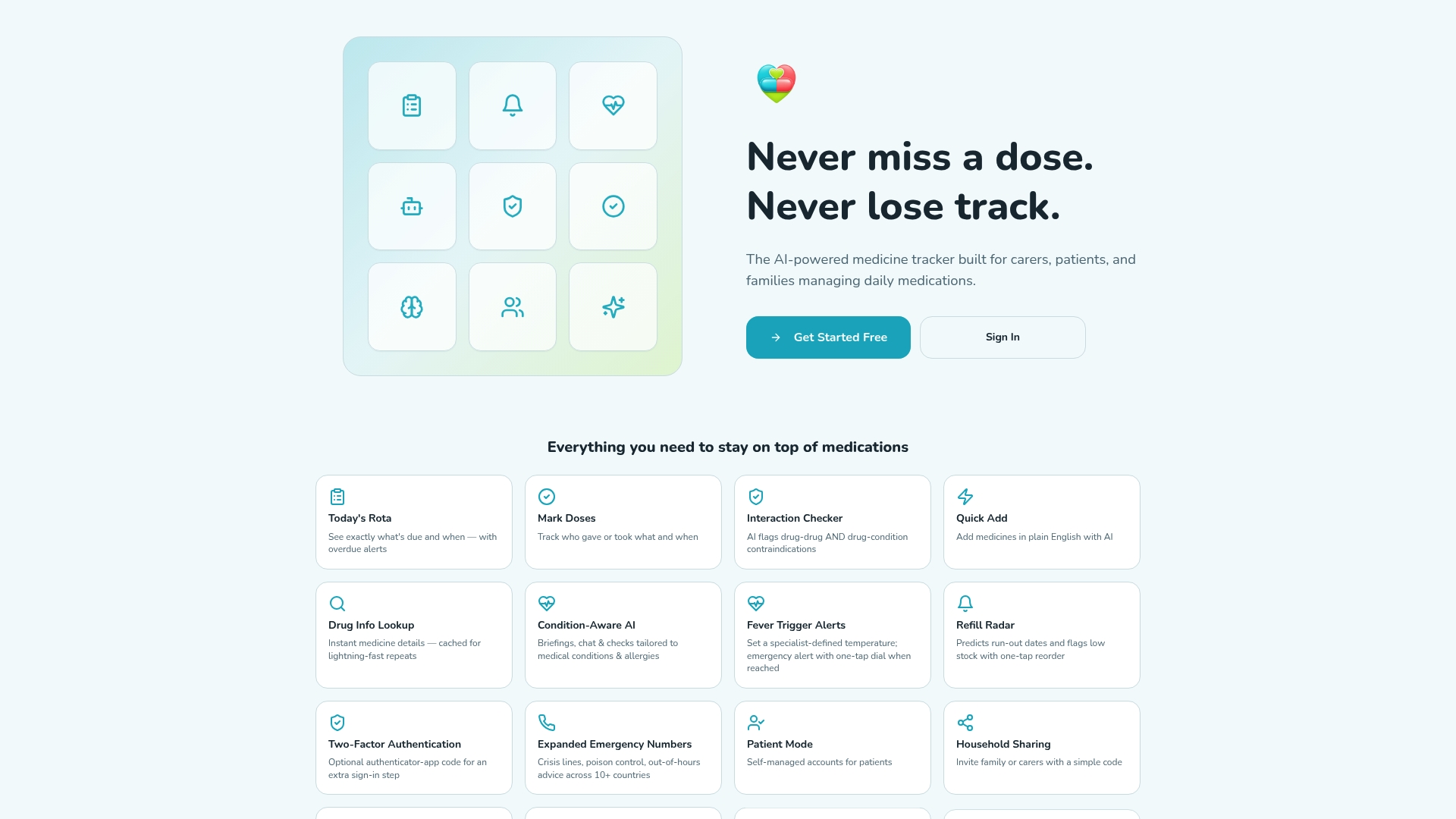
It suits families managing early to moderate dementia at home, and professional carers who need multi patient oversight without juggling separate systems for each person. Drug interaction checks and condition specific guidance sit alongside dark mode and adjustable font sizes, so the interface stays usable as needs change. For a deeper look at combining reminders with routine, Technology for Aging Solo covers complementary low cost tools worth pairing with any digital system. Set up a free household account at The Daily Dose Tracker and add your first medication list today.
This article is general information, not a substitute for advice from a qualified doctor. Consult a qualified healthcare professional about your own circumstances before acting on anything here.
Sources
- Taking medications with dementia | Alzheimer's Society
- Innovative home monitoring service aims to improve care | Imperial NHS
- Helpdementia